For buyers at Origin and Alma Bay Harbor Islands, discreet delivery service begins with written operating rules. Here is what to confirm about valuable packages, screening, courier access, custody, and insurance before relying on the concierge.
A residence should make ownership feel effortless-even when a collectible watch, a framed work, or a signature-required purchase arrives while its owner is away. Yet an elegant lobby and attentive concierge do not, by themselves, establish authority to accept valuables, verify a specialist carrier, or assume responsibility for an overnight hold.
For buyers evaluating Origin Bay Harbor Islands and Alma Bay Harbor Islands, the essential distinction is between advertised infrastructure and written operating procedures. A parcel room is a physical amenity. A delivery policy determines who may use it, what staff may accept, and where responsibility passes from one party to another.
The objective is not unrestricted courier access. It is a discreet, predictable route from arrival to authorized release, with clear alternatives when a delivery falls outside the building’s rules.
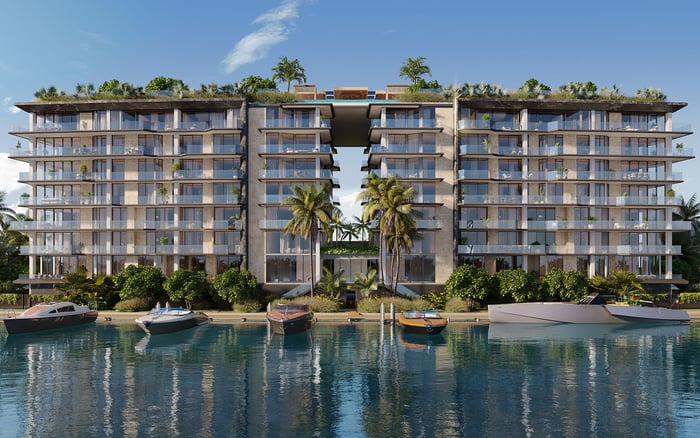
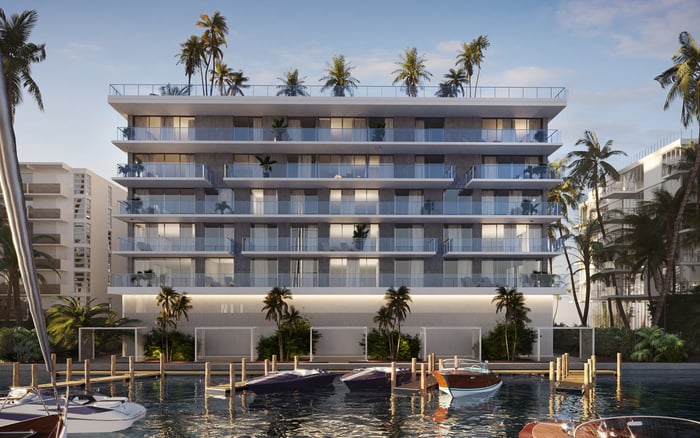
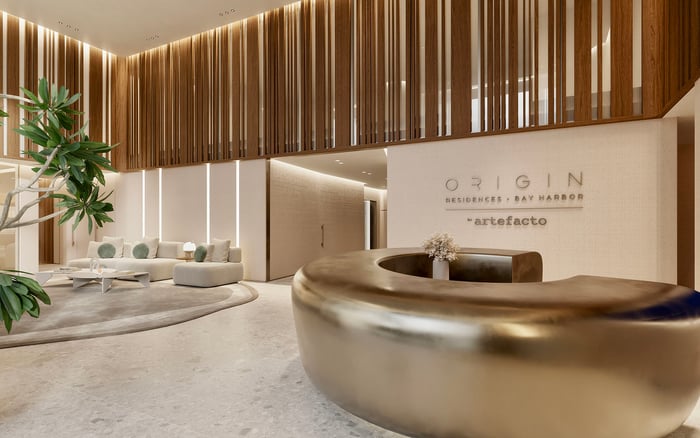
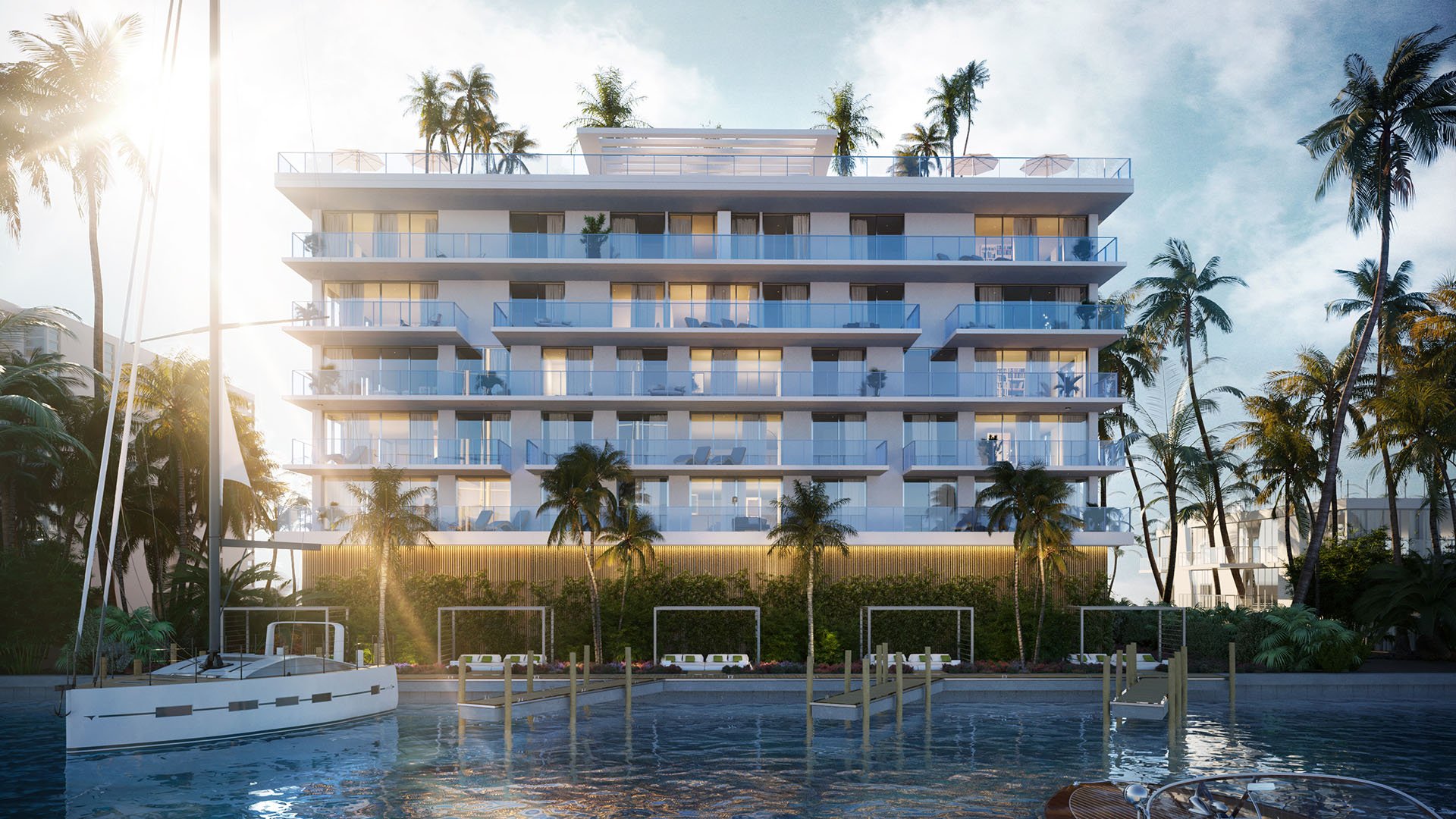
Origin Residences by Artefacto is planned as 27 waterfront residences at 9760 West Bay Harbor Drive. Its advertised offering includes a grand lobby with concierge services, 24-hour security, personalized services, advanced technology, and designated self-parking. A lobby-level mailroom and parcel room with individual access provide a starting point for operational questions.
Those features do not establish round-the-clock package acceptance. Nor does individual access explain who may enter the parcel room, whether staff supervise collection, or how valuable items are separated from ordinary deliveries. Available details do not confirm refrigeration, temperature monitoring, continuous staffing, camera coverage, or package insurance.
Storage on residential floors is also advertised, but it is not designated as secure storage for valuable deliveries. Ask management to distinguish resident storage from space approved for packages held in staff custody. Permission to store personal belongings is not permission to leave a newly delivered artwork unattended.
Alma Bay Harbor Islands is described as a seven-story boutique residential building. Its disclosed operational details do not establish a delivery handbook, bonded-courier policy, package-retention schedule, or screening protocol.
That does not prove those procedures are absent. It means buyers should obtain project-specific confirmation rather than infer service arrangements from scale or design. Do not assume a separate delivery vestibule, private elevator route, virtual doorman, dedicated package room, or continuous reception without written confirmation for Alma itself.
The comparison with Origin is therefore not a demonstrated service ranking. Origin has more specifically described parcel infrastructure; neither project’s disclosed details resolve the high-value delivery questions. Assess both against the same written checklist rather than favoring the more expansive amenity description.
Start with the carrier, the consignment, and the intended recipient. Ask whether management accepts bonded couriers, armored carriers, fine-art logistics firms, and signature-required valuables. These acceptance categories remain unconfirmed in the operational details disclosed for either Origin or Alma.
Request the required credentials and approval process before scheduling. Clarify whether management needs resident preauthorization, identification for each courier, insurance documentation, an appointment, or an escort. Ask who may approve an exception and whether that approval remains valid if the driver or delivery window changes.
Screening needs an equally precise definition. Does it mean checking identification and inspecting the exterior, or could staff open a package? Confirm the required consent, the refusal procedure, and how compromised seals or visible damage would be documented. Do not assume either building opens deliveries.
Finally, map access beyond reception. Origin’s disclosed details do not establish whether couriers may pass the lobby, use a service elevator, or deliver directly to a residence. For both properties, request the permitted entrance, elevator arrangements, after-hours restrictions, and handoff location. Bonded status is no substitute for explicit building authorization.
Ask management to walk through a proposed delivery from arrival to collection. Identify who may sign, what the signature acknowledges, and whether staff may decline an item because of its value, dimensions, condition, or handling requirements.
Then request the recordkeeping procedure. The review should address receipt time, carrier identity, package condition, storage location, resident notification, and release acknowledgment. These are diligence requests, not confirmed operating practices at either property. Origin’s disclosed parcel details do not document courier-identification requirements, custody logs, release signatures, or liability allocation.
Insurance warrants a separate conversation from access. Ask for relevant insurance certificates and acceptance terms, including exclusions, value caps, and responsibility during temporary storage. Have your insurance adviser review the intended handoff alongside your own coverage. Neither concierge acceptance nor a courier’s bonded status confirms that a package is insured while held by the building.
Second-home ownership makes exception handling particularly important. Confirm maximum dimensions and weights, retention periods, collection reminders, abandoned-package rules, and failed-delivery procedures. Origin’s disclosed parcel-room details do not specify maximum dimensions, retention limits, abandonment rules, or failed-delivery arrangements.
Establish how an assistant, household employee, or other authorized representative may collect an item. Ask how authorization is recorded, how identity is checked, and how permission can be withdrawn. For temperature-sensitive goods, confirm the actual storage conditions rather than assuming a parcel room provides environmental protection.
Buyers also considering Bal Harbour, or including Bay Harbor Towers on their shortlist, can put the same delivery scenario to each management team. Compare written answers without assuming equivalent services across neighboring properties.
Origin’s waterfront program includes a private marina with nine boat slips and a pickup/drop-off dock. It also advertises an aqua-club and watersports storage facility. Neither establishes permission for commercial courier handoffs, and watersports storage should not be confused with parcel infrastructure.
If a boat-to-residence transfer matters to your lifestyle, ask whether dock access and residential delivery procedures are coordinated. Clarify the authorized handoff point, staff responsibilities, and any parking or valet involvement, if applicable. Keep that approval separate from permission for a conventional lobby delivery.
Origin’s projected 2027 delivery is not a guaranteed completion date. Confirm the current schedule directly with the developer and ask which proposed delivery arrangements will be formalized before occupancy.
Request association rules, the resident handbook, delivery policies, relevant security procedures, insurance certificates, and management-company acceptance terms. Where procedures remain under development, ask who will finalize them and when buyers may review them.
The decision standard is straightforward: neither property should be treated as bonded-courier-ready or insured for high-value deliveries without written confirmation. The most reassuring service promise is a documented procedure that works when the owner is away.
For a discreet conversation about matching a South Florida residence to your ownership needs, connect with MILLION.
If branded residences are on your mind — as a home or as an allocation — we would be glad to share what we are seeing, privately.
Begin a quiet conversationOrigin’s advertised infrastructure includes a lobby-level mailroom and parcel room with individual access. Storage on residential floors is also advertised, but it is not designated as secure storage for valuable deliveries.
No such acceptance schedule is established by the disclosed details. Confirm package-receiving hours separately from security coverage and concierge services.
The supplied project-specific details do not establish a dedicated package room at Alma. Obtain written confirmation rather than assuming that feature is present or absent.
The disclosed information does not confirm that permission. Ask management about carrier approval, resident preauthorization, entrance rules, elevator access, and the authorized handoff location.
Neither project’s disclosed details establish that practice. Ask whether screening means identity verification and exterior inspection or includes opening packages, and clarify any required consent.
The disclosed details do not establish insurance for high-value packages in staff custody. Request relevant insurance certificates and acceptance terms, then review exclusions and value caps with your insurance adviser.
Ask how receipt time, courier identity, package condition, storage location, resident notification, and release acknowledgment are recorded. These procedures are diligence requests, not confirmed practices at either project.
Origin advertises a private marina with nine boat slips and a pickup/drop-off dock, but those amenities do not establish commercial courier permission. Obtain separate authorization for any waterfront handoff.
The published 2027 timing is a projection, not a guaranteed completion date. Confirm the current schedule directly with the developer.
Request association rules, the resident handbook, delivery policies, relevant security procedures, insurance certificates, and management-company acceptance terms. Ask who will finalize any procedures still under development.