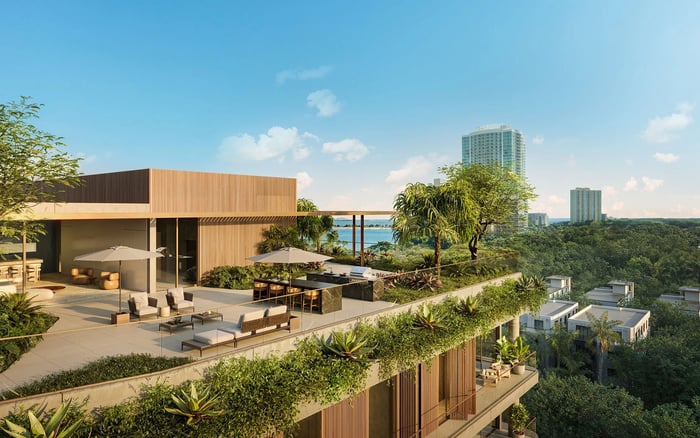
A buyer-focused comparison of Colette Residences Brickell and Nora House West Palm Beach through acoustic comfort, technology infrastructure, and private remote-work living.
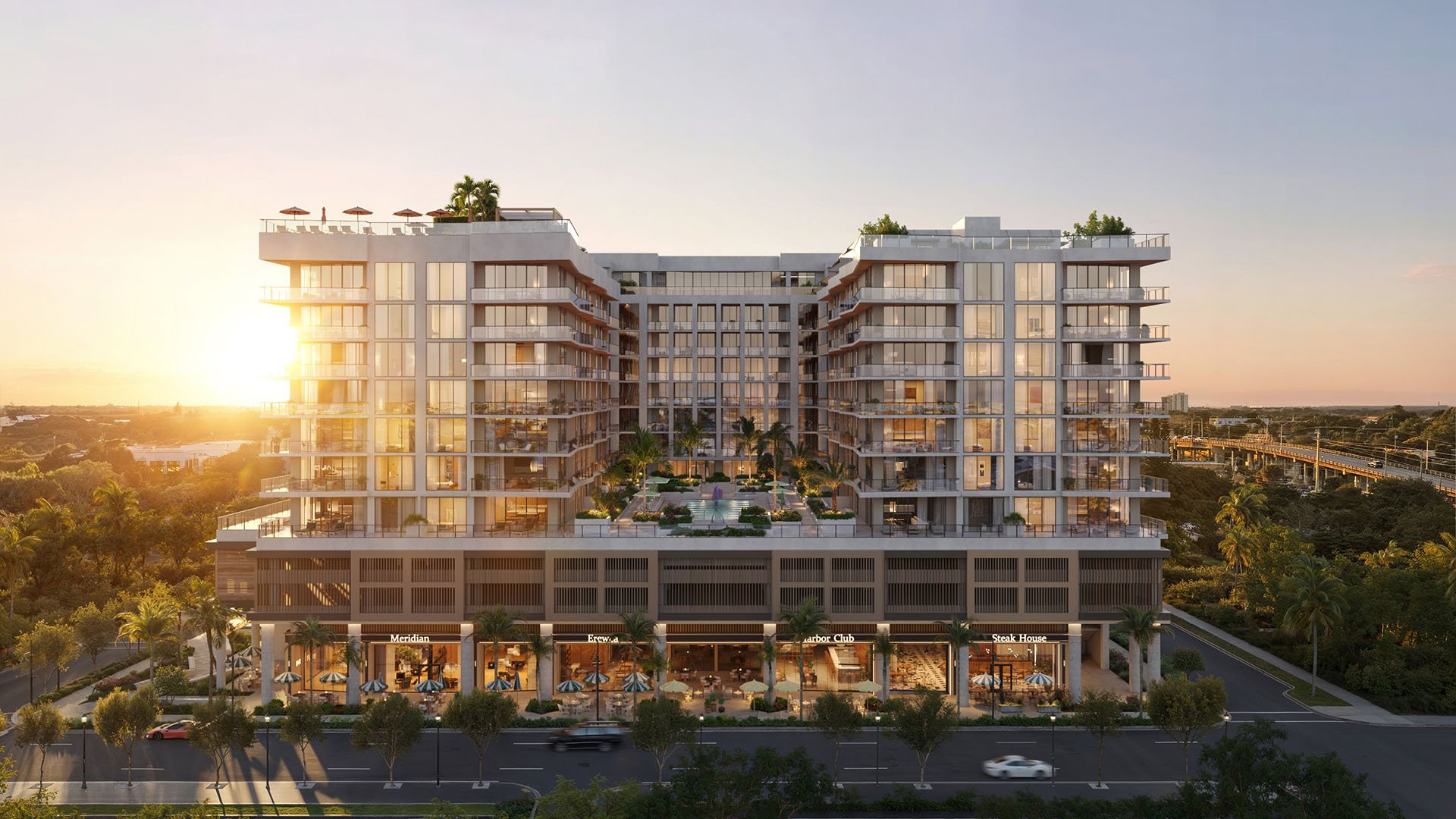
Colette Residences Brickell and Nora House West Palm Beach speak to a buyer who is not simply choosing a residence, but calibrating a way of life. The two names occupy different South Florida contexts, yet the comparison is valuable because both address a modern luxury audience that expects more than finish quality, amenity language, and architectural presence.
For the most discerning purchasers, prestige has become operational. A residence must perform during an early video call, a private negotiation, a visiting family weekend, and an evening when the owner wants silence rather than social energy. The strongest comparison is therefore not only aesthetic. It is acoustic, technological, and spatial.
In MILLION shorthand, this is a Brickell versus West Palm Beach conversation, framed through New-construction, Pre-construction, Boutique, and Ultra-modern expectations. Those labels matter less as marketing categories than as buyer filters. The stronger decision comes from asking how each residence supports concentration, discretion, and daily control.
Acoustic comfort is one of the least visible forms of luxury, and one of the first to be noticed after move-in. A beautiful room loses authority if sound transfers through corridors, adjacent walls, glazing, mechanical systems, or amenity zones. For buyers comparing Colette Residences Brickell with Nora House West Palm Beach, the acoustic question should begin with lifestyle rhythm.
Brickell carries the expectation of urban proximity. Buyers drawn to that setting often accept energy as part of the value proposition, but they should still demand calm inside the residence. The relevant inquiry is not whether the neighborhood is active. It is whether the home creates a reliable interior retreat when the owner needs sleep, calls, reading, or recovery.
West Palm Beach can suggest a different tempo, but quiet should not be assumed. The most refined residences are evaluated room by room. Primary suites, offices, kitchens, terraces, elevators, service areas, and shared walls each carry distinct acoustic implications. A buyer who works from home should listen as carefully as they look.
The practical test is direct: where does sound go, where does it enter, and who controls it? Ask how glazing, doors, wall assemblies, elevator placement, generator areas, amenity locations, and mechanical systems relate to the specific residence under consideration. A luxury buyer should not rely on broad building language when the actual experience is determined by unit position and daily use.
Technology infrastructure has become the quiet backbone of residential value. In an ultra-premium residence, connectivity is not an accessory. It is part of the home’s functional architecture, especially for owners who conduct business, manage family offices, consult privately, or divide time between South Florida and other markets.
When comparing Colette Residences Brickell and Nora House West Palm Beach, buyers should move beyond smart-home language. The real questions are more exacting. How resilient is the connectivity strategy? How flexible is the wiring or network design for future upgrades? Are there suitable equipment locations that do not compromise interiors? Can the home support simultaneous high-bandwidth use across work, entertainment, security, and household operations?
A residence may feel current at launch but age quickly if infrastructure has not been thoughtfully planned. The most successful buyers review technology as they would review millwork or stone. It should be integrated, serviceable, and discreet. A visible router in a refined living room is not luxury. Neither is a beautiful study with unreliable connectivity during a confidential call.
For households with multiple professionals, students, staff, or visiting family members, technology becomes a privacy tool as well as a convenience. Separate work zones, strong internal coverage, secure network planning, and thoughtful device locations all help the residence function without friction. This is where the difference between a handsome home and a truly modern home becomes clear.
Remote-work privacy is not simply the existence of a den. It is the relationship among rooms, circulation, sightlines, acoustics, doors, storage, and background views. A camera-ready space must also be livable when the call ends. That balance is particularly important in luxury residences, where owners often want work to be supported without allowing it to dominate the home.
A floor plan that works for remote privacy usually offers separation without isolation. It allows someone to take a call while another person enters the residence, prepares coffee, receives guests, or uses the terrace. It also considers what appears behind the chair, where papers can be stored, how sound travels from the kitchen or living room, and whether the room can shift from work to reading or guest use.
Colette Residences Brickell may appeal to a buyer who wants proximity to an urban business ecosystem and values an efficient transition between home and the city. Nora House West Palm Beach may appeal to a buyer who prioritizes a different residential cadence while still expecting polish and discretion. The correct answer depends on whether the buyer’s work life is public-facing, confidential, collaborative, or intermittent.
For many South Florida buyers, the ideal remote-work residence now has at least three forms of privacy: visual privacy for video calls, acoustic privacy for conversations, and household privacy so work does not interrupt family life. If a residence solves all three gracefully, it can feel more luxurious every week.
The smartest comparison begins with a written day-in-the-life profile. Where is the first call taken? Who else is home? Are guests frequent? Does the owner work at night? Is terrace use part of the routine? Are household staff present during business hours? These questions reveal more than a generic amenity comparison.
Then walk the residence mentally from entry to evening. In Brickell, consider how the home mediates between city energy and personal quiet. In West Palm Beach, consider whether the setting’s perceived calm is matched by the residence’s internal planning. Prestige should not be confused with performance.
Buyers should also resist treating technology as a final-walkthrough item. Infrastructure belongs in the early diligence conversation because it can affect furniture layouts, office placement, security planning, and future adaptability. A residence that handles tomorrow’s work patterns is more resilient than one designed only for today’s brochure language.
The final distinction is emotional. Acoustic comfort lowers stress. Technology infrastructure removes friction. Remote-work privacy protects time and discretion. Together, they define a version of luxury that is less visible than a lobby, but more important to daily satisfaction.
Are Colette Residences Brickell and Nora House West Palm Beach directly comparable? They are comparable as prestige choices, but the better fit depends on how the buyer lives, works, and values privacy.
Why does acoustic comfort matter in a luxury residence? It protects sleep, concentration, and the feeling of retreat, which are central to daily quality of life.
Should buyers assume new residences have strong technology infrastructure? No. Buyers should review connectivity, equipment locations, upgrade flexibility, and household bandwidth needs.
What makes a remote-work space feel truly private? The strongest spaces combine acoustic separation, controlled sightlines, doors, storage, and a professional video background.
Is Brickell better for business-oriented buyers? Brickell may suit buyers who value an urban setting, but the residence still needs to deliver quiet and privacy inside.
Is West Palm Beach automatically quieter? Not automatically. Buyers should evaluate the specific residence, room placement, and surrounding building conditions.
Can a den solve remote-work needs on its own? A den helps only if it supports calls, confidentiality, storage, lighting, and separation from household activity.
What should buyers ask before selecting a unit? Ask how sound, connectivity, elevator proximity, amenity placement, and work-from-home routines affect the exact residence.
Do acoustic and technology features influence resale? They can strengthen desirability because future buyers increasingly expect homes to support serious work and quiet living.
What is the best way to decide between these two addresses? Match each residence to a realistic weekly routine rather than relying only on location, finishes, or prestige language.
If you'd like a private walkthrough and a curated shortlist, connect with MILLION.
If branded residences are on your mind — as a home or as an allocation — we would be glad to share what we are seeing, privately.
Begin a quiet conversation