South Florida’s appeal to affluent buyers in 2026 is less about a single boom cycle and more about a durable lifestyle, capital, privacy, and ownership ecosystem.
South Florida’s wealth migration story in 2026 is not simply about changing addresses. It is about households redesigning the architecture of their lives. The modern affluent buyer is often thinking less in terms of a single primary residence and more in terms of a flexible personal platform: a place where family, health, business, privacy, culture, and capital preservation can coexist.
That is why South Florida continues to command attention. Its appeal is not dependent on one neighborhood, one product type, or one season of market momentum. It offers multiple expressions of luxury within a relatively tight geography. A buyer can move from the vertical energy of Brickell to the quieter edges of Coconut Grove, from Miami Beach resort living to Palm Beach formality, or from Fort Lauderdale waterfront living to more private residential enclaves. The region’s advantage is choice without a complete lifestyle reinvention.
For discerning buyers, the question is no longer whether South Florida is desirable. The better question is which version of South Florida best matches a family’s next decade.
Earlier relocation waves were often framed as reactive. Buyers wanted space, better weather, different tax exposure, or a more open lifestyle. In 2026, the conversation feels more mature. Wealth migration has become strategic rather than impulsive.
Affluent families are weighing daily quality of life against long-term optionality. They want residences that can serve multiple roles: a year-round base, a seasonal retreat, a family gathering point, or an asset that remains desirable as personal needs evolve. South Florida’s strongest residences tend to answer more than one of those needs at once.
The durability also comes from depth. A market based only on sunshine would be fragile. South Florida now offers a broader luxury ecosystem, with private wellness, dining, design, boating, art, aviation access, and professional networks influencing residential decisions. Many buyers are not just purchasing a home. They are choosing a social and operational environment.
Liquidity is usually a financial term, but in South Florida luxury real estate, it also describes lifestyle. Can a household move easily between work, school, airport, marina, dining, wellness, and the beach? Can the residence support both entertaining and retreat? Can ownership adapt as children age, parents visit, or business rhythms change?
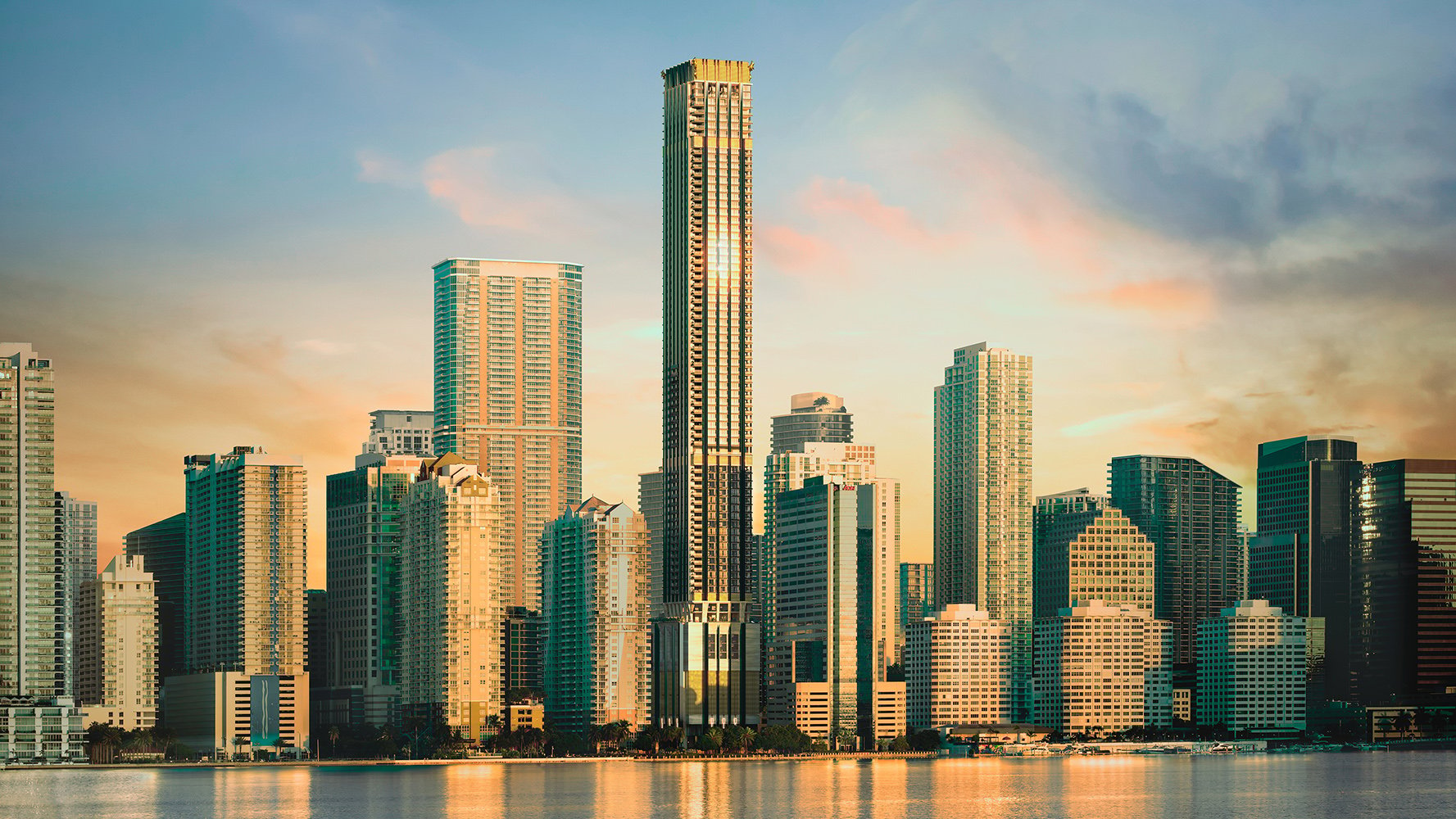
This is where South Florida’s geography matters. It compresses several luxury identities into one region. Brickell can satisfy the buyer who wants skyline energy and proximity to business. Miami Beach speaks to those drawn to ocean air, architecture, and resort rhythm. Coconut Grove appeals to buyers who favor texture, canopy, and a more residential cadence. Palm Beach offers a sense of continuity and restraint. Fort Lauderdale gives many water-oriented buyers a different kind of ease.
The winning markets are not always the loudest. Increasingly, the best decisions come from matching micro-market character to household behavior. A property that looks impressive for a weekend may not live well for a decade. Buyers who understand that distinction tend to make stronger choices.
Luxury migration is often discussed through visible amenities, but the more important advantages are sometimes quieter. South Florida’s appeal rests partly on infrastructure that supports private life: secure buildings, valet environments, staff-friendly layouts, wellness spaces, private terraces, marinas, clubs, and homes designed for both family routine and guest arrivals.
Discretion has become a core luxury value. Many high-net-worth buyers want access without exposure. They may enjoy the restaurants, waterfront, cultural calendar, and international energy, but they also want the ability to withdraw into controlled, calm environments. This is one reason new-construction and thoughtfully managed residences remain compelling. The value is not only in finishes. It is in predictability.
For some buyers, that means a full-service tower with a private arrival sequence. For others, it means a gated single-family setting, a waterfront home, or a boutique building with fewer residences. The unifying theme is operational ease. The best properties reduce friction in daily life.
Investment remains part of the conversation, but the tone has changed. Sophisticated buyers are less likely to speak only about short-term upside. They are focused on resilience, replacement value, scarcity, and whether the property can remain useful under different family scenarios.
A residence with strong emotional utility can still be evaluated with discipline. Does the floor plan support real living? Is the location defensible? Is the building likely to age with dignity? Is the view corridor meaningful? Is there genuine privacy, or only a high price? These questions are increasingly important in a market where luxury buyers have become more educated.
South Florida wins when it offers both enjoyment and optionality. The buyer may be purchasing for today’s lifestyle, but the best acquisitions preserve choices for tomorrow. That may include future resale, seasonal use, multi-generational living, or simply the freedom to spend more time in a place that feels easier.
The first priority is clarity. A buyer should define how the property will actually be used before comparing finishes, brands, or views. Is the home meant to replace a northern primary residence, complement an existing portfolio, or serve as a family base during peak months? Each answer points to a different property profile.
The second priority is rhythm. South Florida neighborhoods have distinct daily patterns. Some are built around movement and social density. Others are intentionally quiet. A magnificent residence in the wrong rhythm can become tiring. A slightly more understated residence in the right rhythm can become indispensable.
The third priority is privacy. Not all luxury properties deliver the same degree of separation from traffic, visibility, noise, or shared circulation. Buyers should examine arrival, elevator access, staff paths, outdoor exposure, parking, and how the property feels at different times of day.
The fourth priority is long-term livability. Large terraces, generous storage, service areas, flexible rooms, natural light, and intuitive circulation often matter more over time than theatrical features. In 2026, true luxury is less about spectacle and more about how beautifully a home performs.
South Florida’s continued strength also reflects a more sophisticated buyer map. The decision is no longer limited to a narrow set of legacy addresses. Buyers are comparing coastal, urban, and village-like environments with greater nuance.
Some want the immediacy of Brickell, where vertical living can support a business-forward lifestyle. Others prefer Miami Beach, where architecture, ocean proximity, and social energy create a distinct residential identity. Palm Beach remains attractive to those who value polish and quiet continuity. Coconut Grove offers a softer, more layered residential texture. Fort Lauderdale appeals to buyers who prioritize boating, space, and a slightly different pace.
This dispersion strengthens the region. It allows South Florida to absorb different types of wealth rather than forcing everyone into the same mold. The buyer from finance, the family office principal, the founder, the international family, and the second-home collector may all arrive for different reasons. The region gives each a credible answer.
South Florida is still winning wealth migration because it has moved beyond being merely attractive. It has become useful. It solves lifestyle problems for people with complex lives. It offers beauty, but also access. It offers privacy, but also connectivity. It offers pleasure, but also practical resilience.
The most successful buyers in 2026 will approach the region with patience and precision. They will not chase every new address or assume that the highest-profile property is automatically the best fit. They will study how a residence lives on a Tuesday morning, how it receives guests on a Saturday evening, and how it may serve a family five years from now.
That is the quiet reason South Florida continues to win. Its best real estate is not just a destination. It is a framework for a more intentional life.
Why is South Florida still attracting wealthy buyers in 2026? It offers a rare blend of climate, privacy, mobility, culture, and residential choice that supports complex affluent lifestyles.
Is the migration story only about taxes? No. Financial planning may be part of the calculus, but lifestyle design, family needs, privacy, and flexibility are equally important.
Which South Florida area is best for luxury buyers? There is no single answer. Brickell, Miami Beach, Palm Beach, Coconut Grove, and Fort Lauderdale each serve a different lifestyle rhythm.
Are buyers still interested in condos? Yes, especially when a condominium offers privacy, service, security, views, and an easy lock-and-leave ownership experience.
Are single-family homes still competitive? They remain compelling for buyers who prioritize land, privacy, outdoor living, and a more controlled residential environment.
What matters most when comparing luxury properties? Livability, privacy, location quality, service, view integrity, and long-term usefulness often matter more than decorative features.
Is South Florida mainly a second-home market? It serves both second-home and primary-residence buyers, with many households using the region more frequently than in past cycles.
How should a buyer evaluate new development? Focus on floor plan, arrival sequence, building management, outdoor space, service quality, and how the residence will age.
Does investment potential still matter? Yes, but sophisticated buyers often pair investment thinking with emotional utility and long-term optionality.
What is the smartest first step for a relocating buyer? Define the desired daily lifestyle first, then compare neighborhoods and properties through that lens.
If you'd like a private walkthrough and a curated shortlist, connect with MILLION.
If branded residences are on your mind — as a home or as an allocation — we would be glad to share what we are seeing, privately.
Begin a quiet conversation