A discreet buyer’s guide to choosing between Coconut Grove and Coral Gables when privacy, tower adjacency, sightlines, terraces, and long-term exposure are central to the decision.
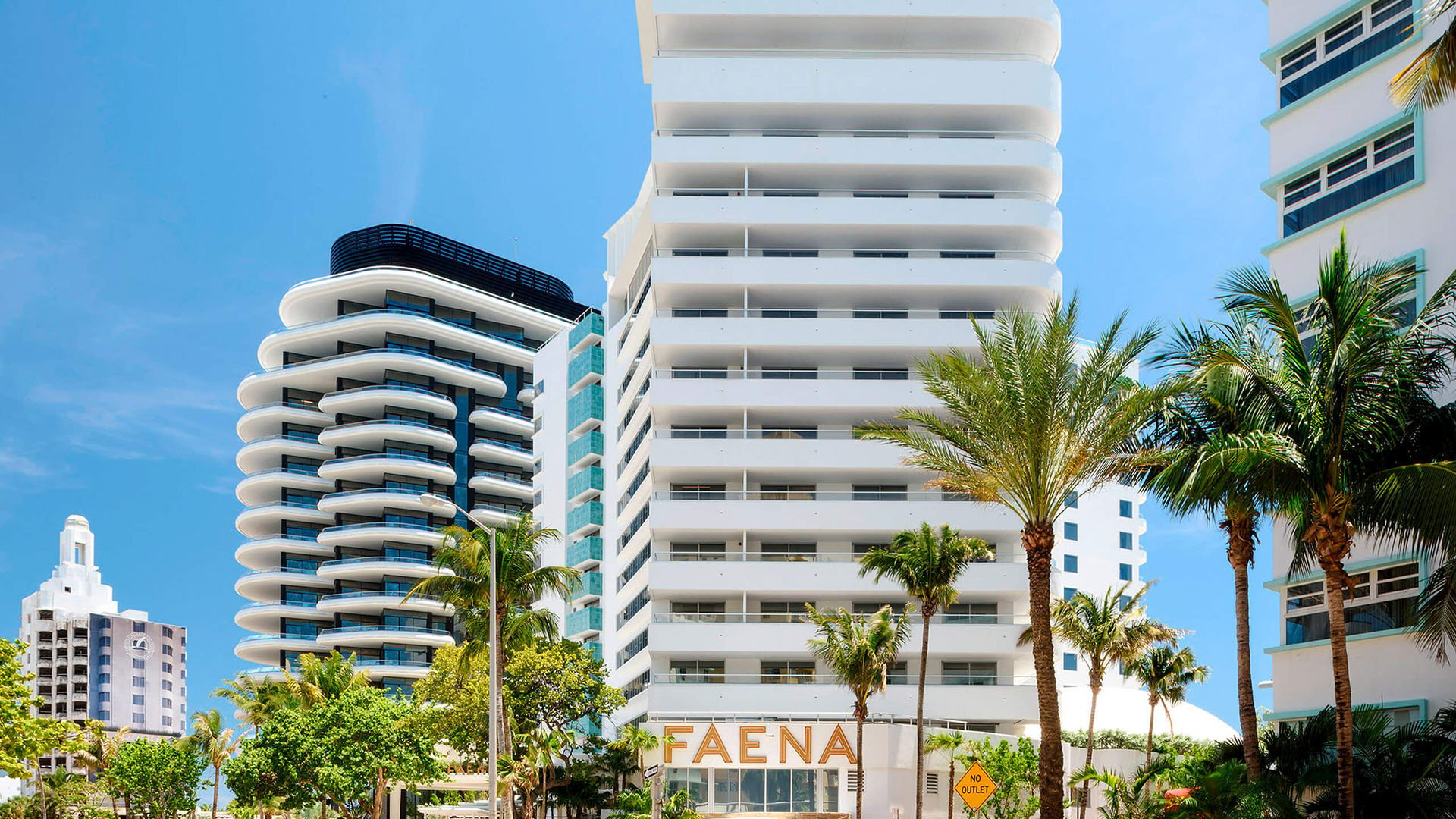
For many South Florida luxury buyers, the choice between Coconut Grove and Coral Gables is not simply aesthetic. It is a question of how life feels when the city is close, the light is generous, and neighboring buildings may become part of the everyday view. Privacy from neighboring towers is less about choosing the tallest residence and more about understanding angles, setbacks, glass lines, terraces, landscaping, and the character of the surrounding blocks.
Coconut Grove and Coral Gables both offer established identities, but they protect privacy in different ways. Coconut Grove often feels layered: canopy, garden walls, curving streets, bay breezes, and a more intimate rhythm of arrival. Coral Gables tends to communicate order: composed avenues, architectural continuity, civic calm, and a more formal sense of separation. Neither is automatically more private. The better choice depends on the exact residence, its orientation, and the future of the parcels within view.
The most private home is not always the one with the most dramatic view. A spectacular exposure can also be a shared exposure, especially when living rooms, primary bedrooms, and terraces face another residential tower at a similar elevation. Buyers should study what each principal room sees while seated, standing, and dining outdoors. A view that feels open from the sales gallery may feel less discreet from a bathtub, home office, or evening terrace.
In Coconut Grove, projects such as Four Seasons Residences Coconut Grove invite buyers to consider how elevated living interacts with the Grove’s softer residential fabric. The key is not height alone. It is whether the residence looks across tree canopy, open water, a low-rise edge, or directly into another facade. That distinction can determine how often curtains remain open.
Coconut Grove appeals to buyers who want privacy to feel organic rather than defensive. The neighborhood’s atmosphere can make a residence feel tucked away even while it remains connected to restaurants, marinas, parks, and cultural life. For many buyers, the Grove’s appeal lies in the way architecture, gardens, and mature streetscape can soften the presence of neighboring structures.
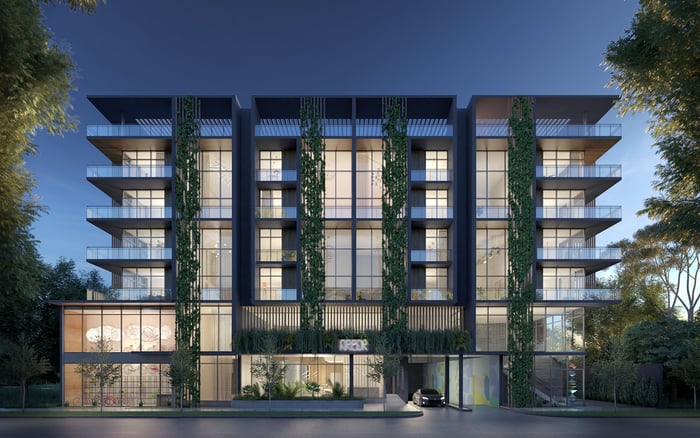
This is where boutique scale can matter. A smaller building is not automatically more private, but it can offer fewer shared thresholds, a calmer lobby experience, and a more residential cadence. At Arbor Coconut Grove, the decision for a privacy-focused buyer would center on plan, orientation, and how the building meets its surroundings. The same discipline applies throughout the Grove: study the approach, the balcony relationships, and the depth of landscape between private life and the street.
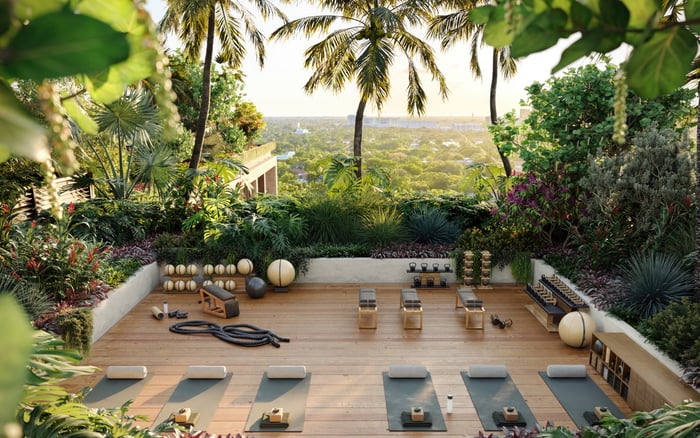
For buyers considering wellness-led or design-forward living, The Well Coconut Grove presents another Grove-oriented lens. The question is not whether a building is desirable in the abstract. It is whether the specific home supports daily rituals, breakfast outside, reading at dusk, or a quiet primary suite without feeling observed.
Coral Gables can be particularly compelling for buyers who want privacy supported by urban discipline. The feeling is less tropical hideaway and more composed enclave. Streets, building edges, courtyards, and civic design can create a sense of proportion that matters when evaluating neighboring towers. Buyers often respond to the Gables because it feels legible. That legibility can make privacy easier to assess.
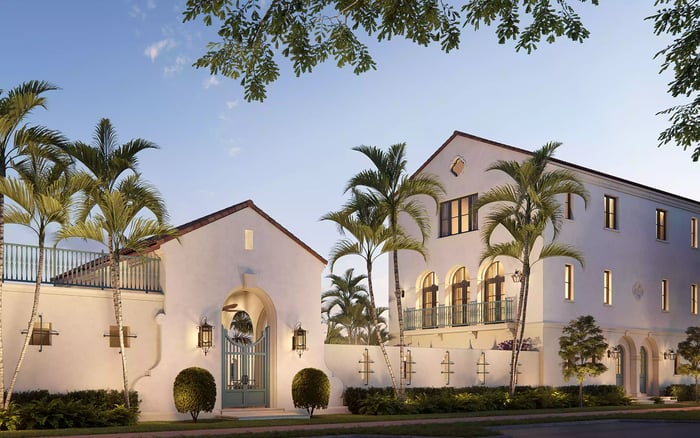
At Cora Merrick Park, a privacy-minded review would begin with adjacency: what sits beside the residence, what faces the glass, and how the home performs during both day and evening. In Coral Gables, where buyers may be especially sensitive to architectural context, a discreet residence should feel composed from the inside out.
Another Gables option, Ponce Park Coral Gables, underscores a broader point: privacy is often won through planning rather than spectacle. A residence can feel luxurious when it edits the city, allowing curated outlooks while limiting direct exposure to nearby windows and terraces.
High-floors can create distance from the street, improve light, and reduce visual contact with lower neighboring uses. Yet they can also align directly with upper floors in adjacent towers. Low-floors may benefit from tree canopy, garden walls, and a more grounded sense of enclosure, but they require careful review of sidewalks, amenity decks, parking entries, and service areas. The middle floors are often the most nuanced, especially when they sit opposite another building’s most active residential levels.
The essential exercise is to map privacy by elevation. Ask what is visible straight ahead, downward, and diagonally across the corner. A corner residence may offer dramatic light, but it may also expose more glass. A deep terrace may feel generous, but if it projects toward another building, its usability may decline. In privacy-sensitive purchases, the best floor is the one where the plan, outlook, and daily use align.
A terrace is only as valuable as it is usable. Buyers should imagine a full day outdoors: morning coffee, a phone call, lunch with guests, an evening glass of wine. If the terrace feels theatrical rather than sheltered, it may photograph beautifully while living less privately. Deep overhangs, side walls, landscape planters, angled railings, and thoughtful furniture placement can all contribute to discretion, but they cannot fully solve a poor exposure.
In Coconut Grove, outdoor living often benefits from the neighborhood’s lush character. In Coral Gables, terraces may feel more architectural and ordered. Both can be excellent. The deciding factor is whether the outdoor room feels like an extension of the home or a stage facing another audience.
With new-construction, privacy must be evaluated both for today and for what may reasonably surround the property tomorrow. Buyers should ask direct questions about neighboring parcels, view corridors, amenity levels, garage screening, and how the building’s most private rooms are oriented. A beautifully finished residence can still be compromised if the primary suite, living room, or plunge pool faces a future wall of glass.
Floor plans deserve particular attention. Split-bedroom layouts can be helpful when they separate guest rooms from more exposed corners. Primary suites should be studied for window placement, not just square footage. Kitchens and family rooms should be evaluated for where life naturally gathers. Privacy is not a single feature. It is a pattern repeated across the home.
Choose Coconut Grove if you want privacy to feel relaxed, green, and layered. It may suit buyers who prize texture, informal elegance, bay proximity, and a sense of retreat without leaving Miami’s cultural orbit. The Grove can feel intimate when the residence uses landscape, orientation, and scale to filter the city.
Choose Coral Gables if you want privacy to feel composed, civic, and architecturally measured. It may suit buyers who prefer order, restrained luxury, and a neighborhood fabric that reads as intentional. The Gables can be especially persuasive for those who value discretion without wanting seclusion to feel remote.
The right decision is ultimately not Grove versus Gables. It is residence versus residence, line versus line, terrace versus terrace. Privacy is personal, and the best homes make it feel effortless.
Is Coconut Grove more private than Coral Gables? Not automatically. Coconut Grove may offer a more layered, garden-like feeling, while Coral Gables may offer privacy through order, spacing, and architectural composition.
Should privacy-focused buyers always choose higher floors? No. High-floors can improve separation, but they may also align with neighboring tower windows, so each exposure must be studied individually.
Can low-floors be more private than upper floors? Yes, when landscaping, walls, setbacks, or canopy create natural screening. The tradeoff is closer proximity to street activity and building entries.
What room matters most when evaluating tower exposure? The primary bedroom usually deserves the closest review, followed by the living room, terrace, bathroom, and home office.
How should I evaluate a terrace for privacy? Stand where you would actually sit, dine, and entertain. Then assess whether neighboring windows or terraces have a direct line of sight.
Does a boutique building guarantee better privacy? No. Boutique scale can reduce traffic and shared intensity, but orientation, glass placement, and adjacent buildings matter more.
Is new-construction riskier for privacy? It can be if surrounding parcels are not carefully reviewed. Buyers should understand present adjacencies and plausible future exposure before committing.
Which neighborhood feels quieter: Coconut Grove or Coral Gables? Quietness depends on the exact block and building. Coconut Grove often feels more lush and informal, while Coral Gables often feels more composed.
Should I prioritize views or privacy? The strongest luxury residences balance both. A curated, private outlook is usually more livable than a dramatic view that feels exposed.
What is the best first step before choosing? Compare specific residences at the same time of day and study sightlines from every major room, not just the main balcony.
To compare the best-fit options with clarity, connect with MILLION.
If branded residences are on your mind — as a home or as an allocation — we would be glad to share what we are seeing, privately.
Begin a quiet conversation