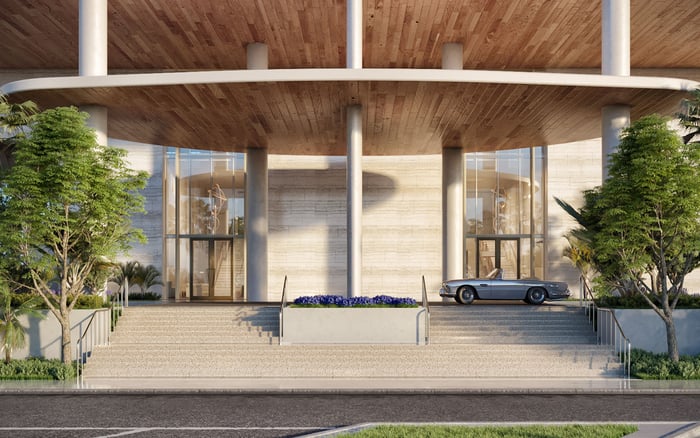
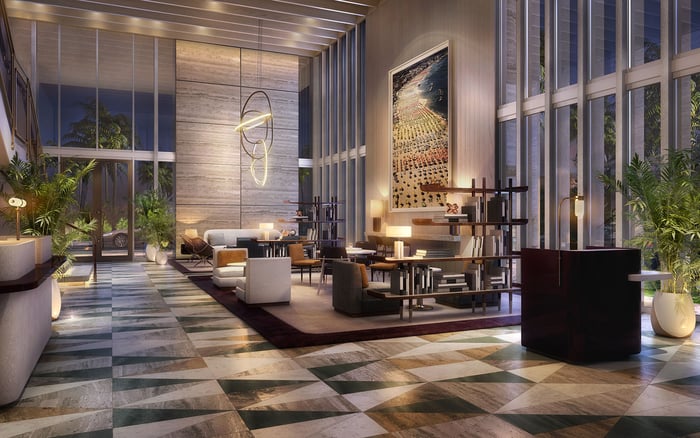
For Coconut Grove buyers, discreet service requires more than a private elevator foyer. Review guest permissions, staff procedures, app functionality and biometric policies before treating an advertised amenity as an operating safeguard.

For a Coconut Grove buyer seeking discreet service, the most revealing tour may begin before the elevator doors open. Consider a guest arriving early, a household employee returning after hours or a delivery requiring access while the owner is away. Each scenario turns a polished amenity description into practical questions about permission, accountability and privacy.
A private foyer describes an arrival space, not a complete admission policy. The buyer’s task is to distinguish the physical route to the residence from the rules governing who may use it. Just as important: what information the building collects along the way, who can see it and when it is deleted.
Evaluate discretion as a sequence: identification, owner authorization, elevator access and arrival at the residence. Ask management to explain each step without requesting sensitive security configurations or other residents’ records.
Advertised features at Grovenor House at 2627 S Bayshore Drive include private elevator foyers, a secure lobby and secure elevator access. Those features do not establish the visitor-admission procedure for a particular residence. During due diligence, ask how lobby approval translates into elevator permission and whether a guest can reach only the intended destination.
Request a management-led demonstration using an authorized test visit. Establish who approves the visitor, how approval is communicated and when permission expires. Ask whether repeat visitors receive standing authorization, whether owners can revoke it immediately and how staff handle an arrival when the resident cannot be reached.
Advertised features at Mr. C Residences Coconut Grove include private high-speed elevators and above-ground parking with security surveillance. Buyers should still trace the route from garage or valet arrival to the residence. Dedicated elevator cabs restricted to verified residents and guests are a possible security layer, not a standard to assume across every building.
The distinction between a dinner guest and a recurring household employee deserves explicit treatment. Request written rules for one-time visitors, overnight guests, extended stays, contractors and personal protection teams. Do not assume that one approval method applies to every category.
Ask what information registration requires and whether identification is inspected, copied or stored. Establish who may submit a guest’s details, whether the resident must approve every arrival and how corrections or cancellations are handled. For longer visits, ask whether access expires automatically or requires a separate instruction.
Review access records separately. Request the retention period, the staff roles permitted to view records and the procedure for responding to a resident’s inquiry. These questions require answers from management; advertised amenities do not establish building-specific policies.
Finally, ask how staff handle an unannounced visitor. A useful answer should explain both the limits of authorization and the service response, rather than rely solely on staff familiarity with the household.
At Mr. C Tigertail Coconut Grove, advertised services include a residents app, 24-hour security, 24/7 valet, concierge reception and butler service. An app’s presence does not establish whether it handles service requests alone or also manages guest registration and access permissions.
Ask to see the functions relevant to your household. Can an owner delegate a service request without delegating entry authority? If guest permissions exist, can they be time-limited and revoked? Ask whether household members have separate accounts and how access is removed when an employee leaves.
Then examine the connection between convenience and data. Request an explanation of what information the app shares with concierge staff, security personnel and technology vendors. Ask about account protection, software updates and cybersecurity protocols where digital services interact with building-management or entry systems.
A practical review should also cover a lost phone, an unavailable app and an owner who prefers staff-assisted service. Ask what alternative procedure applies in each case.
At the Ritz-Carlton Coconut Grove, controlled building access has been advertised using a “Biometric Handkey Identity Verifier.” Confirm the current equipment and enrollment requirements with management before drawing conclusions about how it works today.
The term Handkey does not establish the exact device, the form or location of stored data, or the availability of an opt-out. Request written answers identifying what is collected, whether a biometric template or another record is retained and which entity controls it.
Next, review storage, encryption, access and lifecycle. Ask whether information stays on a local device or is transmitted elsewhere, who can retrieve it, how long it is retained and what triggers deletion. Request the procedure for removing enrollment when an owner sells or a household employee departs.
Ask specifically about non-biometric alternatives and any differences in convenience or permissions. None of these policies should be inferred from the advertised system name. The objective is an informed choice, not an assumption that biometric entry necessarily provides greater privacy.
Advertised plans for Four Seasons Residences Coconut Grove at 2699 S Bayshore Drive include private secured elevators and foyers for each residence. Plans also include electronic access to elevators and garage doors, alongside 24/7 security and valet service. Treat these as planned features, not confirmed operating procedures.
Ask which access arrangements appear in the purchase documents and which visitor or data policies remain to be finalized. Have counsel distinguish a specified physical feature from a future management practice, particularly when a preferred arrival routine influences the purchase decision.
At Opus Coconut Grove, planned features include 14 residences with private elevator foyers and advanced pre-wiring for smart-home automation. Pre-wiring is not evidence of a building-wide visitor-management or biometric system. Nor does a boutique residence count, by itself, demonstrate anonymity or stronger security.
Technology is only one part of the review. Ask whether security personnel are in-house employees or rotating contractors, how access instructions are communicated across shifts and who resolves an uncertain admission request. Buyers using personal protection teams should also discuss coordination, authorization and the boundaries between private personnel and building staff.
Before committing, assemble the applicable visitor rules, app terms, privacy notices and biometric enrollment materials, where relevant. Record unresolved questions and identify who is responsible for answering them. For an operating building, seek a demonstration consistent with the written procedure. For a planned residence, clarify what is specified and what remains subject to future decisions.
The right fit is not necessarily the building with the most technology. It is the residence whose access rules, service practices and data policies match the way your household intends to live.
For a considered approach to Coconut Grove ownership, explore the residential collection at MILLION.
If branded residences are on your mind — as a home or as an allocation — we would be glad to share what we are seeing, privately.
Begin a quiet conversationNo. A private foyer describes an arrival space, but it does not establish who authorizes visitors or how elevator permissions are controlled.
Grovenor House advertises private elevator foyers, a secure lobby and secure elevator access. Ask management to explain the visitor-admission procedure for the specific residence.
The features discussed are advertised in preconstruction materials and should be treated as planned. Confirm the specified features and the status of operating policies before relying on them.
Ask about required information, owner approval, recurring permissions, extended stays and cancellation procedures. Also establish who can view access records and how long they are retained.
An app is advertised, but guest registration and elevator-permission integrations are not established. Request a demonstration of its actual functions.
Controlled access has been advertised using a Biometric Handkey Identity Verifier. Confirm the current device and enrollment requirements with management.
Request written details about collection, storage, encryption, access, retention and deletion. Ask whether a non-biometric alternative is available and how its permissions compare.
No. Advanced pre-wiring for smart-home automation does not establish a building-wide visitor-management or biometric system.
Ask whether personnel are in-house employees or rotating contractors and how instructions carry across shifts. Households using personal protection teams should clarify coordination and access arrangements.
Request applicable visitor rules, app terms, privacy notices and biometric enrollment materials. Distinguish documented procedures from planned features and seek written answers to unresolved questions.