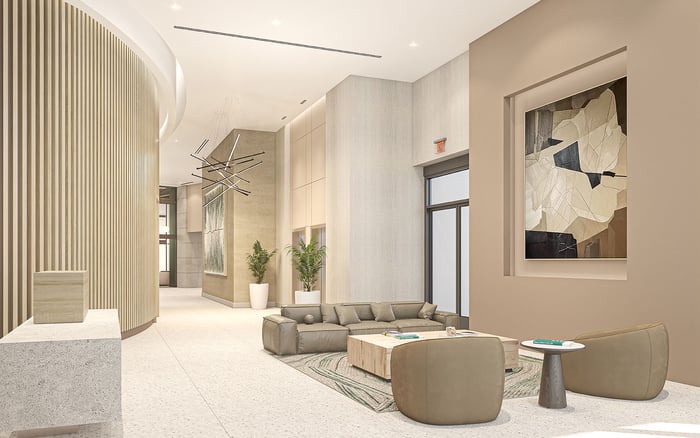
A private elevator is an architectural feature, not a complete privacy guarantee. For Coconut Grove condo buyers, a carefully assembled ownership file should establish who controls access, how visitors are authenticated, and whether service circulation remains separate from residential arrival.
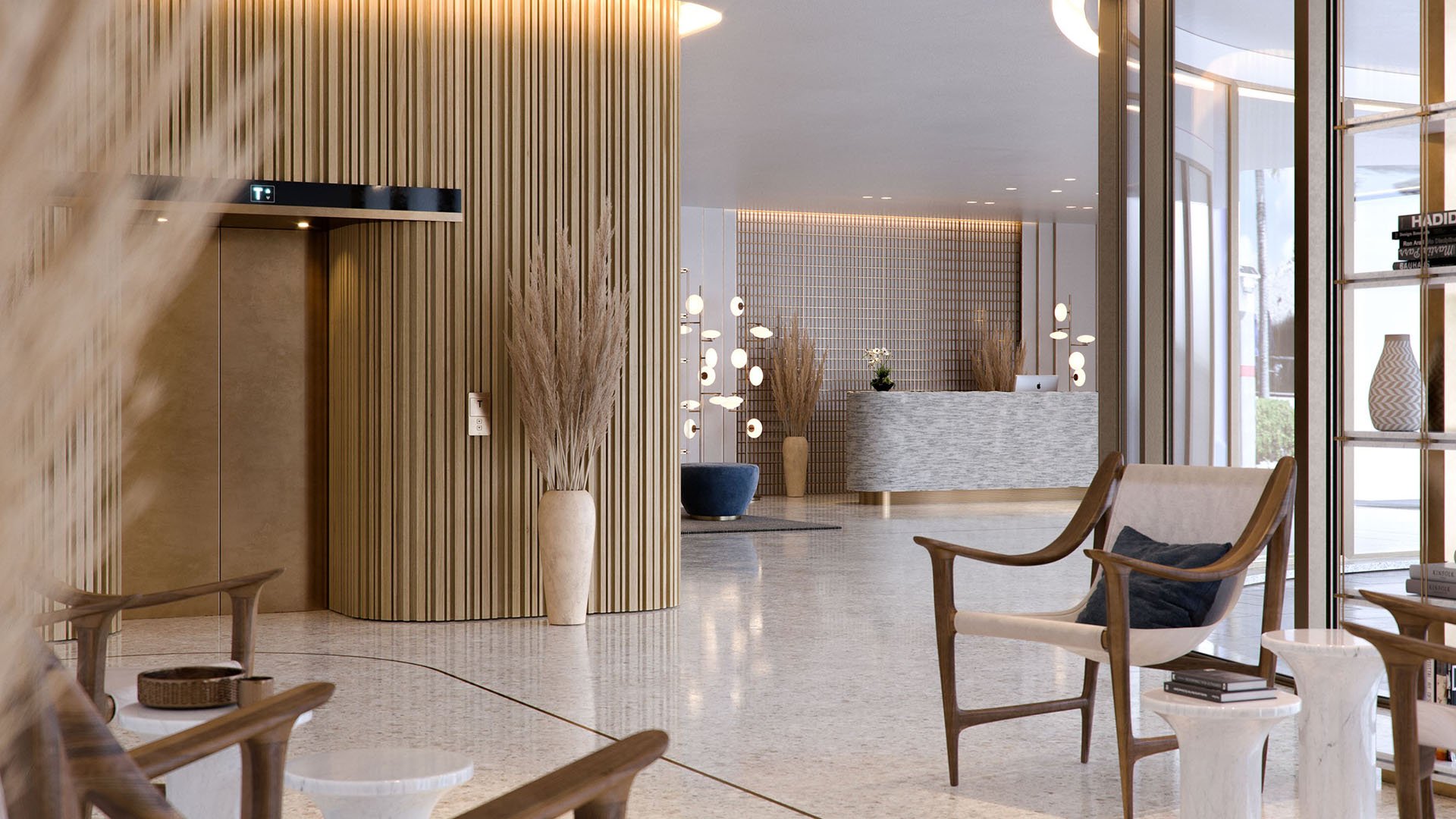
For a Coconut Grove condominium buyer, privacy becomes tangible when an elevator door opens. The arrival may be beautifully composed, but the decisive questions are operational: who can reach that threshold, who authorizes the journey, and whether deliveries and service visits follow a separate route.
A private elevator is an architectural feature, not a complete privacy guarantee. Direct access to a residence does not, by itself, establish exclusive ownership of the elevator, exclusive use of its cab, or an owner's unilateral control over permissions. Those distinctions belong in the ownership file before a buyer treats the arrival sequence as a settled benefit.
The objective is straightforward: align the advertised design, the governing documents, and the building's written procedures. Where operations cannot yet be demonstrated, keep the distinction between a promised feature and a verified procedure explicit.
At Vita at Grove Isle, the advertised residential design includes a private elevator opening directly into the home. The described configuration also includes one passenger elevator and one service elevator serving only 10 units. These features are compatible: a private residential arrival need not mean a cab dedicated to one owner.
For the residence under consideration, request elevator specifications and plans identifying the passenger cab, service cab, destination landings, and residential thresholds. Then ask management to distinguish physical routing from credential permissions. Which destinations does an owner's credential unlock? What access can a guest receive? Who may change those permissions?
The same discipline applies when comparing Park Grove Coconut Grove. One Park Grove's advertised design includes three residences per floor, each with its own private elevator. That description does not settle ownership or operating authority. Private elevators are also an advertised residence feature at Grovenor House; its access arrangements should be examined independently, not inferred from the phrase.
Vita's advertised features include property-wide electronic access control for residents, guests, and service personnel. Its Vita Linc app lets residents register guests and provide electronic keys. This establishes an advertised pre-authorization mechanism, but not the full process for authenticating a visitor on arrival.
Request written confirmation of whether a guest credential is unit-specific, which destinations it permits, whether it expires automatically, and how quickly revocation takes effect. Ask how the visitor is announced and what happens when the resident does not respond. Registration, identity confirmation, and permission to proceed are separate questions.
Clarify who can issue credentials on the owner's behalf. A buyer should know whether management can create or modify permissions, under what circumstances, and how the resident is notified. Do not assume these controls exist simply because electronic keys are available. The useful deliverable is a written description of actual permissions and procedures, not merely an app demonstration.
Four Seasons Residences Coconut Grove, at 2699 South Bayshore Drive, is advertised with private secured elevators and private residence foyers. Its advertised design includes private elevator access to each home, electronic access to elevators and garage doors, and a dedicated private arrival and valet entry.
The advertised service offering includes a director of residences, residential concierge, doorman, and bellman services, together with 24/7 security and 24-hour valet. These features describe an intended arrival environment. They do not establish current staffing performance or each role's precise authority over residential access.
For a buyer, the practical question is where hospitality ends and authorization begins. Ask who confirms a visitor's identity, who approves elevator access, and whether staff can authorize a destination without fresh resident approval. Request the applicable written procedure and distinguish planned arrangements from procedures already in operation. A polished arrival should complement documented permissions, not substitute for them.
A service elevator is not proof of a fully separate service route. The ownership file should include circulation plans that let the buyer trace a vendor's route, a package delivery, or waste removal from entry point to destination.
Request plans showing resident arrival, guest access, loading, staff entrances, package handling, waste removal, and service elevators. Identify shared lobbies, corridors, or thresholds. Where routes intersect, ask how timing, authorization, or staff supervision is intended to manage the overlap.
Vita's advertised passenger-and-service elevator configuration is a useful starting point, but the elevator count alone cannot resolve the circulation question. Ask where service personnel leave the cab and how they enter the residence. Then distinguish occasional deliveries from scheduled work inside the home. The standard is not simply whether a separate elevator exists, but whether the entire service journey supports the degree of separation the buyer expects.
Assemble the declaration, recorded restrictions, current house rules, resident handbook, elevator specifications, and management's written security and vendor-access procedures. Keep the applicable unit plans alongside them so operational answers can be matched to a specific residence rather than a general building description.
Ask counsel to identify which access provisions are established in governing documents and which are addressed through operating rules. Clarify who may change those rules, and do not treat a verbal assurance as an enforceable right.
For each material question, retain a dated written answer identifying the residence, the procedure discussed, and the person providing confirmation. This is particularly useful for guest credential expiration, credential revocation, visitor announcement, and vendor entry. Any unresolved difference between the design, the documents, and management's explanation should remain visible in the file until addressed. The purpose is clarity, not volume: a concise, internally consistent record is more useful than a folder of repeated amenity descriptions.
Where operations are available, arrange management-led demonstrations of a pre-registered guest arrival, vendor service entry, delivery movement, and attempted use of a revoked credential. Use authorized test credentials and agree on the scope beforehand; this is a buyer verification exercise, not an unsupervised security test.
Observe the handoffs as closely as the doors. Does the visitor receive the expected announcement? Does the credential permit only the intended destination? Does the service route match the plan? Ask management to record the result and explain any departure from the written procedure.
Where a demonstration is not yet possible, retain the design and procedural commitments without labeling them operationally verified. The strongest ownership file makes clear what the residence offers, what management controls, and what still requires confirmation. That is the foundation for a genuinely discreet arrival.
For a considered approach to Coconut Grove condominium ownership, explore MILLION.
If branded residences are on your mind — as a home or as an allocation — we would be glad to share what we are seeing, privately.
Begin a quiet conversationNot necessarily. Direct residential access does not establish exclusive cab use, elevator ownership, or unilateral control over access permissions.
Vita describes private elevators opening directly into residences and a configuration of one passenger elevator and one service elevator serving only 10 units.
The app is advertised as allowing residents to register guests and provide electronic keys. Destination limits, expiration, revocation, and arrival procedures still require written confirmation.
Ask whether credentials are unit-specific, which destinations they permit, when they expire, and how revocation works. Separately confirm visitor identification and announcement procedures.
The project advertises private secured elevators, private residence foyers, electronic elevator and garage-door access, and a dedicated private arrival and valet entry. These descriptions establish advertised features rather than verified operating procedures.
No. Advertised staffing does not establish who may authorize a visitor's destination or modify residential access permissions.
No. Buyers should review the full route through loading areas, corridors, landings, and residence entry points to identify any shared spaces.
Include the declaration, recorded restrictions, current house rules, resident handbook, elevator specifications, and written security and vendor-access procedures. Add unit-specific plans and management's written clarifications.
Request management-led demonstrations of a pre-registered guest arrival, vendor entry, delivery movement, and attempted use of a revoked test credential. Keep all testing authorized and coordinated with management.
Retain the applicable design and written procedural commitments, but distinguish them from operationally verified arrangements. Keep outstanding confirmations visible in the ownership file.