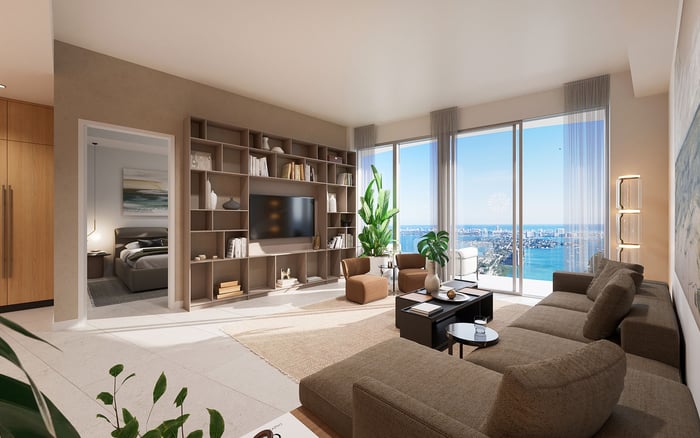
For yacht owners considering The Cove Residences Edgewater, the decisive details lie beyond the bayfront setting. This buyer’s checklist separates planned water-access amenities from the written permissions, technical specifications, crew procedures, and provisioning arrangements needed for dependable use.
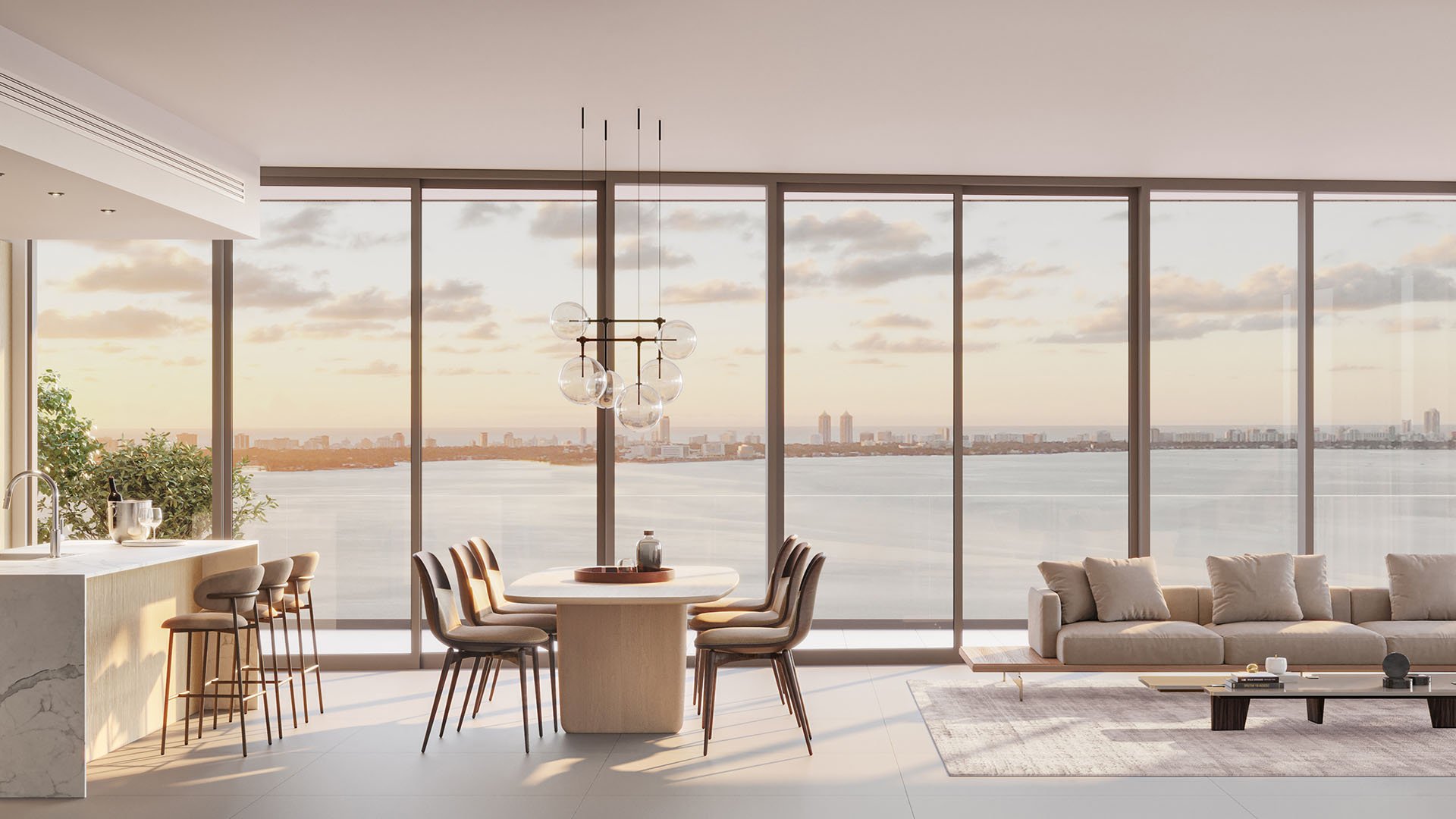
For a yacht owner, the most valuable waterfront amenity is not simply proximity to the bay. It is a dependable transition between vessel, residence, and the people who keep both running. At The Cove Residences Edgewater, planned at 456 NE 29th Street on Biscayne Bay, that distinction should guide the purchase conversation.
Plans call for approximately 42,000 square feet of indoor and outdoor resort amenities, including water-sports dock access and direct boardwalk access. Following an announced March 2026 groundbreaking, these remain planned amenities-not verified operating facilities. Neither the setting nor the amenity language establishes a full-service marina, a large-yacht berth, or an operational tender landing.
For a buyer evaluating Cove Miami as a shoreside residence, the essential question is practical: can the proposed arrangements support your vessel, schedule, crew, and deliveries under written rules?
Start by distinguishing three uses: recreational water access, brief passenger transfers, and vessel berthing. Permission for one is not permission for the others.
The proposed dock is intended for water-sports access. Terms such as “community dock” and “floating dock” do not establish an assigned slip, overnight rights, tender eligibility, or resident priority.
Request written answers covering:
Permitted vessel types and whether powered tenders may land.
Passenger loading, unloading, and maximum permitted dwell time.
Overnight stays, assigned spaces, reservations, and competing uses.
Operating hours, staffing, and applicable noise or wake restrictions.
An off-site yacht berth with tender transfers may be a viable ownership strategy, but only if the dock rules expressly permit the intended use. It should not be treated as an established developer arrangement.
“Floating dock” is not a technical specification. It does not establish low freeboard, adequate approach depth, easy maneuvering, or safe boarding for your guests.
Give your captain the proposed dock information alongside the tender’s actual dimensions. Request approved drawings, confirmation of floating versus fixed construction, dock dimensions, freeboard, approach depths, and maximum vessel length overall, beam, and draft. Ask which details are final and which remain subject to approval or revision.
The review should cover the entire arrival, not simply whether the hull fits beside the dock. Have your captain identify the information needed to assess approach, maneuvering, boarding, and departure. Keep unresolved conditions open for diligence rather than allowing assumptions to shape the purchase decision.
If Aria Reserve Miami is also on your Edgewater shortlist, apply the same vessel-specific questions there independently. No access right or technical conclusion should carry over from one project to another.
Direct boardwalk access does not establish a secure or authorized dock-to-residence route. Request a plan showing how a captain or crew member would move from the landing point through the building and into your residence.
The written procedure should distinguish guest from vendor registration and explain identification requirements, owner authorization, and after-hours entry. Ask whether recurring crew can receive standing authorization or must register for each visit. Presume neither arrangement.
Then separate passenger circulation from service circulation. Verify whether service elevators and back-of-house corridors are planned, along with their capacities and permitted uses. Ask explicitly whether carts, luggage, wet equipment, and supplies may move between the dock, garage, and residence.
Test three scenarios: the owner arrives with guests, crew arrives without the owner, and supplies arrive while the owner is away. Each should have a clear authorized route and a responsible point of contact-not an informal promise that staff will accommodate it.
Planned valet parking with electric-vehicle charging capability does not establish delivery-van access or a loading area. Nor does a waterside restaurant establish yacht catering or boat provisioning.
Trace one proposed delivery from beginning to end: vehicle arrival, unloading, any temporary holding, movement through the building, passage across the boardwalk, and transfer to the tender. For each stage, obtain the permitted location, operating hours, and responsible party.
Confirm whether refrigerated holding is available; do not assume groceries or prepared meals can wait safely for a delayed departure. Verify elevator and cart permissions, delivery access, and whether goods may cross the boardwalk and dock at all.
Ask the restaurant separately about takeaway catering and yacht deliveries. If either service is proposed, request its scope and conditions in writing. A dining amenity can enrich life ashore without functioning as a marine-service operation.
For buyers also considering Villa Miami, this delivery-route exercise provides a consistent basis for comparison without presuming equivalent services or permissions.
Planned resident amenities include a private dining room with a chef’s kitchen, wine storage, private offices, coworking facilities, and conference rooms. Their presence does not establish nonresident crew access. A guest-room amenity is also planned, but eligibility for visiting captains or rotating crew is not confirmed.
Separate three questions: may crew stay in your residence, may they book guest accommodation, and may they use shared facilities? Request the applicable association rules for each, including any owner-presence or booking conditions.
The yacht-club promotion requires its own review. It includes “the first year at Residence Yacht Club,” but that wording does not establish a marina berth or slip entitlement. Confirm the operator, inclusions, eligibility, availability, renewal costs, and contractual status. Assess the promotion separately from any dock permissions attached to the condominium.
Before committing on the strength of yacht-related convenience, assemble the applicable permits, approved dock drawings, final plans, recorded condominium documents, and written operating rules. Identify whether each answer reflects a binding provision, a proposed policy, or a detail still awaiting confirmation. Verbal assurances should not substitute for documents your advisers can review.
Have your captain assess vessel compatibility and your legal adviser review the rights on which your intended use depends. Keep a short decision sheet recording each essential requirement, its supporting document, and any unresolved condition. If tender access is indispensable, an unanswered question is commercially significant-even when the residence itself is compelling.
The purchase can remain attractive without functioning as a yacht base. What matters is valuing the residence for the uses actually supported and treating unconfirmed convenience as a possibility, not an entitlement.
For a discreet perspective on matching South Florida residences to your ownership priorities, connect with MILLION.
If branded residences are on your mind — as a home or as an allocation — we would be glad to share what we are seeing, privately.
Begin a quiet conversationThe Cove Residences is planned at 456 NE 29th Street in Miami’s Edgewater neighborhood, directly on Biscayne Bay.
No. The advertised water-sports dock does not establish yacht berths, individually assigned slips, or overnight vessel rights.
No. Buyers should obtain written permission for their intended tender use and verify vessel limits, passenger-transfer rules, and operating hours.
Request approved drawings, floating-versus-fixed confirmation, dimensions, freeboard, approach depths, and maximum vessel length overall, beam, and draft.
No. Request a plan identifying the authorized dock-to-residence route and written registration and after-hours procedures.
Their existence, capacities, and permitted uses require verification. Ask whether carts, wet equipment, and supplies may move between the dock, garage, and residence.
Eligibility is not established. Confirm crew occupancy, guest-room booking, and nonresident amenity rules separately.
The advertised restaurant does not establish yacht catering or provisioning services. Request written confirmation of any proposed takeaway or boat-delivery arrangements.
The first-year promotion does not establish a slip entitlement. Verify its operator, inclusions, berth availability, renewal costs, and contractual status.
Operating status requires confirmation. Treat the amenities as planned until completion and availability are verified.