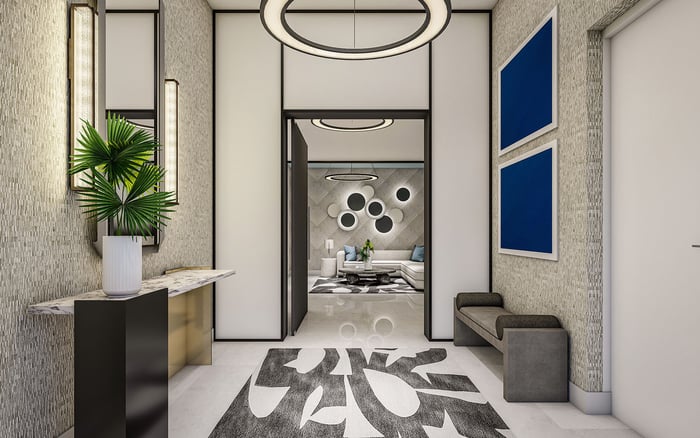
Ziggurat Coconut Grove’s planned wellness amenities invite a closer look at the rules behind the experience. Buyers should clarify fitness reservations, trainer approval, acoustic performance, hydrotherapy protocols, and enforceable service commitments before treating the advertised program as a daily entitlement.

At Ziggurat Coconut Grove, planned for 3101 Grand Avenue in Coconut Grove, the wellness offering includes a gym, yoga studio, curated programming, and therapies tailored to individual needs. The rooftop program adds a resort-style pool, hydrotherapy circuit, private cabanas, lounge chairs, and chef’s grilling stations. Together, these amenities suggest an appealing rhythm of exercise, recovery, and outdoor leisure.
For a buyer, however, an amenity’s presence is only the starting point. The more consequential questions concern access, professional oversight, and the ability to enjoy a quiet residence while wellness spaces are active. Advertised facilities alone do not establish guaranteed staffing, service frequency, charges, or reservation rights.
Gaps in publicly available operational details are unresolved diligence questions-not evidence that policies do not exist. The objective is to obtain the applicable documents and distinguish planned features from written commitments before making assumptions about everyday use.
The publicly disclosed amenity details do not establish booking requirements, software, advance reservation windows, cancellation penalties, or priority access. The gym’s equipment, capacity, staffing, and hours also remain unspecified. Yoga schedules and instructor arrangements require separate clarification.
Ask for draft amenity rules and a demonstration of the proposed reservation portal, if one is planned. Walk through a realistic week: an early workout, a private training appointment, a yoga class, and a weekend visit with a guest. This exercise should reveal whether activities share capacity limits or require separate bookings.
The written policy should address advance booking, recurring reservations, waitlists, guest eligibility, cancellations, and no-shows. It should also explain whether private sessions restrict general resident access, how maintenance closures are communicated, and who resolves scheduling disputes.
Buyers also considering Four Seasons Residences Coconut Grove can apply the same questions without assuming the two properties share operating arrangements. Compare documented access rights, not merely the language used to describe service.
The publicly disclosed project details do not identify an approved trainer roster or minimum certification, insurance, and background-screening standards. Buyers should request the proposed provider policy rather than assume unrestricted access or an exclusive in-house roster.
Start by distinguishing resident-selected trainers from management-arranged providers. Ask whether outside professionals are permitted, how approval works, what fees apply, and whether a resident must accompany the trainer throughout the visit. Clarify permitted session locations and whether trainers may conduct group classes.
Request written criteria covering professional certification, CPR/AED qualifications, insurance, screening, and renewal procedures. Management’s authority to suspend access should be clear, as should responsibility for checking credentials and maintaining current documentation. These are requested safeguards, not confirmed Ziggurat standards.
Specialized therapies deserve a separate review. For each proposed regulated service, have the relevant adviser verify applicable Florida licensing requirements and identify who delivers the treatment. A broad wellness description does not confirm that every provider is authorized for every advertised service.
A fitness room can be visually refined while its operational sound controls remain undefined. Ziggurat’s publicly disclosed amenities do not establish sound-isolation, impact-noise, vibration-isolation, or mechanical-noise criteria. No specific performance level should be presumed.
Request final acoustic specifications and an explanation of how they address the planned equipment and activities. The review should distinguish music and voices from equipment impacts, transmitted vibration, and mechanical noise. Ask the design team or an independent acoustic adviser to explain the relevant assemblies and performance targets in terms a buyer can understand.
Testing matters as much as design intent. Request independent post-installation testing under representative operating conditions, with written acceptance criteria and responsibility for corrective work. A useful assessment should consider the actual equipment, class activity, and mechanical systems-not an empty room alone.
Operating rules should separately define music levels, class hours, complaint handling, and remediation responsibility. When evaluating Opus Coconut Grove alongside Ziggurat, apply the same document-based approach without assuming equivalent specifications. Counsel should confirm applicable noise law; compliance alone should not substitute for an agreed residential comfort standard.
The rooftop pool, hydrotherapy circuit, grills, and cabanas are described as resident-exclusive amenities. That description does not settle guest privileges, booking priority, occupancy limits, or access during maintenance. Each requires a written operational explanation.
For hydrotherapy, request protocols for occupancy, sanitation, temperature monitoring, health advisories, supervision, and maintenance. Ask how temporary closures will be communicated and who is responsible for documenting routine checks. Buyers should understand whether access is independent, supervised, or tied to scheduled programming, without presuming any particular arrangement.
Clarify cabana reservations and the relationship between pool use, hydrotherapy access, and other rooftop activities. The separately advertised rooftop restaurant membership should not be interpreted as a fitness-booking entitlement or a substitute for residential amenity rules. Keep those privileges distinct until their terms are documented.
Curated wellness programming becomes meaningful when a buyer knows what is included, what is optional, and what can change. Request a service-and-fee schedule distinguishing assessment-funded amenities from separately charged classes, private training, therapies, guest visits, or other services, where applicable.
Ask who selects providers, sets schedules, approves fee changes, and communicates interruptions. If programming is central to the purchase decision, clarify minimum service commitments and any management discretion to revise them. An attractive description is no substitute for defined frequency or availability.
A buyer comparing The Well Coconut Grove can use the same framework to assess the importance of wellness to personal routines. Ground the comparison in each property’s own documents, not assumed equivalence between programs.
Before treating the wellness offering as a purchase entitlement, assemble the proposed amenity rules, provider criteria, operating budget assumptions, acoustic specifications, testing commitments, and relevant governing-document provisions. Ask counsel which representations are incorporated into binding documents and which remain subject to revision.
Maintain a short schedule of outstanding questions, responsible parties, and requested written responses. Prioritize issues that affect daily use: realistic booking access, permission for a preferred trainer, quiet enjoyment, additional fees, and responsibility when service or performance falls short.
The strongest diligence outcome is not a promise that every session will be effortless. It is a clear understanding of access, oversight, costs, and remedies. At Ziggurat, that clarity can help a buyer assess the planned wellness experience on terms that matter long after the initial presentation.
For a discreet perspective on South Florida residential choices, explore MILLION.
If branded residences are on your mind — as a home or as an allocation — we would be glad to share what we are seeing, privately.
Begin a quiet conversationZiggurat is planned at 3101 Grand Avenue in Coconut Grove, Miami, Florida.
The planned offering includes a gym and yoga studio, alongside curated wellness programming and tailored therapies. Equipment, gym capacity, staffing, hours, and yoga schedules are not established in the publicly disclosed details.
The publicly disclosed amenity details do not establish booking requirements. Request written rules covering booking windows, capacity, waitlists, recurring reservations, and cancellations.
Outside-trainer access is not established in the provided project details. Ask management about approval procedures, access restrictions, and any applicable fees.
Request proposed certification, CPR/AED, insurance, screening, and renewal criteria. These are diligence requests, not confirmed Ziggurat requirements.
The publicly disclosed amenities do not establish sound-isolation, impact-noise, vibration-isolation, or mechanical-noise criteria. Request final specifications and independent post-installation testing commitments.
The rooftop pool, hydrotherapy circuit, grills, and cabanas are described as exclusively for residents. Guest rules and reservation priority still require clarification.
Request written occupancy, sanitation, temperature-monitoring, health-advisory, supervision, and maintenance protocols. Clarify access arrangements and how closures will be communicated.
No detailed fitness-reservation entitlement is established by the separately advertised rooftop restaurant membership. Review restaurant privileges and residential amenity access as distinct arrangements.
Advertised wellness amenities do not establish included fees, staffing, or service frequency. Request a service-and-fee schedule and ask counsel which commitments are incorporated into binding documents.