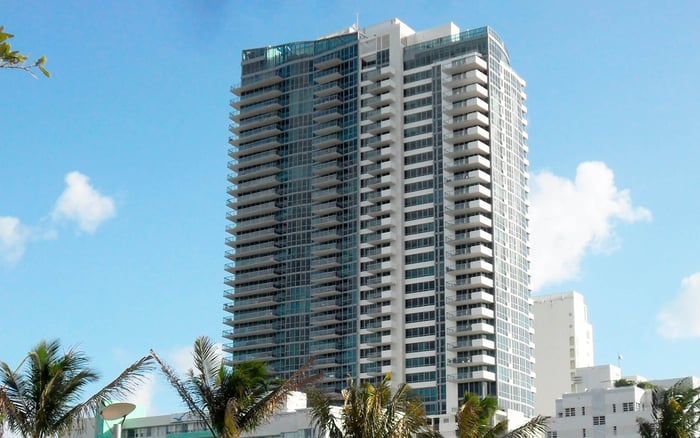
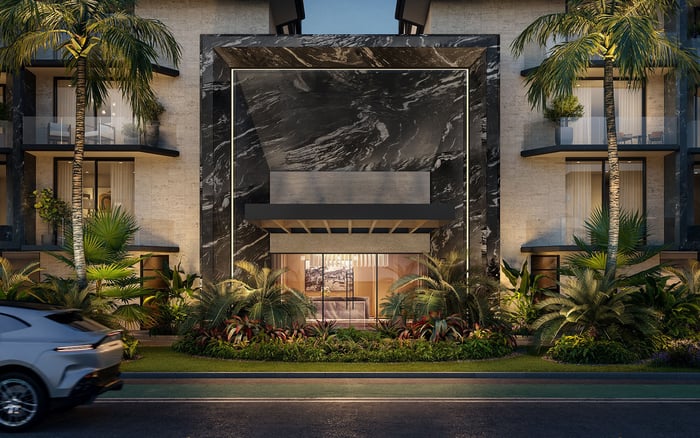
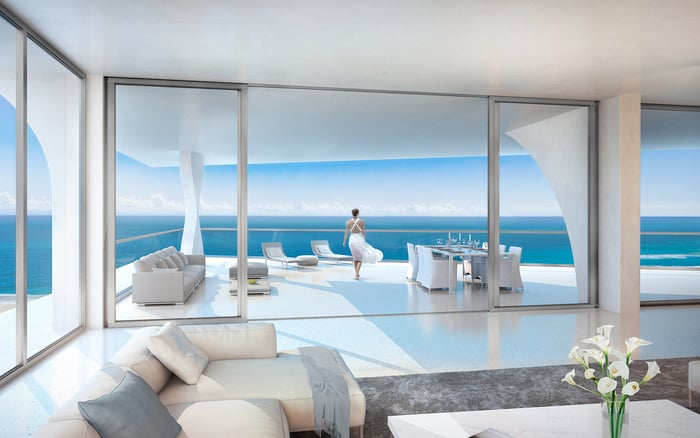
Five Park’s park-adjacent setting and private beach-club offering call for a precise view of coastal ownership. Beach renourishment, landscape resilience and amenity access each matter to long-term enjoyment, but none establishes a resale premium or eliminates property-specific risk.
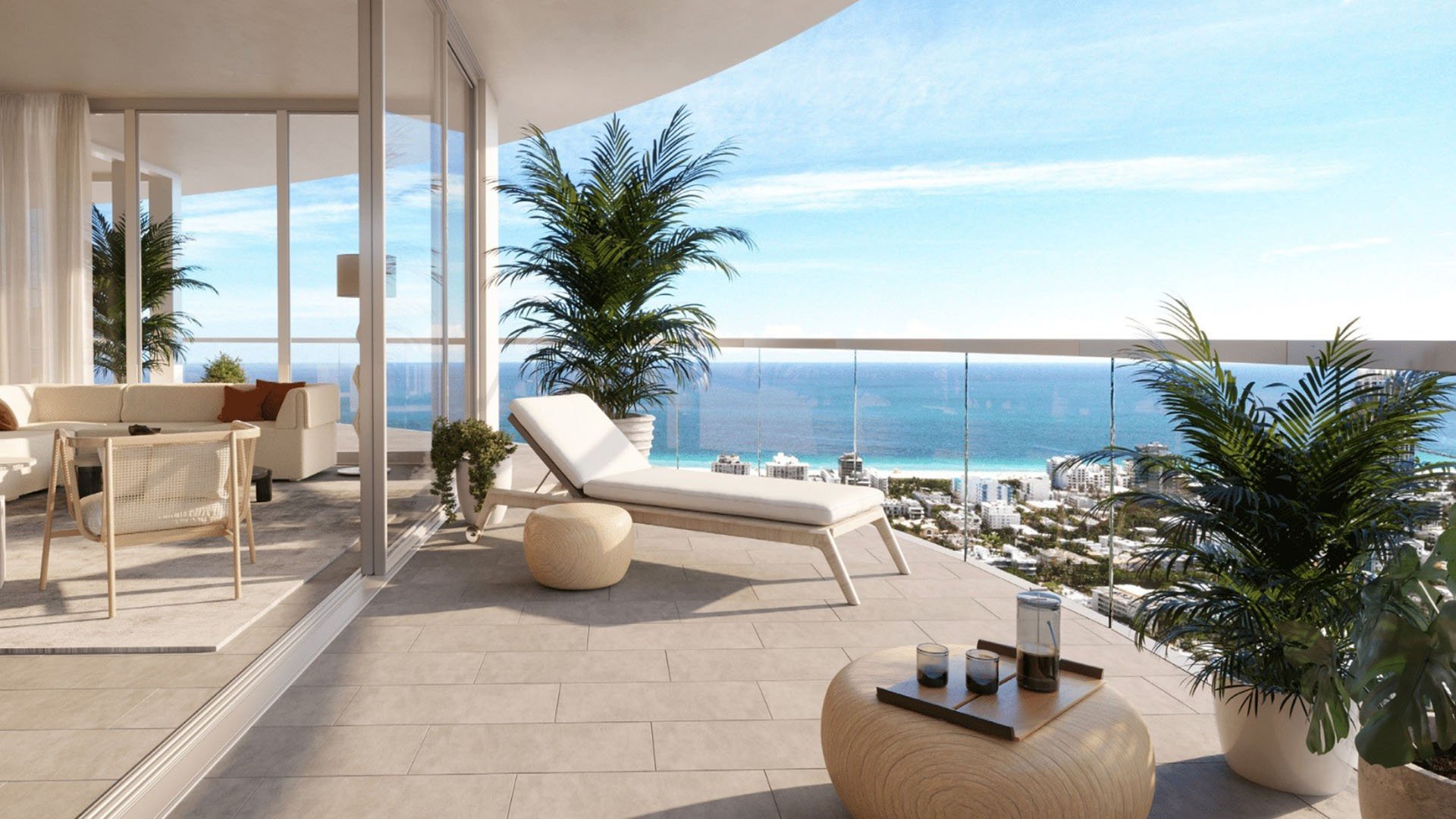
At Five Park Miami Beach, the distinction between living beside a park and living directly on the Atlantic is fundamental. The condominium at 500 Alton Road is park-adjacent, not directly on the Atlantic beachfront. Its residential offering includes a private beach club and wellness amenities, with beach-club access described as a trip via a Five Park Moke rather than a sand-to-lobby connection.
For a long-term buyer, this is more than a distinction in vocabulary. It defines the experience being purchased and the questions worth asking. The residence, the neighboring landscape and the shoreline serving the beach club each require separate diligence. Their benefits can complement one another, but their protections are not interchangeable.
A sound evaluation therefore begins with three considerations: how beach access functions, how the park manages water and how Miami Beach maintains its coastline. None alone establishes a future resale premium.
A private beach club can contribute meaningfully to a residence’s appeal without making it oceanfront. At Five Park, buyers should evaluate the club as an amenity with access arrangements, operating terms and a journey between home and beach. Confirm current eligibility, transportation arrangements, guest policies and any applicable charges before weighing it in a purchase decision.
The practical test is personal. Does the arrangement suit an impromptu morning swim, an afternoon with visiting family or a seasonal stay? Assess convenience against the buyer’s actual routine rather than assuming it from the presence of a beach club.
When considering 57 Ocean Miami Beach alongside Five Park, apply the same discipline to each property: verify the relationship between the residence and the sand, then examine the relevant access terms independently. A location in the same city does not establish identical beach conditions, service arrangements or exposure to maintenance work.
Beach renourishment is more than a cosmetic exercise. Adding sand to an eroded shoreline is part of coastal storm-risk management, including erosion control and hurricane-surge protection. Beach width matters because the shoreline buffers infrastructure farther inland; losing width compromises that protective function.
The 2022-2023 Miami Beach renourishment project illustrates the scale involved. Its scope called for approximately 835,000 cubic yards of sand across 11,400 linear feet of shoreline, with targeted beach widths of about 90 feet. A $40.4 million contract addressed four critically eroded sections.
Those figures must be read within their geographic and historical limits. They concern selected shoreline segments, not the entire Miami Beach coastline, and do not establish that Five Park’s beach-club location received that work. Nor do they describe today’s maintenance calendar or current beach width.
For an owner, the point is that maintaining a beach involves substantial, recurring intervention. A generous stretch of sand is an asset requiring stewardship, not a permanent physical condition.
Canopy Park and Five Park’s tower were conceived as an integrated residential and landscape development. The park’s resilience features include bioswales, sculpted berms and a flood-protection basin. A 25,000-gallon underground cistern captures stormwater for on-site irrigation.
These are functional landscape features, not simply decorative planting. The integrated system is designed to address sea-level rise and stormwater flooding, reduce urban heat and lower energy and water use. For a buyer who values the landscape experience, those functions deserve consideration alongside the park’s visual appeal.
Purpose, however, is not a guarantee. The park’s stormwater infrastructure and public beach renourishment address different risks. Neither establishes that an individual residence is flood-proof, and neither substitutes for a review of building-specific flood protection, insurance and maintenance documentation.
Rather than infer protection from the overall design concept, ask for documentation explaining the building’s own systems, who maintains them and how they relate to surrounding infrastructure.
Miami Beach’s adopted Sea Level Rise Adaptation Plan sets a 75-year planning horizon for safeguarding infrastructure and preserving the city’s role as a global destination. It is a flexible framework informed by public input and sea-level projections, not a promise that every intervention will follow a fixed timetable.
Continued routine beach renourishment is part of that framework. Beach-width thresholds reference erosion beyond the federal design template, treating shoreline width as a measure of protective infrastructure rather than merely an aesthetic preference. A county-level beach-renourishment program also operates alongside municipal planning and federal projects.
A coastal planning proposal contemplated nourishment roughly every four years in selected Miami Beach areas. That is not a guaranteed citywide schedule. Buyers should establish which shoreline segment serves their beach experience, what work is currently planned there and whether temporary access disruptions are anticipated. The historical project provides context, not answers to those current questions.
For a seasonal owner, diligence extends beyond the apartment. Confirm beach-club terms in writing, including how access and transportation are handled if shoreline work affects the usual arrangement. Ask specifically about any known work during the months when the residence will be used.
The same approach applies if The Perigon Miami Beach is also on the shortlist. Each candidate warrants its own review of access, relevant shoreline conditions and building documentation. Do not transfer conclusions from one property or beach segment to another.
Keep public maintenance costs separate from condominium obligations. The historical renourishment contract does not establish a Five Park-specific assessment or a direct allocation of public shoreline costs to its owners. Review the condominium budget, reserves, insurance and assessment disclosures on their own terms, rather than translating a public contract figure into an assumed household expense.
Five Park’s combination of park adjacency, wellness amenities and separate beach-club access is a specific offering. The question is whether it matches the buyer’s priorities at the proposed purchase price, with operating arrangements and responsibilities clearly understood.
Beach maintenance and adaptation planning belong in that judgment because they concern the setting and infrastructure supporting ownership. They do not establish a quantified appreciation benefit, faster resale or superior liquidity. Likewise, resilience-oriented landscaping is a feature to evaluate, not proof of lower future losses or insurance costs.
For a long holding period, clarity is more useful than reassurance: distinguish the amenity from the frontage, the park from the coast and the public plan from the condominium’s obligations. That is the basis for an informed view of long-term value.
For a discreet conversation about evaluating Five Park within your Miami Beach property search, connect with MILLION.
If branded residences are on your mind — as a home or as an allocation — we would be glad to share what we are seeing, privately.
Begin a quiet conversationNo. Five Park is at 500 Alton Road and has park adjacency rather than direct Atlantic beachfront frontage.
Five Park markets a private beach club, with access described via a Five Park Moke. Buyers should confirm current access and transportation terms before purchasing.
Beach conditions matter to the beach-club experience, while shoreline width helps buffer landward infrastructure. Neither consideration establishes the protection afforded to an individual residence.
The historical project described approximately 835,000 cubic yards of sand across 11,400 linear feet, addressing four critically eroded sections under a $40.4 million contract. Those figures do not establish work at Five Park’s beach-club location.
The park includes bioswales, sculpted berms, a flood-protection basin and a 25,000-gallon underground cistern that captures stormwater for irrigation.
No such conclusion is established. Park stormwater infrastructure and beach renourishment serve different purposes and do not replace building-specific flood and insurance diligence.
The adopted plan has a 75-year planning horizon. It is a flexible framework, not a fixed delivery schedule for every intervention.
No. Roughly four-year nourishment intervals appeared in a planning proposal for selected areas, not a guaranteed citywide maintenance schedule.
The public project figures do not establish a Five Park-specific assessment or direct allocation to its owners. Condominium budgets and assessment disclosures require separate review.
No quantified resale premium, appreciation benefit or liquidity advantage is established. Resilience planning and beach access are ownership considerations to evaluate alongside price, costs and personal use.