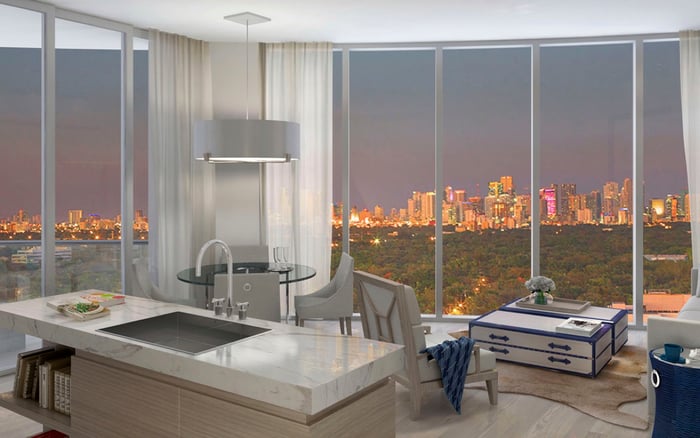
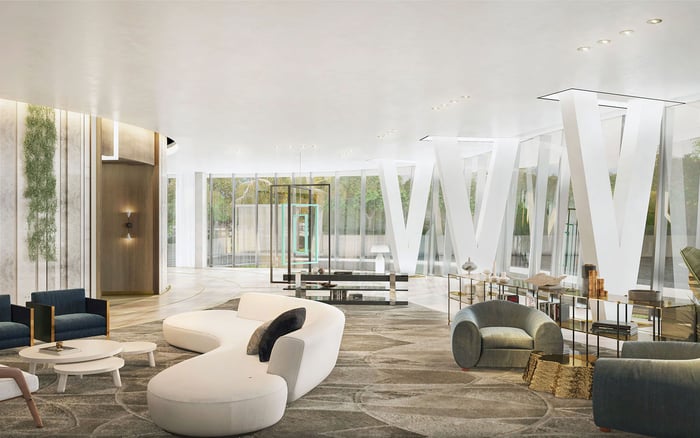
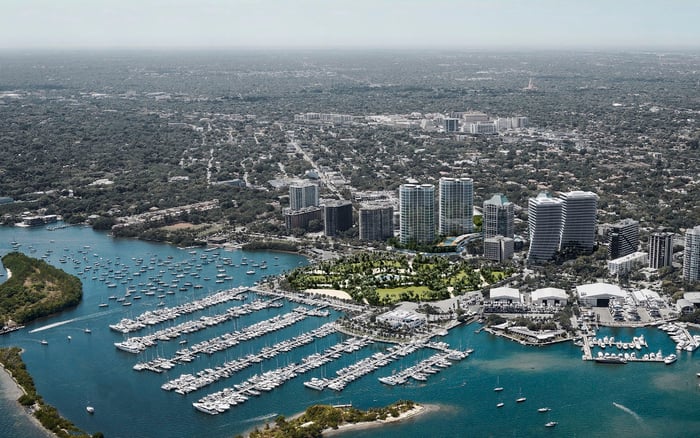
A discreet, buyer-oriented comparison of two Coconut Grove residential options: the sculptural bayfront statement of Grove at Grand Bay and the quieter, canopy-forward appeal of Opus Coconut Grove. This MILLION Luxury editorial focuses on lifestyle fit, arrival experience, privacy, light, views, and long-term livability, with practical guidance for purchasers weighing architecture-driven iconography against classic Grove ease.
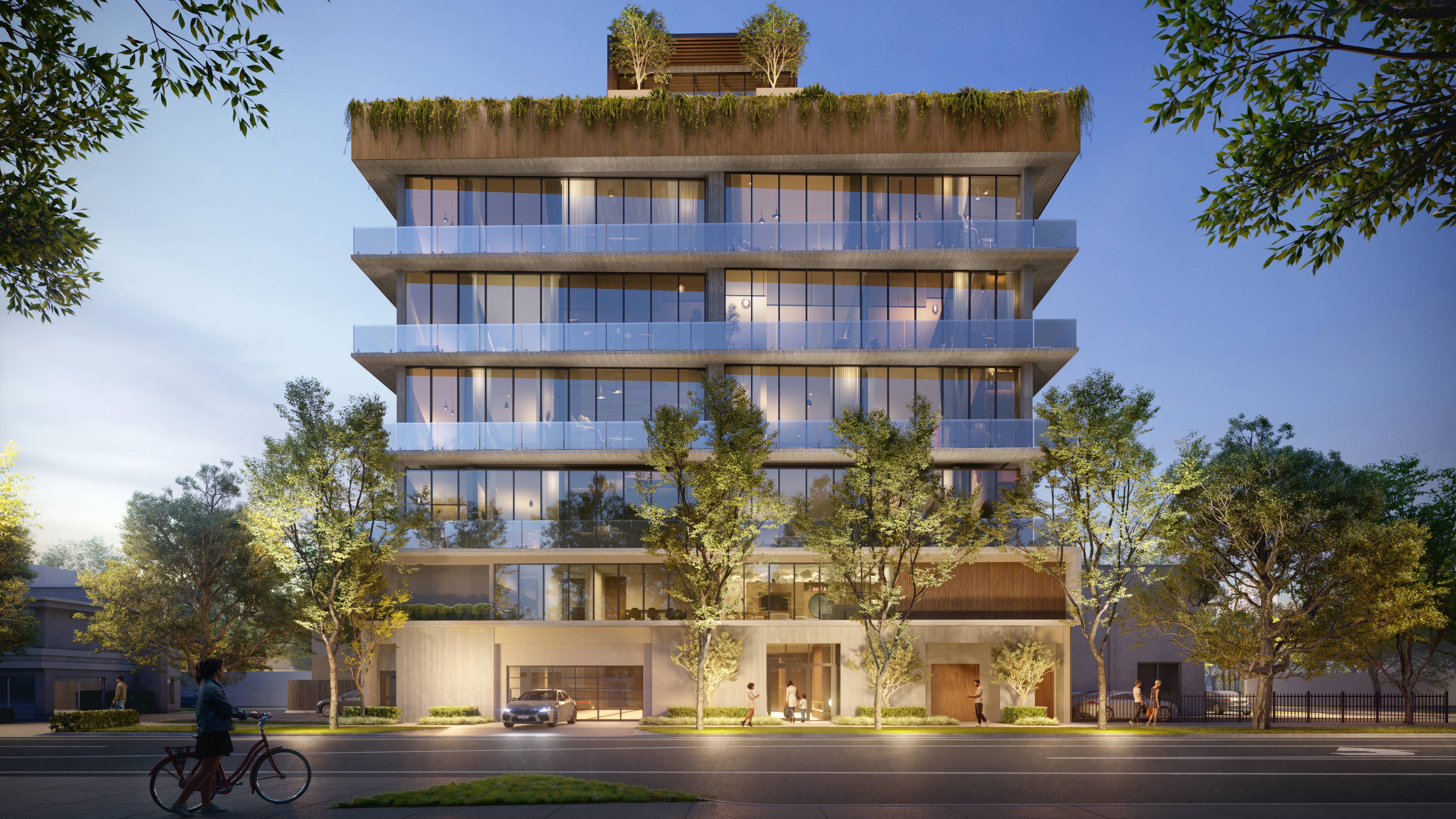
Coconut Grove has always rewarded buyers who purchase for daily life, not just for the closing-day thrill. The neighborhood’s most durable value proposition is experiential: a lush canopy, a village cadence, and a close relationship with the water. Within that backdrop, Grove at Grand Bay and Opus Coconut Grove represent two distinct interpretations of luxury.
One is a sculptural gesture-a residence that announces itself in silhouette and rewards owners with the satisfaction of living “in” a landmark. The other feels edited and residential, designed to recede into the Grove’s natural rhythm, where luxury is less about spectacle and more about calm, convenience, and continuity.
If you are deciding between them, the most useful question is not “Which is better?” It is “Which lifestyle will I actually live?” The differences show up in arrival, privacy, light, view corridors, and how you move through a day-from morning coffee to evening plans.
Grove at Grand Bay suits buyers who want their building to read as contemporary design. Its presence is intentionally bold and angular-a visual counterpoint to the Grove’s organic landscape. The overall impression is controlled drama: the feeling that you are living inside a designed object.
Opus Coconut Grove, by contrast, aligns with the neighborhood’s quieter, classic register. Think less skyline statement and more refined address. Here, luxury is expressed through proportion, discretion, and a home that feels immediately livable rather than perpetually staged. For some buyers, that restraint is the feature: the building’s identity supports the Grove instead of competing with it.
A clean litmus test: if you want guests to arrive and feel they are entering a destination, the twisting-tower narrative will resonate. If you want guests to arrive and feel as though you have always lived there, the classic canopy approach tends to win.
Both options sit within Coconut Grove culture, but they can encourage different patterns of use.
A bay-oriented lifestyle prioritizes openness, horizon, and a relationship with water that stays present in your peripheral vision throughout the day. It can feel exceptionally restorative, particularly for owners who travel frequently and want a clear “reset” on return.
A village-oriented lifestyle prioritizes walkability, errands without a car, and the ability to drop into a favorite café, a park, or a low-key dinner without over-planning. The Grove’s charm is that it still supports this kind of unforced routine.
For buyers also weighing other new and notable addresses nearby, it can help to triangulate style and setting. Park Grove Coconut Grove, for example, reflects a broader master-planned sensibility, while The Well Coconut Grove attracts wellness-forward buyers who want an integrated lifestyle concept. Those references clarify the spectrum: from design landmark to lifestyle ecosystem to quiet, edited living.
In ultra-premium purchasing, the first 60 seconds matter because they reveal whether a building understands ritual. How you enter, where you pause, how you transition from city energy to private life-this is where a residence signals sophistication.
Grove at Grand Bay tends to appeal to buyers who enjoy a pronounced transition. A striking exterior often pairs with an arrival sequence that feels deliberate, as if you are stepping into a modern gallery that happens to be home. That can be deeply satisfying for owners who want architecture as a daily, lived experience.
Opus Coconut Grove typically suits buyers who want ease without sacrificing polish. Privacy can feel more natural when your arrival does not draw attention-when you can come and go without feeling “on display.” If your schedule is full, or if you prefer discretion over ceremony, this distinction becomes practical, not philosophical.
Ask yourself: do you want arrival to be an event, or do you want it to be effortless?
The twisting-tower proposition often translates to dynamic angles, changing light, and view corridors that can feel cinematic. For some owners, that is the point. The home becomes a lens on Miami, with moments that shift throughout the day.
The tradeoff, in any highly sculptural building, is that layouts can be more idiosyncratic. Furniture planning, art placement, and long wall runs may take more intention. Buyers who enjoy curating a space tend to love this; buyers who want immediate simplicity may find it less intuitive.
Opus Coconut Grove’s classic canopy living tends to emphasize ease of use: calmer geometry, rooms that accommodate a wide range of furnishings, and an interior that reads as “finished” without needing theatrical staging. It often feels like a residence you grow into, rather than a residence you must continuously style.
A practical tip: tour at two times of day. Many buyers tour once and fall for a single light moment. The right choice is the one that stays comfortable at midday, not only beautiful at golden hour.
There are two distinct modes of luxury entertaining in Coconut Grove.
The first is statement hosting, where the residence itself becomes the conversation-architecture, panorama, and a sense of being above the city’s hum. Grove at Grand Bay naturally fits that mood. If you host out-of-town guests, or if you enjoy dinners where the view is part of the mise-en-scène, the bayfront statement is compelling.
The second is intimate gathering: a quieter, more residential kind of luxury where friends arrive with ease, linger, and then walk into the neighborhood for one more stop. Opus Coconut Grove aligns with this. It is less about the room performing and more about the day flowing.
Neither is objectively superior. The key is accuracy about your real social life. If you entertain four times a year, optimize for daily comfort. If you entertain weekly, optimize for the kind of hosting you genuinely enjoy.
Most buyers can recognize immediate beauty. Fewer buyers plan for the year-three test.
Grove at Grand Bay’s design-forward identity tends to remain satisfying for owners who genuinely care about architecture and who enjoy living with a bold aesthetic. The payoff is emotional and daily: you notice the building-and you like noticing it.
Opus Coconut Grove’s enduring strength is that it can fade into the background in the best way. When life gets busy, a composed, classic residence becomes a platform rather than a project. That often supports long-term contentment for end-users.
If you are considering Coconut Grove as a second-home base, this distinction matters even more. A second home should reduce decision fatigue, not create it.
Even without leaning on external data points, you can still think like a seasoned buyer by focusing on signals that hold across cycles.
With a landmark building, value is often supported by recognizability, design pedigree, and the scarcity of comparable silhouettes. That can help preserve “trophy” demand over time, particularly for buyers who purchase with an eye toward future resale narratives.
With a quieter building, value is often supported by livability, ease of leasing where applicable, and the timelessness of the product. In lifestyle neighborhoods like Coconut Grove, there is consistent demand for homes that feel calm, efficient, and close to daily conveniences.
If you find yourself torn, consider a third reference point to clarify your preferences: Four Seasons Residences Coconut Grove can serve as a benchmark for service-forward, hospitality-grade expectations. Even if you are not choosing it, the comparison helps you identify whether you are prioritizing icon design, understated residential comfort, or a managed, full-service rhythm.
Bring these questions to your showing-and listen closely to your own answers.
Do I want my home to make a statement from the outside, or only once I am inside?
Where will I spend weekday mornings, and does that spot feel natural?
Does the layout support my real furniture, art, and routines, not an idealized version?
What is my tolerance for attention, both at arrival and when entertaining?
If I owned this for five years, what would I miss most if I sold it?
The correct choice is rarely the one that photographs better. It is the one whose rituals you look forward to repeating.
Which is more “Coconut Grove” in spirit: Grove at Grand Bay or Opus Coconut Grove? Opus Coconut Grove tends to read as more canopy-forward and village-aligned, while Grove at Grand Bay feels more like a bayfront design statement.
Is Grove at Grand Bay better for buyers who want a landmark address? Yes. It generally suits buyers who value recognizable architecture, along with a more dramatic arrival and skyline identity.
Is Opus Coconut Grove a stronger fit for low-key, walkable living? Often, yes. It appeals to buyers who prioritize discretion, routine convenience, and an edited residential feel.
Which one is better for entertaining? Grove at Grand Bay fits statement hosting, while Opus Coconut Grove fits intimate, easy gatherings that flow into the neighborhood.
Do twisting-tower designs affect interior livability? They can, in the sense that sculptural forms may produce more distinctive angles; some buyers love the uniqueness, while others prefer simpler geometry.
What should I pay most attention to during a tour? Focus on the first 60 seconds of arrival, the primary living area’s light at midday, and whether the layout fits your actual daily habits.
Which is typically better for a second home? Buyers who want a true “retreat” often prefer calmer, more effortless living, but architecture-focused owners may enjoy the landmark experience.
How do I compare these to other Coconut Grove options? Use nearby benchmarks to clarify priorities, such as wellness-forward living, hospitality-grade service, or a broader master-planned setting.
Will either option feel timeless over time? Timelessness can look different: bold icons stay relevant through distinct identity, while classic residences stay relevant through restraint.
What is the simplest way to decide between the two? Choose the building whose daily rituals you will repeat happily-not the one you think you should want.
For a discreet conversation and a curated building-by-building shortlist, connect with MILLION Luxury.
If branded residences are on your mind — as a home or as an allocation — we would be glad to share what we are seeing, privately.
Begin a quiet conversation