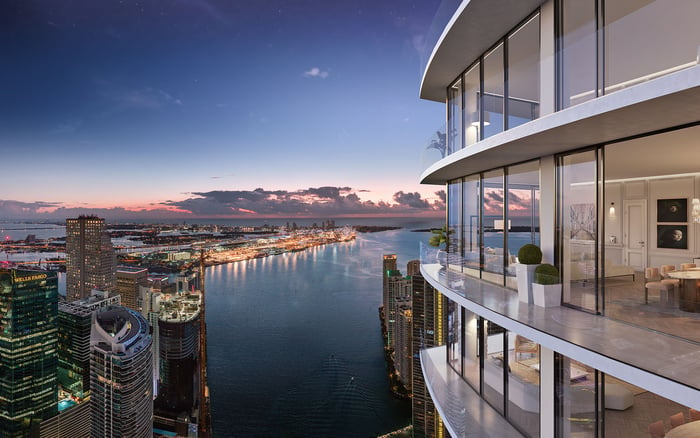
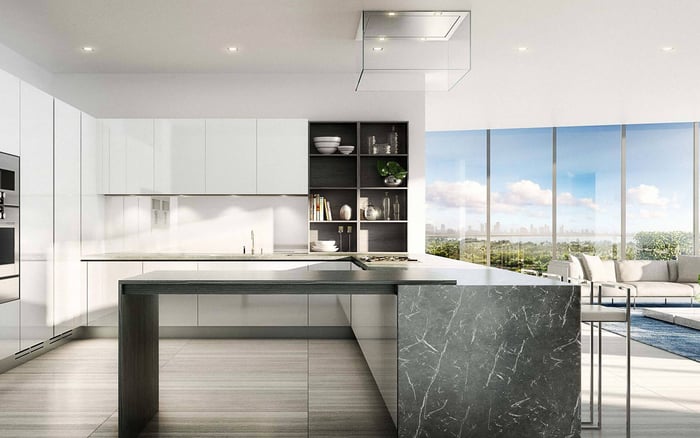
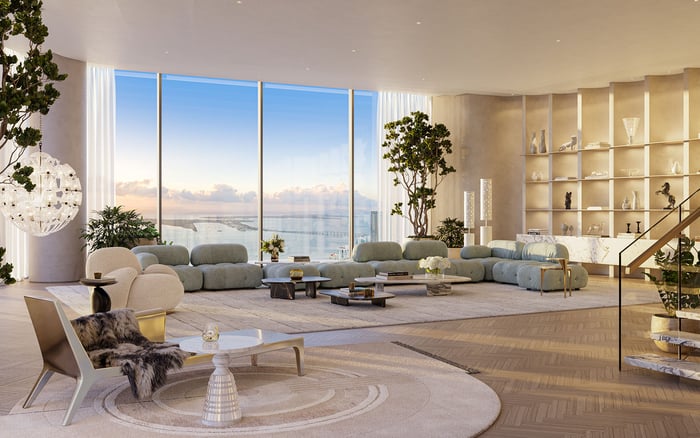
Across South Florida, the modern trophy residence is increasingly defined by what it can host, screen, and showcase. From Manalapan compounds to Miami Beach branded towers, entertainment suites have become a quiet signal of taste, privacy, and scale.
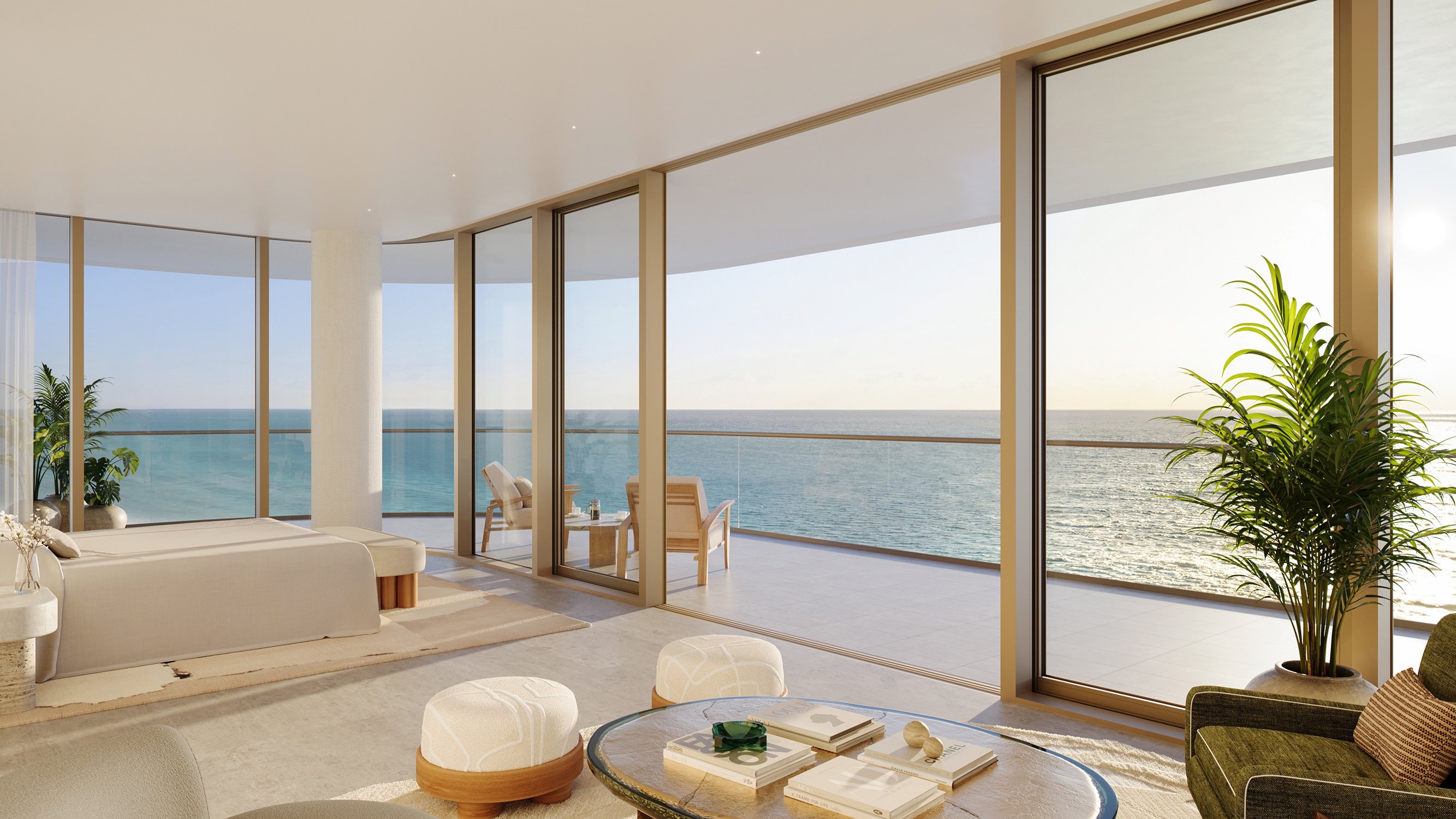
In South Florida’s ultra-premium market, luxury is no longer defined only by architecture and address. A waterfront horizon still commands attention. So do the fundamentals: a guarded gate, a long approach drive, and a primary suite that reads like a private hotel. Yet at the top of the market, many buyers now lead with a more revealing question: what can this home do, day to night, without leaving the property?
For an increasing share of trophy buyers, the answer lives in one concentrated zone: the entertainment suite. This is not a casual media room tucked behind a family kitchen. It is a purpose-built sequence of spaces designed to host, screen, pour, play, and reset, with circulation that keeps the home’s formal rooms protected and private.
Across high-end coverage in the region, the recurring amenities are consistent: two-lane bowling alleys, dedicated theaters, full bars, wine cellars, golf simulators, and in some cases museum-like garages or “car museum” concepts. These features are not treated as accessories. In many listings, they are the narrative. They tell the buyer, in a single glance, that the home was conceived with programming in mind.
MILLION Luxury has chronicled the rise of the “man cave” reimagined as a fully designed wing, and the shift aligns with a broader pattern in how modern wealth buys privacy. The home is no longer the backdrop to a social life conducted elsewhere. For many, it is the venue, curated and controlled.
That preference is not limited to a single pocket of the map. It shows up in Palm Beach coastal compounds, in Coconut Grove estates where privacy is part of the appeal, and in Miami Beach living where luxury can be vertical, serviced, and unapologetically curated.
Entertainment suites are often presented as “fun” amenities. In practice, they function as a form of control: control over the guest experience, over security, over sound and light, and over the schedule. The more public a life becomes, the more valuable it is to create a private environment that can deliver the same emotional payoff as a night out, but on the owner’s terms.
A two-lane bowling alley is an easy symbol, which is why it appears so often in marketing. But its real value is what it implies: ceiling height, structural planning, acoustic separation, mechanical capacity, and the kind of square footage that allows leisure to exist without competing with daily life. The same logic applies to a true theater experience. Tiered seating, projection conditions, sound isolation, and back-of-house storage are not decorative upgrades. They are design decisions that signal a property was planned, not simply assembled.
There is also a generational and market layer to the demand. Many buyers arriving to South Florida’s top neighborhoods come from places where trophy living is synonymous with private club access. Florida has that tradition, too. Sailfish Point, for example, positions itself as a private community organized around golf and marina life, a reminder that “club-level” recreation is part of the state’s luxury DNA.
The entertainment suite is the in-home expression of the same instinct: a desire for leisure that feels elevated and effortless, with fewer variables. In new construction at compound scale, the entertainment wing can operate as a self-contained venue, complete with food and beverage staging, a bar that reads like hospitality design, and a circulation plan that keeps guest energy away from family spaces. For many single-family-home buyers, that separation is the point. The best suites feel like a private resort built inside the footprint, not a collection of rooms competing for attention.
A handful of widely covered examples illustrate both the ambition of today’s amenity packages and the way the market ultimately prices them.
In Manalapan, 1960 S Ocean Blvd was marketed in 2025 with a reported $285 million ask as a proposed or new construction mega-estate, often described in coverage as the most expensive U.S. home listing at the time. The vision leaned heavily into compound-scale recreation, including amenities described as a two-lane bowling alley, a car museum, and a golf simulator among other features. Later, the same property was offered as land only for $75 million. The shift underscores a core truth of the ultra-high-end: at a certain level, the buyer is not only purchasing a house, but also the right to author the house.
Not far away, another Manalapan listing at 1940 S Ocean Blvd was marketed at about $84.888 million, with the entertainment suite positioned as a central pillar of the offering. Listing coverage described a two-lane bowling alley, a movie theater, a bar, and a wine cellar, all within one residence. The headline is not simply that bowling alleys exist inside Florida homes. It is that entertainment has been formalized into architecture, to the point where the home reads as a private resort with a deliberate internal rhythm.
Hillsboro Beach offers a cautionary and fascinating counterpoint. The estate widely known as Le Palais Royal, now referred to as Playa Vista Isle, was profiled nationally for a feature that still feels almost mythic in residential real estate: the world’s first private 3D IMAX home theater. Coverage also described a large-scale wine cellar reported at 3,000 bottles, plus resort-style outdoor living. Yet despite being listed as high as $159 million, it ultimately sold at auction for $42.5 million. For anyone evaluating a trophy purchase, the lesson is uncomfortable but essential: the market pays for desire, not for effort.
In Coconut Grove, the narrative shifts back to privacy and land, and why discretion itself can feel like an amenity. A trophy property known as Banyan Ridge Estate at 3585 Anchorage Way was reported as going into contract while asking $135 million. In a separate headline that underscores Miami’s global pull, tech billionaire Larry Page reportedly bought two Coconut Grove estates for $173.4 million combined. Those numbers, and the privacy-forward nature of that submarket, illuminate why entertainment suites resonate with high-profile owners. They allow hosting, decompression, and play at home without trading security for experience.
Even beyond the trophy segment, entertainment programming has become a recognizable template. Video and tour coverage of Florida and Miami-area mega-homes routinely spotlights bowling alleys paired with large theaters, presented as a single lifestyle proposition rather than separate upgrades. A modern waterfront mansion tour in Vero Beach, for example, described a two-lane bowling alley and a home theater alongside spa-forward wellness amenities. In Central Florida’s Reunion Resort rental market, operators even package “bowling mansion” experiences for groups and celebrations, complete with dedicated theater setups. The concept scales up or down, but the demand signal remains consistent: leisure, delivered privately.
For some buyers, the most refined response to the entertainment-suite impulse is not to build a bowling lane at home. It is to choose a building where lifestyle is orchestrated, serviced, and protected. In Miami Beach, this is where branded and design-forward residences win, offering a version of private club living that can feel lighter than managing a sprawling estate, particularly for second-home owners or global buyers who prefer lock-and-leave simplicity.
A project like Shore Club Private Collections Miami Beach speaks directly to the same desire for curated experience: an address that reads as iconic, paired with hospitality thinking that shapes the day-to-day.
Along the beachfront, 57 Ocean Miami Beach appeals to buyers drawn to low-density coastal living where privacy is treated as an amenity in itself, not an afterthought.
For owners who want Miami Beach to feel like a disciplined lifestyle choice rather than a social calendar, Setai Residences Miami Beach signals a preference for service, discretion, and calm luxury that does not need to announce itself.
Meanwhile, The Ritz-Carlton Residences® Miami Beach represents a classic approach to branded living: standards that are systemized, staff that is trained, and an experience that stays consistent.
In other words, the entertainment question can be answered in two distinct ways. Either you internalize the club inside the home with a dedicated entertainment wing, or you externalize it into a building whose amenity ecosystem replaces the need for a private arcade. The right choice depends on how often you host, how much you value total seclusion, and how much operational complexity you want to carry.
At the trophy end, an entertainment suite should be evaluated with the same rigor applied to seawalls, rooflines, and smart-home infrastructure. A few considerations can separate a well-executed program from a flashy one.
First, review adjacency and separation. A theater placed beside the primary suite is not a luxury. It is a future compromise. The best plans treat entertainment as its own wing, with acoustic buffering, dedicated HVAC zones, and circulation that allows guests to arrive and depart without crossing private family corridors.
Second, look for hospitality logic. A bar is only as good as its support. Is there discreet storage for glassware and supplies? Is there staging space so service feels seamless? Are powder rooms positioned correctly so guests do not wander into private areas? These details determine whether the room functions as a venue or reads as set dressing.
Third, verify the “realness” of the experience. Marketing language often blurs the line between a large TV wall and a cinema-grade room. True theater performance depends on light control, sound isolation, and technical planning. The same applies to bowling. A two-lane setup is a spatial commitment, and the surrounding lounge is what turns it from novelty to ritual.
Fourth, consider long-term adaptability. A car museum concept can be breathtaking for the right collector, but it can also narrow resale appeal. Spaces that can convert, such as an entertainment lounge that can become a wellness studio, gallery, or flex room, preserve optionality.
Finally, assess operational costs and staffing reality. The more complex the suite, the more it behaves like a small venue. That can be a genuine joy, but it is still a choice, and it should be priced and planned accordingly.
South Florida’s trophy market is emotionally driven, but it is not irrational. The headline examples above reveal a tension that both buyers and sellers should respect.
On one side, spectacle sells attention. Attention can attract the rare buyer who wants exactly that feature set, and for that buyer the premium can feel justified. On the other side, the market has repeatedly shown that build cost and aspiration do not guarantee a matching sale price. The Playa Vista Isle outcome is the clearest illustration: a globally publicized amenity package, including a private 3D IMAX home theater, did not translate into a price anywhere near peak ask.
This is why some sophisticated buyers will pay extraordinary numbers for land or a simpler existing structure when the location is truly exceptional. The Manalapan shift from a $285 million proposed mega-estate concept to a $75 million land-only offering reflects that instinct. At the ultra-tier, customization can be the ultimate luxury. It can also be a disciplined way to avoid paying for someone else’s taste.
For sellers and developers, the implication is equally direct. An entertainment suite should be designed as architecture, not as a checklist. The most enduring value comes when these spaces feel inevitable, integrated, and easy to live with, rather than staged for a tour. When programming is handled with restraint and technical competence, the suite becomes a genuine extension of how the home is used, and not just a headline.
Are bowling alleys in homes still considered a novelty? They remain rare, but in South Florida’s trophy segment they have become a recognizable status cue, often paired with theaters, bars, and game lounges.
Why would a buyer prefer “land only” instead of a fully planned mega-estate? At the highest price points, many buyers want authorship. Designing their own compound can better match lifestyle, security needs, and personal aesthetics.
Do extreme amenities help resale value? Sometimes, but not universally. Highly specific features can narrow the buyer pool, which is why location and overall planning often matter more than spectacle.
What is the condo alternative to a private entertainment wing? In Miami Beach, branded residences can deliver club-like living through services and shared amenity ecosystems, reducing the need to build every experience inside the home.
For discreet guidance on trophy properties and new development opportunities, visit MILLION Luxury.
If branded residences are on your mind — as a home or as an allocation — we would be glad to share what we are seeing, privately.
Begin a quiet conversation