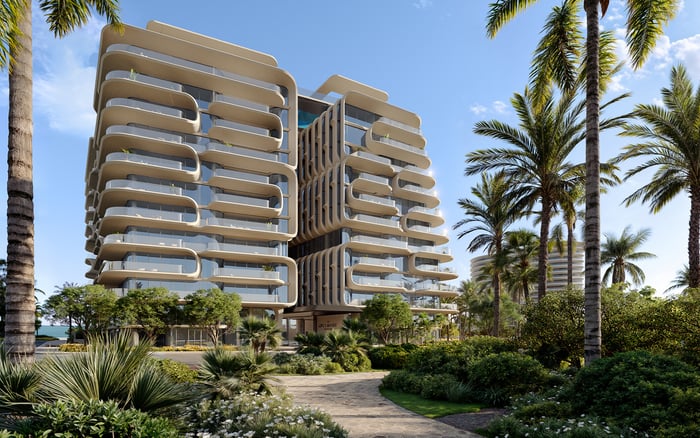
A Bal Harbour penthouse closing should distinguish a beautiful amenity narrative from the rights that actually transfer. Buyers should verify the beach route, cabana status, guest rules, access credentials, title exceptions and recorded easements before funds are released.
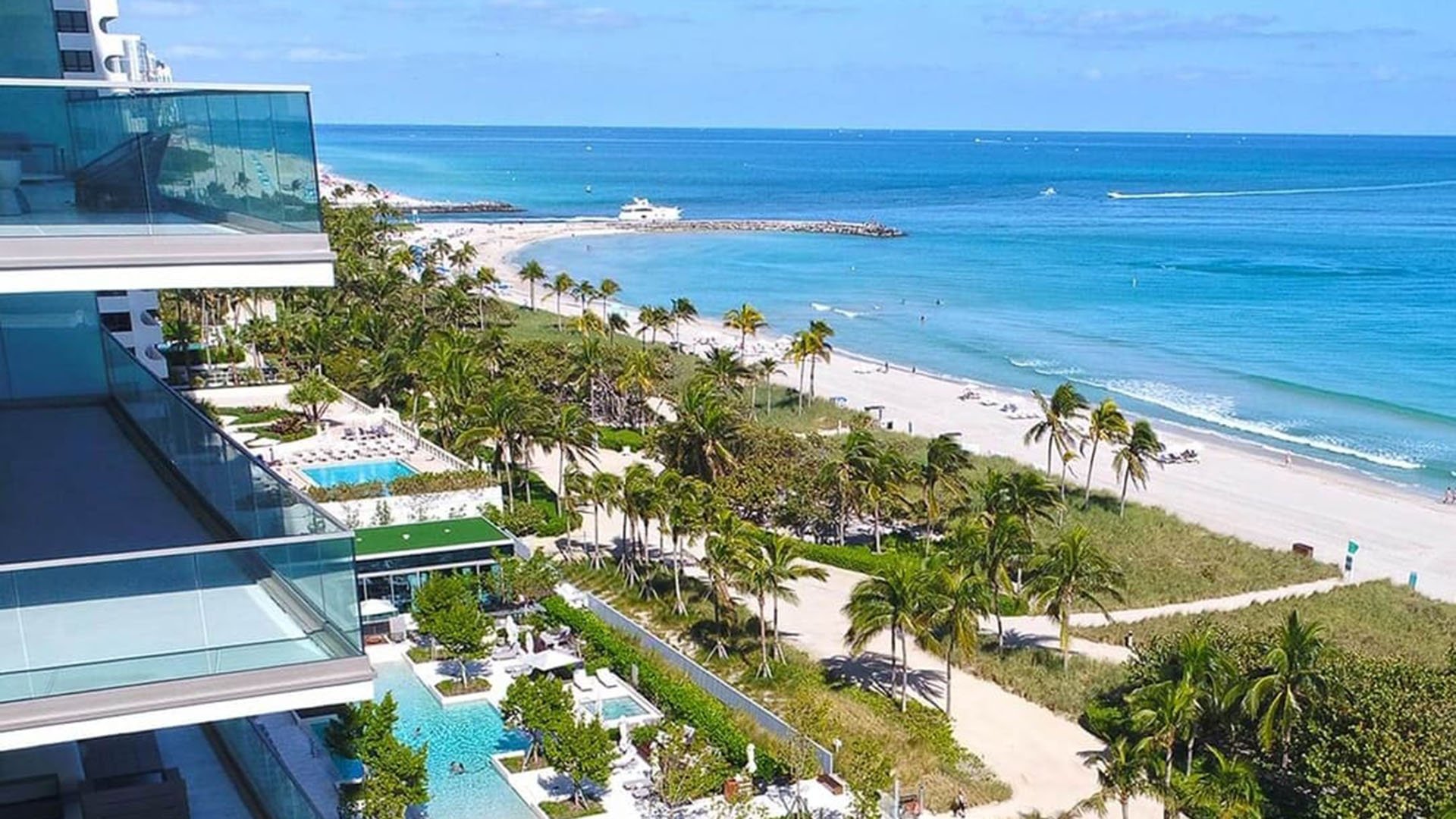
A penthouse in Bal Harbour may command sweeping Atlantic views, but the outlook itself does not establish how an owner, family member or guest reaches the sand. Before closing, the buyer should separate four distinct matters: public shoreline access, a village-controlled entrance, the condominium’s physical route through the property and any private right established by recorded documents.
Wet sand below the high-tide line is public along the shoreline, while designated access points connect Collins Avenue to the beach. The village’s public beach entrance is at 96th Street and Collins Avenue, near the Surfside border. Bal Harbour also maintains 28.62 acres of state-owned beachfront extending from 96th Street to Baker Haulover Cut. None of those facts, however, confirms a private building entrance or a particular owner’s amenity privileges.
The ocean view is visible; the rights attached to it must be documented.
Ask management to demonstrate the complete route from the penthouse elevator to the beach. Note every elevator, lobby, pool deck, gate and service corridor involved. Confirm whether a resident credential opens each controlled point, whether the route changes after hours and whether beach staff follow a defined schedule.
Beach-access diligence should address construction, storms, maintenance closures and accessible alternatives. Vehicles are generally prohibited on the public beach and on public land, easements or rights-of-way within the beach area, subject to stated exceptions. Electric mobility devices are also prohibited along the beach path, jetty, cutwalk and 102nd Street Beach Access Path. A buyer who relies on a mobility device should therefore obtain specific guidance on the permitted route rather than assume the most direct path is available.
For buyers comparing buildings such as Oceana Bal Harbour and Rivage Bal Harbour, the practical question is not simply whether a property is oceanfront. It is which doors open, with which credential, during which hours and under which governing document.
The Bal Harbour All Access Card provides entry to Waterfront Park and is designated to provide access to the 102nd Street Beach Access Path beginning in spring 2026. Locked gates secure the path entrances and require the card. Eligibility extends to Bal Harbour property owners and people who reside there for at least six months annually, subject to verification.
Before closing, confirm the path’s current operating status, card application requirements and expected activation timing. Ask whether ownership recorded at closing is sufficient, what identification or residency evidence is required, and whether separate cards are available for spouses, household members or staff. Eligibility is not the same as an issued, active credential.
The village manages a broader public realm that includes Waterfront Park, the jetty, cutwalk, jogging path, beach path, greenspace and the pedestrian beach crossing south of Oceana. Harbourfront Park work is planned in phases intended to preserve continuous public access and emergency routes during construction, but a buyer should still determine how active work may affect the preferred daily route.
Cabana language demands the same precision as parking or storage. Require the cabana’s exact identifier and written proof of its legal status. It may be conveyed with the residence, assigned under condominium documents, licensed by the association, reserved through an operating program or merely available to rent. Each arrangement offers a distinctly different degree of control and transferability.
A prior Bal Harbour Tower offering was expressly styled as a unit together with a cabana, illustrating why the identifier belongs in the contract and closing file when a cabana is part of the bargain. By contrast, cabanas being among the amenities at Oceana Bal Harbour does not, by itself, establish a unit-specific allocation.
Ask whether the seller can transfer the right, whether board consent is required, whether the assignment renews annually and whether fees, taxes, maintenance charges or insurance obligations apply. Confirm access to electricity, refrigeration, plumbing and storage only if those features are represented, and tie each representation to the relevant plan or document.
Local zoning allows cabanas within specified oceanfront setback areas, subject to dimensional restrictions. One provision limits cabanas in the rear setback to an elevation of 31 feet above average street grade. Zoning permission establishes what may be physically permitted; it does not establish a penthouse owner’s title or exclusive right to use a particular cabana.
Luxury service may feel flexible during a tour, yet guest use is often governed by detailed rules. Obtain the current association provisions covering advance registration, owner accompaniment, daily capacity, permitted hours, holiday restrictions, age requirements, amenity charges and cancellation policies. Also ask whether houseguests, day guests, tenants, family members and domestic staff are treated differently.
Local hospitality practices illustrate the need for precision. One oceanfront villa benefit permits use between 11 a.m. and 5 p.m. and accommodates a maximum of four guests per villa. Separate cabana access may also carry a surcharge rather than being included with general beach privileges. Those examples do not define condominium rights, but they demonstrate why “access” should never be accepted as a complete answer.
If entertaining is central to the purchase, request a written scenario review. Ask management how the rules apply when the owner hosts a family lunch, allows adult children to arrive first, invites guests while traveling or leases the residence. A concise written response can reveal distinctions absent from a general amenities brochure.
Public use near an oceanfront parcel is not necessarily an intrusion on private rights, just as a private gate does not necessarily mean the route beyond it is private. The title commitment, survey, condominium declaration, amendments, exhibits and recorded easements should be read together. Ask counsel to identify who may cross each relevant strip of land, for what purpose, during which hours and who is responsible for maintaining it.
In the Ocean Front District, public-access easements and beach-access improvements approved on parcels wider than 250 feet can affect the measurement of side setbacks. That planning rule is a reminder that beach circulation may be embedded in a site’s legal and physical design. Buyers considering nearby alternatives such as The Delmore Surfside and Eighty Seven Park Surfside should conduct the same parcel-specific review rather than carry assumptions from one building or municipality to another.
Request every title exception affecting the beach side of the property and compare each one with what is visible on site. Confirm maintenance responsibility for gates, paths, landscaping, lighting and security. Ask whether emergency, governmental, utility or public passage rights exist and whether pending capital projects could temporarily alter circulation.
The contract should identify every material beach-related representation that influenced the purchase. The closing file should include the current declaration and amendments, rules, survey, title materials, cabana instrument, fee schedule, access-card instructions and written management responses. Because recently adopted ordinances may not yet appear in the codified village code, counsel should also verify whether newer measures affect the property.
The practical standard is clear: compare listing language with controlling documents, resolve discrepancies before closing and never rely on custom as though it were a vested right. The most valuable answer is not that owners “usually” receive a privilege, but that the privilege is clearly defined, transferable where represented and operational on the expected terms.
For discreet guidance on evaluating a Bal Harbour penthouse and its documented privileges, connect with MILLION.
If branded residences are on your mind — as a home or as an allocation — we would be glad to share what we are seeing, privately.
Begin a quiet conversationNo. A view does not establish a private route or amenity right, so buyers should verify access through the governing and recorded documents.
Wet sand below the high-tide line is public along Bal Harbour’s shoreline.
The village’s public beach entrance is at 96th Street and Collins Avenue near the Surfside border.
Eligibility extends to Bal Harbour property owners and people residing there for at least six months annually, subject to verification.
Yes. Its entrances are secured by locked gates that require an All Access Card.
Confirm its exact identifier and whether it is conveyed, assigned, licensed or merely rentable, together with transfer rules and fees.
No. General amenity language does not by itself establish an allocation to a particular residence.
Review registration, owner-accompaniment requirements, capacity, hours, fees, age limits and the treatment of tenants, family and staff.
Review the title commitment, survey, declaration, amendments, exhibits, title exceptions and recorded easements together.
Recently adopted ordinances may not yet appear in the codified code, so counsel should confirm whether newer measures affect the property.