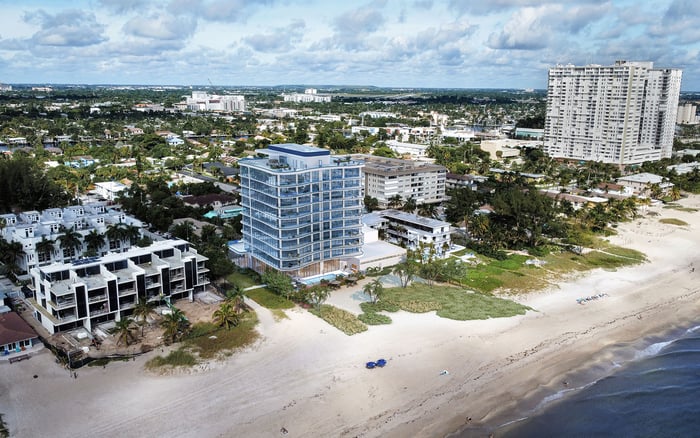
At Armani/Casa Residences Pompano Beach, a disciplined ownership budget begins with forward-looking property taxes, not a historical bill or closing proration. Understand reassessment timing, illustrative tax allowances at $5 million and $7 million, and the documents that make annual carry more predictable.
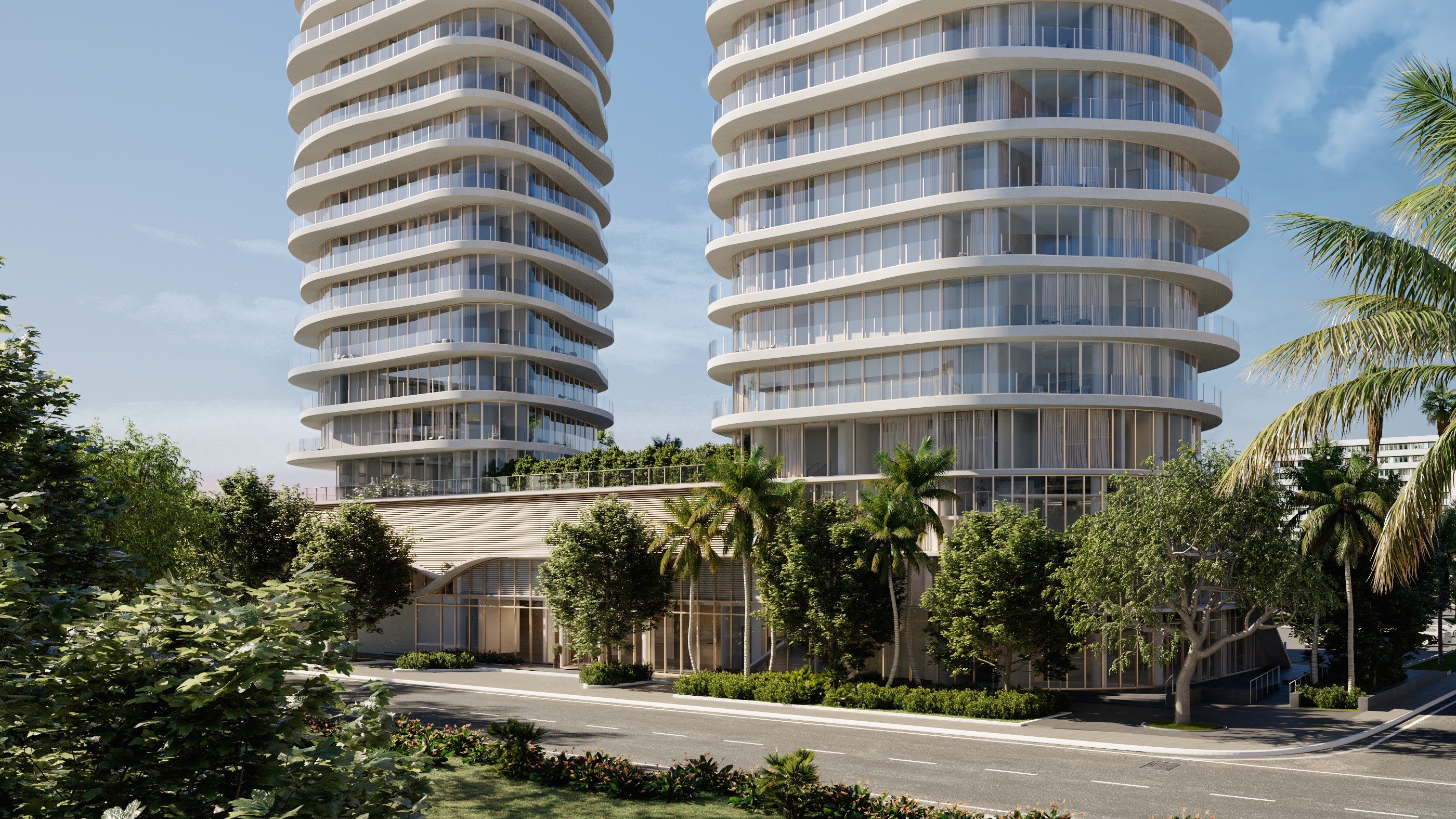
The appeal of Armani Casa Residences Pompano Beach is intimate in scale: a planned oceanfront condominium with 28 residences across two towers, full-floor layouts and an address at 1550 N. Ocean Boulevard. The $5 million and $7 million examples below establish a useful scale for financial planning, not confirmation of current pricing or availability.
At that level, property tax deserves its own underwriting exercise. A historical assessment, a seller’s tax bill and the amount allocated at closing can each present a different picture from the purchaser’s eventual annual expense. The central question is not simply what tax was paid before, but what taxable value will apply after purchase.
Property taxes are only one component of annual carry. Yet they can materially reshape the budget without any change in the residence, its services or the applicable tax rate.
Broward property valuations are assessed as of January 1. Market value, assessed value and taxable value serve different purposes; treating them as interchangeable can obscure the effect of a purchase. Assessment protections can leave an existing owner’s assessed value below current market value, while applicable exemptions can further affect the taxable amount.
Florida’s 10% annual non-homestead assessment cap can reset on qualifying changes in ownership or control. For a qualifying purchase of previously cap-protected property, assessment can return to full market value in the following tax year, rather than immediately on the closing date. The result may be a gap between closing-year taxes and the forward ownership budget.
That does not establish a particular increase for any Armani/Casa residence. A reset must be considered in the context of the property’s assessment history and the transaction. Nor does an assessment cap guarantee that the final tax bill will increase by no more than that percentage. Exemptions and taxing authorities’ rates also influence the result.
Even unchanged millage can produce a materially higher bill if taxable value rises. Asking only whether tax rates are increasing misses an essential part of the analysis.
Armani/Casa is a planned development. A developer closing should not be analyzed as though it necessarily involves a completed residence with a long-held, capped individual assessment. The classic resale concern-a misleadingly low historical tax reference-is an important lesson, not a demonstrated unit-specific condition here.
For a developer purchase, request a post-purchase tax estimate that addresses the completed residence and anticipated assessment timing. For a resale, examine the seller’s assessment protections and the potential effect of the transfer. In both cases, use the closing statement to understand transaction allocations, not as a substitute for the recurring budget.
If your search also includes The Ritz-Carlton Residences® Pompano Beach, apply the same distinction to each opportunity. Identify the transaction type and valuation assumptions before comparing annual tax allowances. A familiar brand name does not resolve those questions.
For preliminary budgeting, the examples below use an illustrative 2% of purchase price. This is not the rate for a specific property or an official Armani/Casa tax quote. Final underwriting should use the applicable Pompano Beach taxing district and the buyer’s expected taxable value.
For an initial sensitivity test, use purchase price as a taxable-value proxy and apply an illustrative 1.9% to 2.1% range. This is a modeling band, not a county-approved project estimate. The appraiser’s final value need not equal the purchase price, and applicable exemptions or other adjustments can change the outcome.
| Illustrative purchase-price proxy | Annual tax at 1.9% | Annual tax at 2% | Annual tax at 2.1% | | --- | --- | --- | --- | | $5 Million | $95,000 | $100,000 | $105,000 | | $7 Million | $133,000 | $140,000 | $147,000 |
At the central assumption, property taxes alone represent approximately $8,333 per month on $5 million and $11,667 per month on $7 million. These are monthly budgeting equivalents, not a statement about payment frequency.
The purpose is to make the scale visible early. Refine the allowance with property-specific information before treating it as a settled annual expense.
A credible carrying-cost budget separates property tax from association dues, owner insurance and any applicable special assessments. It also distinguishes purchase and closing expenses from recurring ownership obligations. Combining these categories too early can conceal which amounts are documented and which remain assumptions.
Request the developer’s current operating budget and review anticipated association obligations alongside the tax estimate. Establish which insurance expenses belong in the owner’s budget and how they relate to association-provided coverage. Avoid filling those lines with generic luxury-condominium allowances.
When weighing Armani/Casa against Waldorf Astoria Residences Pompano Beach, compare the same expense categories using transaction-specific documents. The useful comparison is not an attractive headline carrying cost, but a consistent budget with assumptions that can be examined line by line.
Before closing, ask your advisers to distinguish the closing-year allocation from the expected post-purchase annual tax obligation. Confirm which valuation date and tax year the estimate addresses, whether purchase price is merely a proxy, and which district millage underpins the calculation.
Review exemption eligibility individually. Do not assume homestead treatment or transferable assessment benefits simply because the residence may become a primary home. Likewise, an LLC or trust does not inherently prevent reassessment when a qualifying change in beneficial ownership or control occurs. Entity planning and tax underwriting should be coordinated, not treated as substitutes for one another.
Keep the post-purchase estimate, current operating budget and closing allocations together, with their assumptions clearly labeled. This creates a more useful record than a single annual-carry figure whose components are difficult to reconcile.
The annual TRIM notice separates market value, assessed value, exemptions and proposed property taxes. Review those components against the assumptions used before closing. The TRIM process also provides an opportunity to pursue a Value Adjustment Board appeal, subject to the applicable annual deadline.
For Armani/Casa buyers, the objective is financial clarity, not a promised tax outcome. Budget for the ownership position you expect to hold, distinguish developer closings from cap-protected resales, and update the estimate as property-specific details become available.
For a discreet perspective on South Florida residences and the ownership questions that shape a purchase, explore MILLION.
If branded residences are on your mind — as a home or as an allocation — we would be glad to share what we are seeing, privately.
Begin a quiet conversationThe planned oceanfront condominium at 1550 N. Ocean Boulevard comprises 28 residences across two towers with full-floor layouts.
The examples use $5 million and $7 million as hypothetical purchase-price proxies. They do not confirm current availability or a specific residence’s price.
Assessment protections can leave the seller’s assessed value below market value. A qualifying ownership change can reset that protection, increasing the buyer’s taxable assessment.
No; for a qualifying purchase of previously cap-protected property, the assessment can reset to full market value in the following tax year.
No; assessment protections and final tax bills are different. Exemptions and applicable taxing authorities’ rates also affect the bill.
No; it is an illustrative budgeting assumption, not a property-specific rate or tax quote. Final underwriting should use the applicable taxing district and expected taxable value.
Using purchase price as a taxable-value proxy, the illustrative 1.9% to 2.1% range produces $95,000 to $105,000 annually before applicable adjustments.
At 2%, the annual allowance is $140,000, equivalent to approximately $11,667 per month. This is a budgeting equivalent, not a payment schedule or final assessment.
No; an LLC or trust does not inherently prevent reassessment when a qualifying beneficial ownership or control change occurs.
Review market value, assessed value, exemptions and proposed taxes against the purchase budget. A Value Adjustment Board appeal may be pursued subject to the applicable annual deadline.