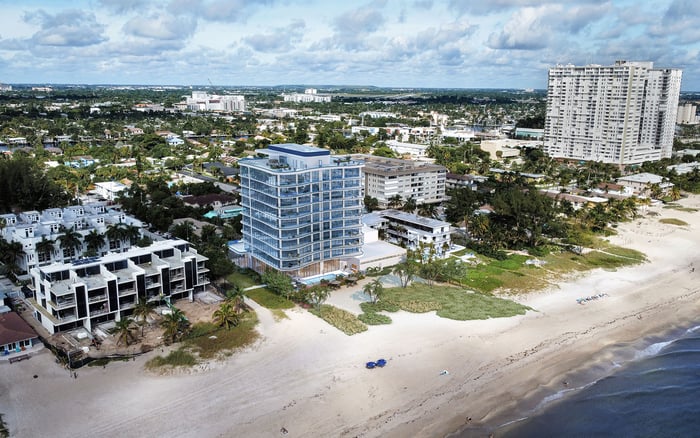
Before closing on a Pompano Beach oceanfront condominium, examine the quiet as carefully as the view. Unit-specific listening, current association rules, elevator maintenance records and enforceable operating schedules can help clarify whether a residence suits your expectations.

An ocean view is immediately legible. Acoustic privacy takes closer examination. Before closing on a Pompano Beach condominium, ask not simply whether the residence feels quiet during a showing, but whether its bedrooms and living spaces remain comfortable while the building goes about its ordinary work.
For buyers considering The Ritz-Carlton Residences® Pompano Beach or another coastal address, quiet is a unit-specific due-diligence question-not an assurance that comes with the brand. The questions below offer a framework for evaluating a purchase, not findings about any named project.
Organize the inquiry around four subjects: sound within the residence, service-elevator operation, any commercial occupants, and loading activity. Request written answers where possible. A reassuring conversation helps; an operating schedule, complaint history or completed repair record gives you more to evaluate.
Request another visit when management expects routine deliveries or service-elevator use. If permitted, spend time in the primary bedroom and other rooms where silence matters, without conversation or background music. Observe ordinary operations rather than a specially quiet interval.
Ask specific questions:
Where are the service-elevator shaft, service corridor and loading area relative to the residence?
Has this unit or its vertical stack generated recurring noise or vibration complaints?
Are acoustic evaluations, sound readings or records of corrective work available?
Can management arrange access during representative operating hours before the contractual review period ends?
When comparing a residence at Casamar with other candidates, use the same listening routine and document requests. That keeps the comparison focused on the apartment you would occupy, rather than a general impression of the building.
Do not mistake a brief visit for a technical certification. If a recurring sound is noticeable or an earlier complaint remains unexplained, consider specialist evaluation before treating the issue as resolved.
Ask management whether complaints concern the elevator itself, vibration within the residence, door operation or activity in the adjacent service corridor. These are matters to investigate, not diagnoses a buyer should make from a single sound.
Request available maintenance records tied to the complaint, descriptions of remedial work, completion dates and any follow-up evaluation. Ask whether residents in the affected stack continued to complain afterward. “The elevator was serviced” does not establish that the particular concern was corrected.
Ask counsel to evaluate the association’s maintenance responsibilities for common elements in light of the governing documents and circumstances. Do not assume a particular repair, assessment outcome or recovery of legal fees.
If the issue remains material, consider evaluation by both a sound engineer and an elevator engineer. Focus the inquiry on everyday residential use and your expectations rather than a promise of absolute silence. Ask what each specialist would need to observe before offering an opinion.
First establish whether the building under consideration has commercial occupants and which activities, if any, share its service infrastructure. Do not infer a restaurant, bar or particular delivery pattern from a project name, lobby presentation or neighborhood setting.
If commercial uses exist, ask counsel whether the governing documents and relevant leases provide enforceable noise and loading-hour controls. Ask management how those controls have been applied, who receives complaints and who can address activity outside permitted hours.
Clarify whether commercial and residential deliveries use the same dock, elevator or corridor. Ask about opening and closing routines, waste collection and exceptions to ordinary schedules. The purpose is to establish actual operations without presuming a problem.
Ask how management handles comparable disturbances from residential and commercial occupants, whether enforcement has been consistent, and whether recurring complaints have prompted documented action rather than repeated informal requests.
Request the current declaration, rules, amendments, nuisance provisions and written schedules for contractors, moves and loading. For a resale purchase, ask which complaint and maintenance records concerning the unit or stack can be made available through the appropriate channels.
Ask whether the rules distinguish between general nuisance restrictions, limits on amplified sound and permitted contractor hours. Obtain the target building’s current rules and amendments rather than relying on an older document or another association’s schedule.
For the dock itself, ask when deliveries begin, when access ends, who authorizes exceptions and whether waste collection follows a separate timetable. Then establish who enforces the schedule. A written closing time answers only part of the question if exceptions are routine or responsibility is unclear.
Association nuisance provisions and local noise standards deserve separate review. Neither should be treated as a substitute for the other.
Confirm the current Pompano Beach procedure for reporting a noise disturbance, including where to direct the complaint, whether it must be reported while occurring and what documentation is required. Ask counsel how local standards relate to the association’s rules rather than assuming the procedures are identical.
For internal complaints, ask whether the association requires written submission, who responds and how an unresolved concern reaches the board.
Noise logs, witness statements and available sound readings can help document a concern. Before closing, ask whether that documentation already exists and what action followed. An absence of records does not establish an absence of disturbance.
Lifestyle fit is the final test. Consider whether the building’s documented routines suit your sleeping hours, working from home and the rooms you expect to use most. For a buyer evaluating Waldorf Astoria Residences Pompano Beach, as for any candidate, distinguish written operating commitments from expectations that still need confirmation.
Before closing, assemble the current rules, management’s answers and any necessary technical advice. If a material concern remains unresolved, ask counsel how it affects the contract and available options before deadlines pass. The goal is not silence at any cost, but a residence whose everyday operation meets your expectations.
For a considered approach to South Florida coastal ownership, explore MILLION.
If branded residences are on your mind — as a home or as an allocation — we would be glad to share what we are seeing, privately.
Begin a quiet conversationRequest a visit during routine service-elevator or delivery activity and listen in the rooms where quiet matters most. Ask about complaints affecting the unit or stack and any available acoustic evaluations.
Ask for available complaint records, related maintenance documentation, descriptions of remedial work and follow-up evaluations. Confirm whether the same concern continued after servicing.
Consider both a sound engineer and an elevator engineer. Ask what each would need to observe to assess the concern within the residence.
Obtain the target association’s current rules and amendments, including nuisance provisions and restrictions on amplified sound. Review local noise standards separately rather than assuming the schedules are identical.
Ask when deliveries begin, when dock access ends and who authorizes exceptions. Confirm whether waste collection follows a separate timetable and who enforces each schedule.
Ask counsel to examine whether the governing documents and relevant leases provide enforceable noise and loading-hour controls. Ask management how those controls are applied in practice.
Confirm the current reporting procedure, the appropriate recipient and any documentation requirements. Ask whether the disturbance must be reported while it is occurring.
Ask whether complaints must be submitted in writing, who responds and how unresolved concerns reach the board. Request available records showing how earlier complaints were handled.
Noise logs, witness statements and available sound readings can help document a concern. Buyers should ask whether existing documentation concerns their unit or stack and what action followed.
Do not assume a particular repair, assessment outcome or legal-fee recovery. Ask counsel to assess responsibility and available options against the governing documents and specific circumstances.