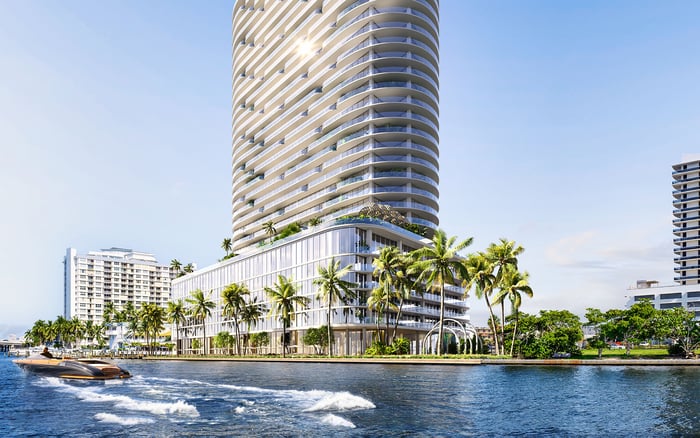
For primary-residence buyers at Shoma Bay, the essential discipline is to separate projected completion, contractual closing, permitted occupancy, and actual relocation. This guide explains how to organize written confirmations and adviser-led domicile planning without treating an anticipated move as an accomplished fact.

A primary residence is more than a waterfront address. It is the place around which ordinary life is organized, and its purchase calls for a timeline that accounts for both the transaction and the household’s relocation. At Shoma Bay North Bay Village, the priority is to distinguish anticipated delivery, contractual closing, permission to occupy, and the day the buyer actually begins living there.
The guiding discipline is simple: let the paperwork follow the facts. A purchase agreement establishes transaction obligations, but signing, funding, or receiving a projected completion update is no substitute for individualized domicile advice.
Build two linked calendars. One tracks the acquisition: deposits, notices, closing conditions, and occupancy information. The other tracks the household’s move and the evidence or filings that Florida counsel or a tax adviser determines are appropriate. Keep them coordinated, not interchangeable.
Shoma Bay is a waterfront condominium development at 1850 John F. Kennedy Causeway, North Bay Village, FL 33141, also identified as 1850 79th Street Causeway. Its 2024 groundbreaking marks a construction milestone, not a buyer-specific promise of possession.
Opening and completion projections have included both 2026 and 2027. Descriptions also differ on tower height and residence count. These discrepancies do not confirm a redesign, nor can they be resolved by choosing the date that best suits a relocation plan.
Request written clarification of the current project description and the expected sequence for your particular residence. Ask what remains provisional, who will issue formal notices, and which purchase-agreement provisions govern timing. Keep a general sales update distinct from a notice that counsel identifies as contractually significant.
For a household also considering Continuum Club & Residences North Bay Village, apply the same questions independently. Comparisons are more useful when each candidate has its own documented timing assumptions rather than a shared neighborhood-level expectation.
Create a single file for the purchase agreement, condominium documents, amendments, payment obligations, and written timing communications. Ask counsel to identify the provisions that govern the next steps, particularly if the anticipated closing date changes.
The file should support a concise set of questions:
What notice initiates the buyer’s closing preparations, and what response does the agreement require?
What conditions must be satisfied before this residence can close?
What written confirmation will establish permission to occupy?
How will inspection, access, and move-in arrangements be communicated?
Which deposit obligations or other commitments need attention if timing shifts?
These are review prompts, not representations of Shoma Bay’s contractual terms. The answers should come from the documents and the authorized parties handling the transaction.
Assign each calendar item a status: projected, confirmed, or completed. Record who provided the information and when it was received. This distinction helps prevent an optimistic conversation from becoming the basis for terminating another residence or committing to a fixed moving date.
Ask Florida counsel or a tax adviser to design the domicile and filing calendar around the buyer’s circumstances. Have the adviser distinguish domicile questions from homestead application questions rather than treating them as one administrative exercise.
The working file can separate transaction records, occupancy communications, the actual relocation chronology, and adviser-directed evidence. This is an organizational framework, not a list of legally accepted residency documents. Counsel should specify what is relevant, what additional information is needed, and when any declaration or application can accurately be made.
Address changes and residency declarations should reflect actual circumstances, not an expected closing. If the purchase precedes the household’s move, record them as separate events. If temporary accommodation becomes necessary, give the adviser the actual sequence rather than compressing it into the planned Shoma Bay arrival date.
Request a written action schedule that identifies the person responsible, the factual event that triggers each step, and any applicable deadline the adviser has confirmed. Do not assign filing dates from a marketing delivery estimate. When timing changes, send the revised facts to the adviser before changing declarations or submitting applications.
The planned mixed-use program includes a 35,037-square-foot Publix market and 15,628 square feet of retail space. For a primary-residence buyer, that matters to daily convenience. It does not confirm that every service will be operating when the residence closes.
Advertised amenities include a spa, Hammam, golf simulators, a Technogym-equipped fitness center, a resident lounge and bar, a kids club, and a pet spa. Ask which facilities are expected to be available at occupancy and how any remaining work could affect the household’s routine.
Parking deserves equally close attention. Most residences are marketed with one assigned space. A two-car household should confirm its unit-specific allocation, any additional rights, and the supporting documentation before making assumptions about daily use.
Residence offerings have included studios through three-bedroom homes and penthouses. Confirm current availability and assess the actual floor plan against work, storage, guests, and everyday living rather than relying on the breadth of the advertised collection.
Marketed rental terms include a minimum of 30 days, up to 12 times annually. Those terms do not establish an individual owner’s primary-residence eligibility. Confirm the restrictions in the governing documents and discuss any intended rental use with the adviser handling domicile and tax questions.
If the search extends to Miami Beach and 57 Ocean Miami Beach, keep lifestyle comparisons separate from legal conclusions. No project selection, amenity package, or ownership intention substitutes for an assessment of the buyer’s actual circumstances.
As closing approaches, bring counsel, the closing team, and the relocation adviser back to the same written chronology. Confirm transaction obligations, the status of occupancy permission, and the household’s intended move. Update the record as events occur.
If those dates diverge, preserve the distinction. Keep alternative accommodation and moving arrangements flexible where possible. Revisit adviser-directed evidence and filings rather than forcing them onto the original schedule. The objective is a well-documented transition into everyday life, not simply a completed purchase.
For a discreet conversation about Shoma Bay and your primary-residence search, connect with MILLION.
If branded residences are on your mind — as a home or as an allocation — we would be glad to share what we are seeing, privately.
Begin a quiet conversationShoma Bay is at 1850 John F. Kennedy Causeway, North Bay Village, FL 33141. The address is also identified as 1850 79th Street Causeway.
Advertised projections have included 2026 and 2027, but neither establishes a buyer-specific closing date. Request written timing information and have counsel review the relevant purchase-agreement provisions.
It establishes a construction milestone, not a guaranteed delivery date or permission to occupy a residence.
Track projected completion, contractual closing, permission to occupy, and actual relocation as separate events. Coordinate adviser-directed evidence and filings with the relevant facts.
Address changes and residency declarations should reflect actual circumstances, not an anticipated closing. Ask Florida counsel or a tax adviser when each action is appropriate.
Organize the purchase agreement, condominium documents, amendments, payment obligations, and written closing and occupancy communications. Counsel should identify which provisions and notices govern the transaction.
Record closing and relocation as separate events and provide the chronology to your adviser. Do not assume the purchase date should govern every residency-related action.
Most residences are marketed with one assigned parking space. Confirm the allocation and any additional rights for the specific residence in the supporting documents.
No. Marketed terms of minimum 30-day rentals, up to 12 times annually, do not establish an individual owner’s eligibility; confirm the restrictions and discuss intended use with your adviser.
No. Ask for written information about expected availability at occupancy, including the planned market, retail, and residential amenities.