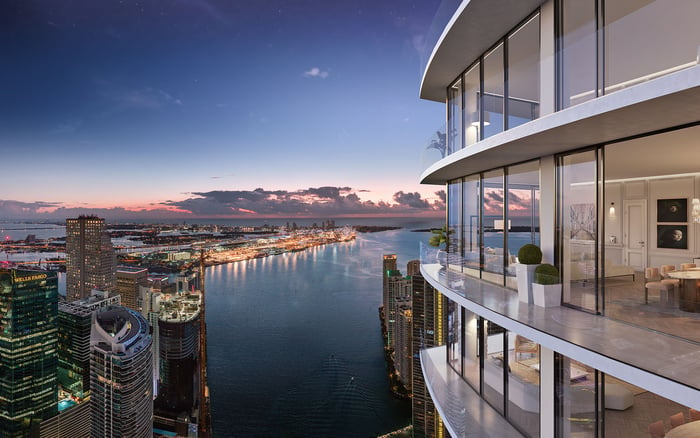
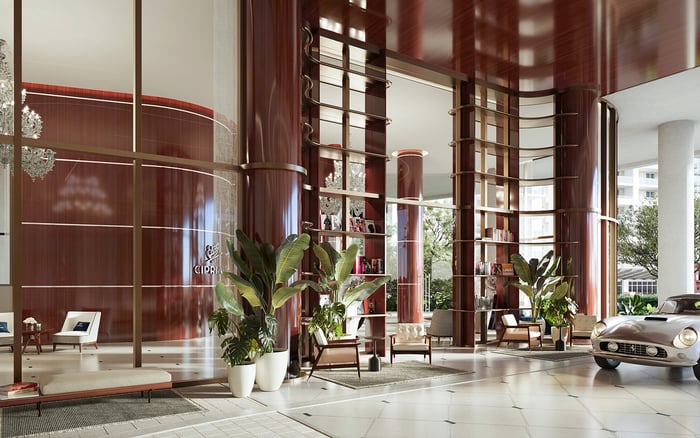
In Brickell, privacy is no longer a perk. It is a purchase criterion. For celebrity and ultra-high-profile buyers, the right tower is one that can be lived in quietly, managed professionally, and exited without friction. This editorial evaluates the practical discretion and anonymity considerations a buyer should weigh at 888 Brickell by Dolce & Gabbana: how privacy is shaped by building operations, access choreography, ownership structuring, and day-to-day lifestyle patterns. Where specifics are not publicly detailed, the focus stays on what can be verified during due diligence, and what should be negotiated in writing before contracting.
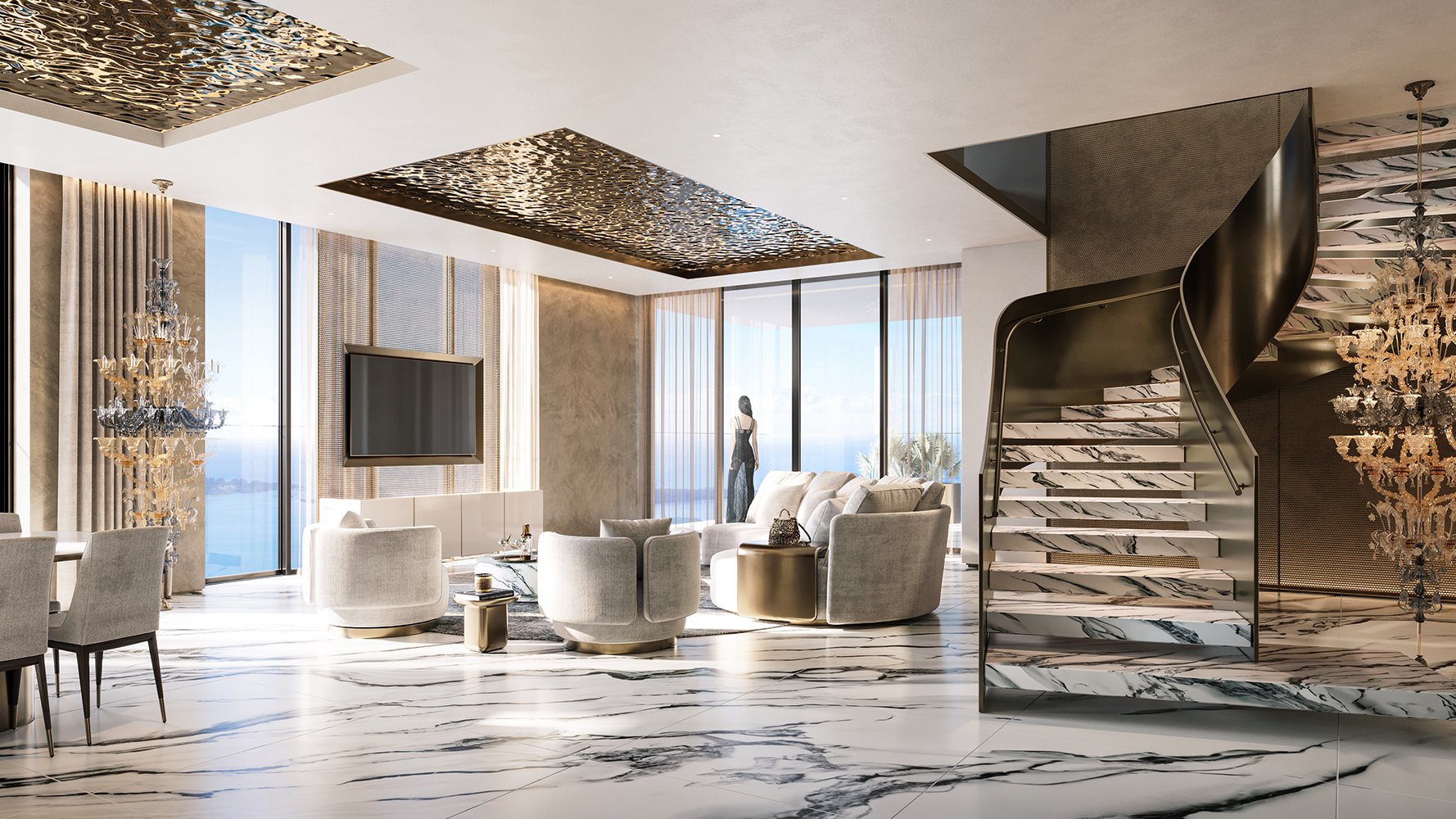
In today’s South Florida market, celebrity demand is less about spectacle and more about control: control of arrivals, control of information, control of daily rhythm. Brickell delivers a particular kind of discretion-urban, vertical, and professionally managed. For public figures who split time between cities, that combination can feel more secure than a standalone home, provided the building’s operations are genuinely calibrated for privacy.
That is the right lens for assessing 888 Brickell by Dolce & Gabbana. Not as a headline, but as an ecosystem: lobby choreography, elevator logic, staffing practices, vendor pathways, and the paper trail that follows a transaction.
Because highly visible buyers rarely want “special treatment” on display, the goal is quiet normalcy. The ideal building makes privacy the baseline for every resident-then supports elevated discretion for those who need it, without drawing attention.
Discretion in a luxury tower is the product of design plus discipline. Many buildings can look private in a rendering. Far fewer can prevent a resident’s routines, guests, and vendors from becoming casual knowledge.
For celebrity buyers, anonymity is typically compromised in three predictable places:
Access points: A single main entrance with frequent ride-share drop-offs creates unavoidable visibility. Multiple arrival options, covered transitions, and clean separation between residents, guests, and service traffic reduce contact.
Vertical circulation: Elevator banks and call systems matter. The more a building forces residents into one predictable path at predictable times, the more it invites chance encounters.
Human systems: Staffing and culture are the true firewall. Policies on photography, guest screening, vendor badges, package handling, and resident information determine whether a building feels discreet-or porous.
In Brickell, where density brings convenience, the strongest privacy is often procedural: who is allowed to know what, and how quickly that knowledge moves.
For high-profile owners, the most sensitive moment is rarely inside the residence. It is the transition from street to private space. That is why buyers should get clarity on how arrivals are handled, how vehicles queue, and where a resident can realistically avoid being seen.
Key due-diligence questions to resolve during the buying process include:
Is there a resident-only drop-off experience that minimizes overlap with guest arrivals?
How is parking managed, and what portion is controlled-access versus valet-only?
Where are cameras positioned, who can retrieve footage, and how long it is retained?
Even in a well-designed tower, privacy erodes quickly if pick-up and drop-off zones become social stages. In Brickell, the surrounding streetscape and neighboring towers can also create unintended sightlines. Evaluate not only the lobby, but the perimeter: curb cuts, lighting, and whether adjacent foot traffic intersects with resident flow.
Within the same neighborhood, privacy expectations vary widely from tower to tower. Comparing operational tone across nearby luxury offerings such as St. Regis® Residences Brickell or Baccarat Residences Brickell helps benchmark what “discreet service” looks like in real conditions-not marketing language.
In a celebrity context, service can unintentionally become exposure. A warm greeting is welcome. A greeting that includes a name, unit number, or recognizable companion in a public lobby is not.
Truly discreet buildings train for neutrality. Staff recognize residents, but avoid identifying them. They manage guests without making the lobby feel like an airport, and they handle vendors without advertising who lives where.
A buyer who requires elevated privacy should confirm-preferably in writing-how the building approaches:
Guest admission: Whether guests are announced, screened, or permitted only with resident authorization.
Vendor and contractor access: Whether vendors are restricted to certain hours, checked in, and routed through service paths.
Package and food delivery: Whether deliveries are held in a secure location, delivered to the door, or handled via controlled lockers.
Photography and filming: Whether the property has a posted policy, and how it is enforced.
Brickell attracts residents who live globally and rely on staff to manage daily logistics. That convenience becomes a privacy advantage when building systems are structured to keep personal details from turning into shared knowledge.
A building can be impeccably run and still leave an owner exposed if title is taken casually. For high-profile buyers, anonymity often begins with how the purchase is structured.
Common discretion tools include entities such as LLCs or trusts, but the right approach depends on the buyer’s goals: limiting public association, compartmentalizing assets, simplifying estate planning, or reducing day-to-day visibility. The objective is not secrecy for its own sake-it is reducing unnecessary linkage between a public identity and a physical address.
Privacy-minded buyers also plan for the “soft disclosures” that create visibility without ever becoming a headline, including:
Utility accounts and service providers
Insurance documentation
Building registration forms and resident directories
Mail forwarding and package labeling
The best outcome is consistency: the ownership vehicle, resident registration, and vendor-facing accounts should align, so the name a buyer wants kept quiet does not reappear through routine paperwork.
Modern buildings run on apps, QR codes, and resident portals. These systems are efficient, but they can also create a trail: guest logs, delivery records, access histories, and staff communications.
Before closing, a discreet buyer should ask what information is stored, who administers it, and what controls exist around access and sharing. The goal is not to micromanage operations-it is to ensure personally identifying information is not broadly accessible.
Practical points to clarify:
Whether resident names appear on intercoms or directory displays
Whether guest lists are visible beyond essential staff
How long access logs are retained
Whether staff devices are permitted to photograph IDs or documents
Digital privacy is now as consequential as physical privacy. In high-profile scenarios, the cleanest solution is often simple: minimize what is collected, restrict who can view it, and define retention practices.
Brickell is appealing because it can be lived without ritual. Restaurants, fitness, waterfront walks, and business centers are close. That density reduces the need for predictable routines that make a resident easy to track.
At the same time, it creates more ambient attention: more cameras, more foot traffic, more casual observers. Preserving anonymity often comes down to avoiding repeated exposure points. That can look like:
Using private car service instead of repeated ride-share patterns
Scheduling personal training and wellness at off-peak times
Routing visitors through controlled check-in rather than “meet you in the lobby”
If a buyer wants Brickell’s energy with a different operational feel, it can also be useful to compare nearby luxury towers such as The Residences at 1428 Brickell or ORA by Casa Tua Brickell. Different buildings attract different resident mixes, and that mix influences how quiet the common areas feel.
The most public moment of ownership can be move-in. Trucks, crates, vendors, and elevator reservations create visibility. In a celebrity purchase, move-in should be treated as an operation.
A discreet buyer plans for:
A move-in window that minimizes exposure
Pre-registration of vendors under entity names when appropriate
Staging and deliveries that avoid repeated lobby interactions
For furnished residences, the risk is not only visibility, but documentation. Invoices, white-glove delivery manifests, and vendor lists can circulate. A buyer’s representative should request privacy-conscious handling of all move-in paperwork, including how vendor names and resident details are stored.
Also consider the resale story. The more public the move-in and early residency become, the more narrative attaches to the unit. Many celebrity buyers prefer a property that can later trade like any other premium residence-without an identity premium or penalty.
A serious discretion plan is a checklist, not a vibe. During the sales process and prior to closing, a buyer should seek clear answers on:
Exact resident, guest, and service circulation routes
Policies for vendor access and contractor oversight
Directory visibility and intercom naming conventions
Package and delivery handling options
Building policy on filming, photography, and press presence
Data storage and resident portal access controls
The intent is to translate “privacy” into operational terms that can be evaluated. If a detail cannot be confirmed, it becomes a negotiation point-or an ongoing risk the buyer consciously accepts.
Is Brickell a good choice for celebrity privacy compared with a single-family home? It can be, if the building’s access and staff protocols reduce exposure more than a street-facing home would.
Does buying in an LLC guarantee anonymity? It helps, but anonymity depends on consistent setup across title, building records, and daily services.
What is the most common privacy weak point in luxury towers? Deliveries and vendors, because they touch multiple staff members and generate repeatable patterns.
Should a high-profile buyer avoid being listed in a resident directory? Yes, when possible; directory visibility and intercom naming are frequent sources of casual exposure.
Are private elevators necessary for discretion? Not always; well-managed elevator logic and controlled access can deliver similar privacy day to day.
How can a buyer reduce visibility during move-in? Use staged deliveries, controlled vendor lists, and off-peak scheduling coordinated with management.
Do building apps and portals create privacy risks? They can, because guest logs and access histories are stored; ask who can view data and for how long.
Is valet parking a privacy advantage or disadvantage? Either, depending on procedures; it can reduce exposure if it keeps arrivals covered and controlled.
Can staff training meaningfully improve discretion? Yes; policies on names, unit numbers, photography, and guest handling are often the true privacy layer.
What should be prioritized first: discretion in operations or anonymity in ownership? Both, but ownership structure sets the baseline and operations determine whether daily life stays quiet.
When you're ready to tour or underwrite the options, connect with MILLION Luxury.
If branded residences are on your mind — as a home or as an allocation — we would be glad to share what we are seeing, privately.
Begin a quiet conversation