For a collecting household, the oceanfront-versus-bayfront decision turns on address-specific flood exposure, verified delivery routes, suitable storage, and stable environmental control rather than the view alone.
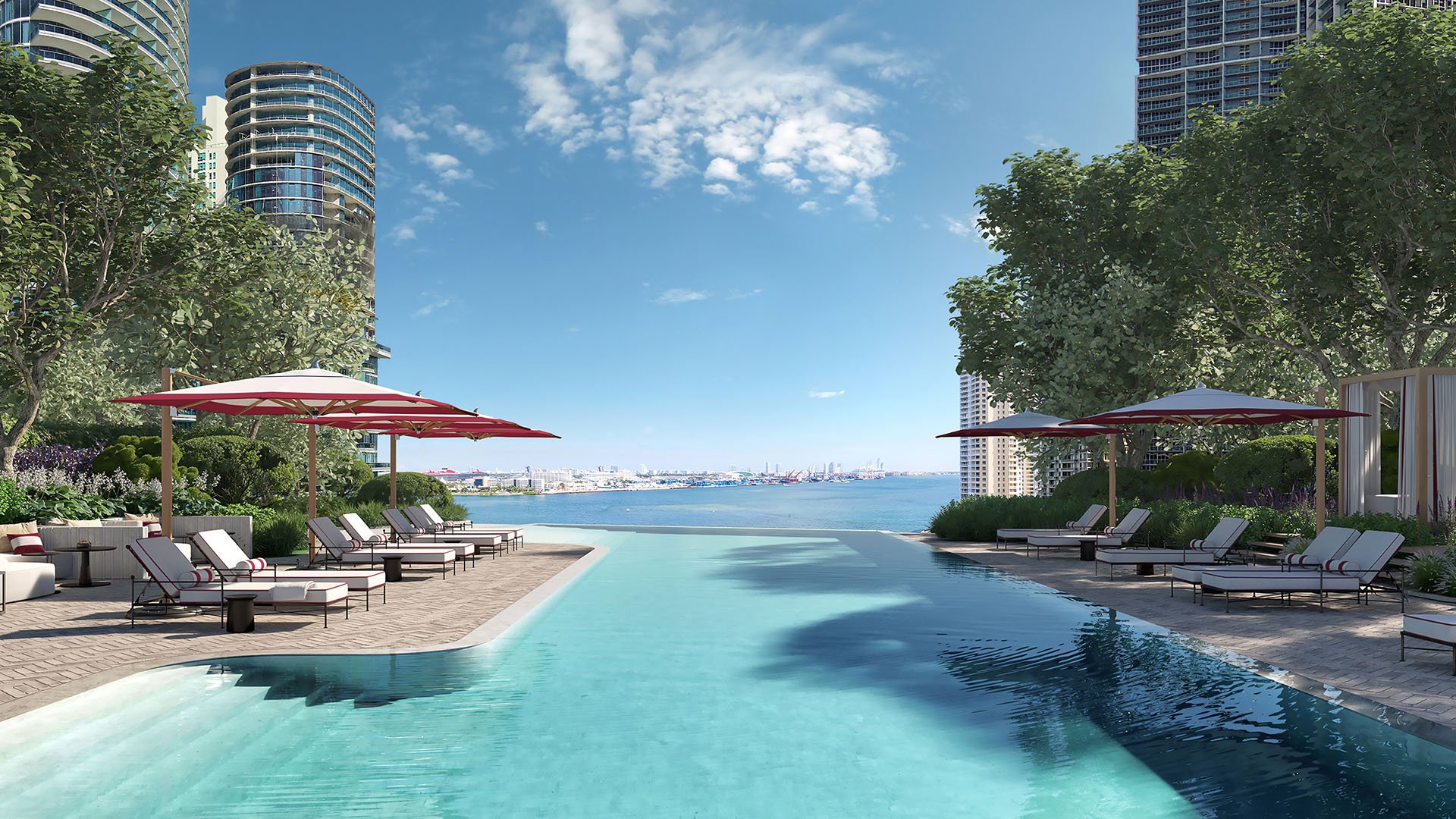
For a household living with paintings, sculpture, textiles, or sensitive objects, the waterfront decision extends beyond the view. The residence must support arrival, installation, storage, daily display, and care while its owners are away. A compelling outlook is only one part of that brief.
Oceanfront and bayfront labels do not establish freight capacity, loading arrangements, backup-power coverage, or climate-control performance. Those questions belong to the individual building and residence. The most useful comparison is operational: can each candidate home support the collection without making its care an ongoing compromise?
Lifestyle preferences can remain decisive once those requirements are met. Before choosing between an ocean-facing address in Miami Beach and a bay-oriented search in Brickell, however, establish the same written collection brief for both. Include the largest crated work, the most environmentally sensitive object, storage needs, and who will respond to an alert.
Waterfront living should begin with a property-specific review of ground elevation, mapped flood zones, storm-surge exposure, and sea-level-rise scenarios. Consider those layers alongside property data rather than assuming one side of the shoreline is safer.
Coastal VE flood zones carry additional hazards associated with storm waves. Mapped flood designations also inform flood-insurance requirements and belong in the ownership-cost discussion. Separately, storm-surge planning zones identify areas potentially affected by hurricane surge of at least 1.5 feet. These planning designations are not interchangeable with flood-insurance zones.
Bayfront does not mean free of substantial inundation. During Hurricane Irma, measurements along Biscayne Bay recorded approximately 4-6 feet, with an estimated depth exceeding 5 feet at Matheson Hammock Park. Those historical observations are not predictions for every bayfront property; they are a reason not to treat the bay as an automatic refuge.
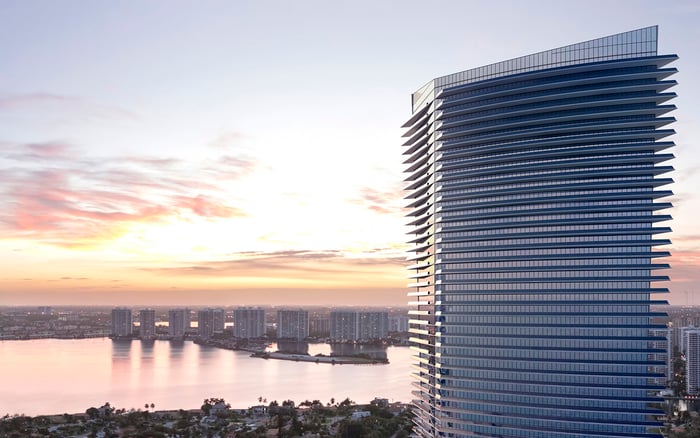
For a Miami Beach candidate such as The Perigon Miami Beach, request the address-specific flood review alongside the building’s collection-handling information. Apply the same discipline to every bay-oriented alternative. Include the proposed storage location and delivery route in the comparison, not just the living-room elevation.
An artwork’s dimensions are not its shipping dimensions. Ask the art shipper to assess the crated work against the complete route from truck arrival to final installation. Have the building manager verify truck clearance, staging space, delivery hours, elevator cab and door dimensions, and weight limits.
The smallest opening or tightest turn deserves as much attention as the freight elevator. Request a route review covering service entrances, corridors, residence doors, and the approach to the intended wall or display position. Written confirmation carries more weight than a general assurance that large deliveries are accommodated.
In Sunny Isles Beach, a household considering Jade Signature Sunny Isles Beach should put these questions directly to management and its shipper. A project name or oceanfront setting is not evidence that a particular crate will fit.
If the proposed solution involves hoisting, crane work, window removal, or balcony access, obtain written approval before committing to delivery. Clarify who authorizes the operation and what conditions apply. Resolve the installation plan before the collection is in transit, rather than improvising at the loading entrance.
A spare room is not automatically suitable collection storage. Ask whether its environmental conditions can be monitored independently and maintained consistently through seasonal changes. Assess storage with the same care as the principal display rooms, even if works will remain there only between rotations.
Recommended conditions for most artworks are 65-75°F and average relative humidity of 45-55%. Stability matters alongside those ranges: storage conditions should show little or no temperature and humidity variation. A thermostat setting alone cannot demonstrate that the room meets the brief.
For sensitive objects, well-sealed cabinets or display cases with humidity-buffering materials may help control the immediate microclimate. Determine their suitability for the objects concerned rather than assuming it from the room’s overall comfort.
When comparing a Brickell residence such as Una Residences Brickell with another waterfront candidate, identify the actual storage room and its controls. Ask how it will be monitored and accessed while the household is away. The relevant distinction is verified suitability, not an ocean-versus-bay preference.
There is no single temperature-and-humidity prescription for every collection. Recommended relative-humidity ranges include 40-60%, while narrower recommendations specify 45-55%. For many hygroscopic materials, including canvas paintings, textiles, and objects containing animal glue, recommended stable conditions are 40-60% relative humidity and 16-25°C.
These ranges are starting points for a collection-specific discussion, not guarantees for every object. Ask a conservator to establish an appropriate operating brief, including acceptable variation. Minimizing abrupt relative-humidity swings greater than 5% within 24 hours is also a general recommendation.
Request historical temperature and humidity records wherever available. Confirm continuous monitoring in exhibition and storage areas, independent monitoring arrangements, and the relevant HVAC controls. The question is not simply whether the home feels cool, but whether measured conditions remain appropriate over time.
For a household evaluating Vita at Grove Isle, request the same evidence as for an ocean-facing residence. Neither setting establishes residential climate performance on its own.
Backup power requires a system-by-system review. Ask which collection-protection systems remain powered during an outage, including the relevant climate controls and monitoring equipment. Do not assume that a building’s generator extends to every function within the residence.
Pair that review with a household response plan. Identify who receives environmental alerts, who can enter the residence, and who contacts the collection’s conservator or shipper when conditions depart from the agreed brief. For owners who travel frequently, those responsibilities should be explicit.
Keep the flood assessment, delivery approvals, environmental requirements, and outage arrangements together. This makes the collection’s operating needs easier to communicate to household staff, management, and specialist advisers.
The stronger home is the one that satisfies the collection brief with clear evidence: an assessed address, a workable freight route, suitable storage, measurable climate stability, and confirmed outage arrangements. Where an answer remains unresolved, make it a condition of further diligence rather than filling the gap with assumptions about the waterfront setting.
Once both candidates meet that standard, choose the outlook and daily rhythm the household prefers. Collection care should support the pleasure of living with art, not compete with it.
Explore South Florida residences with MILLION and bring your collection’s requirements into the search from the outset.
If branded residences are on your mind — as a home or as an allocation — we would be glad to share what we are seeing, privately.
Begin a quiet conversationNeither setting establishes better freight access, storage, or climate control. Compare the individual residence and building against the collection’s requirements.
Yes. During Hurricane Irma, measurements along Biscayne Bay recorded approximately 4–6 feet of inundation, although those observations do not predict exposure at every address.
Review ground elevation, mapped flood zones, storm-surge exposure, and sea-level-rise scenarios. Include the proposed storage location and delivery route in the assessment.
No. Storm-surge planning zones identify areas potentially affected by hurricane surge of at least 1.5 feet and are distinct from mapped flood-insurance designations.
The shipper and building manager should verify truck clearance, staging, delivery hours, elevator dimensions and weight limits, and the complete route to installation. Use crated dimensions for the review.
Obtain written approval before committing to any delivery that requires hoisting, crane work, window removal, or balcony access.
General guidance recommends 65–75°F and average relative humidity of 45–55% for most artworks. The appropriate conditions still depend on the collection and individual objects.
Thermostat settings alone do not establish actual storage or display conditions. Continuous temperature and humidity monitoring helps assess stability and identify departures from the agreed operating brief.
Well-sealed cases or cabinets with humidity-buffering materials can help control an object’s immediate microclimate. Suitability should be assessed for the specific object.
Confirm which collection-protection systems remain powered during an outage, including relevant climate controls and monitoring. Do not assume generator coverage includes every residential function.