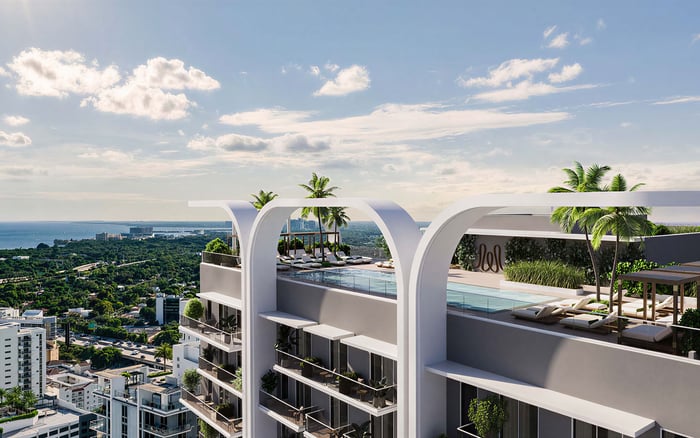
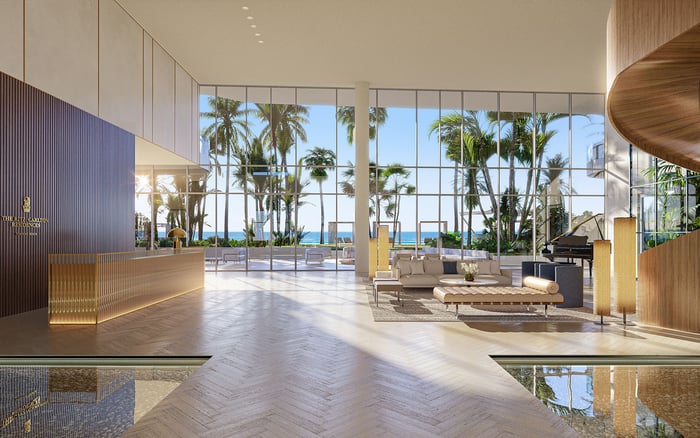
In South Florida’s most design-forward towers, “which unit?” often matters more than “how many bedrooms.” This MILLION Luxury guide breaks down how floor level, view corridors, corner exposure, and floor-plan efficiency influence daily living, operating costs, and long-term desirability, with a practical framework to compare two seemingly similar residences.

In a mature high-rise market, the most consequential differences often live within the same address. Two residences with identical bedroom counts can live - and trade - very differently based on orientation, floor level, view corridor, proximity to elevators or amenities, and the quiet logic of a well-drawn plan. Those variables can create real price separation inside a single project, even before finishes or upgrades enter the conversation.
For buyers in Miami-beach, Brickell, and the broader coastal corridor, this is what sits behind the cocktail-party shorthand of “higher is better.” Sometimes it is. Sometimes it isn’t. The most valuable unit is the one whose specifics match your lifestyle, your noise tolerance, your need for privacy, and your appetite for shared-building complexity.
Higher floors are prized for clear reasons: you are typically farther from street noise, sightlines are often cleaner, and privacy can feel more assured. Daylight may read more evenly as well, particularly in glass-heavy towers where horizon exposure and open sky subtly shift the home’s mood.
There is, however, a real operational trade-off that sophisticated buyers price in emotionally - not only financially. The higher you go, the more your daily rhythm depends on elevators, especially during peak hours or service disruptions. A quiet, high-floor sanctuary can feel less convenient when you’re carrying groceries, hosting guests for a dinner party, or moving through the building during an outage.
Low floors and ground-adjacent homes can be compelling for accessibility and a faster in-and-out lifestyle. The caution is predictable and manageable: apply extra scrutiny to privacy, street-level noise, and foot-traffic exposure. In certain footprints, the “easy” floor becomes the floor where window treatments, security posture, and acoustic comfort carry more weight.
If you’re evaluating high floors versus low floors, treat it less as a hierarchy and more as a fit test. Ask yourself: do you want the sense of remove that comes with altitude, or do you prefer an effortless connection to the lobby, amenities, and the street?
In South Florida, “water view” is used casually - but owners live in specifics: sunrise versus sunset, direct ocean versus bay, a protected corridor versus a future construction site. View value is often a function of what you see today and what you’re likely to see five years from now.
Even within the same building, two units on the same floor can diverge because one looks over a calm, open plane while the other faces a brighter, more active scene. Consider the view at night, too. A dramatic skyline can be theatrical, but it can also introduce light spill and a more public feeling. Conversely, a darker water outlook may read as serene, but for some owners it can feel quiet to the point of isolation.
For buyers who want Miami Beach’s classic mix of ocean proximity and refined amenity culture, a property such as Setai Residences Miami Beach can be a useful reference point for thinking through how elevation and outlook intersect with lifestyle. The goal isn’t the name; it’s the discipline of matching view type to how you actually spend your evenings.
Within a high-rise, location is three-dimensional. Being near elevators, trash chutes, gyms, pools, or amenity decks can deliver convenience, but it can also bring incremental noise, more foot traffic, and a subtle loss of privacy. A residence that looks perfect on paper can feel busier than expected if it sits along a high-traffic corridor.
Corner units are widely treated as more desirable because they often deliver light and ventilation from multiple sides. In practice, corner exposure can also support better furniture planning, clearer room definitions, and a sense that the home has a “front” and “back,” rather than a single long façade.
Miami Beach buyers who value discreet arrivals and a service-forward environment often find the quietest units are defined by thoughtful adjacency - not simply the highest floor. As you tour, pay attention to what you hear in the hallway, how close you are to amenity doors, and whether the residence shares walls with louder common areas.
Square footage sells, but usable space sustains. Inefficient layouts can make a larger home live smaller, especially when circulation is dominated by long hallways, awkward room shapes, or oversized transitional areas that don’t support daily life. Conversely, a smaller residence with clean proportions and intelligent storage can feel calm, expansive, and far more “expensive” than its size suggests.
Floor-plan quality influences value because layout shapes function, circulation, and perceived spaciousness. In the ultra-premium segment, buyers aren’t just purchasing rooms; they’re purchasing how a morning works, how a dinner party flows, and how privacy holds when guests stay over.
A practical touring habit: stand in the places you’ll actually use. Where is the primary seating area relative to the view? Does the kitchen function as a display or as a workspace? Can you move from entry to living to terrace without cutting through private zones? If the answers feel effortless, the plan is doing luxury’s quiet work.
In vertical living, lifestyle is partly a line item. Amenity-rich buildings can support marketability and daily pleasure, but they can also raise operating costs - which can translate into higher monthly dues. HOA fees affect affordability and resale appeal, so evaluate both today’s number and the building’s direction of travel.
Special assessments deserve direct attention. When reserves are insufficient for major repairs or capital projects, associations can levy one-time charges. In the luxury segment, buyers sometimes underestimate how emotionally disruptive an assessment can feel, even when it’s financially manageable. This is where governance and budgeting discipline become part of your quality-of-life purchase.
A structured due-diligence process typically includes reviewing condo documents - such as budgets, reserves, and rules - before committing. Management quality matters because it shapes maintenance, budgeting discipline, and the resident experience. If the building feels beautifully maintained, ask whether that standard is supported by stable operations or by deferring costs.
When you’re choosing between two similar residences, intuition can be persuasive - but it can also overvalue a single “wow” factor. A weighted decision matrix reduces bias by making trade-offs explicit. List your criteria, assign weights based on importance, and score each option consistently.
For luxury condos, criteria often include: view permanence, noise exposure, privacy, layout efficiency, outdoor-space livability, elevator convenience, parking access, and monthly carrying costs. Add a category for building health: reserve posture, fee trajectory, and clarity of rules. Then add lifestyle items: do you entertain, work from home, travel frequently, or require lock-and-leave simplicity?
This method doesn’t strip emotion from the decision. It simply forces the question: are you paying for what you love, or are you paying for what photographs well?
Miami Beach is a masterclass in how small differences change ownership. The ocean is a magnet, but so is privacy. For some buyers, a quieter, more residential oceanfront experience will outrank broader nightlife adjacency.
Consider how boutique scale and direct beach access shape your daily routine. A project like 57 Ocean Miami Beach can anchor the conversation around oceanfront living, where outdoor space, wind exposure, and the soundscape of the shoreline become real decision criteria. Meanwhile, for those who prioritize a branded service environment and a highly polished arrival sequence, The Ritz-Carlton Residences® Miami Beach illustrates how management culture and resident experience can carry as much value as a view.
For buyers drawn to social gravitas and members-club energy, Casa Cipriani Miami Beach offers a different kind of luxury signal: a lifestyle that is curated, not merely accommodated. The key is alignment. A high-touch environment can be extraordinary if you use it. If you travel constantly and want minimal engagement, quieter operational simplicity may win.
Two residences of similar size can produce very different utility bills. Sun exposure, glass area, wind patterns, and HVAC load can change real monthly costs, as can how often you occupy the home. For second-home owners, this also affects humidity management and the “closed-home” strategy.
Ask practical questions during due diligence: which direction does the primary glass face? How does the building manage climate control in common areas? Are there restrictions on thermostat settings when the unit is vacant? These details are rarely glamorous, but they materially shape long-term satisfaction.
South Florida’s condo and home market has seen increased activity tied in part to mortgage-rate declines, but at the luxury end, the more durable driver is confidence. Buyers move decisively when the unit’s story is coherent: a plan that lives well, a view that feels enduring, and a building whose finances and management appear disciplined.
In practice, the best purchase is rarely the loudest one. It’s the residence where floor level, stack position, and operations all reinforce the same promise: effortless daily life and clean future liquidity.
Do higher floors always mean better resale? Not always. Higher floors often bring less noise and more privacy, but layout, view corridor, and building health can matter more.
Are corner units worth prioritizing? Often, yes. Corner exposure can improve light and ventilation and may feel more private than a mid-corridor interior line.
How should I evaluate view permanence? Look beyond what you see today and consider nearby development potential, sightline obstructions, and nighttime light conditions.
What are special assessments, and why do they matter? They’re one-time HOA charges for major repairs or projects when reserves fall short, and they can materially change your all-in cost.
Do amenities increase value or just HOA fees? Both can be true. Amenities can boost lifestyle and marketability, but they also raise operating costs that may increase dues.
Is a larger square-footage unit always better? No. Usable space and circulation often beat raw size, since inefficient layouts can make a bigger home live smaller.
How can I compare two similar condos objectively? Use a weighted decision matrix that scores criteria like view, noise, privacy, layout, and carrying costs to make trade-offs explicit.
Should I avoid units near elevators and amenity decks? Not universally, but proximity can increase foot traffic and noise. Tour at different times to gauge the real corridor experience.
What condo documents should I review before buying? Focus on budgets, reserves, rules, and recent or planned capital work to understand the building’s financial posture.
What’s the biggest mistake luxury buyers make in towers? Falling for a single headline feature while ignoring daily livability factors like plan efficiency, adjacency noise, and fee trajectory.
For a confidential assessment and a building-by-building shortlist, connect with MILLION Luxury.
If branded residences are on your mind — as a home or as an allocation — we would be glad to share what we are seeing, privately.
Begin a quiet conversation