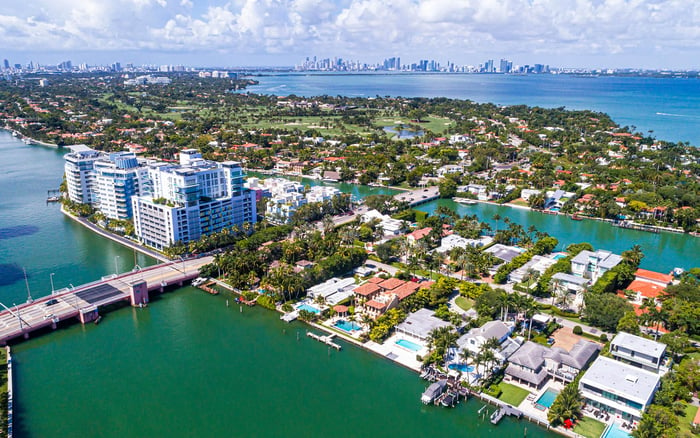
A discreet buyer’s guide for Chicago collectors evaluating Boca Raton and wider South Florida homes through the lens of art storage, installation routes, climate control, light, security, and long-term stewardship.

For a Chicago collector considering Boca Raton, the question is not simply where to live in South Florida. It is how a home will perform around important objects. Art, design, photography, works on paper, sculpture, collectible furniture, and archives impose a different discipline on a residence. They call for quiet rooms, thoughtful service circulation, reliable environmental control, restrained sunlight, and enough privacy for vendors to work without turning the home into a staging area.
The strongest purchase decisions begin before the first showing. A collector should define what must be displayed, what should remain in rotation, what needs dark storage, and what can be held off-site. That hierarchy changes the meaning of a floor plan. A glamorous living room may photograph beautifully, but a secondary room with stable conditions, limited glazing, and discreet access can be more valuable to the collection than another view corridor.
Boca Raton appeals to many buyers because it can offer a more residential cadence than the denser cores to the south, while still keeping the broader South Florida cultural and design circuit within reach. Yet every property type carries tradeoffs. A condominium may offer lock-and-leave convenience and controlled access. A single-family home may provide deeper storage potential and easier customization. The art determines which format is more intelligent.
Serious art planning begins at the curb. Before debating finishes, study the path from vehicle arrival to final placement. Is there a protected entry sequence? Can crated works move without tight turns, fragile thresholds, or public interruptions? Is there an elevator that can accommodate oversize pieces, or a service path that avoids the main social spaces? A home that forces a complicated delivery will make every future installation more expensive and more stressful.
For condominium buyers, private or semi-private elevator access can be a meaningful advantage, not for spectacle, but for control. It reduces the number of shared touchpoints and can make installations more discreet. In Boca Raton, buyers comparing Alina Residences Boca Raton with other luxury residences should consider how arrivals, parking, elevator protocols, and loading access align with the scale and sensitivity of their collection.
In houses, the same logic applies differently. Look for garage depth, covered transitions, wide interior openings, and a practical route to the principal display areas. If a sculpture or large canvas can enter only through temporary door removal or altered landscaping, the home may still work. That reality should be understood before closing, not discovered on installation day.
South Florida living brings light, water, greenery, and an indoor-outdoor rhythm that many Chicago buyers want. For art, those same pleasures require discipline. The goal is not to turn a residence into a vault. The goal is to create zones where the collection can live calmly while the owners enjoy the home naturally.
Ask how the property manages humidity, air conditioning consistency, filtration, and backup planning. A collector-grade approach separates public comfort from object care. Bedrooms and lounges may follow daily lifestyle patterns, while storage rooms, display corridors, and archive spaces should be more carefully controlled. If the home has extensive glass, evaluate solar exposure, shade potential, window treatments, and wall placement with the same seriousness you would give to a kitchen or primary suite.
New-construction can be attractive because buyers may have more opportunity to coordinate lighting, wall reinforcement, millwork, and storage requirements before habits harden. Still, a new residence is not automatically collection-ready. It must be tested against the art itself. The question is not whether the home is luxurious. It is whether fragile, valuable, or irreplaceable works can live in a predictable daily environment.
Boca Raton often suits collectors who want privacy, ease, and a residential base. For buyers who prefer a branded hospitality framework, The Residences at Mandarin Oriental Boca Raton may enter the conversation as part of a broader search for service, discretion, and convenience. Nearby options such as Glass House Boca Raton can be considered through the same lens: how does the residence support quiet ownership of significant objects?
West Palm Beach can be compelling for buyers who want proximity to Palm Beach’s social and collecting orbit while retaining a condominium lifestyle. A residence such as The Ritz-Carlton Residences® West Palm Beach belongs in discussions where service expectations, privacy, and an elegant arrival sequence matter as much as views.
Miami answers a different need. For collectors who regularly engage with galleries, design events, and international visitors, Brickell, Miami Beach, Coconut Grove, and the Design District orbit may be part of the ownership strategy. A buyer might maintain Boca Raton as the calmer primary base while considering a Miami pied-à-terre such as The Residences at 1428 Brickell for access, entertaining, or seasonal flexibility.
This is where Design & Architecture becomes more than taste. It becomes logistics, preservation, and choreography.
Waterfront and Oceanfront residences carry obvious appeal, especially for buyers leaving Chicago winters. For collectors, the view must be reconciled with the wall. Floor-to-ceiling glass can make a home feel extraordinary, but it can also reduce usable hanging surfaces and intensify light-management requirements. A dramatic exposure may be right for entertaining and daily living, while the most important works belong in a more protected gallery corridor, library, office, or interior room.
The best collectors do not fight the architecture. They sequence it. Public rooms can celebrate water, skyline, garden, and terrace. Protected rooms can hold works that need calm. Transitional spaces can carry rotation pieces, photography, or sculpture chosen for resilience. The result is not a compromise. It is a better house, because the art and the setting stop competing.
For a Chicago buyer, this may require a mental reset. A South Florida home should not be judged solely by the largest uninterrupted view. It should be judged by the balance between visual drama and curatorial control. If every major wall is glass, you may own a beautiful residence with nowhere appropriate to place the collection you care about most.
Before contract, assemble the right advisory circle. The real estate advisor should coordinate with an art adviser, conservator, installer, insurance specialist, and, when needed, an architect or lighting designer. Each sees a different risk. The installer studies movement. The conservator studies environment. The insurance specialist studies security and documentation. The architect studies what can be changed without compromising the residence.
The most refined acquisitions are often the quietest. They are not driven by a dramatic first impression alone. They are shaped by questions that protect future ownership: where does the crate go, how does the work enter, where is the dark room, how stable is the environment, who has access, and how will the collection evolve over the next decade?
This is also a Lifestyle decision as much as a real estate one. A collector who entertains frequently may want generous display walls and flexible lighting. A more private owner may prioritize storage, study rooms, and secure circulation. A buyer with large contemporary works may need volume and wall strength. A collector of works on paper may prioritize light control and archive conditions.
Should art storage influence the neighborhood search? Yes. The right area should support your daily life, service access, privacy expectations, and the vendors who help maintain the collection.
Is a condominium or single-family home better for a collector? Neither is automatically better. Condominiums may offer controlled access, while single-family homes may allow more customization and storage flexibility.
What is the first thing to inspect for large artworks? Study the route from arrival to placement. Elevators, turns, thresholds, and service access can matter as much as the display wall.
Are waterfront homes suitable for serious collections? They can be, provided the home has protected rooms, thoughtful light control, and a plan for works that should not live in full exposure.
How important is natural light control? Very important. Beautiful light should be managed so it enhances the home without compromising sensitive works.
Should buyers plan off-site storage as well? Often, yes. Off-site storage can support rotation, seasonal occupancy, or works that require conditions the residence should not be forced to provide.
Can a new residence be adapted for art before move-in? Often it is easier to plan lighting, reinforcement, millwork, and storage needs before the home is fully furnished and occupied.
What professionals should be involved before closing? Consider an art adviser, conservator, installer, insurance specialist, and design professional alongside the real estate advisor.
Does Boca Raton work for collectors moving from Chicago? It can, especially for buyers seeking privacy, space, service access, and a calmer residential base within South Florida.
What is the most overlooked art-storage issue? Many buyers focus on wall space and overlook the daily operating environment, including light, air, access, and secure storage.
For a discreet conversation and a curated building-by-building shortlist, connect with MILLION.
If branded residences are on your mind — as a home or as an allocation — we would be glad to share what we are seeing, privately.
Begin a quiet conversation