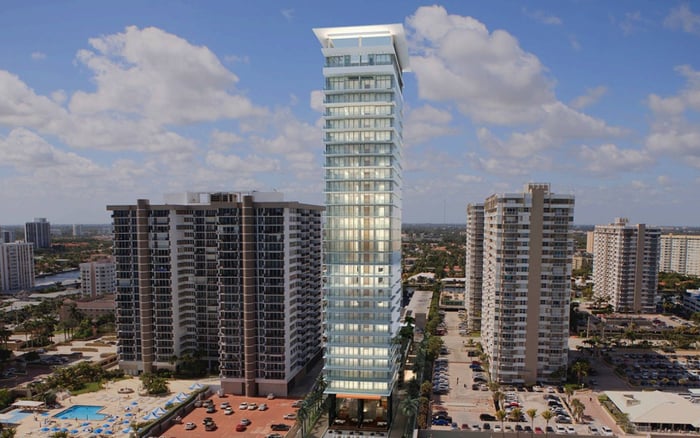
A practical luxury buyer’s guide to evaluating marina access, boat-slip rights, waterfront governance, and exit value before purchasing in Hallandale Beach.
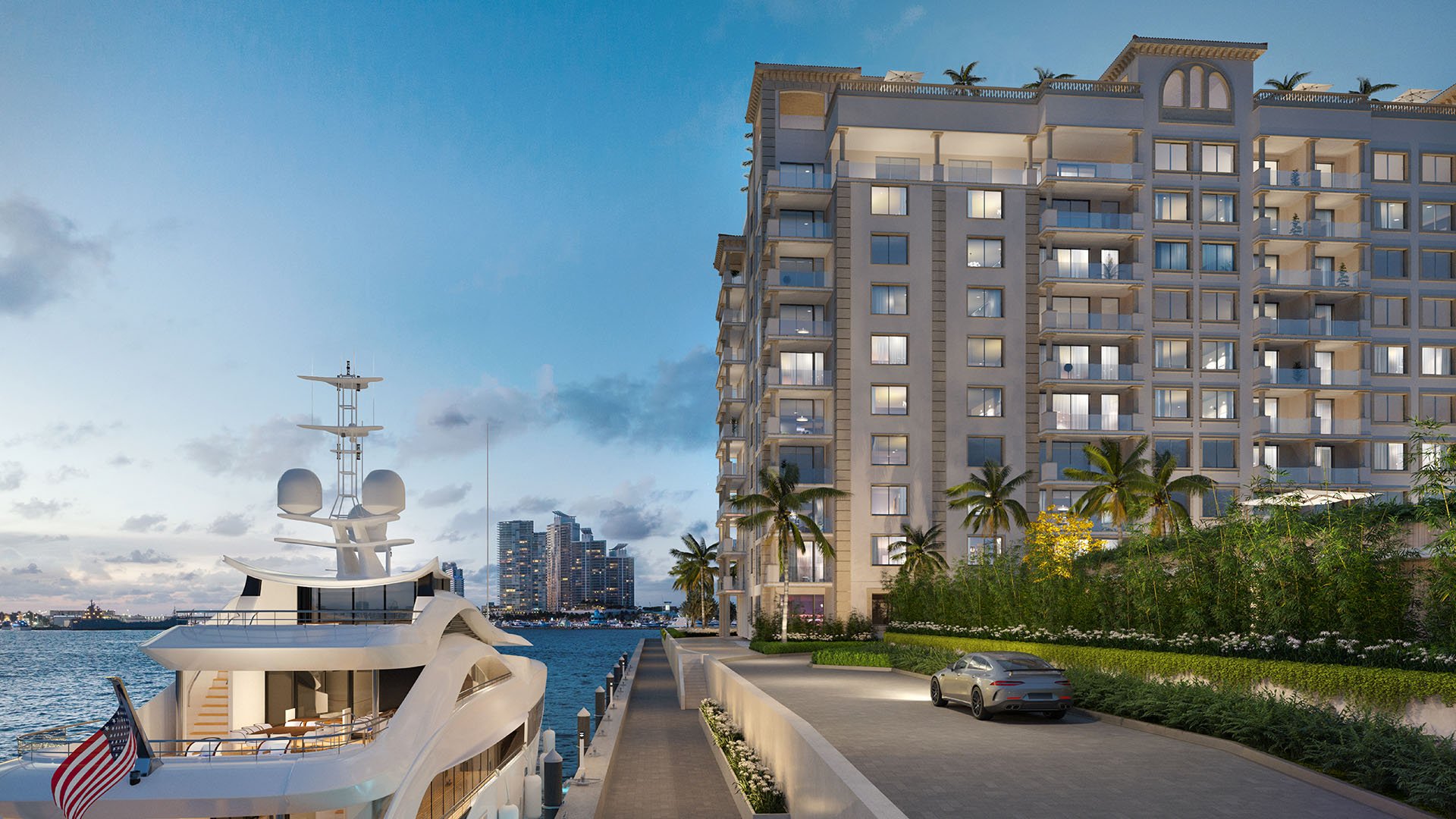
In Hallandale Beach, a marina decision should begin before a buyer falls in love with a terrace, finish package, or skyline orientation. For a serious boater, the residence and the berth are part of the same ownership thesis. One defines the home experience. The other determines whether the property can support the way the owner actually moves through South Florida.
Disciplined buyers separate “waterfront” from “usable water.” A beautiful outlook may have little relationship to navigability, berth availability, marina governance, insurance obligations, or the practical rhythm of leaving and returning by boat. That distinction matters because a marina is not merely an amenity. It is an operating environment with rules, costs, capacity constraints, and long-term resale implications.
This is especially relevant for buyers comparing Hallandale Beach with nearby coastal markets. A residence such as Shell Bay by Auberge Hallandale may attract a buyer who values a broader private-club lifestyle, while 2000 Ocean Hallandale Beach may appeal to those focused on an oceanfront residential experience. The right question is not which address is more glamorous. It is whether the ownership structure supports the buyer’s actual boating life.
A serious marina strategy starts with definitions. Buyers should clarify whether a project offers owned slips, assigned slips, leased slips, transient docking, club access, priority access, or simply proximity to nearby marine facilities. Each model behaves differently.
An owned or deeded interest may carry one set of transfer considerations. A leased or licensed arrangement may be subject to renewal terms, association rules, or changes in availability. Priority access can be valuable, but only when the hierarchy is clearly documented. Casual access may be convenient for social boating, yet inadequate for an owner with a vessel that requires predictable storage, service coordination, and secure access.
This is where boat-slip diligence becomes essential. Buyers should review what size vessel can be accommodated, whether beam and draft are addressed, how utility charges are handled, whether liveaboard use is restricted, and whether captains or crew may access the marina independently. None of these points should be left to conversation. They belong in the documents.
A marina can look effortless from the promenade and still be complex behind the scenes. The governing documents should answer how slips are allocated, who controls pricing, what rules apply to guests, whether commercial use is prohibited, how maintenance is funded, and whether special assessments can affect marine infrastructure.
The strongest buyers read these materials as operators, not tourists. They ask how conflicts are resolved when demand exceeds supply. They ask whether hurricane protocols are written, who is responsible for securing vessels, and how quickly access resumes after a major weather event. They also ask whether marina privileges transfer with a sale, terminate upon sale, or require separate approval.
For Hallandale buyers, these questions should sit beside the usual condominium review. A waterfront residence may have impeccable design, but marina uncertainty can narrow the future buyer pool. Conversely, a clearly governed marine component can deepen appeal for a smaller, more committed segment of purchasers.
Hallandale Beach does not exist in isolation. Buyers often compare it with Aventura, Sunny Isles Beach, Fort Lauderdale, and select Miami waterfront neighborhoods. The purpose is not to crown one market. It is to understand the trade-offs among boating convenience, residential privacy, beach access, service depth, and daily drive patterns.
A buyer considering Avenia Aventura, for example, may be focused on a different waterfront rhythm than a buyer evaluating Hallandale Beach. Farther north, St. Regis® Residences Bahia Mar Fort Lauderdale gives buyers another lens on how a marine-oriented setting can shape expectations around service, scale, and waterfront identity.
These comparisons should remain practical. How often will the owner use the boat? Will the vessel be owner-operated or captain-managed? Is the priority ocean access, entertaining, sportfishing, day cruising, or simply preserving the option to keep a boat nearby? The right property is the one that answers the owner’s real use case without forcing compromises into daily life.
Marina convenience is rarely free, even when it feels seamless. Buyers should ask for a complete view of recurring charges, utility fees, insurance requirements, maintenance obligations, and any association-level reserves connected to marine infrastructure. They should also understand whether dredging, dock repairs, seawall work, security, or storm-related remediation could become shared costs.
The point is not to avoid expenses. Luxury ownership often involves paying for precision, privacy, and readiness. The point is to avoid ambiguity. A buyer who understands the cost stack can compare properties rationally and negotiate from strength.
This is where a buyer’s-guide mindset is useful. Treat the marina like a separate asset class inside the purchase. It has utility value, lifestyle value, and potential resale value. It also has operational risk. The best purchase is not necessarily the one with the lowest fees. It is the one where fees correspond to quality, governance, and reliability.
For many ultra-premium owners, the decisive factor is not the berth itself, but the choreography around it. Can the owner arrive with guests and board comfortably? Is there adequate privacy? Are provisioning, fueling, cleaning, and captain access easy to coordinate? Does the marina feel residential, commercial, or hybrid?
Security deserves special attention. Buyers should understand access controls, guest procedures, after-hours protocols, and the boundary between residential staff and marina staff. A beautiful marina that feels porous may not suit an owner who values discretion. A secure marina with cumbersome procedures may frustrate frequent use. The balance should fit the household’s habits.
Waterfront living is most successful when the home, car arrival, lobby sequence, outdoor areas, and vessel access feel like one continuous experience. If any link in that chain is awkward, the owner will use the boat less often than expected.
The resale value of a marina-oriented purchase depends on clarity and scarcity. Future buyers will want to know exactly what rights come with the residence, how those rights transfer, and whether the marina can accommodate the vessel profile they have in mind. If the answer requires too much explanation, value may become harder to defend.
Buyers should also consider whether the property appeals beyond boaters. A residence that is compelling only because of marina access may be vulnerable if the marine component changes or if the next buyer does not own a vessel. A stronger position is a property that stands on its own architecturally and residentially, with marina access as an additional layer of desirability.
That is the central discipline in Hallandale Beach: buy the home as a home, evaluate the marina as an operating asset, and make sure the two strengthen each other.
Should marina access be evaluated before choosing a residence? Yes. For boaters, marina rights, usability, and transferability can materially shape the quality and logic of the purchase.
Is a waterfront view the same as boating utility? No. A view may be beautiful without offering practical vessel access, clear docking rights, or reliable marine operations.
What should buyers ask about a boat slip? Ask about size limits, draft, beam, utilities, fees, guest access, crew access, insurance, and whether rights transfer on resale.
Are leased slips less desirable than owned slips? Not always. The key is clarity around term, renewal, pricing control, availability, and transferability.
Why do governing documents matter so much? They define the buyer’s actual rights and obligations, which are more important than informal descriptions during a showing.
Should non-boaters care about marina strategy? Yes. A well-structured marina can support resale appeal, while unclear marine rights can complicate future buyer confidence.
How should buyers compare Hallandale Beach with Fort Lauderdale? Compare daily use, service expectations, privacy, residential character, and how each location fits the owner’s boating pattern.
Can marina costs affect ownership quality? Yes. Fees, reserves, maintenance, insurance, and potential repairs should be understood before a buyer commits.
What is the biggest mistake marina-minded buyers make? They focus on lifestyle imagery before verifying the legal, operational, and financial structure behind the marina.
When should specialists review the marina documents? As early as possible in the diligence period, ideally before emotional attachment limits negotiating discipline.
If you'd like a private walkthrough and a curated shortlist, connect with MILLION.
If branded residences are on your mind — as a home or as an allocation — we would be glad to share what we are seeing, privately.
Begin a quiet conversation