A discreet guide for California-connected buyers evaluating South Florida real estate, with emphasis on privacy, residency planning, ownership structure, and neighborhood fit.

For California-connected buyers considering South Florida, the real estate conversation often starts with climate, architecture, waterfront access, and lifestyle. The more consequential conversation begins earlier and more privately, with counsel, tax advisors, wealth planners, and a trusted property advisor aligned before the first tour is scheduled.
Privacy is not secrecy. In the ultra-premium market, it is a disciplined approach to limiting unnecessary exposure while remaining compliant, financeable, insurable, and practical. The most elegant purchase is rarely the loudest one. It is the one in which the buyer’s identity, ownership structure, residency plan, and long-term use case have been considered together.
A migration from California to South Florida can involve far more than acquiring a residence. It may affect calendars, business operations, family logistics, estate planning, charitable activity, professional licensing, club memberships, and travel patterns. A deed alone does not tell the whole story. The quality of the file matters.
Buyers often underestimate how many details support a relocation narrative. A home purchase may be one part of a broader change in personal and financial life, but it should not be treated as the sole evidence of intent. Advisors may examine where time is spent, where important decisions are made, how family routines are organized, and whether documents, banking, insurance, and estate planning are aligned with the intended life.
For privacy-minded buyers, that coordination is especially important. A purchase made through an entity, trust, or other structure can be useful in some circumstances, but it can also introduce questions around financing, underwriting, title, insurance, tax treatment, and future transfer planning. The issue is not simply, “What name should appear on the contract?” The better question is, “What structure serves the family’s tax, estate, financing, and privacy objectives without creating unnecessary complexity?”
That answer should be settled before a deposit is wired. It is far easier to create a clean acquisition path at the beginning than to repair an inconsistent one after a contract, loan application, or closing statement has already been prepared.
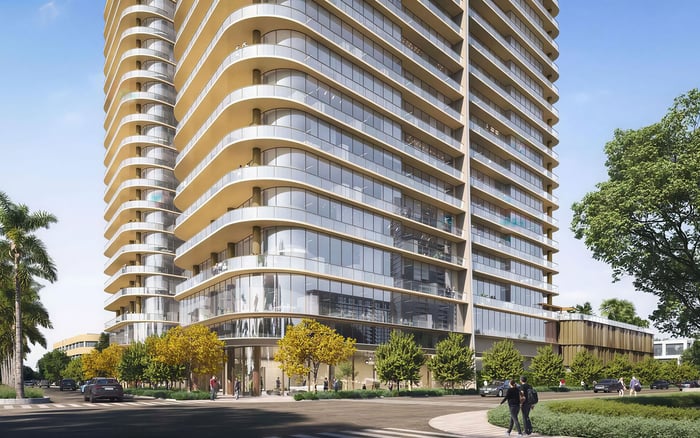
South Florida is not a single luxury market. It is a collection of distinct living patterns, each with its own rhythm of visibility, access, and discretion. For some buyers, Brickell offers the convenience of a vertical lifestyle, private amenity floors, serviced residences, and immediate proximity to business and dining. A residence such as St. Regis® Residences Brickell may appeal to buyers who want a highly serviced address without sacrificing the efficiency of an urban base.
Edgewater attracts buyers who want water views and proximity to the cultural core without the formality of more traditional enclaves. In that context, Villa Miami represents the type of branded residential environment where arrival sequence, service, and residence design can matter as much as the view itself.
Aventura can suit buyers who prefer a northward orientation, easier access to family routines, shopping, dining, marinas, and established residential corridors. Avenia Aventura fits into that conversation for those evaluating a more residential pace while remaining connected to the broader Miami market.
For buyers drawn to a quieter waterfront lifestyle, Grove Isle and the surrounding Coconut Grove sensibility can feel less performative than more public-facing addresses. Vita at Grove Isle speaks to that desire for privacy through setting, scale, and separation.
On Miami Beach, discretion is often shaped by building culture, staff professionalism, private access, and how residents move through shared spaces. The Perigon Miami Beach belongs in conversations where beachfront living must be balanced with control, calm, and a refined daily routine.
A privacy plan should begin with purpose. Is the residence a primary home, a family base, a seasonal retreat, or a long-term holding? Will it be used only by immediate family, or should the structure contemplate guests, adult children, family office administration, or future succession? Is financing involved, or will the purchase be made without leverage? Will the buyer want to renovate, combine units, hold artwork, employ household staff, or maintain multiple residences?
Each answer can affect how advisors think about ownership. A structure that is elegant for estate planning may not be optimal for lending. A structure that offers administrative privacy may create additional reporting, insurance, or tax considerations. A structure that works for one family member may be inappropriate for another.
The most sophisticated buyers do not ask for a one-size-fits-all privacy vehicle. They ask for a coordinated architecture: title, tax, estate, financing, insurance, and property management all working in the same direction.
New-construction can be attractive to buyers who want modern systems, fresh design, and a cleaner path to customization. It can also require careful attention to contract timing, deposit structure, completion expectations, closing logistics, and interim residency planning. Buyers should understand how a pre-completion commitment fits into their broader relocation timeline.
Second-home purchases require a different lens. If the South Florida residence will not be the center of daily life, the buyer should be especially careful about how the property is described, used, insured, and staffed. A residence can be emotionally central without being administratively central, and advisors should understand the distinction.
Investment intent introduces another layer. A property acquired for appreciation, rental potential, family use, or portfolio diversification should be evaluated differently from a residence intended to anchor a tax migration narrative. Blending these objectives is possible, but it should be deliberate.
Before pursuing a contract, buyers should clarify who will own the property, who will occupy it, how it will be funded, and how the acquisition fits within a broader residency plan. They should ask whether the building’s rules align with their lifestyle, whether staff access is manageable, whether arrival and parking are suitably discreet, and whether the residence supports the daily life they are trying to create.
They should also consider how visible the purchase will become in practice. Public records, building culture, social patterns, service providers, renovations, deliveries, and household staffing can all affect privacy. The most private residence is not always the most secluded one. Sometimes it is the residence with the best systems, the right staff protocols, and a building culture that understands discretion.
Above all, buyers should avoid treating privacy as a single document. It is a habit, a structure, and a sequence of decisions made consistently over time.
Can a South Florida purchase alone establish tax residency? A purchase can be part of a broader plan, but residency questions are fact-specific and should be coordinated with qualified tax counsel.
Should a privacy-minded buyer use an entity to purchase? Possibly, but ownership structure should be reviewed for tax, estate, financing, title, and insurance consequences before signing.
Is privacy the same as anonymity? No. Privacy is about reducing unnecessary exposure while staying compliant and practical throughout the acquisition and ownership period.
When should advisors become involved? Ideally before showings begin, so the buyer’s structure, funding path, and residency narrative are aligned from the start.
Does neighborhood choice affect privacy? Yes. Building culture, arrival sequence, staffing, service protocols, and daily visibility can matter as much as location.
Are branded residences useful for privacy-focused buyers? They can be, particularly when service standards, access control, and management culture support a discreet lifestyle.
What should buyers ask about building rules? They should review guest policies, staffing access, leasing rules, renovations, deliveries, parking, and use of amenities.
Can a second home support a migration strategy? It may not be enough by itself. Buyers should ensure the property’s use aligns with the larger personal and advisory plan.
Is investment intent different from residency intent? Yes. A portfolio acquisition and a home used to support a life transition should be evaluated through different lenses.
What is the most common mistake privacy-focused buyers make? Waiting until contract or closing to address structure, documentation, and advisor coordination can create avoidable friction.
For a confidential assessment and a building-by-building shortlist, connect with MILLION.
If branded residences are on your mind — as a home or as an allocation — we would be glad to share what we are seeing, privately.
Begin a quiet conversation