A discreet buyer’s guide to evaluating Miami waterfront property through the lenses of protected views, carrying costs, insurance scrutiny, and resilient building quality.

A Miami waterfront residence is rarely purchased for a single reason. The view matters, of course, but so does the way light enters the room, how the terrace feels in the late afternoon, how the lobby performs in a storm, how the association approaches maintenance, and whether the building’s insurance profile supports the lifestyle the buyer expects. On the water, romance and diligence are inseparable.
The most sophisticated buyers treat a waterfront search as an architectural and financial review, not simply a tour of beautiful apartments. A bayfront tower in Brickell, a boutique address in Surfside, and an oceanfront residence on Miami Beach can all deliver water, sky, and privacy, yet the ownership questions may be very different. The right purchase is not only the one with the most dramatic outlook. It is the one whose view, building condition, insurance structure, and long-term stewardship feel coherent.
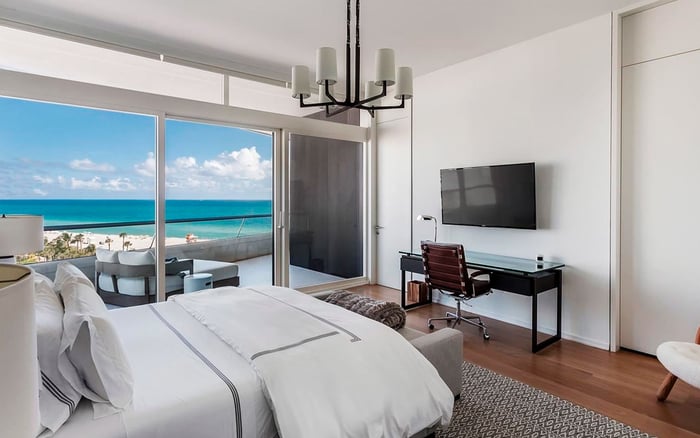
A view is what you see today. A view corridor is the logic of what may remain visible over time. Buyers should look beyond the balcony and study the geometry of the site: neighboring parcels, waterfront edges, setbacks, public rights of way, nearby rooftops, marina activity, and the angle from primary rooms. The most coveted lines of sight are often not the widest. They are the ones that feel composed, layered, and difficult to interrupt.
In Brickell, the question may be whether a residence looks across open water, between towers, or over an urban foreground. At Una Residences Brickell, the appeal for a buyer considering the area is less about a generic skyline and more about how a specific exposure frames water, city, and sunset. In Edgewater, a buyer may compare a direct bay orientation with a more oblique perspective that captures movement, bridges, and evening light. Aria Reserve Miami is the type of waterfront conversation where elevation, orientation, and neighboring context deserve careful review.
The practical test is direct: stand in the primary bedroom, kitchen, living room, and terrace, then ask which part of the view is essential to the residence’s value. If the answer depends on a narrow slice between buildings, the buyer should examine that corridor with particular care.
For waterfront buyers, insurance should be addressed early, not after contract momentum has taken over. Premiums, deductibles, association coverage, unit-owner coverage, flood considerations, wind considerations, exclusions, reserves, and claims history can all influence the real cost of ownership. The point is not to be alarmist. It is to understand whether the property’s carrying profile matches the buyer’s expectations.
In a condominium, the building’s master policy and the owner’s personal policy serve different purposes. A buyer should understand where one ends and the other begins, especially for interiors, improvements, personal property, loss assessment, and temporary housing needs. The details matter because luxury residences often include custom finishes whose replacement cost may not resemble a standard buildout.
This is also where the building’s culture becomes visible. A polished amenity deck is appealing, but disciplined insurance management, transparent budgeting, and a board that treats risk as an ongoing responsibility can be just as important. A building that communicates clearly about coverage, reserves, maintenance, and capital planning gives a buyer more confidence than one that relies on presentation alone.
Waterfront buildings ask more of their materials and systems. Salt air, wind, sun, moisture, and heavy seasonal use place pressure on façades, terraces, mechanical systems, garage areas, landscaping, and shared amenities. Buyers should look closely at the envelope, glazing, waterproofing, drainage, elevator strategy, backup systems, access control, parking, and service circulation.
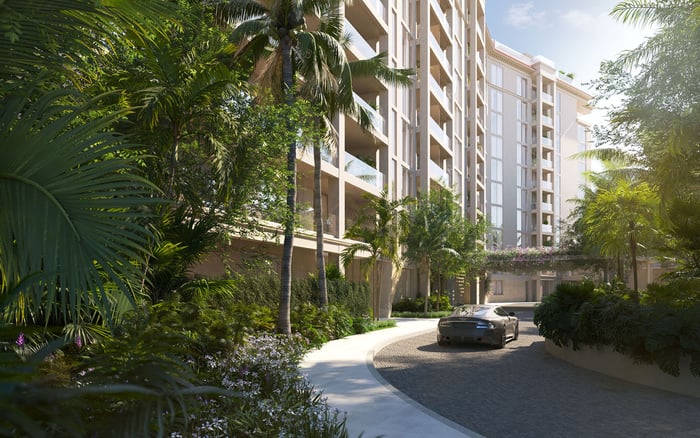
New construction can offer a clean slate, but it still deserves the same discipline as a resale. The relevant question is not simply whether a building is new, but whether its design choices support long-term waterfront living. How are terraces drained? How protected are arrival areas? How does the building separate guest circulation from service needs? How does management handle maintenance before it becomes visible?
On Miami Beach, The Perigon Miami Beach invites the kind of buyer discussion where architecture, exposure, and the oceanfront environment must be evaluated together. In Surfside, The Delmore Surfside belongs to a market where discretion, scale, and coastal conditions are part of the same ownership equation. Beautiful design is the beginning. Performance over time is the measure.
Not all waterfront is interchangeable. Some buyers want the energy of Brickell, where water views exist within a financial and cultural district. Others prefer Edgewater for its bayfront residential character and proximity to Miami’s design, arts, and dining corridors. Some are drawn to Miami Beach for direct coastal atmosphere, while others prefer Surfside for a quieter expression of the same horizon.
The right fit depends on daily rhythms. A buyer who entertains frequently may prioritize a deep terrace, dramatic arrival, and guest parking. A seasonal owner may focus on lock-and-leave services, staff professionalism, and predictable maintenance. A family may care more about elevator privacy, storage, access to schools and clubs, and how easily the residence functions during peak periods.
Waterview value is also emotional. A direct ocean exposure may feel meditative. A bay view may feel cinematic at sunset. A skyline-and-water composition may feel distinctly Miami. The best residence is the one where the view supports how the owner actually lives, rather than how a brochure imagines the owner might live.
Before writing, buyers should assemble a compact due diligence framework. Review the view corridor. Understand the insurance stack. Read the association documents. Study reserves, assessments, maintenance history, and management quality. Inspect the residence with attention to windows, doors, terraces, mechanical systems, moisture, and any custom improvements. Speak with qualified legal, insurance, tax, and inspection advisors before committing beyond comfort.
A disciplined offer also recognizes that the most expensive mistake is not always overpaying. It can be buying a spectacular view in a building whose costs, governance, or physical condition do not match the buyer’s tolerance. Conversely, a residence with a slightly less dramatic view may be the better long-term acquisition if the building is better managed, the exposure is more durable, and the ownership experience is calmer.
Miami rewards confidence, but waterfront confidence should be earned. The best buyers move decisively only after they have separated theater from substance.
What is a view corridor in Miami waterfront real estate? It is the line of sight from a residence that may define its daily experience and perceived value. Buyers should evaluate not only what is visible now, but what could affect that composition.
Is a direct water view always better than an angled view? Not necessarily. An angled view can offer more privacy, better light, or a richer city-and-water composition depending on the building and exposure.
When should insurance be reviewed during a purchase? Early in the process. Buyers should understand likely coverage needs, deductibles, exclusions, and association insurance before relying on a final ownership budget.
What should condo buyers ask about master insurance? They should ask what the association policy covers, what the unit owner must insure separately, and how deductibles or assessments may be handled.
Do new waterfront buildings eliminate maintenance concerns? No. Newer buildings may offer modern systems, but buyers should still review design quality, materials, management, warranties, and long-term maintenance planning.
Why does building governance matter on the waterfront? Waterfront buildings face ongoing exposure to sun, salt air, wind, and moisture. Clear budgeting and proactive management can materially shape the ownership experience.
How should a buyer compare Brickell and Edgewater waterfront homes? Brickell often feels more urban and finance oriented, while Edgewater can feel more residential and bayfront focused. The better choice depends on lifestyle and commute patterns.
What makes Miami Beach waterfront different? Miami Beach often centers on direct coastal atmosphere, resort energy, and ocean proximity. Buyers should balance that appeal with building condition and operating costs.
Should seasonal owners think differently about waterfront property? Yes. They should prioritize service quality, security, maintenance responsiveness, storm preparation, and the ease of leaving the residence unattended.
What is the most important waterfront buying principle? Treat the view, insurance, and building standards as one decision. A beautiful residence is strongest when the ownership structure feels equally considered.
For a discreet conversation and a curated building-by-building shortlist, connect with MILLION.
If branded residences are on your mind — as a home or as an allocation — we would be glad to share what we are seeing, privately.
Begin a quiet conversation