A discreet buyer’s guide to evaluating South Florida homes where sightlines, setbacks, neighboring parcels, and civic context may matter as much as interior finish.
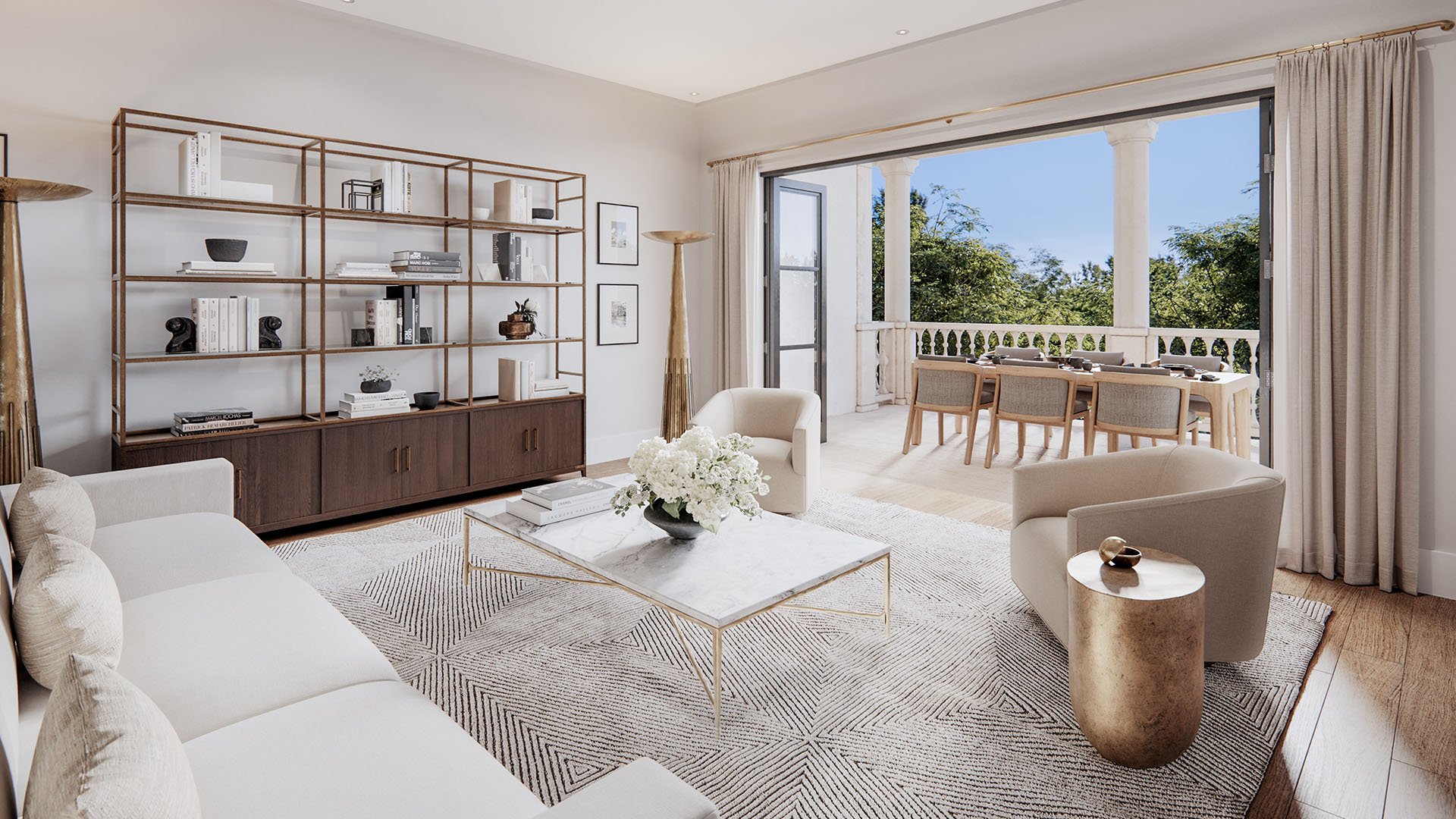
For a Paris buyer, the instinct is familiar: a home is not only a floor plan, but a position within a composed urban view. The question is not simply whether a residence faces water, skyline, tree canopy, golf, or a civic axis. The sharper question is whether that view has durability.
In South Florida, the phrase “protected view corridor” should be handled with discipline. Some sightlines are shaped by public planning, setbacks, easements, height transitions, historic context, waterfront geometry, or the simple fact that a park, canal, bay, or roadway sits in the foreground. Others are merely pleasant today. The distinction matters. A buyer paying a premium for air, light, horizon, or privacy should understand what can change, what is constrained, and what depends on the next owner of a neighboring parcel.
This is one of the more nuanced Buyer's Guides questions in luxury real estate because the view is both emotional and technical. It is the morning ritual from the primary suite, the dinner terrace at dusk, and the value proposition on resale. It is also a matter for surveyors, land-use counsel, architects, and advisors who can read the parcels beyond the glass.
Paris teaches patience with perspective: alignments, cornice lines, courtyards, gardens, and monuments. South Florida asks for a different literacy. Here, a view may be horizontal rather than axial. It may depend on the width of a waterway, the depth of a setback, the height pattern of a nearby district, or the likelihood that an older structure may one day be replaced.
In Coral Gables, buyers often value tree canopy, garden setbacks, and a sense of architectural order. A residence near Ponce Park Coral Gables may appeal to those who want a more composed urban environment rather than a purely vertical skyline experience. Nearby, Cora Merrick Park can be part of a broader conversation about walkability, scale, and the importance of surrounding context.
The essential move is to separate beauty from protection. A charming foreground is not automatically secure. A broad street may preserve openness better than a narrow lot line. A public open space may carry a different risk profile than a private parcel. A waterfront angle may feel permanent, but the buildings flanking it still require study.
Begin with the view itself. Stand in the rooms that matter most at the hours you will actually use them. Morning light, reflected heat, glare, privacy, and evening skyline all behave differently. A sunset view can be magnificent and demanding. A north-facing garden view may be quieter, softer, and more livable.
Then study the foreground. The land between your glass and the object of the view is often more important than the object itself. Is it a street, a canal, a park, a low-rise structure, a marina, or a neighboring roof deck? Who controls it? What could be built there? Are there existing setbacks, height patterns, or easements that influence future massing? These questions belong at the beginning, before the contract feels inevitable.
Next, review side angles. Many luxury buyers focus on the central postcard image and miss the oblique view. Yet side conditions determine privacy, terrace usability, and the sense of spaciousness from secondary bedrooms and informal living areas. A residence can have a magnificent primary view and still feel compromised if the neighboring balcony is too close.
Finally, stress-test resale. A protected or partially defensible view is easier to explain to the next buyer. A view based only on the current low-rise condition next door requires a more cautious premium. The goal is not to eliminate risk, but to price it intelligently.
Coral Gables rewards buyers who appreciate layered privacy: walls, gardens, streetscapes, civic order, and mature landscaping. The strongest decisions here often involve restraint. A less dramatic vista may be more stable and more elegant than a theatrical but exposed view.
Coconut Grove is different. Its luxury is often filtered through canopy, bay glimpses, and an older village texture. Buyers considering Four Seasons Residences Coconut Grove should evaluate not only the primary outlook, but the way greenery, water, and neighboring architecture frame daily life. In the Grove, privacy and atmosphere can be as valuable as a full horizon.
Brickell is a study in vertical adjacency. A high-floor view may feel commanding today, but the neighborhood’s centrality makes surrounding development analysis essential. For buyers looking at The Residences at 1428 Brickell, the relevant conversation includes skyline depth, water angles, corridor width, and how future buildings might affect light and lateral privacy.
Miami Beach asks yet another question: what is the relationship among ocean, park, street, and neighboring towers? In a residence such as The Ritz-Carlton Residences® Miami Beach, buyers should consider how the view performs from interiors, terraces, and arrival spaces. Oceanfront is not a single category. Direct ocean, side ocean, bay, garden, and city views each carry a different rhythm and premium.
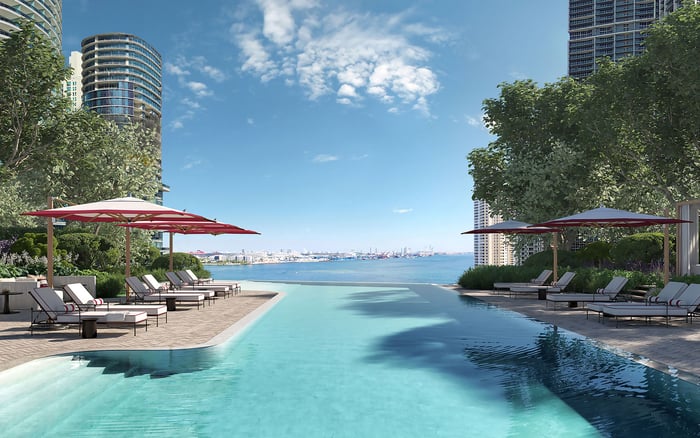
Waterfront property across South Florida is often valued for openness, but openness should still be verified. Water width, navigation patterns, seawall conditions, and neighboring dockage can influence the lived experience. A perfect photograph is less important than a view that remains gracious at breakfast, in high season, and after the lights come on across the water.
The cleanest approach is to assign the view a separate line of value in your mind. What are you paying for interior quality, building services, location, outdoor space, and brand or design? What additional premium is truly attributable to the outlook? Once separated, the view can be tested.
Ask for a written explanation from your advisory team regarding the parcels that sit within the cone of vision. Request practical, not abstract, guidance: what is likely stable, what is unknowable, and what would materially change the experience. A view that is 70 percent defensible may still be worth owning if the residence is otherwise exceptional. A spectacular but fragile view may require more conservative pricing.
Also consider the emotional hierarchy of rooms. If the primary suite, living room, and main terrace all share the strongest corridor, the premium may be easier to justify. If the best view appears only from a secondary corner or a narrow balcony, the valuation should be more disciplined.
The Parisian lesson applies beautifully here: the best homes do not merely look outward. They are composed around what they see.
What is a protected view corridor? It is a sightline with some degree of practical or legal support, often through planning, setbacks, easements, public space, or physical constraints.
Is every water view protected? No. Water can create openness, but neighboring parcels, dockage, and future construction still need to be reviewed.
Why should a buyer study neighboring parcels? The land in front of or beside a residence often determines whether today’s view can change over time.
Are higher floors always safer for views? Not always. Height can improve reach, but surrounding development and side angles may still affect privacy and light.
How does Coral Gables differ from Brickell? Coral Gables often emphasizes canopy, setbacks, and civic scale, while Brickell requires closer attention to vertical adjacency.
What should I ask before paying a view premium? Ask what protects the foreground, what could be built nearby, and how the view performs from the rooms you use most.
Can a partial view be a better buy than a panoramic view? Yes. A quieter, more defensible partial view can be more livable and better priced than a dramatic but uncertain outlook.
Should architects be involved in view diligence? Yes. An architect can help interpret sightlines, glare, privacy, terrace usability, and the relationship between rooms and views.
Do protected views matter for resale? They can. A view with clear supporting conditions is easier to explain and defend when presenting the property to future buyers.
What is the best way to shortlist comparable options for touring? Start with location fit, delivery status, and daily lifestyle priorities, then compare stacks and elevations to validate views and privacy.
For a tailored shortlist and next-step guidance, connect with MILLION.
If branded residences are on your mind — as a home or as an allocation — we would be glad to share what we are seeing, privately.
Begin a quiet conversation