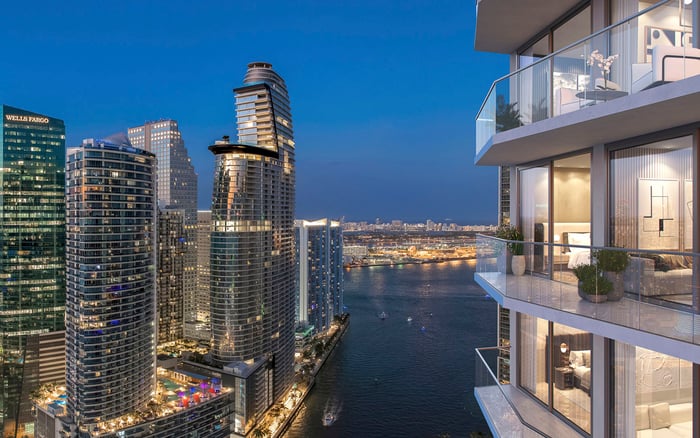
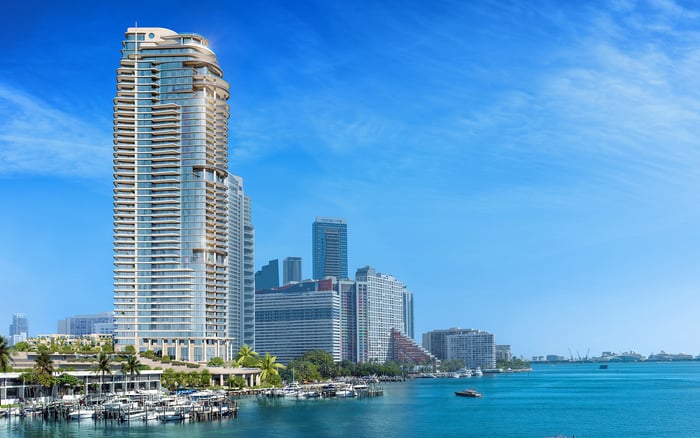
A buyer-focused view of how bilingual service culture shapes luxury living in Brickell and Downtown Miami, from privacy and staff coordination to rental, resale, and long-term ownership strategy.

In South Florida luxury real estate, bilingual fluency is often treated as a courtesy. At the upper end of the market, it functions more like infrastructure. It shapes how a buyer is received, how a household is supported, how vendors are coordinated, how family members understand a building’s rhythm, and how confidently an owner can make decisions when time, privacy, and precision matter.
The question, then, is not whether Brickell or Downtown Miami offers bilingual service. Both belong to an international city where multiple languages are woven into daily life. The sharper question is where bilingual service culture matters more to the luxury owner. The answer depends less on geography than on use case. Brickell tends to reward bilingual service in the daily mechanics of ownership. Downtown tends to reward it in moments of access, hosting, movement, and civic energy.
For a buyer deciding between the two, the distinction is subtle but meaningful.
Brickell is often chosen by buyers who want a polished, vertical lifestyle with a strong sense of routine. Morning coffee, valet coordination, private appointments, wellness habits, business lunches, visiting relatives, and evening reservations all become part of a recurring service pattern. In that context, bilingual service culture matters because the same household may move among more than one language in a single day.
The luxury is not simply that someone at the front desk can translate a phrase. It is that the building team, household staff, property manager, leasing representative, and preferred vendors can communicate without friction. A resident should not have to restate a preference three times. A family member visiting from abroad should not feel like a guest in someone else’s system. A principal who values discretion should be able to delegate without creating confusion.
In Brickell, bilingual service matters most when the home is used frequently and operationally. If the residence is a primary base, weekday pied-à-terre, or family hub tied to business and private banking, language fluency becomes part of the owner’s time management. It is the difference between assistance and anticipation.
Downtown Miami poses a different question. The neighborhood has a more kinetic identity, with a buyer profile often drawn to events, cultural access, business meetings, waterfront views, and proximity to major urban venues. Here, bilingual service culture may matter less as a daily ritual and more as a coordination layer.
A Downtown owner may need multilingual support for guests arriving at different times, drivers navigating changing schedules, private dining requests, ticketed evenings, medical appointments, or family members in Miami for a limited stay. The service standard is judged by how smoothly people move through the city and how well the residence supports that movement.
This is where Downtown can be compelling for owners who entertain, host international visitors, or use the residence around peak calendar moments. The building does not merely receive the owner. It becomes the point of translation between a fast urban setting and a private domestic experience.
If the question is where bilingual service culture matters more every day, Brickell has the edge. Its luxury proposition is closely tied to continuity, convenience, and household rhythm. Owners who spend significant time in residence will feel the quality of bilingual service through repeated, small interactions.
If the question is where it matters more during high-complexity moments, Downtown can be just as important. A single weekend with visiting family, multiple reservations, staggered arrivals, and a full calendar can reveal whether a service culture is merely polite or truly capable.
The practical test is simple. Ask how many people will interact with the residence beyond the deeded owner. If the answer includes parents, adult children, domestic staff, assistants, drivers, visiting executives, or international guests, bilingual service should move higher on the priority list. It should be evaluated as carefully as views, finishes, parking, and amenity design.
The strongest bilingual service cultures are rarely theatrical. They are calm, consistent, and well documented. A buyer should listen to how a sales team explains building operations, how clearly policies are communicated, and whether staff can move between languages without becoming informal or imprecise.
Luxury owners should also distinguish between bilingual speaking ability and bilingual service judgment. A fluent speaker may still lack the discretion expected in an ultra-premium environment. The higher standard is cultural intelligence: knowing when to be warm, when to be quiet, when to confirm in writing, and when to protect the owner from unnecessary exposure.
For new-construction buyers, this matters before closing. The best time to understand service culture is during the purchase process, not after move-in. How a team handles questions, family involvement, document review, appointments, and schedule changes is often an early signal of how the building will feel when the residence is occupied.
Bilingual service is not only a lifestyle consideration. It can influence how broadly a property speaks to future demand. Whether the brief is Investment, Rent, or Resale, the ability of a building and its surrounding service ecosystem to accommodate international users may help preserve confidence.
For rental-oriented owners, bilingual communication can reduce friction during showings, onboarding, maintenance, and guest or tenant questions. For resale-minded owners, it can make the property easier to present to a wider buyer pool. For long-term holders, it supports the less visible part of value: the owner’s willingness to keep using and recommending the residence.
This does not mean language alone creates value. Architecture, location, floor plan, views, privacy, brand strength, and carrying costs still matter. But in Miami’s luxury market, service culture can become the reason a buyer chooses one building over another when the tangible features feel closely matched.
Brickell and Downtown are not opposites. They are neighboring expressions of Miami’s vertical luxury life. Brickell is more daily, polished, and routine-driven. Downtown is more eventful, connected, and movement-driven. In both, bilingual service culture matters because luxury ownership in Miami is rarely lived in only one language.
If a buyer wants the most consistent daily benefit, Brickell is usually the more sensitive test. If a buyer expects to host, move, and coordinate around concentrated moments, Downtown deserves equal scrutiny. The best choice is not the neighborhood with more language ability. It is the address where language, discretion, and service judgment work together without the owner having to ask.
Does bilingual service matter more in Brickell or Downtown Miami? It often matters more day to day in Brickell, where ownership routines are more continuous. In Downtown, it may matter most during hosting, events, and guest coordination.
Is bilingual service only important for international buyers? No. It also helps domestic buyers with multilingual family members, staff, guests, tenants, or advisors who interact with the residence.
Should bilingual service affect a luxury condo purchase decision? Yes, if the owner expects frequent staff interaction, family use, rentals, or international guests. It can meaningfully affect comfort and efficiency.
What is the difference between bilingual staff and bilingual service culture? Bilingual staff can speak more than one language. Bilingual service culture means the entire experience remains discreet, precise, and consistent across languages.
Why is Brickell especially sensitive to service culture? Brickell often functions as a daily residential and business base. Small service interactions repeat often, so communication quality becomes highly visible.
Why might Downtown require strong bilingual coordination? Downtown ownership can involve more movement, appointments, visitors, and time-sensitive plans. Clear multilingual coordination helps protect the experience.
Does bilingual service help with Rent strategy? It can. Clear communication with tenants, guests, managers, and vendors may reduce friction and support a more polished ownership experience.
Can bilingual service influence Resale appeal? It may broaden comfort for future buyers who expect an internationally fluent service environment. It is one part of a larger value equation.
Should Investment buyers evaluate service culture before closing? Yes. Early interactions can reveal how well a building communicates, documents, and supports owners across languages.
What is the best way to shortlist comparable options for touring? Start with location fit, delivery status, and daily lifestyle priorities, then compare stacks and elevations to validate views and privacy.
To compare the best-fit options with clarity, connect with MILLION.
If branded residences are on your mind — as a home or as an allocation — we would be glad to share what we are seeing, privately.
Begin a quiet conversation