A buyer-oriented guide to choosing between Downtown Miami and Brickell when resale liquidity, building specialization, and future exit strategy matter as much as lifestyle.

Choosing between Downtown Miami and Brickell is rarely a simple neighborhood preference. For the luxury buyer, the sharper question is this: which setting will produce the deepest buyer pool when it is time to sell a residence in a specialized building?
A specialized building may be design-led, hospitality-branded, architecturally distinctive, exceptionally tall, amenity-intensive, highly private, or focused on a particular lifestyle. That identity can create desirability, but it can also narrow the audience. Resale liquidity is the discipline of owning something distinctive without asking the future buyer to work too hard to understand it.
Downtown and Brickell both make compelling cases. Downtown often appeals to buyers seeking skyline drama, cultural proximity, bay views, and a sense of landmark arrival. Brickell, by contrast, is often chosen for daily convenience, office adjacency, dining density, and a more established live-work rhythm. In a conventional building, that distinction may be largely lifestyle-driven. In a specialized building, it becomes strategic.
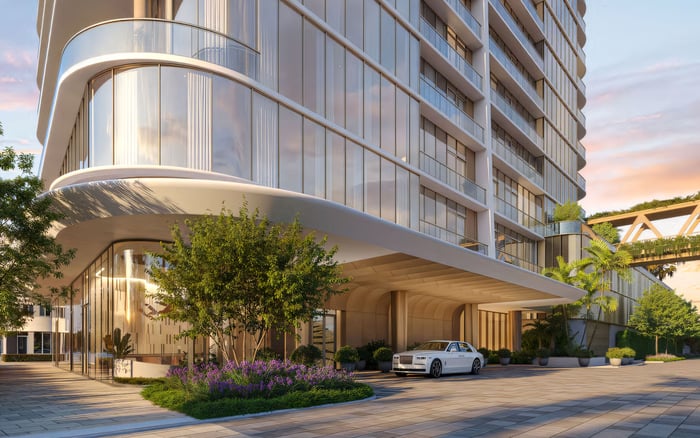
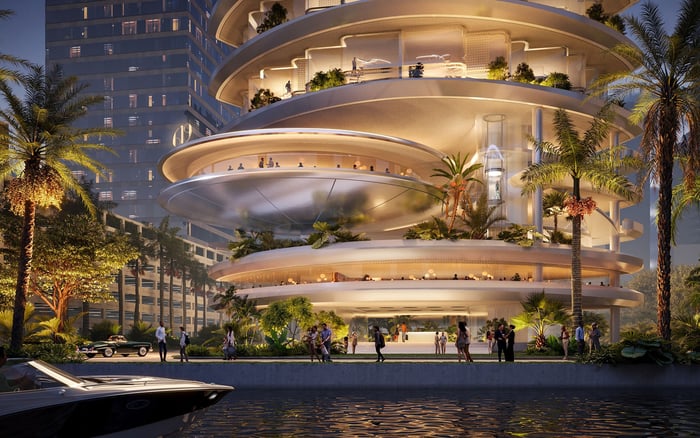
Downtown Miami can be especially persuasive when the building itself is part of the reason to own. A residence associated with a recognizable silhouette, a dramatic arrival sequence, or a strong architectural proposition can take on a collectible quality. In that context, projects such as Waldorf Astoria Residences Downtown Miami and Aston Martin Residences Downtown Miami are useful reference points for buyers considering how branded or design-forward identity may influence future demand.
The liquidity advantage in Downtown is not merely visibility. It is narrative clarity. A future buyer should be able to understand, within minutes, why the building is not interchangeable with the tower next door. That may come from views, architecture, services, scarcity, or a strong sense of arrival. The risk is over-specialization: if a residence depends too heavily on one niche attribute, the resale audience can become thinner.
Downtown may reward owners who can hold through market noise. The best exit is often to a buyer who wants the building, not just the address. That buyer may be motivated by skyline identity, proximity to cultural venues, waterfront energy, or the desire to own in a more vertical, urban environment. For resale planning, the question is whether the building’s identity will remain legible five or ten years later.
Brickell’s strongest liquidity argument is depth. It is a neighborhood where many luxury buyers already understand the use case: proximity, convenience, dining, wellness, office access, and a polished urban routine. Specialized buildings in Brickell can benefit from that baseline demand, provided their pricing and monthly costs remain intelligible against competing inventory.
For buyers studying branded or lifestyle-focused residences, Baccarat Residences Brickell and Cipriani Residences Brickell illustrate why name recognition can matter, but only when it is paired with a floor plan and ownership profile that a future buyer can rationalize. A brand may draw attention. The residence itself must close the resale argument.
Brickell can be more forgiving than Downtown when the unit is highly functional. A well-proportioned plan, usable terrace, strong elevator experience, thoughtful parking, and clear building rules may appeal to a larger pool than a spectacular but idiosyncratic residence. High floors may command attention, but liquidity also depends on whether the apartment lives comfortably and compares cleanly.
For investment-minded buyers, Brickell’s discipline is useful. The neighborhood often forces direct comparison among buildings, tiers, views, services, and fees. That can reduce fantasy pricing at resale, but it can also help a strong asset stand out quickly. In Brickell, the future buyer may be less romantic and more decisive.
Before choosing either neighborhood, test the building against four liquidity filters.
First, ask whether the specialization expands or narrows demand. A discreet wellness orientation, a refined hospitality program, or a recognizable design language may broaden appeal. A more eccentric concept may require the perfect buyer.
Second, study how the floor plan will age. Luxury buyers forgive many things, but they rarely forgive awkward circulation, undersized secondary bedrooms, compromised storage, or terraces that photograph better than they function.
Third, examine the ownership rules. Rental restrictions, pet policies, guest access, amenity procedures, and service protocols can shape both lifestyle and resale. A building that is perfect for one household may be too controlled for another.
Fourth, consider carrying costs in relation to perceived value. Amenities can support pricing when they are used, maintained, and aligned with the building’s identity. They can weaken liquidity when buyers view them as decorative expense.
This is where boutique sensibility can be powerful. Smaller-feeling service, privacy, and consistency may hold long-term appeal, even within a larger urban setting. But boutique cannot merely be a marketing word. It must be felt in arrival, staffing, proportions, acoustics, privacy, and resident experience.
Choose Downtown if the residence offers a clear landmark proposition and you are comfortable owning an asset whose resale may depend on a more selective buyer. Downtown can be the better choice for those who value cultural adjacency, skyline presence, dramatic architecture, and the emotional pull of a distinctive address. It is a setting where new construction can feel especially transformative when the building adds something recognizable to the skyline.
Choose Brickell if you want a broader everyday-use argument around the residence. Brickell may be the better choice for buyers who want walkability, business-district convenience, dining options, and a more direct comparison set. In a specialized building, that can translate into a wider pool at exit, especially if the unit is practical and not over-personalized.
A project such as The Residences at 1428 Brickell also underscores a broader point: the most liquid specialized buildings usually balance distinction with usability. They give the buyer something memorable without making the next buyer accept too many compromises.
The most prudent approach is not to ask which neighborhood is superior. Ask which neighborhood gives your specific building a clearer second buyer. If the future buyer is likely to be a skyline collector, Downtown may have the edge. If the future buyer is likely to prioritize daily efficiency and known neighborhood demand, Brickell may be more resilient.
Liquidity in a specialized building is rarely about chasing the most dramatic brochure. It is about buying the residence that will still be easy to explain when the market is crowded, quieter, or more selective. The best purchase has a story, but it also has a plan.
In Downtown Miami, that plan should emphasize landmark identity, view quality, architectural confidence, and scarcity. In Brickell, it should emphasize depth of demand, functional living, service credibility, and clean comparables. In both neighborhoods, the smartest buyers avoid confusing uniqueness with liquidity. The two can coexist, but only when the building’s identity is supported by livability.
Is Downtown Miami more liquid than Brickell for luxury resale? Not universally. Downtown may be more compelling for landmark-driven buyers, while Brickell often benefits from a deeper everyday-use buyer pool.
What makes a specialized building harder to resell? A concept that appeals to a narrow audience, high carrying costs, restrictive rules, or an awkward floor plan can all reduce liquidity.
Can a branded residence improve resale liquidity? It can help create recognition, but the residence must still offer strong layout, service, location, and value relative to alternatives.
Should I prioritize views or floor plan? Views matter, but a difficult plan can limit the buyer pool. The most liquid residences usually combine both.
Is Brickell better for investment buyers? Brickell may suit buyers who value demand depth and comparability, but every building and unit should be evaluated individually.
Does boutique positioning help resale? It can, if privacy, service, and resident experience are genuinely strong. The word alone does not create value.
Are high floors always better for liquidity? Not always. Height can add appeal, but price, exposure, elevator experience, and livability still matter.
How should I compare monthly costs? Compare costs against the quality of services, amenities, staffing, reserves, and the likely expectations of future buyers.
Is new construction safer for resale? New construction can be attractive, but liquidity depends on design, pricing, delivery quality, and how much competing inventory exists.
What is the best first step before buying? Define the likely future buyer, then test whether the building, unit, and neighborhood make that buyer’s decision simple.
To compare the best-fit options with clarity, connect with MILLION.
If branded residences are on your mind — as a home or as an allocation — we would be glad to share what we are seeing, privately.
Begin a quiet conversation