For sophisticated buyers and investors, U.S. residential real estate remains compelling not merely for upside, but for its ability to hold purchasing power through tax efficiency, durable demand, and hard-asset scarcity. In South Florida, that thesis becomes especially clear where constrained waterfront supply, international liquidity, and Florida’s tax structure combine to support long-term value retention.

For private clients focused on protecting wealth, residential real estate holds a distinct place in the portfolio. Unlike a purely financial instrument, a well-chosen home or investment residence combines utility, scarcity, and a degree of pricing resilience that can matter during periods of monetary uncertainty. The strongest version of the thesis is not that every luxury property preserves capital; it is that select assets can preserve purchasing power when location, structure, carrying costs, and exit demand are aligned.
The preservation case is strongest when a property has enduring relevance. In practice, that means prime neighborhoods, limited future supply, resilient construction, and a buyer pool broad enough to sustain liquidity across cycles. In South Florida, those conditions often converge more clearly than in many other U.S. markets. Waterfront parcels are finite. International demand remains present. And Florida’s tax structure can improve the after-tax appeal of ownership for qualifying residents.
For discerning buyers, the goal is not to pursue the most aggressive short-term appreciation story. It is to own an asset that can retain desirability, preserve optionality, and protect net worth after taxes, insurance, financing, reserves, and maintenance are taken into account.
One reason U.S. residential real estate remains central to wealth strategy is that the tax framework can reward patience and thoughtful structuring. According to IRS Publication 527, residential rental property buildings and structural components are generally depreciated over 27.5 years under the General Depreciation System. For investment owners, that can shelter a portion of rental income and improve after-tax holding efficiency.
Disposition can be equally important. For owners repositioning within the asset class, qualifying like-kind exchanges under Section 1031 may allow gains to be deferred when real property held for investment or business use is exchanged for other qualifying real property. The IRS makes clear that the rules apply to qualifying real property and do not automatically cover personal-use residences.
For primary residences, financing can also play a role in preserving capital. Qualified residence interest may be deductible within applicable federal limits, helping some owner-occupants maintain after-tax carrying efficiency. The practical lesson is simple: in luxury housing, gross return tells only part of the story. Net retained capital is what matters.
Florida offers a clear advantage that sophisticated households understand immediately: the state does not levy a personal income tax on natural persons. The Florida Department of Revenue also confirms that Florida’s estate tax was eliminated for decedents dying after December 31, 2004.
There is also a practical property-tax dimension for primary residents. According to the Florida Department of Revenue, a qualifying permanent residence may receive a homestead exemption that decreases taxable value by as much as $50,000 and qualifies the home for Save Our Homes assessment limitations. The Department’s January 2026 Save Our Homes publication lists the 2026 annual assessment cap at 2.7%. For families planning a long tenure, those features can contribute meaningfully to carrying-cost stability.
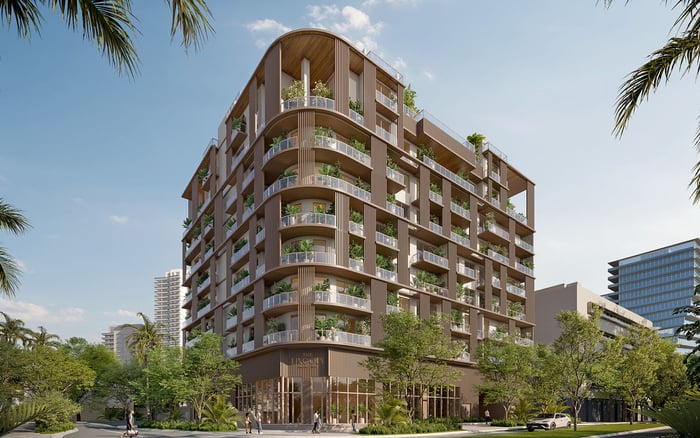
This helps explain why established enclaves continue to command attention. In Coral Gables, municipal stability, civic quality, and enduring neighborhood identity often make ownership feel defensive in the best sense of the word. Properties near legacy districts or refined village-style environments, including Ponce Park Coral Gables and The Village at Coral Gables, align naturally with buyers seeking long-horizon value retention rather than speculative velocity.
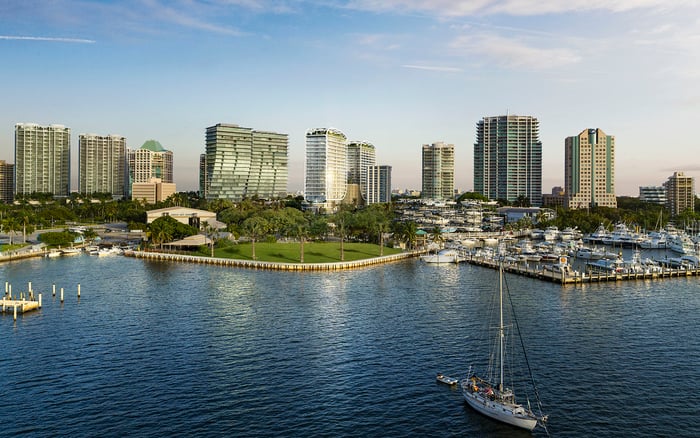
Capital preservation in residential real estate is rarely about owning the property with the loudest narrative. It is about owning what cannot be easily replicated. Tight inventory can support price stability, especially in prime segments where replacement opportunities are limited. In South Florida, few forms of scarcity are more durable than true waterfront positioning.
Oceanfront and bayfront parcels are finite by definition. That simple constraint can create a persistent premium relative to comparable non-waterfront homes, particularly in markets where land availability is already restricted. The preservation logic follows naturally: when a location cannot be meaningfully reproduced, value is less dependent on fashion alone.
That is one reason oceanfront product continues to hold strategic appeal. A residence such as 57 Ocean Miami Beach speaks to this equation directly, where frontage, access, and irreplaceable setting matter as much as finishes. In Surfside, The Delmore Surfside reflects the same scarcity-led thesis, while in Bal Harbour, Rivage Bal Harbour sits within one of the region’s most supply-constrained luxury coastal corridors.
For buyers focused on capital preservation, the search should begin with the assets least likely to become interchangeable. MILLION helps identify scarce South Florida trophy and luxury properties through a discreet, tailored process that weighs location, waterfront exposure, building governance, resilience, service level, and future buyer depth. In practice, that means access to a curated field of public, new-development, and select private opportunities rather than a generic inventory scan.
A preservation strategy also depends on exit depth. Prime South Florida benefits from an unusually diverse demand base, including international buyers and domestic purchasers seeking Florida’s lifestyle and tax profile. According to MIAMI Realtors’ 2025 International Report, foreign buyers purchased $4.4 billion of South Florida residential property in 2025, up from $3.1 billion in 2024, and global buyers bought 5,300 South Florida properties. MIAMI Realtors also reported that 51% of international residential transactions in South Florida were all-cash.
This matters for neighborhoods such as Brickell, Miami Beach, and select waterfront communities where global recognition reinforces local demand. In Brickell, for example, properties such as St. Regis® Residences Brickell and The Residences at 1428 Brickell align with buyers who value not only design and service, but also a market with broad international visibility.
That visibility does not guarantee appreciation in every period. What it can do is improve the likelihood that a prime asset remains liquid, financeable, and desirable across different macro environments. For preservation-minded buyers, that distinction is crucial.
Leverage can enhance return on equity when values rise, but it also amplifies downside when markets reset. That is why financing strategy deserves the same scrutiny as location. Luxury purchases often rely on jumbo mortgages, which can improve capital efficiency for qualified borrowers, but borrowing terms, reserve requirements, and rate sensitivity can change quickly.
Defensive ownership does not mean maximum leverage. In a capital-preservation framework, prudent debt sizing, substantial liquidity reserves, and realistic holding periods matter more than stretching for the most aggressive structure available. Buyers who expect flexibility through changing rate environments tend to be better positioned than those underwriting only a best-case scenario.
For investors, there is another layer to consider: optional rental income. In prime South Florida neighborhoods, luxury residences can generate meaningful revenue when a property is not used exclusively as a personal residence. That possibility should be treated selectively and under local rules, association documents, and tax guidance, but as part of a broader hold strategy it can soften carrying costs while preserving long-term ownership of a scarce asset.
The most defensible assets are not only beautiful. They are physically and financially durable. According to Florida DBPR, many residential condominium and cooperative buildings with three or more habitable stories are subject to milestone inspections and structural-integrity reserve studies. Buyers should review milestone status, reserve funding, insurance, pending assessments, engineering reports, and board-level capital planning before treating a condominium as a preservation asset.
Coastal risk is equally important. Miami-Dade County’s sea-level-rise materials rely on regional projections showing sea levels expected to be 10 to 17 inches higher by 2040 than 2000 levels. The Florida Office of Insurance Regulation’s July 2025 Property Insurance Stability Report points to stabilization in the insurance market, but South Florida premiums and storm exposure remain material ownership costs. Elevation, flood zone, hurricane hardening, window systems, generator capacity, drainage, and claims history should all be part of the underwriting file.
The strongest preservation candidates usually share a common profile. First, they sit in neighborhoods with enduring social and municipal relevance rather than transient novelty. Second, they offer genuine scarcity, whether through waterfront exposure, limited parcel count, protected views, or an irreplaceable urban position. Third, they appeal to multiple future buyer profiles, including end users, second-home purchasers, and globally mobile households.
That framework is especially useful when evaluating new construction against established inventory. A newly delivered residence can offer modern systems and lower near-term maintenance risk, while a mature building in an iconic location may offer deeper proven scarcity. There is no single answer. The more important question is whether the property is likely to remain among the most sought-after addresses in its submarket after insurance, reserves, taxes, and physical condition are considered.
This article is general editorial information, not tax, legal, insurance, or investment advice.
Is residential real estate a growth investment or a preservation asset? It can be both, but its preservation role depends on scarcity, utility, after-tax efficiency, and risk-adjusted carrying costs.
Why does Florida appeal to capital-preservation buyers? Florida’s lack of state personal income tax and the absence of a state estate tax can improve net retention for qualifying residents, while homestead-related features may help moderate property-tax growth.
Does waterfront really matter that much? Yes. In coastal South Florida, true waterfront supply is limited, and scarcity is one of the most durable supports for long-term value.
Are luxury condos appropriate for preservation strategies? They can be, especially when the building offers enduring location quality, strong buyer appeal, reserve strength, and limited competitive supply nearby.
How important is the holding period? Very important. A longer holding period gives the asset more time to absorb transaction costs, market volatility, and capital improvements.
Can financing still make sense for private buyers? Yes, if used conservatively. Thoughtful leverage can preserve liquidity, but excessive leverage increases risk in a downturn.
What makes South Florida more resilient than some other markets? A mix of constrained prime supply, international demand, and lifestyle appeal can help premier neighborhoods remain desirable through varied cycles.
Should buyers favor owner-use or rental potential? Ideally, a property offers both. Personal utility is valuable, but optional income can improve carrying efficiency if the asset is suitable for leasing.
Do tax rules materially affect preservation outcomes? Absolutely. Depreciation, long-term capital-gains treatment, mortgage-interest rules, and exchange strategies can all shape net returns.
What is the simplest test for a preservation-quality property? Ask whether the asset is likely to remain scarce, wanted, insurable, and liquid ten years from now, not just impressive today.
For a tailored search focused on scarce, preservation-quality South Florida residences, connect with MILLION for discreet guidance, private shortlists, and access to select luxury and trophy listings.
If branded residences are on your mind — as a home or as an allocation — we would be glad to share what we are seeing, privately.
Begin a quiet conversation