A buyer-focused guide to choosing family-scale South Florida condominiums for Californians seeking privacy, space, schools, waterfront access, and long-term livability.

For buyers moving from California, the search for a South Florida condominium is rarely about downsizing in spirit. It is about translating the best qualities of a substantial home into a more serviced, secure, and climate-conscious residential format. The strongest family-scale condos are not simply large apartments. They are residences with an intelligent daily rhythm: a considered arrival, usable secondary bedrooms, quiet work areas, real storage, generous terraces, strong building operations, and enough separation for parents, children, guests, and help to coexist without friction.
That distinction matters. A family leaving a Brentwood estate, a Pacific Heights townhouse, or a Silicon Valley compound may be ready to exchange a yard for a waterfront terrace, but not for compromised privacy or awkward circulation. In South Florida, the best fit often depends less on glamour than on how the building handles school mornings, sports equipment, visiting grandparents, pets, elevators, parking, groceries, and the simple desire to be home without feeling managed by the building.
Coconut Grove is often the first neighborhood to understand for California families who want mature greenery, a village sensibility, and a softer pace than the urban core. It can feel more residential than many waterfront markets, with daily life organized around parks, marinas, dining, and quiet streets rather than pure vertical energy. For buyers who want the condominium format but still value shade, texture, and family routine, Four Seasons Residences Coconut Grove belongs in an early comparison set.
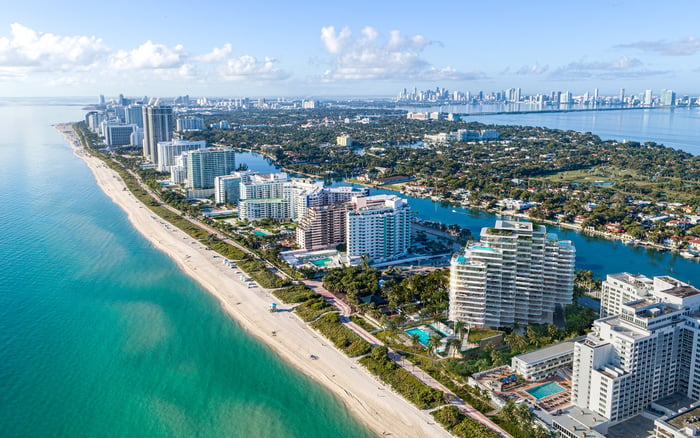
Surfside appeals to families who want beach proximity without the full intensity of a resort corridor. It is compact, walkable in key pockets, and close to Bal Harbour, Miami Beach, and Bay Harbor Islands, while retaining a more intimate coastal feel. A buyer considering Surfside should focus on privacy, beach access, building scale, and how easily children and guests can move between the residence, the pool deck, the sand, and nearby conveniences. In that context, The Delmore Surfside offers a natural reference point for families drawn to a more composed oceanfront lifestyle.
Brickell serves a different household. It is best for families who want city energy, offices, restaurants, cultural access, and airport connectivity, but still need a residence that can absorb real family life. The question in Brickell is not whether the neighborhood is convenient. It is whether the building and floor plan create enough calm above the city. Families evaluating Brickell should look closely at elevator experience, acoustic comfort, parking logistics, outdoor space, and whether the residence can support entertaining and homework on the same evening.
Boca Raton is often compelling for buyers who place schools, clubs, wellness, and a more established residential cadence near the top of the list. It can feel familiar to California families used to polished suburban luxury, but with South Florida’s tropical ease and a more direct relationship to the coast. Alina Residences Boca Raton fits naturally into that conversation for households comparing condominium convenience with a refined, less urban daily rhythm.
Sunny Isles is more vertical and ocean-oriented, with strong appeal for buyers who want views, services, and a high-rise beachfront identity. Families considering St. Regis® Residences Sunny Isles should think carefully about elevator flow, beach club programming, parking, guest accommodations, and how the building’s hospitality layer supports or complicates routine family living.
The most successful family-scale floor plans begin with separation. Parents need a primary suite that feels restorative, not merely large. Children need bedrooms that are not treated as afterthoughts. Guests should have privacy, especially for longer visits from California friends or grandparents. A den should function as a true work room or study zone, not as a decorative alcove. If staff space is relevant, it should be positioned with dignity and practicality.
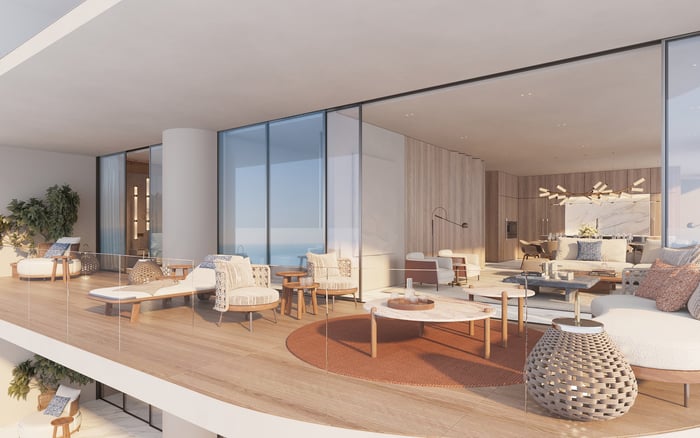
Flow-through residences can be especially attractive when they provide light, cross-breezes, and distinct zones for morning and evening. Large terraces are also important, but only when they are genuinely usable. A dramatic balcony that cannot comfortably hold dining, lounging, and children’s movement is less valuable than a more measured terrace that becomes part of daily life. California buyers should ask where backpacks land, where scooters or tennis bags go, where groceries are staged, and where a child can read while adults entertain.
Storage is another quiet luxury. Many California families arrive with bicycles, boards, golf gear, seasonal wardrobes, art, books, and household inventory that does not vanish simply because the address is now a condominium. Private garages, storage rooms, service elevators, and flexible utility areas can be as important as finishes.
For family buyers, amenities should be judged by use, not spectacle. A resort pool may impress on a first tour, but the better question is whether it works on a Saturday with children, visiting guests, and summer weather. Fitness centers matter, but so do shaded outdoor spaces, children-friendly programming, pet areas, valet reliability, package handling, and staff culture.
The most valuable amenity is often operational discipline. Families moving from California may be accustomed to controlling every element of a private home. In a condominium, that control is shared with management, neighbors, and building rules. The best buildings make that transition feel seamless. Staff know residents without intruding. Common areas are maintained without fuss. Security is present but not theatrical. Service feels personal rather than performative.
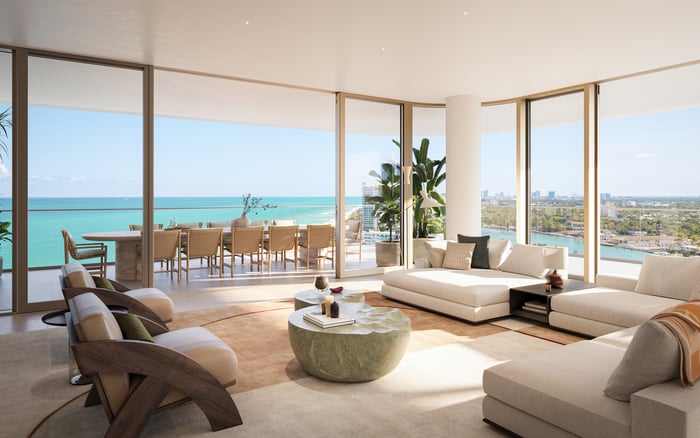
This is also where waterfront buildings should be evaluated beyond the postcard view. Beach access, bay views, marina proximity, and terrace exposure all have different daily implications. Afternoon sun, wind, elevator waits after beach hours, and the path from pool to residence can shape the lived experience more than a rendering ever can.
Some California families want South Florida because it feels freer, warmer, and more connected to water. Others want tax, business, or family proximity advantages, but still need a residential environment that is emotionally grounded. The best neighborhood choice should reflect the family’s week, not its vacation mood.
For a finance or founder household, Brickell may be practical if the residence is serene enough to offset the pace below. Aria Reserve Miami may enter the broader Miami comparison for buyers who want a waterfront high-rise experience with access to the city while keeping a degree of separation from the densest commercial blocks. For a family prioritizing schools, sport, and a village setting, Coconut Grove or Boca Raton may feel more intuitive. For those who want beach life with polish and international ease, Surfside or Sunny Isles can be persuasive.
The right answer is rarely abstract. It comes from mapping a real week: school drop-off, airport runs, office days, tennis or golf, dinners, grandparents, pediatric appointments, beach time, and the moments when nobody wants to get in a car. A residence that reduces friction across that week is more valuable than one that merely photographs well.
A family-scale condo should be selected with the next five to ten years in mind. Children grow. Schools change. Work patterns evolve. Grandparents may visit more often. A residence that feels generous today should still feel adaptable later. That means prioritizing bedroom count, flexible dens, storage, parking, terrace usability, and building governance over purely decorative choices.
Resale resilience also begins with fundamentals. Privacy, views, sensible layouts, respected locations, and well-run buildings tend to matter across market moods. Highly personalized finishes can be changed. A poor stack, difficult parking, or a building culture that does not match family life is much harder to correct.
California buyers should also be attentive to the emotional shift from detached living to shared vertical living. The best South Florida condos offer liberation from maintenance, but they require comfort with association rules, service protocols, and neighbor proximity. Families that choose buildings aligned with their temperament usually settle faster and enjoy the move more fully.
What makes a South Florida condo family-scale? It should offer true bedroom separation, practical storage, flexible work or study space, outdoor living, and building operations that support daily family routines.
Is Brickell appropriate for families moving from California? Brickell can work well for families who want city access, but the building must provide quiet, privacy, parking efficiency, and enough space above the urban energy.
Why do some California buyers prefer Coconut Grove? Coconut Grove offers a greener, more village-like setting that can feel familiar to families leaving established residential neighborhoods in California.
Is Surfside better than Miami Beach for family condo living? Surfside may appeal to families seeking a quieter coastal rhythm while remaining close to Miami Beach, Bal Harbour, and other key destinations.
Should buyers prioritize oceanfront or bayfront condos? Oceanfront living emphasizes beach access and open views, while bayfront residences may offer calmer water outlooks and a different daily atmosphere.
How important is parking for family condo buyers? Parking is critical, especially for households with multiple drivers, school schedules, sports gear, visiting relatives, and frequent airport runs.
Are branded residences suitable for families? They can be, provided the service culture, rules, amenities, and floor plans support everyday family life rather than only short-stay luxury.
What should buyers inspect beyond the residence itself? Elevator flow, staff quality, storage, pet policies, pool usability, guest procedures, and service entrances all deserve close attention.
Can a condo replace a California single-family home? It can, if the residence offers scale, privacy, outdoor space, and enough operational ease to offset the loss of a private yard.
What is the best way to shortlist comparable options for touring? Start with location fit, delivery status, and daily lifestyle priorities, then compare stacks and elevations to validate views and privacy.
If you'd like a private walkthrough and a curated shortlist, connect with MILLION.
If branded residences are on your mind — as a home or as an allocation — we would be glad to share what we are seeing, privately.
Begin a quiet conversation