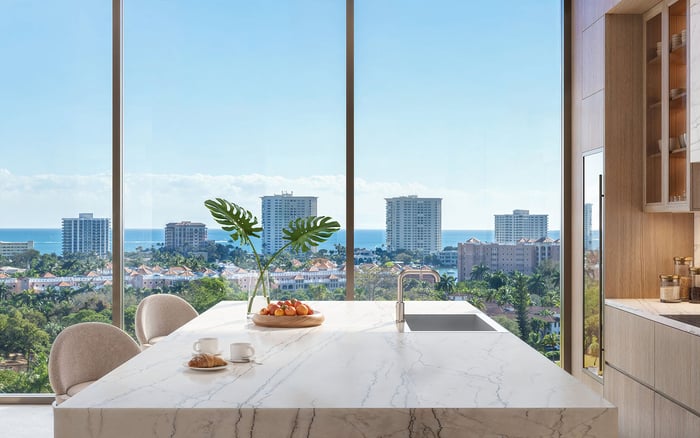
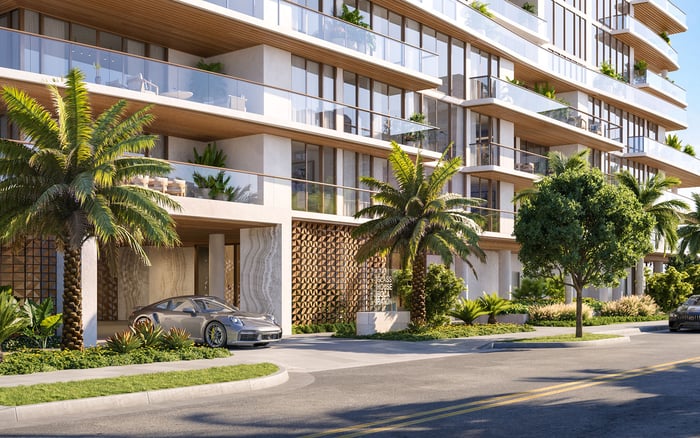
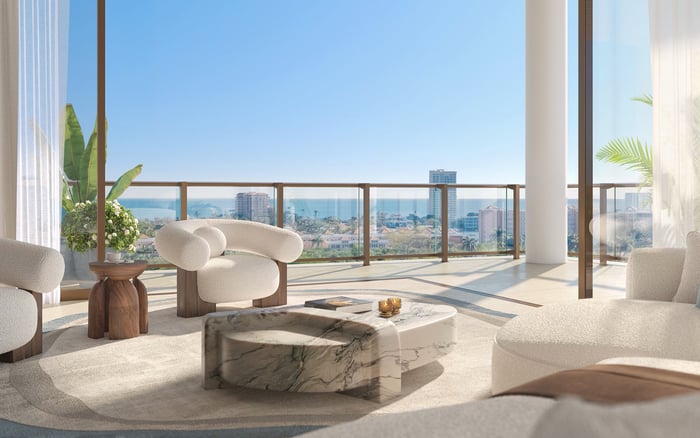
An analytical look at Glass House Boca Raton as a quiet luxury condominium proposition built around discretion, resilience, service, and second-home ease.
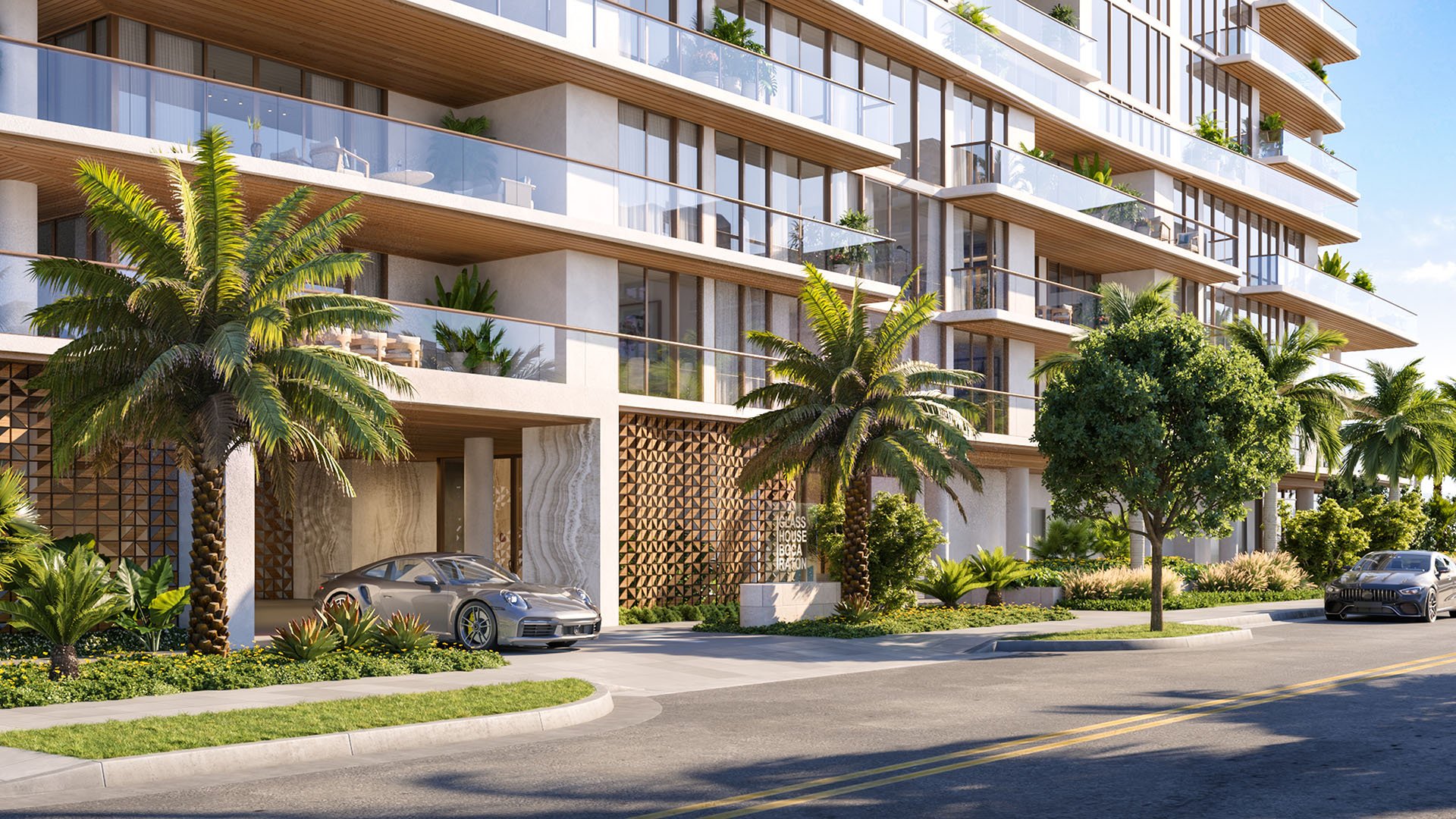
Glass House Boca Raton is not most persuasive as simply another luxury condominium. Its stronger case is strategic: a residence conceived around the confidence to arrive, depart, and remain at ease while life continues across multiple homes, cities, and obligations.
For the ultra-premium South Florida buyer, that distinction matters. The modern second residence is no longer judged only by finishes, views, and amenities. It is judged by the friction it removes. Can an owner leave for several weeks without a cascade of small concerns? Can the home feel prepared on arrival without theater or overexposure? Can the building operate as a composed, rigorously managed residential asset?
Glass House Boca Raton enters that conversation as a study in quiet luxury. The phrase is often reduced to muted palettes and expensive materials, but its deeper meaning is operational. Quiet luxury is the confidence that quality does not need to announce itself. It is restraint, permanence, craft, and discretion, supported by systems that make ownership feel lighter.
In many luxury buildings, lock-and-leave convenience is treated as a secondary benefit. At Glass House Boca Raton, the more compelling reading is that lock-and-leave confidence sits near the center of the ownership proposition.
That changes the buyer lens. A high-net-worth owner who splits time among homes is not merely buying a floor plan. They are buying control. They want a residence that remains secure, supported, and ready without constant local oversight. The value is emotional as much as practical: fewer calls, fewer unknowns, fewer moments when distance becomes inconvenience.
This is where service and technology become part of the luxury architecture. Remote oversight, efficient arrivals and departures, and a broader sense of managed ease all reinforce the idea that the home can stay in rhythm with a mobile owner’s life. The best version of lock-and-leave is not absence. It is continuity.
The quiet luxury argument for Glass House Boca Raton is not about austerity. It is about selection. At this level of the market, affluent buyers are increasingly fluent in the difference between conspicuous expense and durable quality. They respond to material richness, craftsmanship, and proportion, but they do not always want a residence that performs for the street.
That distinction is important in Boca Raton, where privacy and daily composure are part of the appeal. The city can offer coastal proximity, refined amenities, cultural access, and a more controlled pace than higher-intensity luxury corridors. For buyers who do not want the constant tempo of Miami or the formality associated with Palm Beach, Boca Raton can feel like a calibrated middle ground.
In practical search language, this is why terms such as Glass House Boca Raton, Boutique, New-construction, Second-home, Ultra-modern, and Boca Raton matter: they signal a buyer seeking a composed coastal residence rather than a trophy that demands constant attention.
The strongest luxury condominiums are no longer evaluated as collections of private residences alone. They are evaluated as systems. Architecture, building operations, risk management, life-safety planning, amenities, and service culture all shape the owner’s daily experience.
That is especially true in coastal South Florida. Buyers at this level understand that beauty must be matched by resilience. Storm-aware construction standards and thoughtful life-safety planning are not glamorous considerations, but they are central to long-term confidence. A residence that can be left behind for stretches of time must be supported by more than attractive design.
This is where Glass House Boca Raton’s value case becomes less about spectacle and more about assurance. The question is not only how the residence looks when the owner is present. It is how the property behaves when the owner is elsewhere.
Boca Raton’s luxury positioning rests on a rare combination: coastal proximity, polished amenities, privacy, cultural offerings, and lower daily friction. For owners who are in and out of South Florida, those qualities can be more valuable than sheer visibility.
The city’s appeal is also tied to a broader shift across the region. Boutique, design-forward residences in walkable coastal hubs have become increasingly relevant to buyers who want the benefits of condominium living without the scale or intensity of a larger urban tower. Smaller-feeling luxury, when well managed, can offer a more personal form of confidence.
For a buyer comparing South Florida options, the question becomes lifestyle fit. Miami may deliver energy and global connectivity. Palm Beach may deliver tradition and social gravity. Boca Raton can deliver a controlled coastal rhythm with privacy, access, and a sense of order for owners who prize ease.
A quiet luxury residence should be examined in layers. The first layer is design: proportion, materials, natural light, and the feeling of permanence. The second is operations: how the building supports owners before arrival, during residence, and after departure. The third is resilience: how coastal realities are addressed through construction, systems, and planning.
The fourth layer is discretion. In the ultra-premium market, discretion is not an abstract preference. It shapes how owners move through a property, interact with staff, receive guests, and maintain privacy. It also determines whether a residence feels like a sanctuary or another high-maintenance asset.
Glass House Boca Raton is most interesting because these layers are not separate talking points. They converge into a single proposition: a South Florida residence that emphasizes control, confidence, and quiet permanence.
The word investment is often narrowed to pricing and appreciation, but for many luxury owners, the broader investment is in time quality. A residence that reduces friction has value because it protects attention. It allows the owner to enjoy South Florida without managing South Florida.
That does not mean buyers should ignore fundamentals. They should still evaluate the building’s positioning, the character of the surrounding area, the durability of the design language, and the credibility of the operational promise. But in the quiet luxury segment, a key question is simple: does this property make ownership feel easier without making it feel generic?
Glass House Boca Raton’s answer appears rooted in restraint. Rather than relying on excess, it frames confidence as the amenity. For the buyer who wants a home that can be left securely, returned to gracefully, and lived in privately, that may be the most relevant luxury of all.
What is the main appeal of Glass House Boca Raton? Its appeal is the combination of quiet luxury and lock-and-leave confidence for affluent owners who value discretion, control, and ease.
What does lock-and-leave mean in this context? It means a residence designed to support owners who come and go often, with an emphasis on oversight, readiness, and reduced daily friction.
Is Glass House Boca Raton best understood as a second-home option? Yes, the concept is especially relevant for buyers who divide time among multiple residences and want a managed coastal base.
How does quiet luxury differ from more visible luxury? Quiet luxury communicates wealth through quality, materials, restraint, and permanence rather than overt display or spectacle.
Why is Boca Raton part of the value proposition? Boca Raton offers coastal access, privacy, amenities, and a more controlled daily pace than some higher-intensity South Florida markets.
Does the lock-and-leave concept depend on technology? Technology is one part of the equation, especially when it supports remote oversight and smoother arrivals and departures.
Why does resilience matter for this type of buyer? Coastal owners need confidence that construction, systems, and life-safety planning are considered as part of ownership security.
Is this a flashy luxury concept? No, the positioning is more restrained, with emphasis on craft, discretion, and confidence rather than conspicuous presentation.
Who is the likely buyer profile? The likely buyer is a high-net-worth owner seeking a refined South Florida residence that can be enjoyed without constant management.
What should buyers evaluate before choosing a lock-and-leave residence? They should consider design quality, building operations, privacy, resilience, service culture, and how easily the property supports their lifestyle.
If you'd like a private walkthrough and a curated shortlist, connect with MILLION.
If branded residences are on your mind — as a home or as an allocation — we would be glad to share what we are seeing, privately.
Begin a quiet conversation