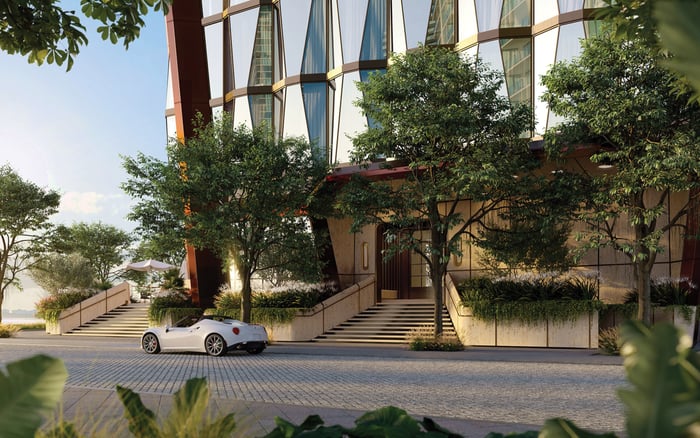
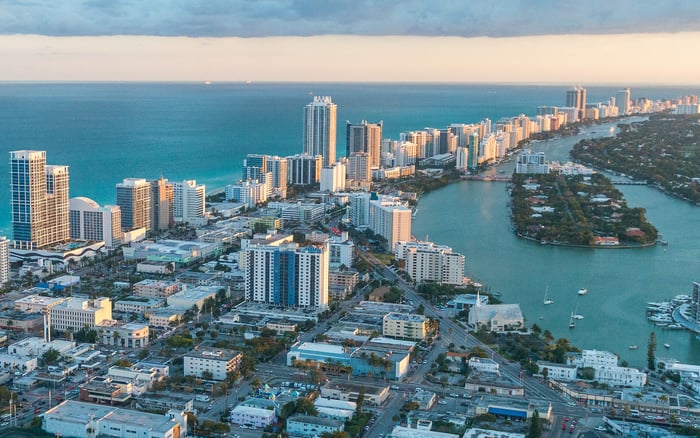
For Miami’s most time-sensitive residents, private aviation is less about spectacle and more about continuity: boardroom to beachfront with minimal friction. Yet in a dense coastal skyline, true “dedicated helipad access” is rare, highly regulated, and often misunderstood. This MILLION Luxury guide reframes the conversation around what can be verified, what buyers should demand in writing, and which addresses consistently perform for aviation-adjacent living when discretion and logistics matter.
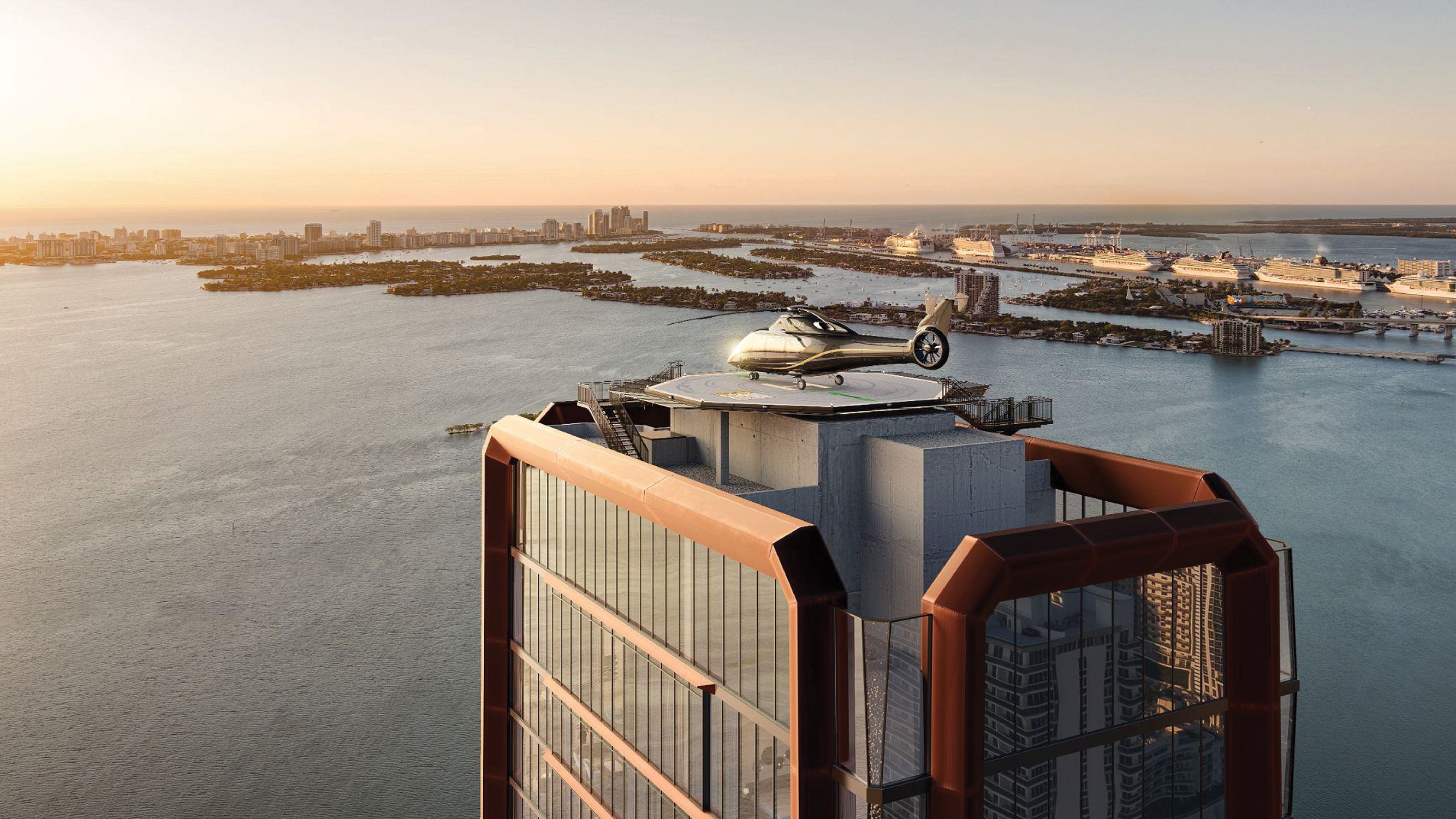
In South Florida, private aviation has become an everyday tool for principals moving between Miami, Palm Beach, and global hubs on compressed schedules. The fantasy is simple: land, step inside, and disappear upstairs. The reality is far more complex. In Miami’s dense urban fabric, rooftop operations, approach paths, noise constraints, airspace coordination, and building governance quickly narrow the field.
For buyers, the most important reframing is this: the true luxury is not the existence of a landing surface. It is the reliability of the entire sequence-permissions, secure arrivals, elevator control, staffed curb flow, and a building culture that treats privacy as a service.
That’s why the most practical way to evaluate “dedicated helipad access and aviation logistics” is to focus on a tower’s ability to deliver a consistently protected transfer-and to verify every operational promise in writing.
Whether a tower has a rooftop pad, a neighboring pad, or an arrangement that effectively functions like one, aviation-forward residents tend to share the same baseline expectations:
Controlled arrival choreography. A dedicated entry, minimal public exposure, and staff trained to move people, luggage, and security with speed and precision.
Elevator sovereignty. Service and private lift capabilities are a meaningful differentiator for discreet vertical movement.
Curb and valet discipline. In Downtown and Brickell, the curb is the battleground. A tower that can’t manage ride shares, guests, and deliveries cannot credibly promise frictionless VIP transfers.
Governance clarity. Condominium documents, rules, and board culture matter as much as the architecture. Restrictions on short-term traffic, filming, or events can protect the tone you’re buying.
In practice, many buyers who say they want a helipad are really buying the ability to move quickly between a residence, a car, a marina, and a private terminal-without being “handled” in public.
1. Brickell core tower - high-control arrivals in a financial district setting
Brickell remains the most logical base for principals who treat Miami as an operating city. The strongest towers here are defined by disciplined staffing, predictable curb control, and fast access to the highways that connect to private aviation infrastructure.
For buyers who prioritize a modern, residential-first experience with strong address value, 2200 Brickell represents Brickell living that pairs understated design with day-to-day operational ease. In Brickell, the helipad conversation is ultimately about transfer time and privacy management-not rooftop spectacle.
2. Downtown waterfront tower - yacht-ready positioning with executive logistics
Downtown Miami can be exceptionally efficient for aviation-adjacent residents when a building is engineered for arrivals and departures that don’t feel performative. Waterfront adjacency adds optionality: car transfer, water transfer, and quick repositioning across the bay.
A strong expression of this lifestyle is Aston Martin Residences Downtown Miami, where positioning near the water supports a broader mobility mindset. The luxury here is a residence that can pivot between day and night logistics without compromising discretion.
3. Miami Beach oceanfront tower - privacy-forward living for those who land and retreat
Miami Beach is where many buyers want the “arrive and exhale” effect. In this context, aviation logistics often translate into minimal lobby exposure, elevated service, and a building culture that treats privacy as non-negotiable.
For a newer oceanfront posture with clean architectural lines, 57 Ocean Miami Beach suits the buyer who values a quieter edge of the Beach while maintaining swift connectivity back to the city. The best Beach towers aren’t loud about logistics; they simply make them feel effortless.
4. Sunny Isles-style vertical privacy - high elevation, low friction living
For some residents, the appeal is a singular vertical world: fewer neighbors per floor, controlled access, and the sense that the building operates like a private club. When executed well, aviation transfers simplify because the “last mile” inside the property is predictable and protected.
A compelling proxy for this high-privacy, high-control lifestyle is Regalia Sunny Isles Beach. The experience is less about public-facing amenities and more about an internal rhythm that works for principals who treat time as the most valuable asset.
5. Hallandale luxury near resort-scale destinations - discreet access with room to breathe
North of Miami, the rhythm shifts. Roads can feel less compressed, and the arrival sequence can be calmer-especially for residents splitting time between the Beach, Broward, and Palm Beach. Buyers who value space, service, and a quieter operational environment often find this corridor compelling.
An oceanfront expression of that lifestyle is 2000 Ocean Hallandale Beach, which speaks to a resident who wants sophistication without the intensity of Miami’s most congested nodes.
The most expensive mistake in this category is purchasing an idea instead of an operating system. Before you contract, press for specifics that translate into lived reality.
Request building policies that address guest handling, security coordination, after-hours arrivals, elevator usage for large luggage, and where vehicles stage during peak periods. If any part of the pitch is “we can always do that,” treat it as unproven until it’s documented.
A nearby pad may exist in a neighborhood context, but that doesn’t mean it can be used reliably for your needs, at your preferred hours, or in a way that protects privacy. The relevant question isn’t distance-it’s operational permission.
Stand in the arrival zone and observe. Is there a clear security posture? Do staff actively manage people flow? Are there choke points where a camera phone would be unavoidable? In Brickell and Downtown, this single test often reveals whether a building can truly support aviation-forward living.
Aviation adjacency is personal. The same “best” tower can feel like the wrong fit if the surrounding neighborhood doesn’t align with your working pattern.
Brickell is for those who need proximity to decision-making and a refined, modern residential experience. The tradeoff is density. When Brickell works, it works because the building’s operations are impeccable-and the resident’s schedule benefits from centrality.
Downtown can deliver executive efficiency, especially for residents who want waterfront optionality and quick reach across the metro. The best towers here can feel like private enclaves despite being in the middle of everything.
Miami Beach is ideal when the goal is restoration. Buyers who keep public life elsewhere often prefer Beach living that minimizes exposure. The right tower makes arrivals feel like a quiet reset, even during high season.
Sunny Isles can read as a vertical retreat. It favors residents who value privacy, views, and internal predictability over the spontaneity of more walkable urban cores.
Hallandale offers a calmer tempo with access to major destinations up and down the coast. For some, it’s the most livable balance between access and breathing room.
Even at the ultra-premium level, resale liquidity is shaped by practical factors. Aviation-forward buyers are sophisticated, and they will underwrite the same friction points you should.
Operational excellence ages better than novelty. Strong staff culture and controlled access remain valuable even as design trends shift.
Privacy is a durable amenity. The ability to arrive and depart without spectacle is increasingly prized.
Rules clarity supports confidence. Uncertainty around arrivals, guests, and security can chill demand.
In other words, a tower’s long-term performance in this niche is less about marketing language and more about whether the building consistently behaves like a high-end service platform.
What does “dedicated helipad access” usually mean in Miami? It typically refers to a practical, repeatable path from aircraft to residence with controlled handling-not merely proximity to a landing site.
Do many Miami residential towers have rooftop helipads? Very few are positioned to support reliable rooftop operations, so most buyers prioritize proven logistics over a rooftop label.
Is Brickell a smart base for private aviation users? Yes-especially for buyers who need centrality and can secure a building with disciplined arrivals and curb management.
Is Miami Beach better for privacy than Downtown? It can be, because the best oceanfront buildings are designed around retreat and controlled access rather than constant public flow.
What should I ask a building before buying for aviation-heavy use? Ask for written policies on arrivals, security coordination, elevator usage, and where vehicles stage during peak periods.
How important is valet and curb flow for aviation logistics? It’s critical, because ground transfer is where delays and exposure usually happen in dense neighborhoods.
Can a nearby helipad guarantee reliable use? Not necessarily; reliability depends on permissions, operating constraints, and whether your use case is allowed and practical.
Does a higher-floor residence make logistics easier? It can, if the building provides private elevator control and staff support that reduce waiting and public interaction.
Are oceanfront towers practical for frequent flyers? They can be, particularly for buyers who value decompression and can accept slightly longer transfers in exchange for privacy.
What is the best way to protect discretion during arrivals? Choose a building with controlled entry points, trained staff, and a culture that treats privacy as a service standard.
When you're ready to tour or underwrite the options, connect with MILLION Luxury.
If branded residences are on your mind — as a home or as an allocation — we would be glad to share what we are seeing, privately.
Begin a quiet conversation