In Miami’s luxury tower market, parking is not a minor convenience. It is a legal right, an operational system, and often a defining part of the arrival experience. For affluent buyers evaluating residences in Brickell, Downtown, Edgewater, Miami Beach, and Sunny Isles, the essential question is not simply how many spaces come with a unit, but how those rights are documented, managed, and transferred.

In South Florida’s premier towers, private parking sits at the intersection of ownership, architecture, and daily convenience. Even a beautifully finished residence can lose some of its appeal if the parking arrangement is vague, difficult to access, or governed by rules that do not suit the owner’s lifestyle. That is especially true for buyers with multiple vehicles, household staff, visiting family, or a preference for self-parking over valet.
For MILLION Luxury clients, the central point is straightforward: parking rights in a Florida condominium are defined by the condominium’s governing documents. In practice, that means a buyer should verify whether a space is deeded, appurtenant to the unit, assigned by the association, subject to a license, or otherwise allocated through the building’s recorded framework. Listing language may describe a residence elegantly, but it does not replace the legal definition of the parking right.
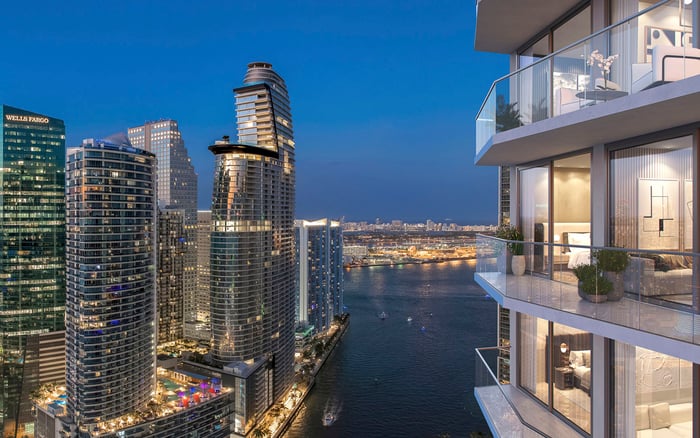
This matters across every submarket, from Brickell and Downtown to Edgewater and Miami Beach. In towers such as One Thousand Museum Downtown Miami, the arrival sequence is part of the luxury proposition. In large urban environments such as Mercedes-Benz Places Miami or Aria Reserve Miami, parking is shaped not only by the resident experience but also by site planning, circulation, and development approvals.
Affluent buyers often ask a simple question: does the unit come with parking? The better question is: what, exactly, is the legal nature of that parking interest?
Some spaces transfer with the residence because they are appurtenant to the unit under the condominium documents. Others may be separately described, limited to a particular use right, or subject to association control. In inherited, trust-held, or entity-owned purchases, this distinction becomes even more important, because the parking component may not track ownership in the way a buyer assumes.
A prudent review should clarify several points before closing:
Whether the space transfers automatically with title
Whether it can be sold or negotiated separately
Whether the association may reassign or regulate its use
Whether oversized vehicles, secondary cars, or specialty vehicles are restricted
Whether guest or staff access depends on resident registration procedures
If a dispute later arises, parking conflicts in Florida condominiums can fall within the same governance framework that applies to broader condo disagreements, including formal dispute-resolution channels. That is why careful document review at the contract stage is far less expensive than resolving ambiguity after move-in.
Miami buyers sometimes expect a consistent parking ratio from one high-end building to the next. That is not how the market works. Parking outcomes vary because local zoning, project entitlements, waivers, bonuses, and site-specific approvals can produce very different results, even within nearby neighborhoods.
In dense districts such as Brickell and Downtown, structured parking is typically integrated into the building or a larger development rather than handled through surface lots. Large mixed-use environments, including Brickell City Centre, illustrate how major urban projects rely on substantial internal parking systems as part of the overall plan. That logic carries into surrounding residential inventory, where the resident experience may ultimately depend on access ramps, shared entry points, valet courts, or podium-garage design.
For example, a buyer comparing Baccarat Residences Brickell with Aston Martin Residences Downtown Miami should not assume the same parking model simply because both sit within the urban luxury core. Building form, entitlement history, circulation planning, and operational philosophy can all differ.
Mechanical and automated parking systems can be appealing in theory. They may improve space efficiency, support tighter urban footprints, and create a more curated arrival sequence. For some buyers, they also signal a level of engineering sophistication consistent with contemporary luxury development.
Yet these systems warrant practical questions. Mechanical parking in a high-rise environment is tied to code compliance, inspections, maintenance obligations, and operating procedures. Buyers should ask how the system is managed, what downtime protocols exist, who performs service, and what happens during inspections, repairs, or building emergencies.
The broader design of parking structures in South Florida is also influenced by structural and life-safety requirements. In this region, garages and parking components are shaped by stringent building standards, including conditions imposed by the coastal climate and wind performance. In other words, garage design is not merely a convenience feature. It is part of the building’s engineered envelope.
That is particularly relevant in design-forward towers where lifestyle expectations are high. A polished motor court and discreet resident drop-off can be compelling, but owners should still understand the mechanics behind access, retrieval, and continuity of service.
In many premier towers, valet is not a backup amenity. It is the primary operating model. That can feel seamless when management is well organized, but buyers should resist assumptions about cost or privilege.
Valet fees are not automatically included in regular assessments. Service structure, billing, staffing, and resident privileges are typically determined at the building level. Some towers may include a baseline level of service, while others charge separately for additional vehicles, overnight guest use, or special requests. The relevant point is that there is no universal valet package.
Guest parking is similarly property-specific. Boards and management can impose rules on duration, access windows, registration, and fees, so long as those rules align with the governing documents and applicable law. For households that entertain frequently, use drivers, or host extended family, guest parking rules are not an afterthought. They are a core lifestyle term.
This issue is especially important in towers where the arrival experience is central to the brand proposition, from St. Regis® Residences Brickell to Turnberry Ocean Club Sunny Isles. In both Brickell and Sunny Isles, a refined porte cochere may appear visually effortless, but residents should still understand whether vehicles are self-parked, valeted, stacked, or governed by time-based access rules.
Today’s parking diligence extends beyond the space number on an estoppel or sales brochure. Electric vehicle charging has become a major consideration in new and resale condominiums alike. Installation rights, electrical capacity, cost allocation, and day-to-day use policies can all be affected by condominium governance and the building’s existing infrastructure.
Buyers should also ask operational questions that are increasingly relevant in Miami: What are the storm procedures for garage access? Are there restrictions on vehicle storage during a weather event? Is the garage entrance subject to temporary operational controls during severe conditions? None of these questions diminish the glamour of ownership. They simply reflect the realities of tower living in coastal South Florida.
A thoughtful parking review also helps clarify whether a residence truly supports the owner’s lifestyle. That may mean confirming room for an additional car in Aventura, understanding guest protocols for a second-home owner in Miami Beach, or assessing EV readiness for a primary residence in Brickell.
Before committing to a high-value purchase, buyers should request the declaration, bylaws, current rules, and any parking-related amendments or policies. The goal is to determine not only what the seller says is included, but what the condominium legally recognizes and operationally permits.
Focus on these areas:
The exact identification of each parking right
Transferability with the residence
Valet versus self-parking rules
Guest and vendor access policies
Mechanical system disclosures, if applicable
EV charger permissions and electrical limitations
Any recent rule changes affecting use or fees
In a market where details define value, parking should be treated with the same seriousness as waterfront exposure, ceiling height, or service level. For the affluent buyer, true convenience is not assumed. It is documented.
Does an assigned parking space always transfer with a Miami condo sale? Not necessarily. Transfer rights depend on the condominium documents and how the parking interest is legally described.
What is the difference between deeded and appurtenant parking? Both involve legal rights, but the exact structure depends on the condominium’s recorded documents and should be reviewed closely.
Can a condo board change parking rules after I buy? Associations can adopt and enforce parking rules if they are consistent with the governing documents and applicable law.
Are valet fees usually included in monthly assessments? Not always. Valet billing and service levels are commonly set by the building’s own operations and rules.
Why do some Brickell towers offer more self-parking than others? Parking outcomes can vary by zoning, approvals, design constraints, and each project’s entitlement history.
Should buyers worry about mechanical parking systems? They should understand them. These systems involve code compliance, inspections, maintenance, and operating procedures.
Is guest parking guaranteed in luxury towers? No. Guest access is highly building-specific and may be subject to time limits, registration rules, and fees.
Can I install an EV charger in my condo garage space? Possibly, but approval, infrastructure capacity, and condominium policies all matter.
Do parking disputes in condos become formal legal matters? They can. Parking conflicts may fall within the condominium dispute framework, making early document review essential.
What should I ask for before closing on a luxury condo? Request the declaration, bylaws, current rules, amendments, and any written parking or valet policies tied to the unit.
For a discreet conversation and a curated building-by-building shortlist, connect with MILLION Luxury.
If branded residences are on your mind — as a home or as an allocation — we would be glad to share what we are seeing, privately.
Begin a quiet conversation