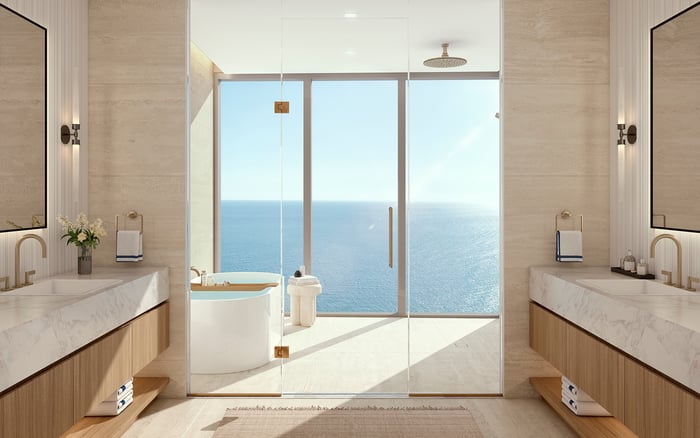
A buyer-focused comparison of Bentley Residences Sunny Isles and W Pompano Beach Hotel & Residences through pet movement, service elevators, vendor circulation, house-rule flexibility, and daily operational control.

The most revealing difference between Bentley Residences Sunny Isles and W Pompano Beach Hotel & Residences may not be the glamour of the brand language. It is the choreography of daily life. How does a dog leave the residence after dinner? Which elevator does a housekeeper use? Can a private chef arrive without crossing the wrong circulation path? Who has authority to change operating rules once the building is occupied?
Both properties belong in a South Florida luxury conversation, yet they should not be evaluated as if they offer the same domestic rhythm. Bentley Residences Sunny Isles should be studied through the lens of privacy, resident control, arrival patterns, and how daily movement is separated or shared. W Pompano Beach Hotel & Residences should be studied through the lens of a hotel-and-residences environment, where hospitality expectations, guest activity, service systems, and owner routines may need to coexist.
For one buyer, hospitality energy is the attraction. For another, it can raise questions that deserve answers before the sales gallery shapes the decision. The point is not to declare one model superior. The point is to understand which operating structure will feel better after the first season of ownership.
Bentley Residences Sunny Isles is best evaluated as a privacy-first purchase. Buyers should ask how resident arrivals are handled, how often owners interact with shared arrival areas, how visitors are received, and how staff or vendors are routed. The building may appeal most to households that value discretion, predictable access, and a residential feeling of control.
That privacy-oriented analysis is especially relevant for households with staff, frequent deliveries, children, pets, or a strong preference for quiet routines. The question is not whether the building appears luxurious. The question is whether its operating structure allows an owner to live privately without daily friction.
W Pompano Beach Hotel & Residences requires a different set of questions because the name itself signals a hotel-and-residences format. That can be compelling for buyers who want a serviced, social, hospitality-influenced environment. It can be less ideal for owners who expect broad discretion over vendors, pets, entertaining, or access protocols.
For pet owners, the right question is not simply whether pets are allowed. It is how pets move. At Bentley Residences Sunny Isles, buyers should focus on pet policies, elevator use, controlled lobby access, outdoor routing, enforcement language, and whether daily walks align with the privacy expectations being sold.
No buyer should assume the outcome from marketing language alone. Final condominium documents should be reviewed for pet limits, breed or size language if any, service-elevator requirements, lobby rules, pet relief procedures, fines, and enforcement mechanisms. A luxury building can feel pet-friendly in presentation while still being restrictive in operation.
At W Pompano Beach Hotel & Residences, pet logistics require a broader lens. Owners should evaluate how animals move through a hotel-residence environment where residents, guests, staff, deliveries, vendors, and food-service activity may overlap. Are pets permitted through the principal residential path? Must they use a service elevator? Are there operator standards that shape the association’s practical flexibility? How are guest interactions managed during busier periods?
Pompano Beach buyers attracted to hospitality should be especially disciplined here. The most polished arrival experience can become complicated if a large dog, stroller, luggage carts, and service circulation converge at the same hour.
Service-elevator planning is one of the clearest ways to understand a building’s true lifestyle. In a residential condominium setting, service circulation can often be reviewed around owner needs: move-ins, staff access, vendors, package delivery, private events, and maintenance.
For Bentley Residences Sunny Isles, buyers should ask how frequently they will need shared arrival spaces, how vendors are screened, whether residents can reserve service elevators, and what rules apply to deliveries or private staff. The service plan may matter as much as the finishes because it determines how quietly the residence functions.
At W Pompano Beach Hotel & Residences, the service-elevator conversation is more complex because hotel and residential needs may intersect. Guest activity, owner access, housekeeping, vendors, deliveries, and food-service circulation can create overlapping flows that require clear scheduling and authority.
The refined buyer should request draft or final rules on service-elevator reservations, resident use, vendor credentialing, staff access, delivery hours, move-in windows, and emergency exceptions. A branded environment can be beautifully managed, but that beauty depends on systems understood before purchase.
House rules are often treated as legal background noise. They should not be. For long-term owners, house-rule flexibility can shape daily comfort more than a finish selection.
Bentley Residences Sunny Isles should be reviewed for who can amend rules, what voting thresholds apply, and whether any developer, management, or brand-related rights survive after turnover. Buyers should not assume that a residential feeling automatically equals unlimited flexibility.
W Pompano Beach Hotel & Residences should be approached differently. A hotel-and-residences model may involve more standardized operating expectations where brand experience, guest services, and hotel operations are central to the property. Owners may gain consistency and service structure, but they should ask which rules can be changed by owners and which require operator or brand approval.
This is the central tradeoff. Bentley leans toward the questions of privacy and resident control. W Pompano leans toward the questions of hospitality energy, service systems, and professional standardization. Neither is universally better. The stronger choice depends on whether the household values autonomy or managed atmosphere more.
Before signing, map a week of real life. Include pet walks, staff arrivals, grocery delivery, private trainers, dinner guests, late-night returns, family visits, rental plans, and maintenance needs. Then test each scenario against the building’s likely operating model.
For Bentley Residences Sunny Isles, ask which arrivals can avoid unnecessary shared exposure, how pets reach the outdoors, how vendors are screened, whether residents can directly reserve service elevators, and what rental restrictions apply. For W Pompano Beach Hotel & Residences, ask how hotel-residence operations affect owner access, how pets are routed, how service elevators are scheduled, and how residential needs are prioritized when hotel and owner activity overlap.
Sales galleries are designed to make desire feel effortless. The best luxury purchase analysis does the opposite. It slows desire down long enough to examine the unglamorous mechanics that determine whether a residence will feel gracious after the first season.
Is Bentley Residences Sunny Isles more private than W Pompano Beach Hotel & Residences? It may be better aligned with a privacy-focused buyer, but the actual answer depends on final access, elevator, vendor, and house-rule documents.
Is W Pompano Beach Hotel & Residences better for buyers who want service? It may appeal to buyers who want a hospitality-influenced environment, but they should verify how services affect owner access and daily routines.
Should pet owners focus only on whether pets are allowed? No. Pet owners should verify routes, elevator use, lobby access, size or breed limits if any, relief procedures, and enforcement language.
Why do service elevators matter so much in this comparison? They reveal how residents, vendors, staff, deliveries, housekeeping, and food-service activity move through the building each day.
What should Bentley buyers ask before signing? They should ask about resident arrivals, pet routing, vendor screening, service-elevator reservations, rental limits, and who can change house rules.
What should W Pompano buyers ask before signing? They should ask how hotel-residence operations affect pets, vendors, owner access, delivery windows, service elevators, and rule flexibility.
Could W Pompano have less flexible house rules than a pure residential building? It could, depending on the final documents and any operator or brand approval rights. Buyers should verify the hierarchy of authority before contract.
Is this mainly a Sunny Isles versus Pompano Beach decision? Location matters, but the deeper comparison is daily operating control versus a more hospitality-influenced residential experience.
Should buyers review final condominium documents before signing? Yes. Draft or final documents should be reviewed for pet policies, rental rules, vendor access, service elevators, and owner rights.
Which property is the better choice for an ultra-private household? Bentley may be more aligned with privacy-oriented living, while W Pompano may better suit buyers seeking a serviced atmosphere.
When you're ready to tour or underwrite the options, connect with MILLION.
If branded residences are on your mind — as a home or as an allocation — we would be glad to share what we are seeing, privately.
Begin a quiet conversation