A buyer-focused editorial on beachfront construction setbacks, using The Estates at Acqualina and 900 Ocean Surfside as reference points for how sophisticated South Florida purchasers should evaluate coastal design, privacy, resilience, and long-term value.
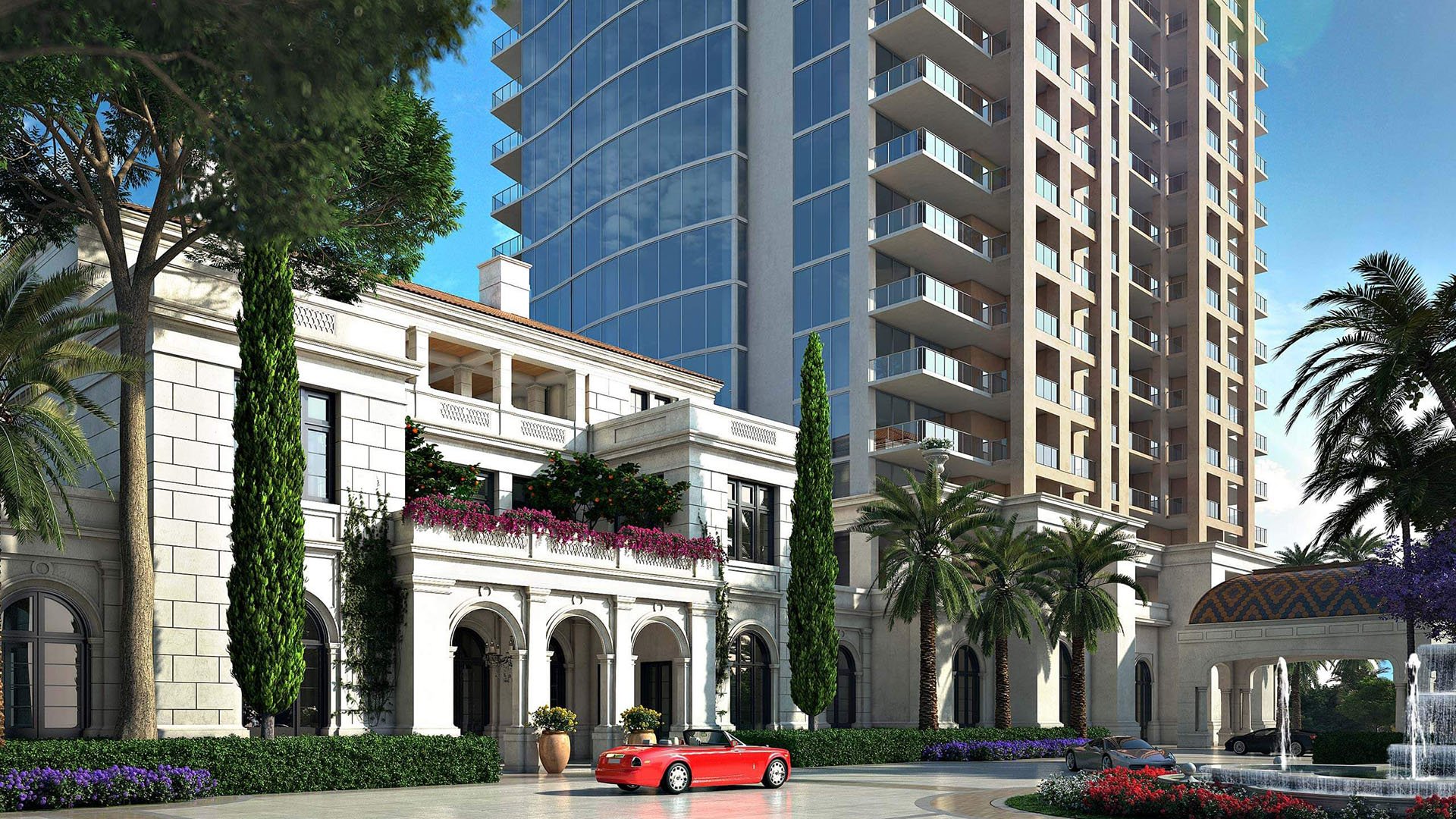
For South Florida’s ultra-prime buyer, beachfront construction setbacks are not a technical footnote. They are one of the quiet forces shaping privacy, architecture, outdoor living, future renovation flexibility, and the emotional quality of arriving at the ocean. A tower may be judged first by its skyline profile, but its long-term elegance is often determined by how it meets the beach.
The title pairing of The Estates at Acqualina and 900 Ocean Surfside is useful because it places two buyer instincts side by side. One is the established appeal of a full-service oceanfront address with the visibility of Sunny Isles. The other is the intimacy and village-scale sensibility associated with Surfside. In both cases, the essential question is not simply how close a residence feels to the water. It is how intelligently the building, landscape, access, and protective coastal conditions are composed between the private threshold and the shoreline.
A setback is a boundary, but in luxury real estate it can also be a design instrument. The distance between a structure and the beach may allow for a more gracious arrival sequence, deeper landscaping, less visual exposure from the sand, and a calmer relationship between indoor rooms and outdoor terraces. When well handled, that distance does not dilute oceanfront living. It refines it.
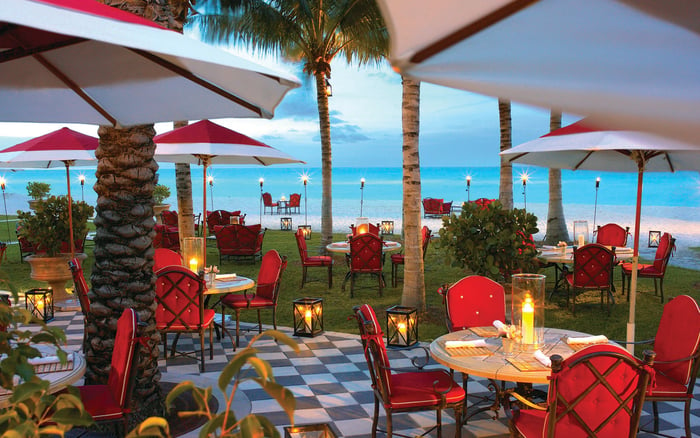
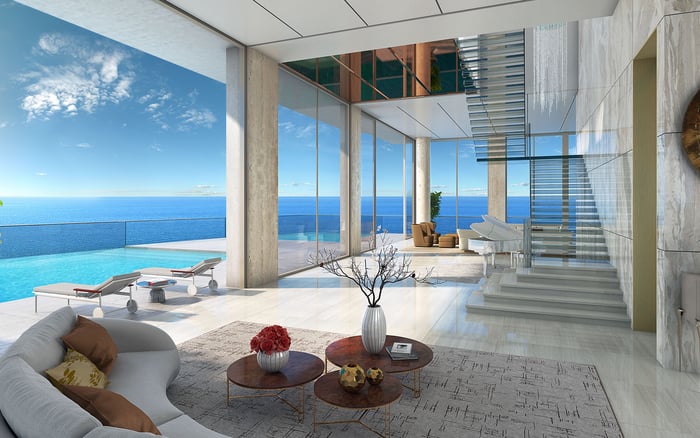
Buyers often focus on the view corridor from the principal living room or primary suite. That is understandable, but incomplete. A refined review also asks what sits below the view: pool decks, lawns, pedestrian paths, dune areas, service access, beach gates, and neighboring structures. These layers influence whether the home feels resort-like, discreet, open, or exposed. For an oceanfront buyer, setbacks help determine whether the residence performs as a private sanctuary or as a beautiful apartment overlooking a busy edge.
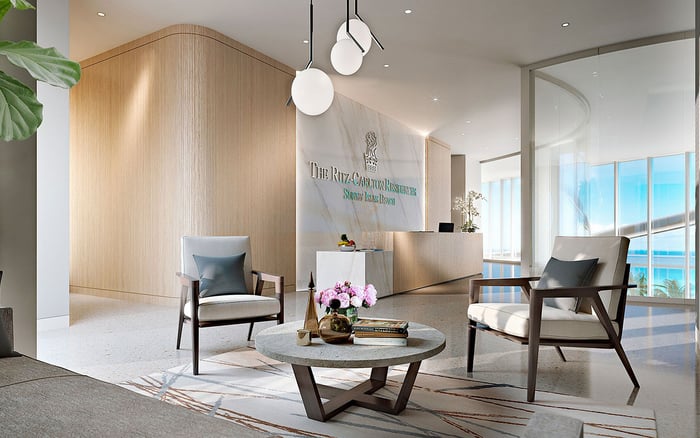
The Estates at Acqualina Sunny Isles belongs to the mental map of buyers who associate Sunny Isles Beach with vertical luxury, resort-caliber service, and large-format oceanfront living. In this context, setbacks should be read not as a single measurement but as part of a broader experience: arrival, lobby procession, pool environment, beach transition, and the way residents move from amenity spaces to the sand.
In Sunny Isles, beachfront living tends to be evaluated through scale. High-rise architecture intensifies the importance of ground-plane design, because the resident experience is not only about altitude. It is also about how the building touches the coast. A thoughtful buyer will want to understand whether outdoor amenities feel sheltered, whether beach access is direct yet controlled, and whether the site plan creates breathing room between private leisure areas and public-facing coastal activity.
The most discerning purchasers also look beyond the first impression of glamour. They ask how a property may age under coastal conditions, how maintenance responsibilities are organized, and whether future work near the beach could be constrained by the same conditions that make the address rare. In ultra-luxury beachfront ownership, permanence is a form of prestige.
Surfside invites a different conversation. Compared with larger coastal corridors, it is often perceived through the lens of restraint, walkability, and a quieter residential rhythm. A buyer considering 900 Ocean Surfside should treat setbacks as part of that boutique equation. The smaller the perceived neighborhood scale, the more meaningful every transition becomes: street to lobby, residence to terrace, pool to beach, and building to neighboring property.
In Surfside, privacy can be less about height and more about composition. A well-planned beachfront setback can soften the interface between a residence and the public beach environment. It may also influence how light, landscaping, and outdoor circulation are experienced throughout the day. The question for buyers is not whether a property feels close to the Atlantic on a brochure page. It is whether the site feels composed when one stands at eye level, walks the perimeter, and observes how residents and guests actually move.
That level of attention is especially important for new-construction buyers. Newness can create confidence, but it should not replace due diligence. The most desirable beachfront homes pair contemporary design with an intelligent coastal posture.
Before becoming attached to a floor plan, buyers should request and review the documents that explain the site. A survey, site plan, recorded access information, association materials, and any available coastal or municipal approvals can help clarify what is private, what is shared, and what may be limited in the future. The point is not to turn a lifestyle purchase into an engineering exercise. It is to ensure that the lifestyle is supported by a resilient physical framework.
A buyer should also walk the property at different times of day. Morning light may reveal privacy conditions differently than late afternoon. Weekend beach activity may feel different from a weekday showing. A pool deck that appears serene in photographs may read differently when beach traffic, service movement, wind, and sound are considered together.
Beach access deserves particular attention. Direct access is prized, but the best version is controlled, elegant, and intuitive. Gates, paths, showers, storage, security, and the relationship between private amenity space and the public shoreline all affect daily life. In the luxury segment, convenience without composure can feel ordinary. Composure is what separates a premium address from a truly considered one.
Setbacks influence value because they shape both what can be enjoyed today and what may be possible tomorrow. A generous or well-managed coastal edge can help preserve privacy and create a more layered living environment. A constrained or poorly understood edge can complicate maintenance, renovation, insurance analysis, and buyer confidence at resale.
This is why sophisticated clients do not treat setbacks as an obstacle to ocean proximity. They treat them as part of the property’s architecture of risk. A residence that feels slightly more restrained on paper may live more beautifully if the site protects outdoor space, buffers public activity, and handles the coast with discipline. Conversely, a dramatic water-facing position may deserve extra scrutiny if it leaves little room for adaptation.
The best beachfront ownership in South Florida is a balance of immediacy and prudence. The ocean should feel present, but not overwhelming. The building should command its setting, but not appear to challenge it. The owner should feel the privilege of the shoreline without inheriting unnecessary ambiguity.
For MILLION’s audience, the conversation around The Estates at Acqualina and 900 Ocean Surfside is ultimately about reading luxury at a deeper level. Finishes, amenities, and views are visible. Setbacks are quieter. Yet they influence how the property breathes, how private it feels, how gracefully it ages, and how confidently it may be presented to the next generation of buyers.
In a market where oceanfront land is finite and expectations are exacting, the most compelling residences are not merely close to the beach. They are intelligently positioned within it. That distinction is where design, regulation, discretion, and value meet.
What is a beachfront construction setback? It is the required or planned distance between construction and a coastal reference point or property condition. For buyers, it affects privacy, usable outdoor space, and future flexibility.
Why do setbacks matter for luxury condos? They influence how a building meets the beach, how amenities are arranged, and how protected residents feel from public activity. They can also affect long-term maintenance planning.
Should a buyer compare setbacks between The Estates at Acqualina and 900 Ocean Surfside? Yes, but the comparison should be contextual rather than purely numerical. Site design, neighborhood scale, access, and outdoor programming all matter.
Are closer buildings always more valuable? Not always. Immediate ocean proximity can be powerful, but a more composed coastal edge may provide better privacy, resilience, and daily livability.
What documents should buyers review? Buyers should review surveys, site plans, association materials, access provisions, and any relevant approval documents. Counsel and qualified consultants can help interpret them.
How does Surfside change the setback conversation? Surfside often rewards a quieter, more residential reading of the beachfront. Privacy, scale, and the transition from building to sand become especially important.
How does Sunny Isles change the setback conversation? Sunny Isles often involves larger vertical luxury environments. Buyers should study how ground-level amenities, service areas, and beach access are organized.
Can setbacks affect renovations? They can. Work near the coast may face additional review, limits, or design considerations, so future plans should be discussed before purchase.
Do setbacks affect insurance or carrying costs? They may be part of the broader risk picture. Buyers should evaluate coastal exposure, building condition, maintenance obligations, and association reserves together.
What is the best way to shortlist comparable options for touring? Start with location fit, delivery status, and daily lifestyle priorities, then compare stacks and elevations to validate views and privacy.
For a discreet conversation and a curated building-by-building shortlist, connect with MILLION.
If branded residences are on your mind — as a home or as an allocation — we would be glad to share what we are seeing, privately.
Begin a quiet conversation