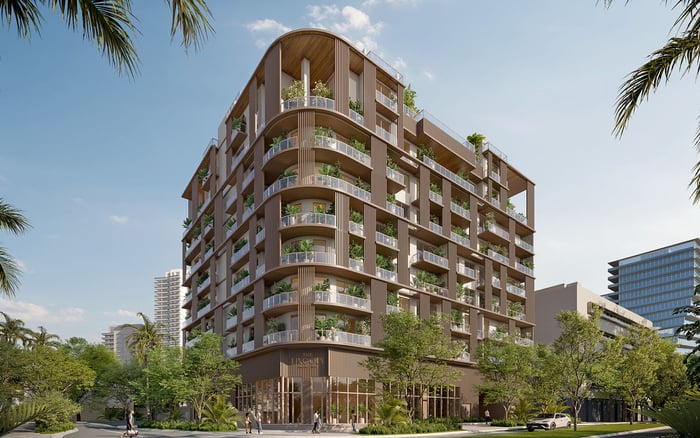
A collector-led shortlist and due-diligence framework for evaluating Coconut Grove residences through privacy, light control, security, display, and art-handling needs.
For an art collector, a Coconut Grove address is only the starting point. The more consequential question is whether a particular residence can meet the collection’s requirements without compromising daily life. Privacy, controllable illumination, discreet circulation, secure storage, and carefully planned display walls matter more than a dramatic first impression.
The strongest search begins with the individual floor plan, exposure, glazing, access sequence, and building protocols. Even within a single development, two residences may perform very differently. The waterfront setting should be treated as part of the brief, not as proof that a home is collection-ready.
This editorial order presents five useful starting points for collector-specific due diligence. It does not assume that every residence within each project meets the same standards.
1. Park Grove: the balanced-gallery candidate
Place Park Grove first when the objective is to balance entertaining space with quieter rooms for controlled display. Request plans for the specific residence, then map sightlines, wall dimensions, window positions, and the route from arrival to the principal art areas.
2. Four Seasons Residences Coconut Grove: the service-protocol candidate
Consider this address through the lens of operational discretion. Before selecting a residence, determine how private arrivals, approved vendors, oversized deliveries, temporary holding, and contractor access would function for the specific collection and acquisition schedule.
3. Vita at Grove Isle: the access-control candidate
Use Vita at Grove Isle to frame questions about the entire chain of custody. With qualified art handlers, review every transition between the property entrance, loading point, elevator, residence threshold, storage area, and final installation location.
4. Mr. C Tigertail Coconut Grove: the glazing-and-layout candidate
Here, keep the focus on the residence itself. Compare exposures, uninterrupted walls, ceiling conditions, reflective surfaces, and furniture clearances. A compelling view should not dictate where important works must hang or how rooms must function.
5. Opus Coconut Grove: the planning-flexibility candidate
Approach Opus as a test of how early collector priorities can enter the design conversation. Confirm what may be modified, when decisions must be made, and which proposals require building review before committing to lighting, millwork, reinforcement, or integrated security.
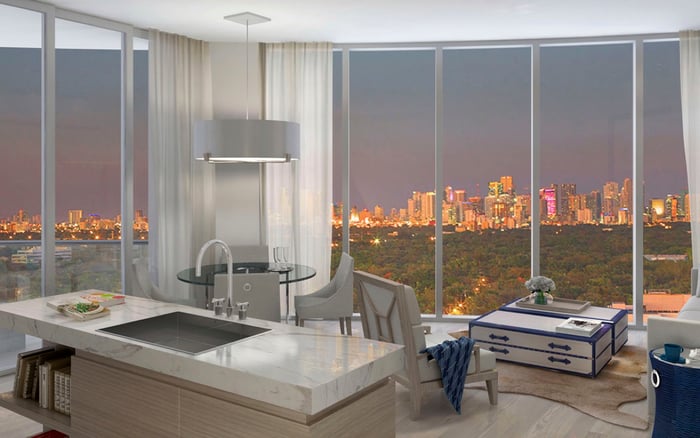
Collectors should evaluate daylight room by room and hour by hour. Ask a lighting consultant and conservator to review glazing, shade pockets, fixture locations, control zones, and potential reflection paths. The objective is not simply darkness, but a flexible environment that can shift from private viewing to evening entertaining without improvisation.
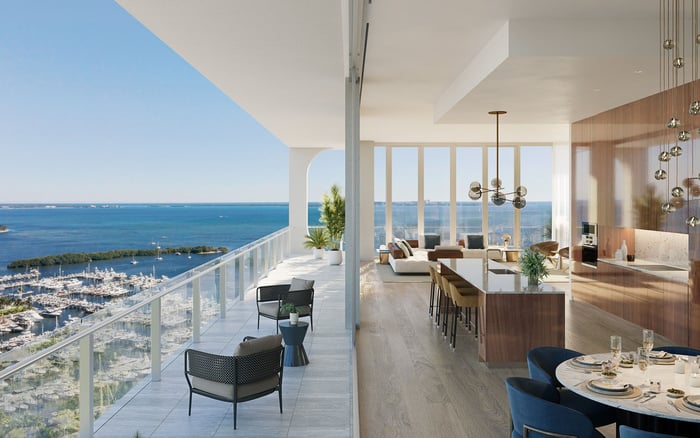
High floors may appeal for outlook and discretion, but elevation alone does not answer a collection’s needs. Exposure, nearby reflections, window geometry, and interior planning still demand direct review. A balcony can also influence room layout and sightlines, making its relationship to display walls worth studying.
Project inquiries should be followed by a residence-specific technical assessment rather than assumptions based on a project name.
Privacy is most convincing when embedded in circulation. Buyers should trace the routes used by residents, guests, household staff, installers, and deliveries, noting where those paths overlap. Elevator access, service scheduling, threshold visibility, and temporary staging should be evaluated together.
Security demands the same layered thinking. A specialist can assess alarms, cameras, communications, display fixings, secure storage, and response procedures while preserving the interior’s calm. Cybersecurity also belongs in the conversation when lighting, shades, climate controls, and access systems share connected interfaces.
Buyers should request written answers about the exact residence and its access protocols.
An art-ready home should be developed around a collection plan, not decorated after closing. The team may include an architect, lighting designer, conservator, security adviser, art handler, insurer, and technology consultant. Early coordination can clarify display zones, concealed equipment, storage, electrical capacity, and installation sequencing.
The project conversation should identify decision deadlines and approval boundaries. Across Coconut Grove, the prudent approach remains consistent: verify every proposed intervention before relying on it.
Lifestyle remains important, but collector comfort comes from knowing that protection does not overwhelm the rooms. The strongest result feels residential, composed, and effortless, even when substantial planning sits behind the walls.
Request the exact plan and finish specifications, then arrange an in-person review with the appropriate advisers. Test arrival and delivery paths, measure intended display walls, inspect shade and lighting provisions, identify secure storage possibilities, and clarify alteration rules. Written confirmation is essential whenever a purchase depends on a future modification or operating accommodation.
Finally, separate project-level impressions from residence-level conclusions. Orientation, layout, condition, and owner alterations can change the answer. The best Coconut Grove waterfront residence is the one that survives technical review while still feeling like a private home.
What should an art collector evaluate first? Start with the exact floor plan, exposure, access route, and the collection’s display requirements.
Is a waterfront view compatible with light-sensitive art? It can be, subject to a conservator-led review of glazing, shading, reflections, and placement.
Should buyers favor higher floors? Not automatically. Compare privacy, exposure, access, installation logistics, and the individual layout.
Why does the delivery route matter? It affects discretion, handling risk, staging, elevator coordination, and movement into the residence.
Can building security replace private collection security? Buyers should have a qualified adviser assess whether collection-specific measures are appropriate.
When should a conservator join the purchase process? Ideally, before contract terms or design decisions depend on unverified environmental conditions.
What documents should a buyer request? Seek the precise plan, relevant specifications, alteration rules, and written answers to material questions.
How should collectors compare two residences in one building? Review each independently, because exposure, wall area, circulation, and prior alterations may differ.
Should smart-home systems be part of security review? Yes. A specialist should consider connected access, lighting, shading, climate, and communications systems.
What defines the best residence for a collector? It is the home that meets technical requirements while preserving privacy, beauty, and ease of living.
For a confidential assessment and a building-by-building shortlist, connect with MILLION.
If branded residences are on your mind — as a home or as an allocation — we would be glad to share what we are seeing, privately.
Begin a quiet conversation