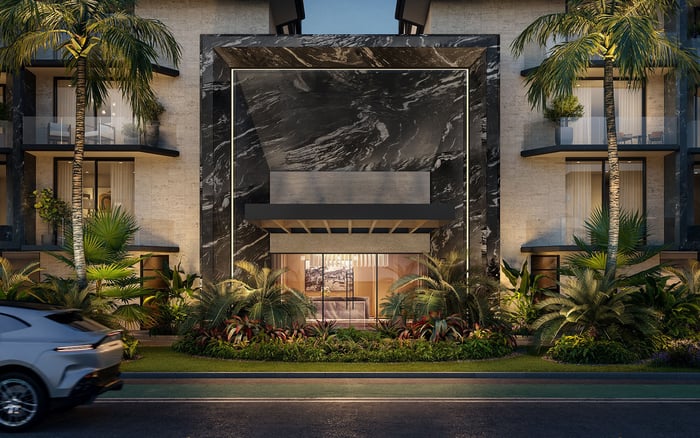
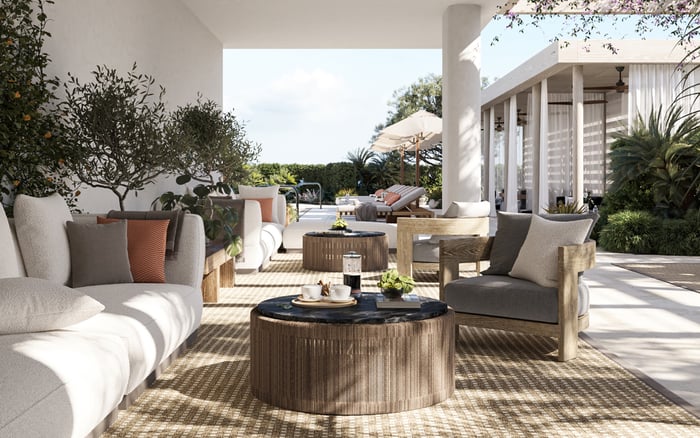
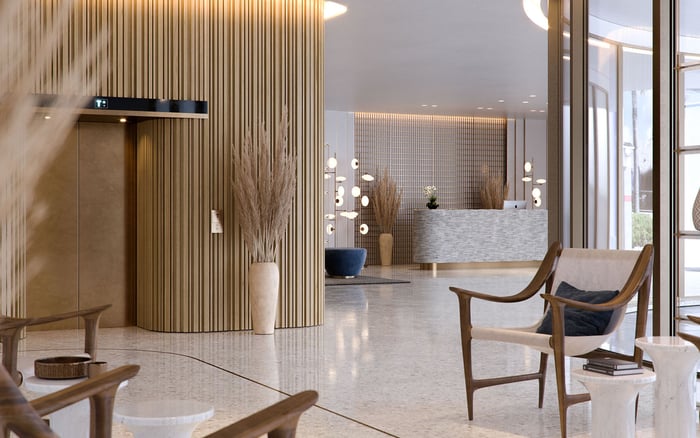
Bay Harbor Islands has become a case study in South Florida’s “small-building, big-lifestyle” thesis: low-rise and mid-rise waterfront residences that trade on privacy, walkability, and boating access while staying minutes from Bal Harbour and Miami Beach. This guide outlines what is driving demand, which project attributes matter most, and how to underwrite value in a market where boutique inventory can command meaningful premiums.
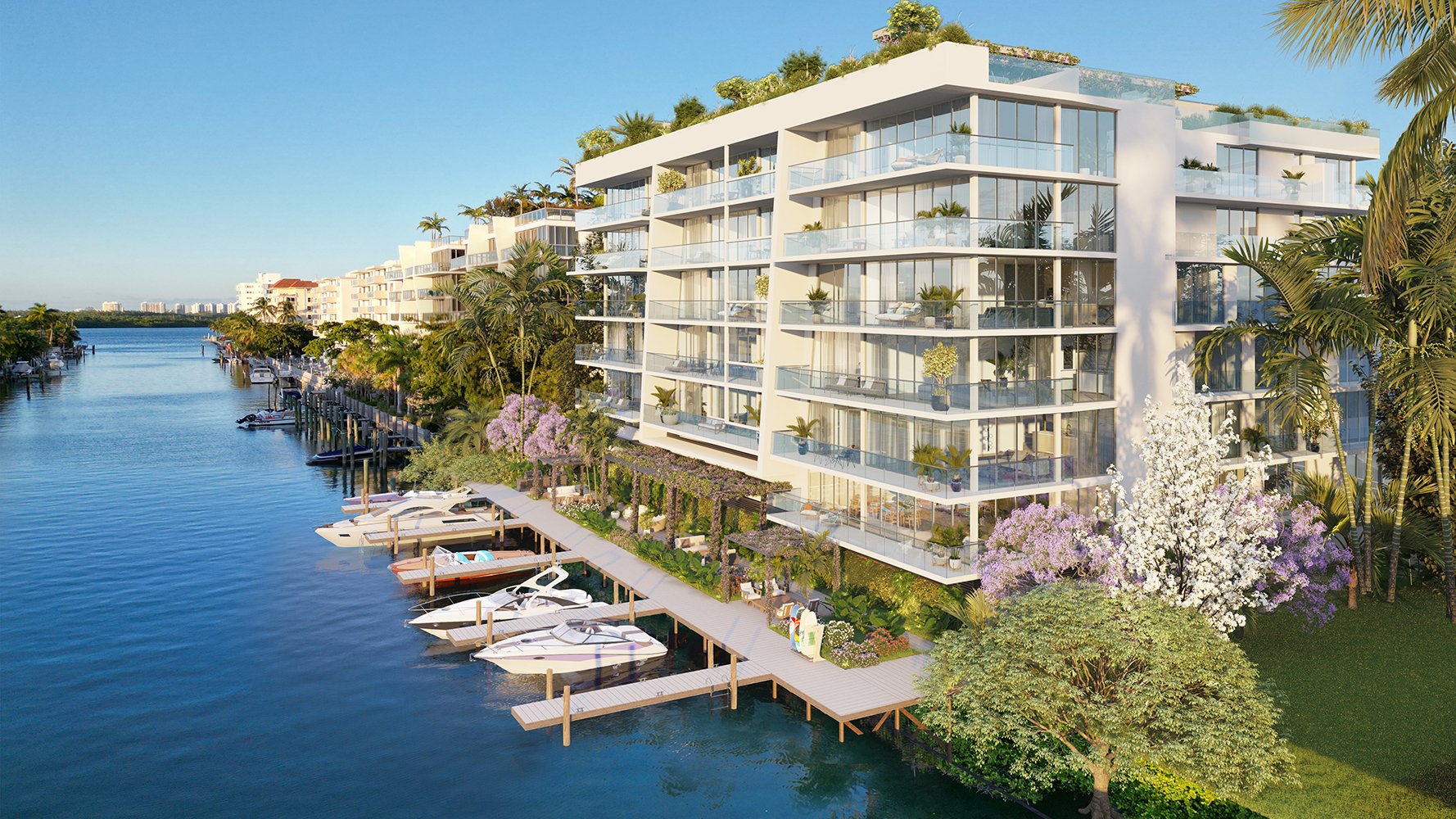
Bay Harbor Islands is a two-island community in Biscayne Bay that often reads more like a private address than a scene. Its center of gravity is Kane Concourse, a walkable business district that gives the neighborhood daily momentum without the volume and traffic profile of many nearby Miami corridors. For buyers who want to be close to Bal Harbour and Miami Beach while protecting privacy, this geography is the advantage.
In the Bay Harbor conversation, the appeal is rarely about spectacle. It is about ease: shorter drives, fewer buildings competing for the same view corridors, and a residential cadence that still supports restaurants, services, and a highly navigable day-to-day routine.
Bay Harbor Islands’ luxury condo market has been cited as gaining roughly 93 percent in price per square foot over about two years, trading at an estimated 14 percent premium versus Miami’s broader luxury condo market. Those figures are less a story about any single building and more a repeatable pattern: limited supply, fewer neighbors, and a buyer profile that consistently values calm and discretion.
Here, “boutique” operates as a practical filter, not a marketing flourish. In real terms, boutique scale can mean:
The strongest offerings pair that small-building intimacy with a clear materials narrative. Italian-forward specifications are frequently highlighted in current Bay Harbor pipelines, including Snaidero kitchens and Miele appliances in certain projects. The signal is finish quality and cohesion, rather than simply maximizing square footage.
On paper, many waterfront condos in South Florida advertise “boating.” In Bay Harbor Islands, the better projects treat marina access as an organizing principle, not an add-on.
A privately positioned marina changes the daily experience. You are not merely near water, you are oriented to it. For some buyers, that means weekend departures feel frictionless. For others, it is the visual and acoustic calm of a protected bay, with yacht culture implied rather than performed.
One of the clearest examples of this marina-forward posture is Onda Residences, which is marketed with a private marina of 14 slips intended for boats roughly 30 to 55 feet, with access out via Haulover Inlet. The point is not scale. It is curation that aligns with Bay Harbor’s boutique identity.
Bay Harbor Islands is not a single “best building” story. It is a tight set of boutique propositions, each with a different mix of planning certainty, design direction, and lifestyle emphasis.
La Baia South is a useful baseline for the modern boutique template. Publicly reported project details describe an 8-story building with 68 residences at 9201 E Bay Harbor Dr, along with a broad amenity program that includes a rooftop pool deck and fitness and wellness-focused spaces. The market has also reported pricing roughly spanning about $900,000 to about $3 million depending on unit type and timing. The underwriting question is not only price, but how consistently those new-build expectations are delivered across layouts, exposures, and long-term management.
For those tracking future inventory, La Baia North is widely covered as a companion boutique project planned at 9481 E Bay Harbor Dr. It is reported as an 8-story building with 57 residences, and construction reporting noted it broke ground in October 2024 with roughly 75 percent pre-sold around that time. In a boutique market, early absorption matters because it can shape the resale narrative before the building delivers. For readers actively evaluating the pipeline, La Baia North Bay Harbor Islands is a reference point for how quickly larger two- to four-bedroom layouts can be spoken for when the product is correctly positioned.
Design pedigree is another separator. Onda Residences is marketed as a 7-story, 41-residence bayfront condo designed by Arquitectonica, led by Bernardo Fort-Brescia, and developed by Morabito Properties together with CMC Group. The amenity language is explicitly wellness-oriented, including a rooftop pool deck plus Technogym equipment and sauna and steam. For buyers who want an architectural signal without moving into a high-rise ecosystem, Onda Bay Harbor sits squarely in the “modern boutique with boating” lane.
La Maré, marketed as three collections, adds a different note: a portfolio idea rather than a single monolithic tower. The Regency Collection is publicly positioned at 9927 E Bay Harbor Dr and marketed as 33 residences with large-format floor plans. The design team is also a meaningful cue, with Kobi Karp Architecture and Interior Design and interiors by Debora Aguiar Arquitetos. Buyers who prioritize interior atmosphere as much as water adjacency often gravitate to projects that are explicit about authorship, which is why La Maré Bay Harbor Islands belongs in the shortlist conversation.
Comps still anchor expectations. Indian Creek Residences and Yacht Club was reported as sold out, and it has been cited as setting a pricing benchmark around $1,900 per square foot for Bay Harbor Islands boutique waterfront product. A single benchmark like that can influence negotiations across the neighborhood, especially when buyers are deciding whether new boutique pricing is justified by scarcity. For context, Indian Creek Residences and Yacht Club is often referenced as a proof point that demand for high-finish, limited-residence buildings is real.
Finally, the boutique waterfront thesis is echoed by newer marketed entries such as Bay Harbor Towers, which emphasizes water views and a limited-residence lifestyle. Even when buyers are not selecting a specific building, the newest marketing language reveals where demand is concentrating: low density, water orientation, and amenities that feel curated rather than crowded.
When a submarket is said to trade at a premium, the temptation is to treat it as automatic upside. Sophisticated buyers interpret the premium as the market pricing constraints. Bay Harbor Islands has hard constraints: it is physically small, waterfront is finite, and the most compelling new projects remain boutique in scale.
The cited premium and the approximately $1,900 per square foot benchmark are less an invitation to extrapolate than a prompt to ask tighter questions:
In practice, the strongest Bay Harbor underwriting is comparative, not theoretical. If two boutique buildings are both bayfront but one offers a credible boating program and better wellness infrastructure, a premium can be rational even at similar size.
In small buildings, little details become big. Boutique due diligence is best treated as an exercise in operational reality.
Start with waterfront and boating mechanics. If marina access is a core value driver, understand how slips are allocated, how access is managed, and whether the marina is a headline feature or a lifestyle you can actually use.
Then pressure-test amenities. Rooftop pools and wellness spaces matter in boutique product because they substitute for the broader “resort campus” experience found in larger towers. If the building is marketed with a rooftop pool deck, fitness programming, or spa elements like sauna and steam, the question is not only whether it exists, but whether it is sized and designed for the resident count.
Finally, audit the finish narrative. When Snaidero kitchens and Miele appliances are emphasized, it signals a design-driven approach. The higher-value question is consistency: whether those specifications are standard across residences or selectively applied, and whether they translate into a coherent interior experience.
Bay Harbor Islands is not trying to be everything, and that focus is a competitive advantage.
First is the boating-forward resident who wants a calm home base. For this buyer, marina access is not a secondary amenity. It is the center of the lifestyle.
Second is the design-first buyer who prefers a smaller building where architectural authorship can be felt in the lobby, corridors, and residence detailing, rather than diluted across hundreds of units.
Third is the privacy-seeking second-home owner. The neighborhood’s two-island scale, paired with a walkable Kane Concourse, supports a quieter routine. You can arrive, live well, and leave without being pulled into a perpetual event environment.
Is Bay Harbor Islands walkable? Yes. Kane Concourse is widely known as a walkable business district, and many daily errands can be done on foot.
What makes Bay Harbor Islands different from nearby areas? It is generally quieter and more residential in feel while staying close to Bal Harbour and Miami Beach.
Are boutique buildings really more private? Typically, yes. Fewer residences can translate to fewer neighbors, less elevator traffic, and calmer common areas.
What is a realistic price range for new boutique condos here? Reported pricing varies by project and timing. For example, La Baia South has been reported roughly from about $900,000 to about $3 million depending on unit type and market timing.
What does “marina access” usually mean in Bay Harbor? In the best cases it means an on-site private marina integrated into the project’s lifestyle, not just water views.
Which project has publicly described boat slips and sizing? Onda Residences is marketed with 14 slips intended for boats roughly 30 to 55 feet, with access out via Haulover Inlet.
Are there meaningful wellness amenities in these boutique projects? Yes. Some are marketed with rooftop pool decks and fitness and spa elements, including Technogym equipment plus sauna and steam at Onda.
What is known about La Baia North’s sales pace? Construction reporting noted it broke ground in October 2024 and was reported around that time as roughly 75 percent pre-sold.
How do buyers benchmark value in Bay Harbor Islands? A commonly cited benchmark is Indian Creek Residences and Yacht Club Bay Harbor Islands, which was reported sold out and cited around $1,900 per square foot.
Is Bay Harbor Islands mostly high-rises? No. The neighborhood is widely associated with boutique-scale buildings, including 7- to 8-story waterfront projects.
For private guidance on Bay Harbor’s boutique waterfront market, connect with MILLION Luxury.
If branded residences are on your mind — as a home or as an allocation — we would be glad to share what we are seeing, privately.
Begin a quiet conversation