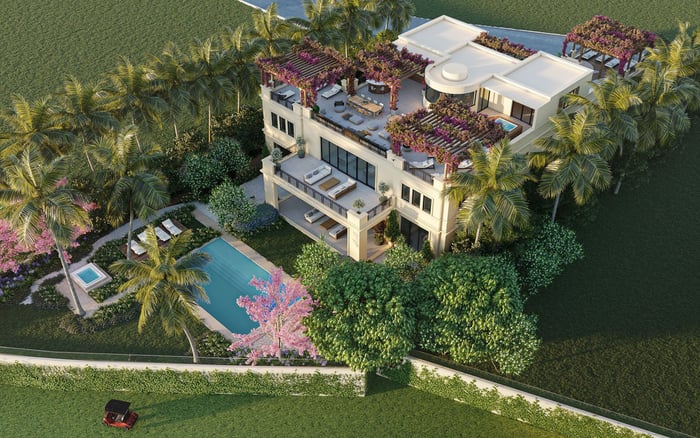
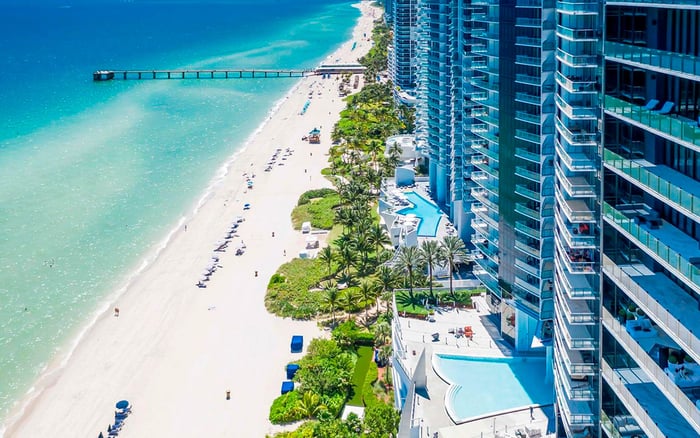
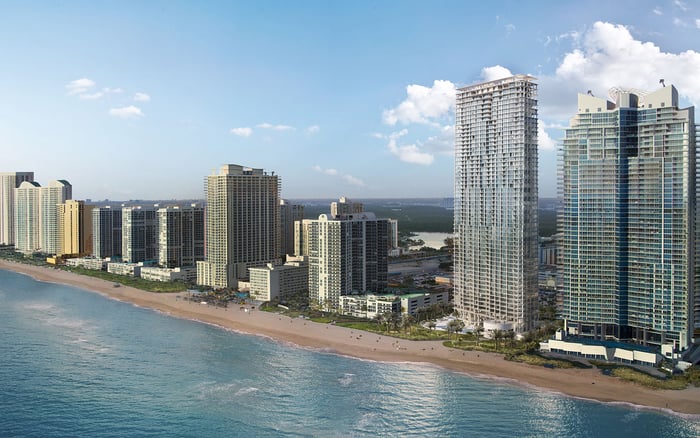
The Village at Coral Gables offers a location thesis built on residential scale, greenery, architectural cohesion, contextual privacy, and durable lifestyle appeal rather than skyline spectacle.
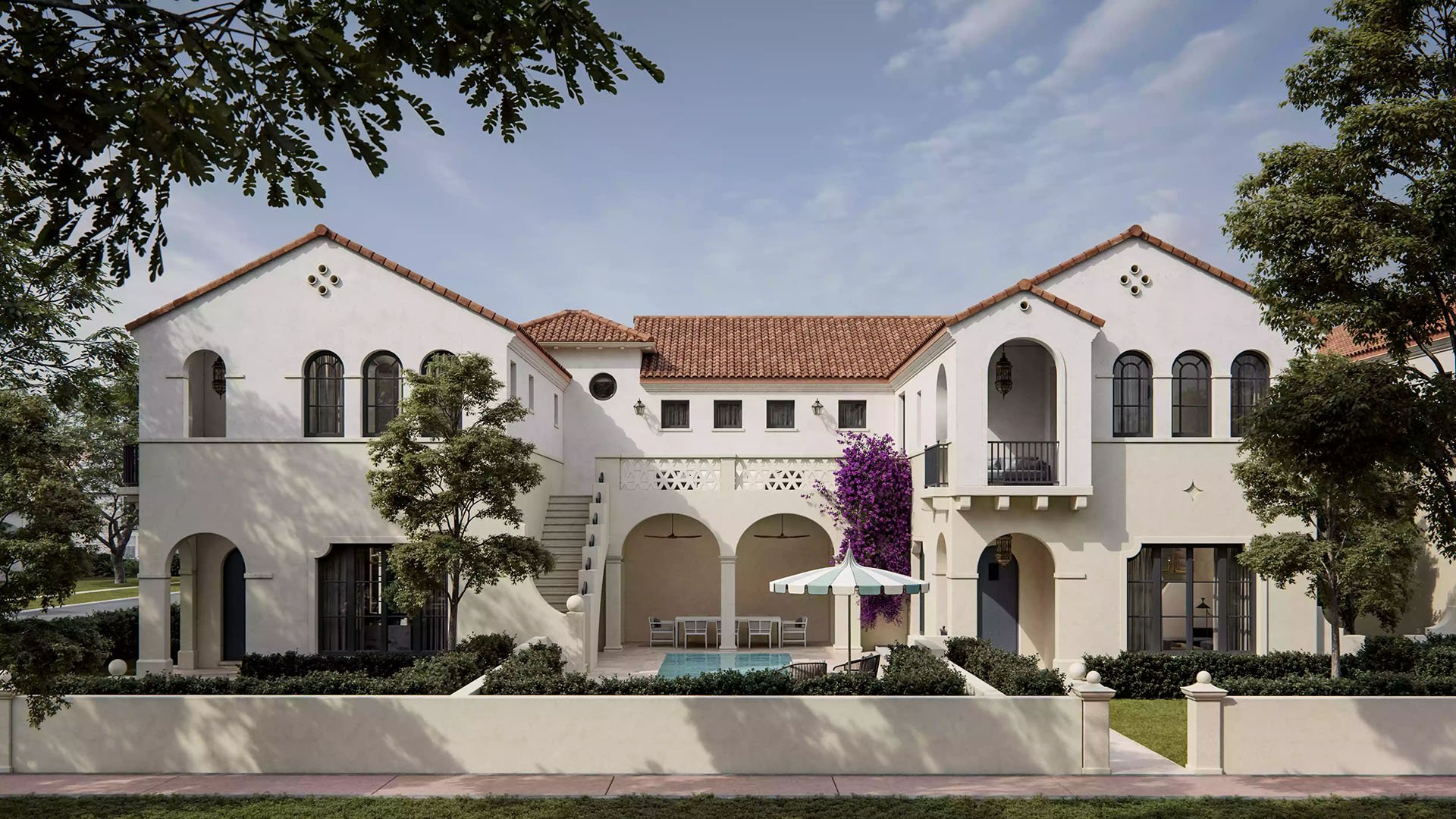
For buyers considering The Village at Coral Gables, the central question is not simply whether the residence is attractive. It is whether Coral Gables supports how they intend to live, maintain privacy, and ultimately position the property for resale.
The setting offers a distinct answer. Rather than reproducing the glass-tower experience of Miami’s denser districts, the project occupies an established, low-rise residential and architectural context. Grounded, Mediterranean-influenced design, mature landscaping, and carefully maintained streetscapes create a strong sense of place. The result is luxury expressed through continuity and composure rather than height.
Coral Gables can feel calmer and more neighborhood-oriented than downtown or oceanfront luxury districts. That distinction shapes the cadence of ownership. Greenery and cohesive streets frame the arrival rather than a wall of towers, while the surrounding urban fabric can offer a greater sense of openness than Miami’s more vertical submarkets.
This is the lifestyle proposition at its clearest: access to the wider Miami area without relinquishing an established residential identity. It is particularly relevant for buyers who value aesthetic consistency and a grounded atmosphere over immediate waterfront access or skyline views.
Nearby Coral Gables options such as Cora Merrick Park and Ponce Park Coral Gables belong in the same location-led comparison. The point is not to treat them as interchangeable, but to understand how strongly the city itself shapes the ownership experience.
Privacy is often reduced to gates, access systems, or separation between individual residences. At The Village at Coral Gables, the location adds another layer. A low-rise neighborhood context can feel less exposed than a dense district where buildings, traffic, and public activity converge vertically.
That does not make privacy absolute, nor does it replace project-level due diligence. Rather, the broader environment contributes to discretion before a resident reaches the threshold. For buyers evaluating a townhouse or another low-rise format, that contextual privacy may carry as much weight as the individual floor plan.
Architectural cohesion is central to Coral Gables’ luxury character. The Village’s grounded, Mediterranean-influenced expression suits a setting where visual consistency holds value. This differs materially from choosing a residence whose identity depends primarily on elevation, façade novelty, or a branded skyline presence.
Consistency can make daily surroundings feel considered rather than incidental. It also clarifies the project’s audience. Buyers drawn to greenery, residential scale, and a recognizable architectural language are likely to view the location as part of the asset, not merely its address.
The clearest contrast is with Brickell. A buyer reviewing 2200 Brickell is considering a different submarket context, one associated with greater density and a more vertical urban environment. The Village presents an alternative to that rhythm.
Neither model is universally superior. Brickell may suit buyers who want the energy and turnover of a downtown setting. Coral Gables is the stronger fit for those seeking a calmer residential pattern, established streetscapes, and architecture that reads as part of a neighborhood. The decision should follow intended use rather than fashion.
The investment case requires discipline. A prestigious location does not guarantee exit appeal, and atmosphere alone cannot imply appreciation. The relevant question is whether future buyers will continue to value the Coral Gables name, lifestyle, architectural cohesion, and constrained residential character.
The Village’s resale positioning is therefore likely to be strongest when presented to buyers already seeking these qualities. Its differentiation does not come from imitating oceanfront or downtown living. It lies in the persistence of a distinct proposition: access to greater Miami paired with a more settled residential identity.
Owners should also recognize the trade-off. Buyers prioritizing immediate waterfront access, panoramic skyline views, or resort-style energy may look elsewhere. Conversely, purchasers focused on long-term residential appeal may regard the absence of those qualities as part of the location’s advantage.
The strongest fit is a buyer who views neighborhood character as a durable component of value. This purchaser prefers greenery to spectacle, openness to vertical intensity, and architectural continuity to rapid visual change. The location may also suit those who want Miami access while keeping daily life anchored in a more established setting.
The least natural fit is a buyer seeking the pace, visibility, and frequent turnover associated with resort or downtown submarkets. The Village does not need to win that comparison. Its appeal rests on a different definition of South Florida luxury, measured by calm, context, and continuity.
What defines the location fit at The Village at Coral Gables? Low-rise scale, greenery, cohesive architecture, and an established residential atmosphere define the fit.
How does daily life differ from Brickell? Coral Gables offers a calmer, more neighborhood-oriented setting than Brickell’s denser, more vertical environment.
Does the location guarantee privacy? No. The low-rise context can support discretion, but buyers should still assess privacy at both the residence and project levels.
Is this an oceanfront lifestyle? No. The location is better suited to buyers who prioritize residential character over immediate waterfront access.
Why does architectural cohesion matter? It gives the setting a recognizable identity and helps the project feel integrated with its surroundings.
Who is the ideal buyer for the project? The clearest fit is a buyer seeking greenery, residential scale, aesthetic consistency, and long-term livability.
What could support future exit appeal? Continued demand for the Coral Gables name, lifestyle, and constrained residential character could support buyer interest.
Is resale performance assured by the location? No. Exit performance depends on future demand, market conditions, property specifics, and competitive supply.
Should buyers compare the project with downtown residences? Yes, provided the comparison centers on lifestyle trade-offs such as density, pace, openness, and residential identity.
What due diligence remains important? Buyers should verify residence details, privacy conditions, costs, and practical access requirements before proceeding.
For a confidential assessment and a building-by-building shortlist, connect with MILLION.
If branded residences are on your mind — as a home or as an allocation — we would be glad to share what we are seeing, privately.
Begin a quiet conversation