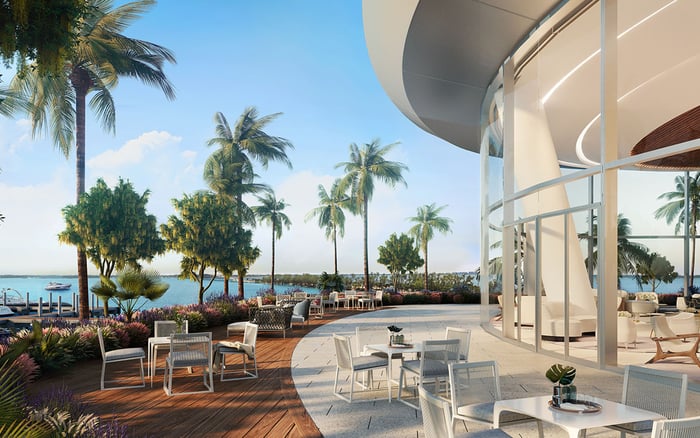
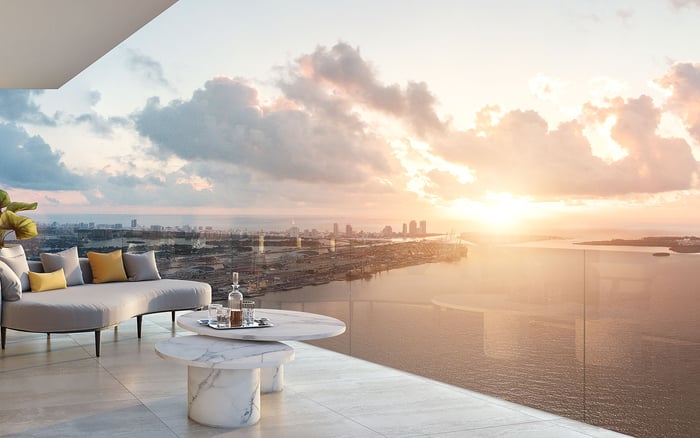
A buyer-focused guide to evaluating commercial-tenant noise exposure at Baccarat Residences Brickell, from riverfront operations and loading logistics to legal protections and unit selection.
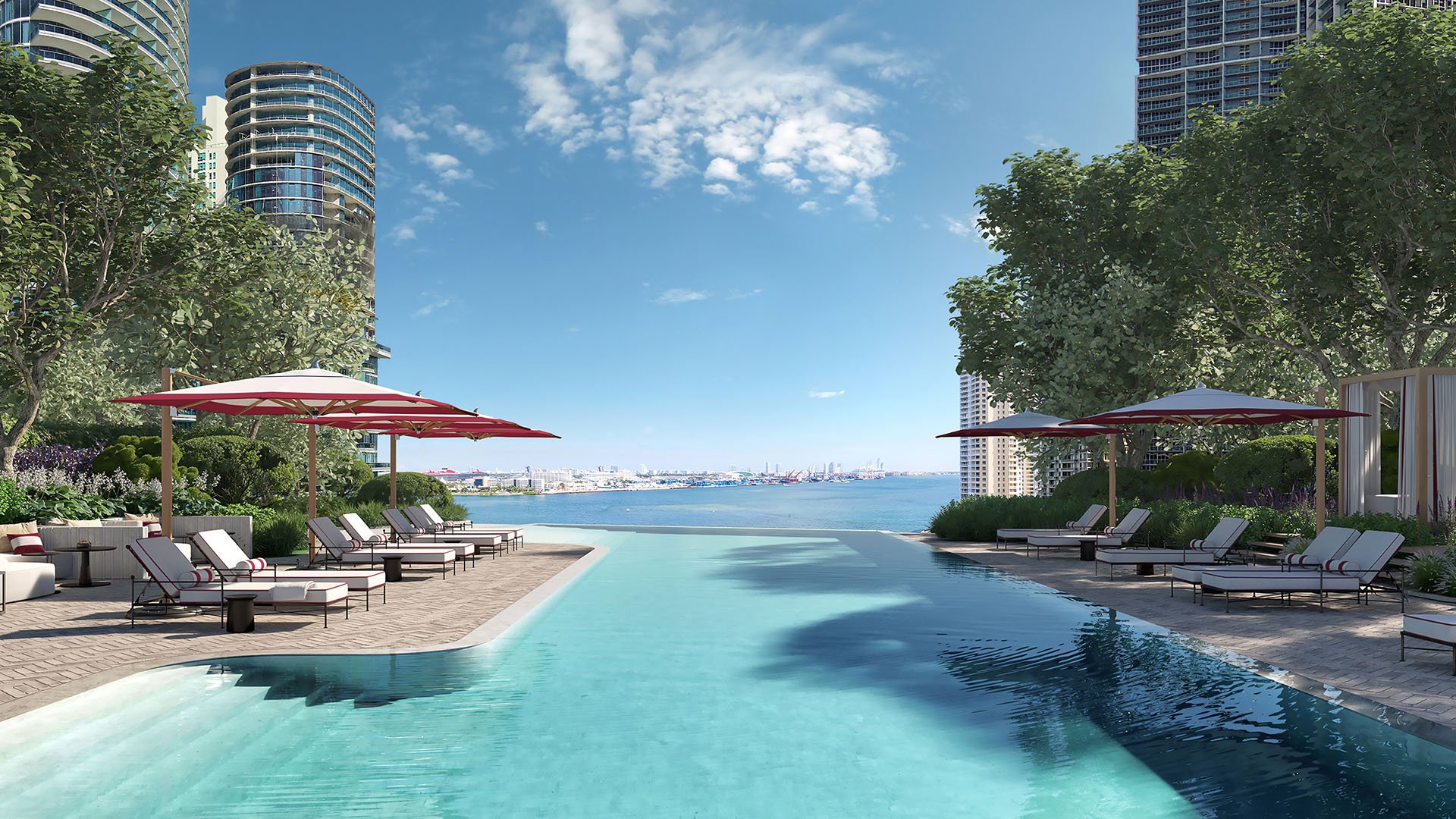
For a buyer considering Baccarat Residences Brickell, the most revealing noise questions are not aesthetic. They are operational. A polished rendering can show a tranquil promenade, a composed pool deck, or a glamorous retail edge. It cannot show when a tenant opens, whether music is permitted, how deliveries are routed, or where trash is staged before dawn.
That distinction matters in Brickell. The district is a dense urban core shaped by traffic, hospitality, restaurants, retail, valet circulation, nightlife, and river activity. For buyers tracking Baccarat Residences Brickell, the analysis is not about suspicion. It is about sequence: verify operations before choosing exposure.
This is especially important in a luxury branded environment, where the visual language can suggest calm and control. The sharper question is whether the building design, operating rules, and governing documents preserve quiet enjoyment once the project is occupied and the commercial program is active.
“Retail” is too broad a category for serious due diligence. A boutique, gallery, or daytime service use presents a very different residential sound profile than a restaurant, bar, lounge, or private event space. A food and beverage tenant may involve kitchen exhaust equipment, grease ducts, late deliveries, waste handling, outdoor seating, ride-share traffic, and the possibility of music. A quiet shop may have a far narrower operating footprint.
Buyers should ask for the commercial-use plan behind the marketing images. The inquiry should include any restaurant, bar, lounge, retail, valet, loading, back-of-house, terrace, or flexible event component. If the specific tenant is not yet known, the permitted-use language becomes even more important. What uses are allowed? What uses are prohibited? Who approves changes over time?
This is not unique to one building. Across Brickell, buyers weigh mixed-use convenience against residential serenity at projects such as Cipriani Residences Brickell and St. Regis® Residences Brickell. The same discipline applies: understand not only how the lobby looks, but what the podium, curb, service areas, and commercial envelope are permitted to become.
The riverfront context adds another layer. Waterfront amenities and river-facing commercial spaces can create a different sound environment than interior retail or street-facing storefronts. Sound can travel across open water in a more direct way, particularly from terraces, outdoor dining, lounges, or event activity.
A riverfront restaurant or outdoor lounge would carry a different acoustic risk profile than a boutique or daytime-only service tenant. The issue is not only decibel level. It is rhythm. A quiet weekday breakfast use has little in common with evening cocktails, private events, amplified music, or guests gathering at the edge of a waterfront terrace.
For a waterview buyer, the view premium should be evaluated alongside the sound path. River-facing lines may deliver the most cinematic outlook, but they should also be mapped against any outdoor seating, hospitality area, valet lane, service access, mechanical equipment, and surrounding river activity. The same waterfront appeal that supports value can also carry sound if operations are not tightly managed.
Unit selection is one of the most practical tools available to a buyer. Low-floors, podium-adjacent residences, river-facing stacks, and units above service areas can experience a building differently than higher or more internally buffered lines. The question is not simply whether a residence is “above retail.” It is above which use, separated by what construction, and exposed to which operating schedule.
Ask to see plans that identify loading docks, trash rooms, exhaust fans, grease ducts, valet lanes, service elevators, and commercial mechanical equipment near residential lines. A buyer should also understand where staff, vendors, and deliveries enter and exit. Repetitive sounds, such as carts, compactors, service doors, mechanical hum, or reversing vehicles, can become more consequential over time than an occasional burst of street noise.
The same thinking applies when comparing nearby residential choices. A tower such as Una Residences Brickell may prompt a buyer to focus on waterfront exposure, while 2200 Brickell may shift the conversation toward urban context and street-level activity. In each case, the strongest purchase decision comes from aligning the preferred line with the actual noise generators around it.
Luxury quiet is engineered before it is experienced. Buyers should verify building-envelope specifications, including glazing, balcony-door performance, wall assemblies, and mechanical vibration isolation. These are not decorative details. They determine how the residence performs when the district is active, when a commercial tenant operates, and when surrounding Brickell activity intensifies.
Glazing and balcony doors deserve particular scrutiny because exterior sound often enters through the weakest part of the envelope. Wall assemblies matter where residential units interface with commercial or mechanical zones. Vibration isolation is critical when equipment, exhaust systems, elevators, or service machinery sit near residential areas.
A model residence can feel calm during a controlled tour. A completed home is tested at night, during deliveries, on weekends, and through high-traffic periods. Buyers should therefore ask for the technical specifications that support quiet enjoyment rather than relying on the ambient impression of a sales environment.
The legal documents are where architectural promise becomes enforceable protection. Buyers should review commercial-owner rights, tenant-use restrictions, nuisance provisions, late-night operations, signage, outdoor sound, terrace use, private events, and enforcement mechanisms. If a rule exists but enforcement is weak or ambiguous, the practical protection may be limited.
The most important questions are direct. Can commercial tenants use outdoor seating? Are terraces allowed? Is amplified music permitted? What about DJs, live entertainment, or private events? Who grants approvals, who monitors compliance, and what remedies exist if the residential experience is affected?
The documents should also clarify whether commercial uses can change in the future. A quiet tenant at opening does not eliminate the need for long-term controls. For a luxury buyer, the standard is not simply whether the project is branded or visually refined. The standard is whether the governing structure protects residential quiet over time.
Noise risk is not limited to commercial tenants inside the building. Brickell’s hotels, restaurants, rooftops, traffic corridors, valet queues, ride-share activity, and river movement can all shape the sound environment. A buyer who focuses only on the project’s own retail may miss the broader urban acoustic field.
That does not make Brickell unsuitable for quiet luxury. It means expectations should be calibrated. Many buyers want the energy, access, and hospitality of the district. The aim is to choose a residence where the envelope, elevation, orientation, and rules match the buyer’s tolerance for urban sound.
A discreet evening walk around the immediate area can be useful, but it should not replace document review and plan analysis. The experience at one hour may not reflect the experience during deliveries, weekend evenings, or active waterfront periods.
Before committing, request the commercial-use matrix, operating-hour assumptions, terrace-use rules, music and event policies, loading and trash plans, service circulation diagrams, mechanical equipment locations, and acoustic specifications. Then compare those details against the specific residence being considered.
The most resilient purchase decision is made at the intersection of design, documents, and line selection. Commercial convenience can be valuable, especially in a full-service urban luxury environment. But convenience should be weighed against recurring sound from crowds, music, deliveries, waste handling, kitchen exhaust systems, ride-share activity, and valet movement.
At Baccarat Residences Brickell, the key diligence standard is not whether the rendering is serene. It is whether the built environment and governing rules make serenity repeatable.
Is commercial-tenant noise a confirmed issue at Baccarat Residences Brickell? This article treats noise as a due-diligence topic, not as evidence of a confirmed tenant problem.
What should buyers verify first? Start with the actual commercial-use plan, including restaurants, lounges, retail, valet, loading, and back-of-house areas.
Why do operating hours matter? A daytime tenant and a late-night hospitality use can create very different sound patterns for nearby residences.
Are river-facing units more exposed to sound? They can be, depending on terraces, waterfront activity, outdoor seating, and the path sound travels across open space.
Do higher floors always solve the noise question? Not always. Elevation helps in some cases, but orientation, glazing, mechanical locations, and surrounding rooftops also matter.
Which documents should be reviewed? Review commercial-use rights, nuisance provisions, sound rules, terrace permissions, event policies, and enforcement language.
What building specifications are most relevant? Glazing, balcony-door performance, wall assemblies, and mechanical vibration isolation are central to acoustic comfort.
Should buyers ask about trash and deliveries? Yes. Trash pickup, loading docks, service elevators, and delivery routes can create recurring operational noise.
Can commercial uses change after opening? They may, depending on the governing documents, so permitted-use language and approval rights are important.
What is the best overall standard for evaluating quiet enjoyment? Confirm that design, unit position, operating rules, and enforcement mechanisms work together over time.
For a discreet conversation and a curated building-by-building shortlist, connect with MILLION.
If branded residences are on your mind — as a home or as an allocation — we would be glad to share what we are seeing, privately.
Begin a quiet conversation