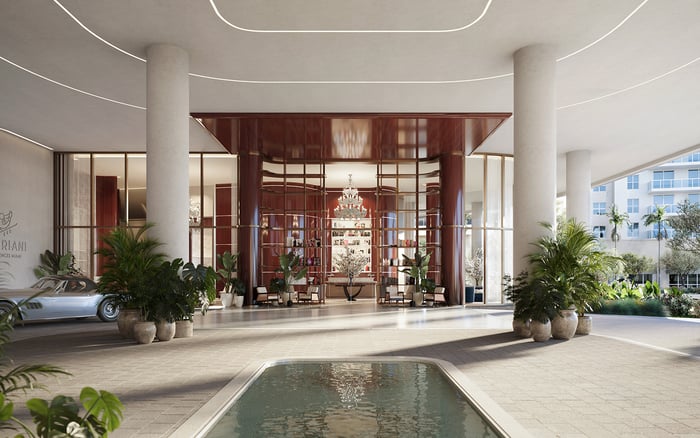
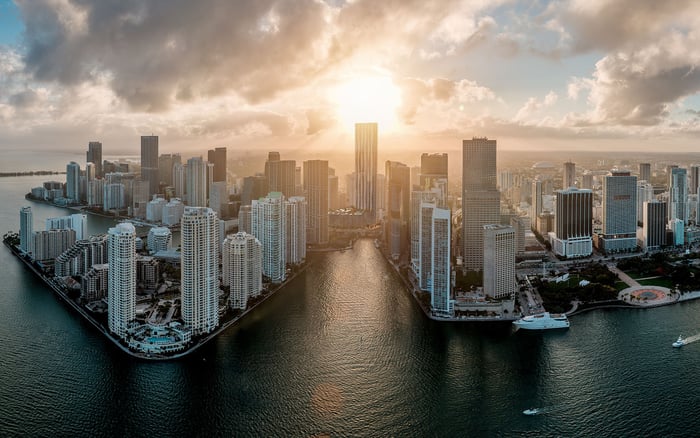
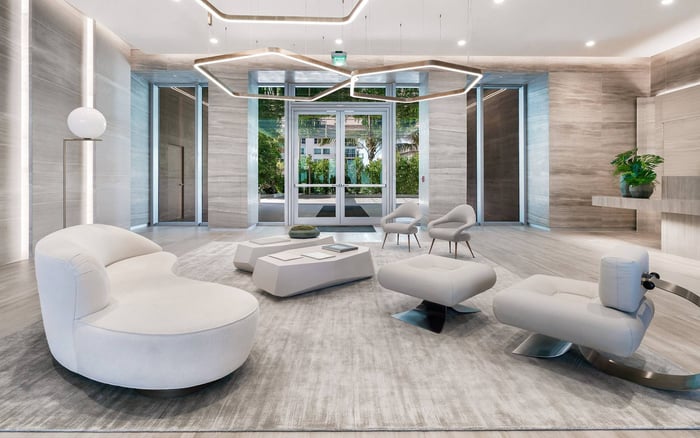
In Brickell’s uppermost tier, Baccarat Residences and Colette Residences represent two very different expressions of luxury. Baccarat favors scale, branded hospitality, and a riverfront address woven into the energy of central Miami. Colette, by contrast, is defined by a far smaller residence count, a more private cadence, and a quieter form of prestige aimed at buyers who value discretion above visibility.
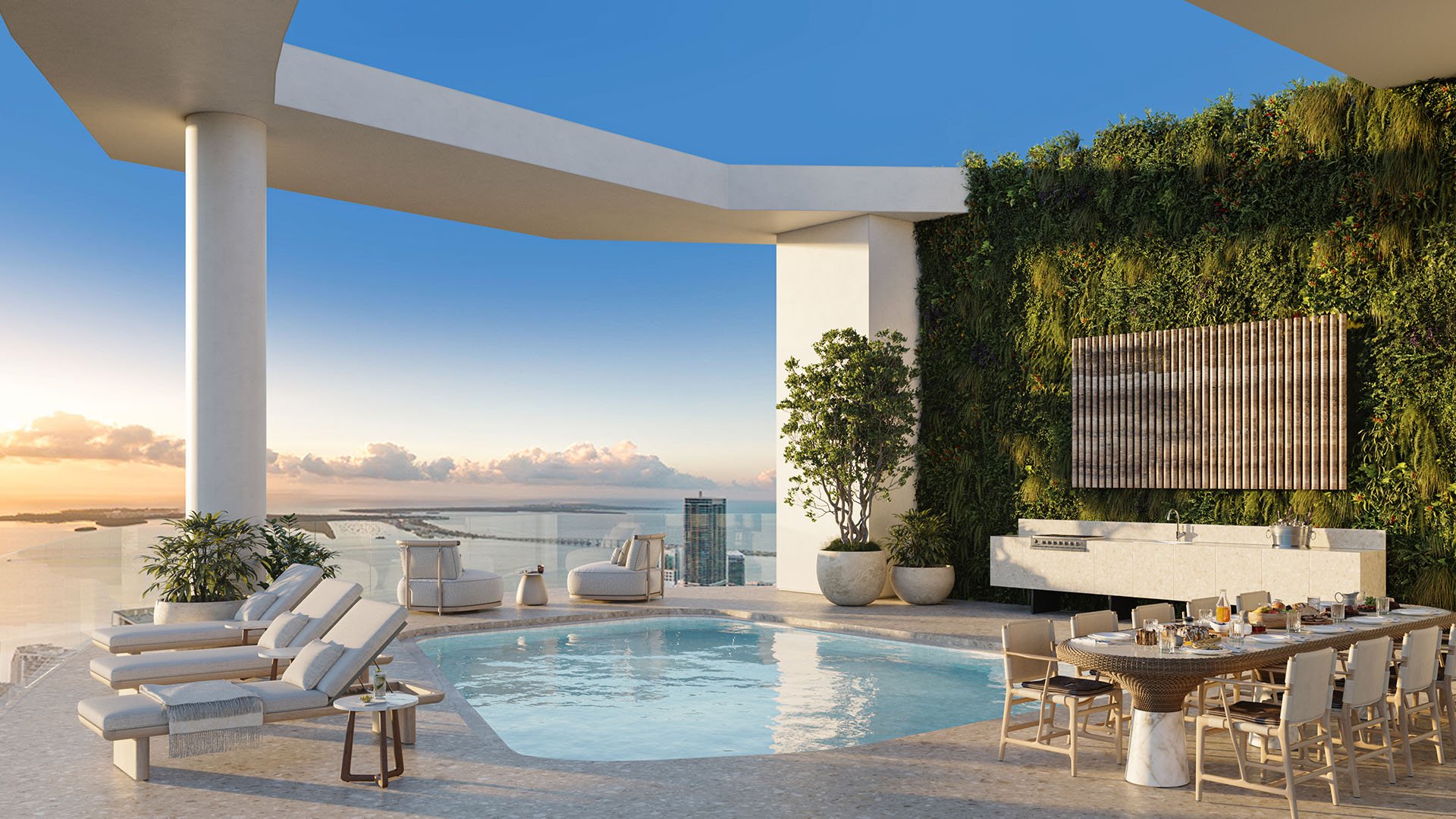
In Brickell, luxury is no longer defined by price alone. The more meaningful distinction is how a building delivers privilege: through scale, service, and visibility, or through scarcity, privacy, and restraint. That is exactly why Baccarat Residences Brickell and Colette Residences warrant comparison. They occupy the same elite district, yet speak to very different buyers.
Baccarat holds a prominent waterfront position in Brickell, where the Miami River meets the edge of Biscayne Bay. It is conceived as a high-density vertical statement, with a 75-story tower and 324 residences. Colette is framed differently in the public record, with a reported 50 residences and a far more boutique identity. The contrast is immediate: Baccarat offers a larger social and service ecosystem, while Colette leans toward lower resident density and a more private ownership experience.
For buyers considering Baccarat Residences Brickell or Colette Residences Brickell, the essential question is not which building is more luxurious in the abstract. It is which version of Brickell luxury best fits how they intend to live.
Baccarat’s appeal begins with presence. The tower is large, internationally legible, and tied to Baccarat Hotel & Residences, giving it a hospitality identity rather than the feel of a purely private condominium. In practice, that tends to attract buyers who value a polished arrival sequence, expansive amenity programming, and the ease of a service-forward environment.
The design pedigree reinforces that positioning. Architecture is by Arquitectonica, with interiors by Meyer Davis Studio, a pairing aligned with the expectations of globally minded luxury buyers. Residences are marketed with floor-to-ceiling glass, expansive terraces, premium kitchens, and smart-home-style finishes. The visual language is contemporary and urbane, calibrated to Brickell’s fast-moving international tone.
Amenities are equally central to the Baccarat proposition. A spa, fitness and wellness offerings, concierge services, hospitality-style gathering spaces, and private marina access make the building feel almost like a private club layered into a residential tower. For a buyer who wants to move fluidly between finance, dining, entertaining, and waterfront leisure, that density of services can be a real advantage.
This is also why Baccarat belongs in the same broader conversation as St. Regis® Residences Brickell, The Residences at 1428 Brickell, Cipriani Residences Brickell, and ORA by Casa Tua Brickell. Each represents a version of Brickell where luxury is amplified through stature, design authorship, and a highly curated amenity environment.
Colette’s appeal is quieter. Publicly disclosed details are more limited, but its market positioning is clear: a lower-density, ultra-luxury residential property in Brickell centered on privacy, personalization, and white-glove service. Where Baccarat is outward-facing and brand-led, Colette is better understood as inward-facing and discretion-led.
The headline number matters. With a reported 50 residences, Colette is far more supply-constrained than Baccarat. That smaller resident count changes everything from elevator traffic to common-space use to the social texture of ownership. In the ultra-premium market, scarcity is not merely a talking point; it is part of the product.
Colette is also associated with architect Carlos Ott, suggesting an emphasis on sculptural form and architectural distinction. Its residences are marketed with larger luxury layouts and private terraces, while amenities are described in more intimate terms, including spa, gym, concierge, and lounge spaces. The difference is not that Colette lacks service. It is that the service appears calibrated to a quieter residential rhythm rather than a branded hotel atmosphere.
For some buyers, especially those who already know Brickell well, that low-traffic, low-profile quality can feel more exclusive than a globally recognizable name. It places Colette closer in spirit to boutique-minded projects where privacy is part of the value proposition, even as the neighborhood context remains distinctly Brickell.
The most important comparison between these two projects is simple: 324 residences versus 50. Density shapes nearly every aspect of daily life inside a building.
At Baccarat, a larger residence count supports a broad amenity ecosystem and a more dynamic sense of activity. There is likely to be more movement, more arrivals, more visible service choreography, and a stronger sense of being part of a major luxury address. Some owners actively want that. They value the energy, the social potential, and the institutional confidence that comes with scale.
At Colette, the smaller residence count points in the opposite direction. Less density often means fewer daily interactions, a calmer rhythm, and a stronger sense that the building is reserved for a narrower ownership circle. For families, international second-home buyers, and privacy-focused principals, that can be more compelling than an expansive amenity catalog.
Brickell remains the common denominator, but the product philosophies diverge. One leans into brand visibility and service density, while the other leans into scarcity and a more protected ownership environment.
Baccarat is best suited to the buyer who wants Brickell at full volume. The riverfront setting, proximity to the financial district, and access to dining and shopping all reinforce a lifestyle tied to movement and immediacy. This is a natural fit for owners who want a statement address, hospitality-style services, and a building with broad international visibility.
Colette is better suited to the buyer who values control over exposure. Its proposition is less about being seen and more about being insulated. For an owner who prefers a quieter arrival, fewer neighbors, and a more personalized residential environment, Colette may be the more refined answer.
Both target the upper tier of the Brickell market, but the emotional logic behind the purchase differs. Baccarat emphasizes scale, service, and waterfront presence. Colette emphasizes intimacy, privacy, and low-density exclusivity.
Viewed through a MILLION Luxury lens, this is not a contest with a single winner. It is a study in two forms of prestige within the same neighborhood.
Baccarat makes the stronger case for buyers who want waterfront grandeur, branded design, and the confidence of a fully realized service platform. It translates Brickell’s international identity into a polished residential product at substantial scale. Colette makes the stronger case for buyers who believe true luxury is measured by limited access, lower density, and a residential experience that feels less public.
In that sense, Baccarat sells momentum. Colette sells insulation. One is high-density riverfront luxury with hospitality DNA. The other is low-density exclusivity shaped by scarcity and privacy. The right choice depends on whether the buyer wants Brickell to feel like an extension of the city’s energy or a retreat from it.
Is Baccarat Residences Brickell a branded project? Yes. Baccarat is positioned under Baccarat Hotel & Residences, giving it a hospitality-driven luxury identity.
How many residences are reported at Baccarat and Colette? Baccarat is planned with 324 residences, while Colette is reported to have 50.
Which project is more private? Colette is the more privacy-led option, largely because of its far lower residence count and boutique positioning.
Which project offers a more hotel-like lifestyle? Baccarat does, with a service model and amenity mix that align more closely with branded hospitality.
Is Baccarat in a walkable part of Brickell? Yes. Its waterfront Brickell location is closely tied to the district’s financial core, dining, and shopping.
What kind of amenities define Baccarat? Spa, fitness and wellness offerings, concierge services, social spaces, and private marina access are central to its appeal.
What kind of amenities define Colette? Colette is described with a more intimate amenity profile, including spa, gym, concierge, and lounge spaces.
Who is Baccarat best for? Buyers who want a prominent address, robust service infrastructure, and an energetic urban waterfront setting.
Who is Colette best for? Buyers who prioritize discretion, lower density, and a more personalized residential atmosphere.
What is the core difference between the two? Baccarat is a high-density branded riverfront tower, while Colette is a low-density boutique play centered on exclusivity.
If you'd like a private walkthrough and a curated shortlist, connect with MILLION Luxury.
If branded residences are on your mind — as a home or as an allocation — we would be glad to share what we are seeing, privately.
Begin a quiet conversation