A buyer-focused look at how Aventura luxury condo shoppers should evaluate brand-led residences, hospitality-style services, recurring fees, and long-term resale appeal.
Aventura has long appealed to buyers who want a polished South Florida lifestyle without surrendering to the density and pace of more urban waterfront markets. The city occupies a distinctive lane: residential, connected, quietly affluent, and close enough to the oceanfront corridor to borrow from its energy without being defined by it. For the luxury condo buyer, that makes Aventura a useful lens on how brand-led living is evolving beyond a logo at the porte cochere.
In this context, “brand-led” should be read broadly. It may involve hospitality cues, design identity, concierge culture, curated amenities, or a development narrative shaped by the language of private clubs and five-star service. The essential question is not whether a name feels recognizable. It is whether the brand promise translates into daily life, building operations, and eventual resale value.
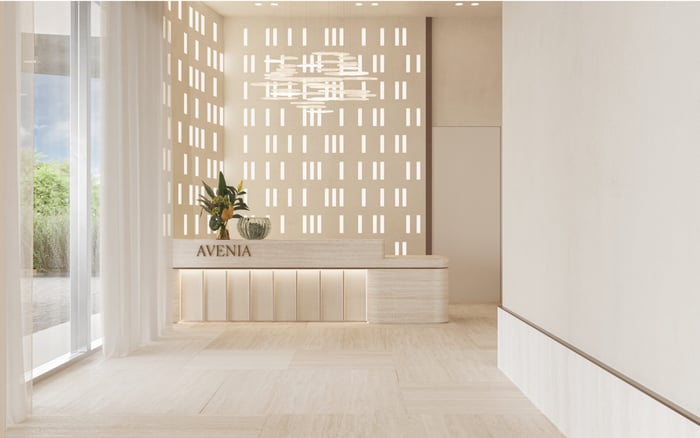
A buyer comparing Avenia Aventura with coastal alternatives should look beyond first impressions. Lobby design, service rituals, valet flow, wellness spaces, resident privacy, and the discipline of association management all matter. The strongest luxury buildings are not merely attractive at delivery. They remain composed years later.
Hospitality language can be seductive, especially in South Florida, where buyers often arrive with experience in private clubs, resort residences, and global hotel environments. Yet the value of hospitality in a condominium is practical. It is measured by how a building receives guests, handles packages, coordinates maintenance, protects resident privacy, anticipates owner preferences, and sustains a calm service culture during peak periods.
For Aventura buyers, the first layer of due diligence is separating amenity quantity from operational quality. A long amenity menu can be compelling, but the more important question is whether the building has the staffing, budgeting, rules, and resident culture to keep those amenities functioning at a high level. A beautiful lounge that is rarely maintained, a wellness suite without thoughtful scheduling, or a concierge desk without authority will not feel luxurious for long.
This is where brand discipline can matter. A credible hospitality framework can create expectations around training, presentation, and consistency. Buyers should still review the condominium documents, association budget, staffing model, reservation policies, guest rules, and service standards. The true luxury is not the promise of attention. It is the reliable delivery of attention without friction.
Fees are often treated as an afterthought in luxury condo conversations, but they deserve the same scrutiny as floor plan, exposure, and finish level. In a brand-led residence, fees may support staff, amenities, insurance, reserves, maintenance, technology, security, valet operations, and common-area presentation. The question is not simply whether fees are high or low. The question is whether they are coherent.
A sophisticated buyer should ask what the monthly obligation is designed to preserve. If the building depends on hospitality-style service, underfunding can be more damaging than a well-explained premium. Conversely, a costly fee structure without transparent service value can become a point of resistance in future resale conversations.
New-construction buyers should be particularly attentive to the transition from developer-controlled presentation to owner-controlled governance. The early years of a building can feel immaculate because the sales environment is highly curated. Long-term appeal depends on whether the association can maintain that standard once the building is fully lived in. A prudent review should include reserves, maintenance planning, insurance assumptions, service contracts, and any rules that affect renting, pets, guests, and amenity use.
Fees should also be evaluated against personal use. A seasonal owner who values lock-and-leave convenience may find a robust service platform worthwhile. A full-time resident may care more about staff consistency, noise control, elevator efficiency, and the tone of day-to-day management. In either case, the recurring cost should be understood as a lifestyle budget, not merely a line item.
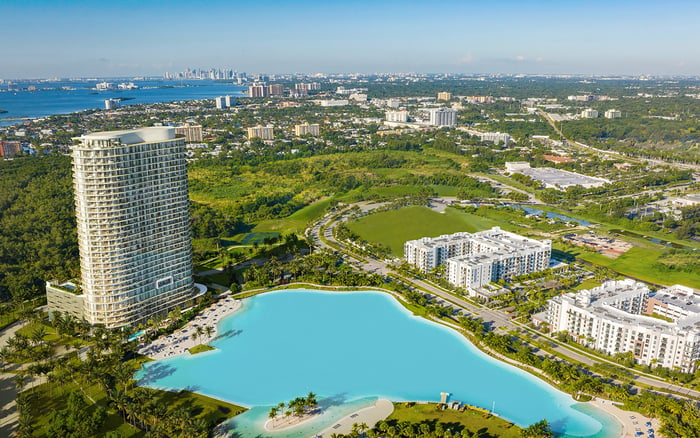
Aventura’s luxury appeal is sharpened by comparison. Buyers often weigh the city against nearby coastal markets, especially when they want water proximity, shopping access, and a residential rhythm without committing to a fully beachfront identity. The comparison is not about declaring one market superior. It is about understanding what each setting delivers.
Sunny Isles, for example, provides a useful coastal reference point for buyers studying brand recognition and vertical luxury. A project such as St. Regis® Residences Sunny Isles frames the conversation around global hospitality associations and beachfront prestige, while The Ritz-Carlton Residences® Sunny Isles speaks to the enduring appeal of hotel-informed residential service. These examples help Aventura buyers calibrate what branded service means in an adjacent market, even when their preferred lifestyle may be less overtly resort-driven.
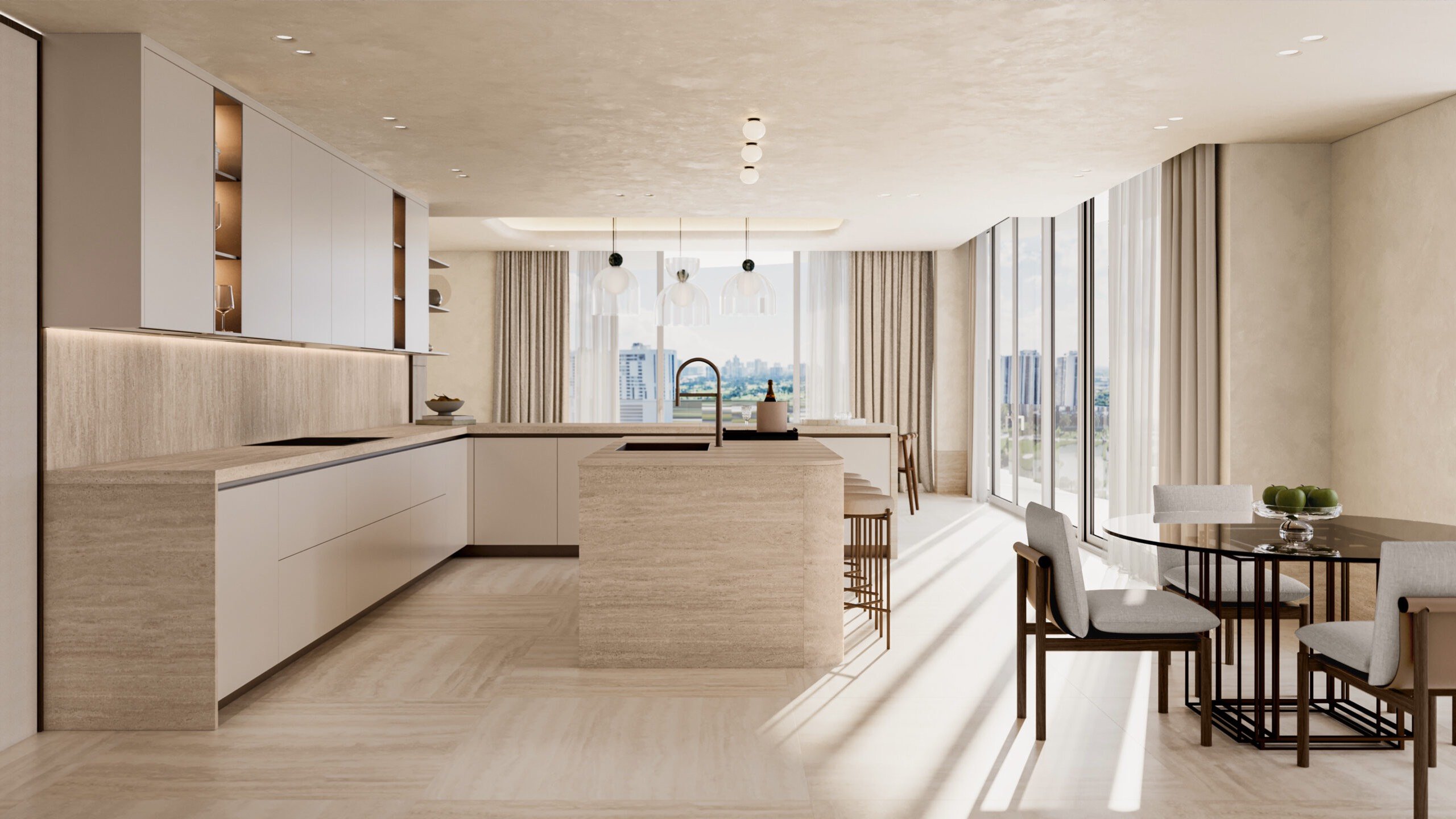
Aventura can feel more discreet. Its buyer may prioritize everyday convenience, access to established retail, family practicality, private outdoor space, marina adjacency where available, and a calmer residential base. Terrace usability can matter as much as dramatic amenity theater. The right home is the one that supports how the owner actually lives, not how a brochure imagines the owner will live.
Resale in a brand-led condo is shaped long before an owner decides to sell. The purchase decision itself establishes the future narrative. Was the floor plan efficient? Does the view have enduring appeal? Are the interiors timeless rather than trend-dependent? Does the building have rules that protect residential quality? Is the service model financially sustainable? These questions are not abstract. They determine how a future buyer will judge the home.
Brand can help create recognition, but recognition alone is not a resale strategy. The strongest resale stories combine a clear building identity with disciplined maintenance, sensible governance, and a floor plan that remains relevant across buyer profiles. Aventura buyers should be especially careful with homes that rely too heavily on novelty. Luxury purchasers may admire spectacle, but they often pay for confidence.
This is also where investment thinking must be more refined than a simple expectation of appreciation. A luxury residence can be an investment in lifestyle, optionality, family use, and long-term market positioning. For financially driven buyers, the analysis should include carrying costs, potential rental restrictions, expected holding period, liquidity, and the depth of the future buyer pool. For lifestyle-led buyers, the question is whether the home will remain desirable even if market conditions become more selective.
Nearby branded and design-led projects such as Bentley Residences Sunny Isles can be useful comparables for understanding how identity, design language, and amenity expectations influence buyer psychology. Aventura does not need to imitate those coastal towers. It needs to offer a convincing alternative.
The most elegant Aventura purchase begins with restraint. First, define the role of the residence: primary home, seasonal base, family apartment, lock-and-leave pied-a-terre, or long-horizon hold. Then evaluate the building through four lenses: service, cost, governance, and exit.
Service should be judged through lived experience. Visit at different times of day. Observe arrival sequences, staff presence, amenity usage, garage flow, guest handling, and the tone of common spaces. Cost should be judged with documents, not impressions. Review monthly fees, assessments, reserves, insurance responsibilities, and any special charges tied to branded operations. Governance should be judged by rules and culture. The best buildings protect privacy, order, and maintenance without feeling rigid.
Exit should be considered from the beginning. A home with broad appeal, strong light, useful outdoor space, intuitive layout, and a building story that is easy to explain will usually be easier to reposition when the time comes. Aventura buyers do not need to chase every new branded concept. They need to choose the one that will still feel composed, useful, and desirable after the opening glow has faded.
What does brand-led mean in an Aventura condo? It generally refers to a residence shaped by a recognizable service, design, hospitality, or lifestyle identity rather than a purely generic condominium concept.
Are hospitality-style services always worth higher fees? They can be, if the services are well staffed, well governed, and genuinely useful to the way the owner lives.
What should buyers review before purchasing? Buyers should review condominium documents, budgets, reserves, rules, rental policies, service contracts, and the overall governance structure.
Is Aventura better for full-time living or seasonal ownership? Aventura can appeal to both, but the best fit depends on the owner’s desired pace, service needs, family requirements, and carrying-cost comfort.
How should I compare Aventura with Sunny Isles? Compare lifestyle first: Aventura tends to feel more residential, while Sunny Isles is often evaluated through a stronger coastal and beachfront lens.
Do branded residences automatically resell better? No. Brand recognition can help, but resale strength depends on layout, views, condition, fees, governance, and buyer demand at the time of sale.
Why do fees matter so much in luxury condos? Fees fund the services and maintenance that preserve the building’s experience, so they directly affect both daily life and future market perception.
What makes a floor plan more resilient for resale? Clear circulation, useful rooms, strong natural light, privacy between bedrooms, and functional outdoor space tend to age better than overly stylized layouts.
Should investors prioritize branded buildings? Investors should prioritize liquidity, carrying costs, rental rules, buyer depth, and long-term relevance rather than relying on branding alone.
What is the best way to shortlist comparable options for touring? Start with location fit, delivery status, and daily lifestyle priorities, then compare stacks and elevations to validate views and privacy.
For a confidential assessment and a building-by-building shortlist, connect with MILLION.
If branded residences are on your mind — as a home or as an allocation — we would be glad to share what we are seeing, privately.
Begin a quiet conversation