A buyer-focused guide to evaluating private terraces in North Miami, from outdoor kitchens and plunge pools to materials, upkeep, privacy, and long-term livability.
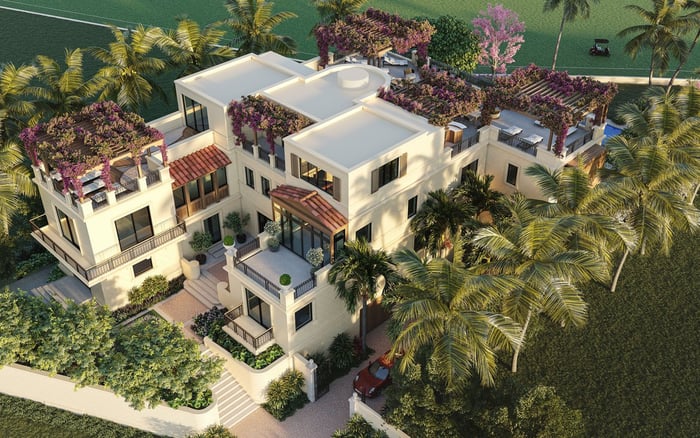
In North Miami, the private terrace is no longer a decorative appendage to the residence. For many luxury buyers, it is the room that defines the home: the setting for morning coffee, the quiet dinner salon, the place where water, skyline, and garden views become part of daily life. A well-composed terrace can make a residence feel larger, calmer, and more connected to South Florida’s climate without sacrificing privacy.
The most successful terraces are planned with the same discipline as an interior great room. They have zones, circulation, shade, lighting, storage, and a clear relationship to the kitchen and living areas inside. A wide exterior slab is not enough. Buyers should ask whether the space supports real use: dining for guests, quiet lounging, cooking, planting, children, pets, or some combination of them all.
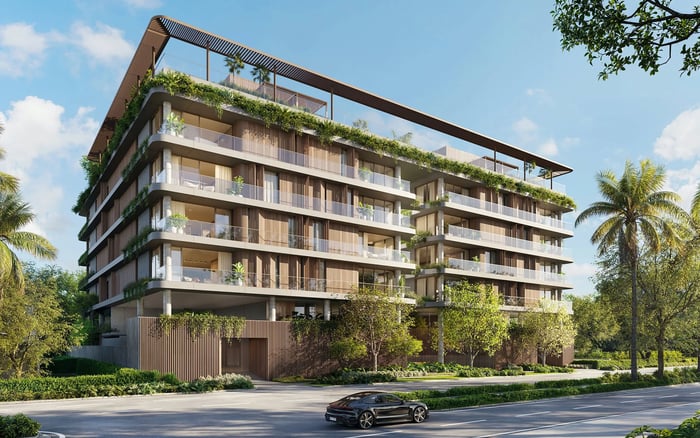
For North Miami buyers comparing new residences, One Park Tower by Turnberry North Miami is a natural reference point because it keeps the conversation local. Nearby markets also inform expectations, from Aventura to Bay Harbor and North Bay Village, where outdoor space has become central to how buyers read luxury.
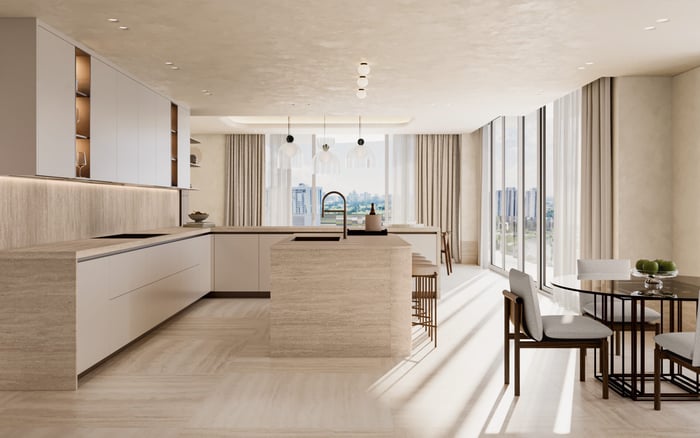
An outdoor kitchen should be approached with restraint. The objective is not to duplicate an interior chef’s kitchen outside. It is to create a composed service area that supports entertaining without turning the terrace into a utility deck. The essentials are straightforward: a durable cooking surface, appropriate ventilation, protected cabinetry, practical counter space, and lighting that does not overpower the evening atmosphere.
Placement matters. A grill or cooking station should be convenient to the interior kitchen, but not so close to seating that smoke, heat, or noise controls the experience. In a condominium setting, buyers should confirm what equipment is permitted, how gas or electric service is handled, and whether the building has rules for ventilation, fire safety, and storage. These details are not glamorous, but they determine whether the space feels effortless after move-in.
Material selection deserves particular scrutiny. South Florida terraces live with intense sun, wind-driven rain, and coastal air. The best finishes are selected for endurance as much as appearance: cabinetry that closes tightly, counters that clean easily, and appliances designed for exterior conditions. A beautiful outdoor kitchen that demands constant attention quickly loses its charm.
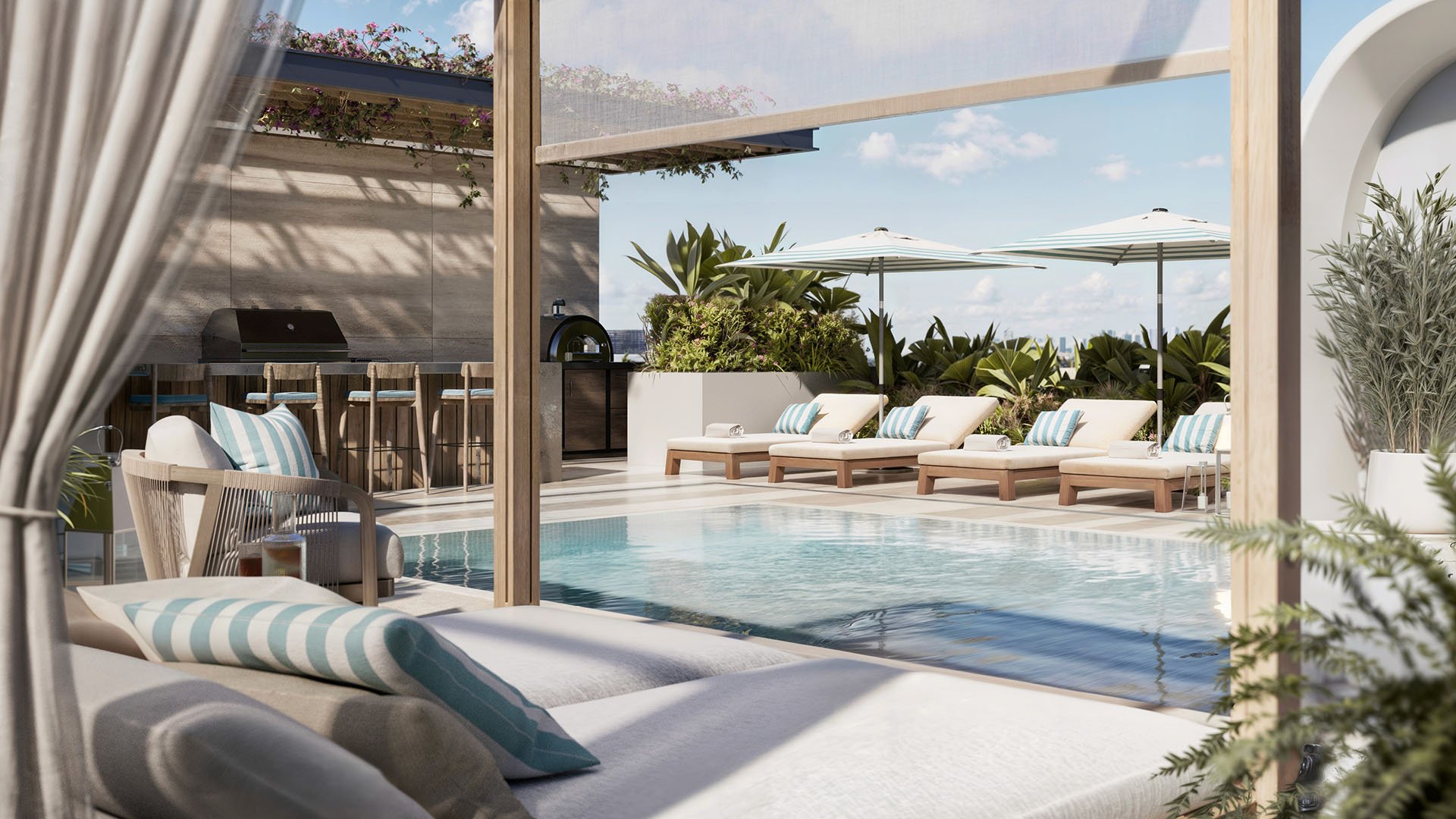
A private pool or plunge spa can be the ultimate terrace privilege, but it also asks the most of an owner. The question is not simply whether a residence has water outside. It is whether the feature is sized, placed, and maintained in a way that enhances daily life. A plunge pool beside a quiet seating area can feel serene. A poorly placed water feature can interrupt furniture layouts, complicate circulation, and create more upkeep than pleasure.
Before committing to a residence with a private pool or spa, buyers should understand who maintains it, how access is handled, and what responsibilities belong to the owner versus the building. Equipment location, drainage, waterproofing, and service access should all be reviewed carefully. The more private and elevated the feature, the more important the maintenance plan becomes.
Furniture should be selected around water use, not after it. Wet feet, towels, sun exposure, and evening humidity all influence the right fabrics and frames. A terrace with a pool should have storage for cushions and accessories, shaded areas for comfort, and surfaces that remain practical after rain.
A waterview is powerful, but privacy determines whether the terrace will be used. Buyers often fall in love with the first impression, then discover that neighboring sightlines, prevailing sun, or wind exposure shape the real experience. The best evaluation happens at different times of day, if possible, because morning comfort and evening atmosphere can feel entirely different.
Look at railings, planter zones, overhangs, and the relationship between terraces on adjacent tiers. A balcony with strong views may be ideal for quiet mornings, while a deeper terrace may better support dining and entertaining. Depth is critical. A terrace that looks expansive on a floor plan may feel narrow once dining chairs, loungers, planters, and circulation paths are in place.
Buyers comparing North Miami with Avenia Aventura may notice how neighboring submarkets create different expectations for openness, water orientation, and convenience. The right choice is rarely about size alone. It is about whether the outdoor room supports the owner’s actual rhythm.
Terrace living is shaped by the building as much as by the residence. Before focusing on furniture plans, buyers should understand the association rules for grills, planters, exterior lighting, sound, pets, private pools, and alterations. Some buildings encourage a highly finished outdoor lifestyle, while others maintain a more restrained exterior standard. Neither is inherently better, but the fit should be clear.
Service culture also matters. Residences with large terraces often benefit from predictable building protocols for cleaning, window-washing coordination, deliveries, and contractor access. If the owner expects a lock-and-leave lifestyle, those details become central. New-construction buyers should ask early about what is delivered as standard, what may be customized, and which upgrades require approval.
This is where comparisons beyond North Miami can be useful. Onda Bay Harbor and Continuum Club & Residences North Bay Village sit in nearby waterfront conversations where outdoor living, privacy, and services are often evaluated together. For a discerning buyer, the terrace is not separate from the building’s operating philosophy.
The most elegant terrace is the one used often. That means planning for shade, easy cleaning, seasonal adjustments, and furniture that can withstand real exposure. It also means resisting the urge to overfill the space. A dining table, lounge grouping, outdoor kitchen, pool, planters, and sculpture may all be desirable, but not every terrace can carry every program gracefully.
Start with the primary use. If the terrace is for dining, prioritize table placement, service flow, and evening lighting. If it is for wellness, prioritize shade, privacy, surface comfort, and access to water. If it is for entertaining, consider how guests move from interior spaces to exterior seating without crossing service zones. The strongest plans feel inevitable rather than crowded.
For North Miami, where water, greenery, and city access can converge, the private terrace is a sophisticated filter. It lets the owner decide how much of South Florida to invite in, and how much to keep quietly at a distance.
What should buyers inspect first on a private terrace? Start with depth, privacy, exposure, drainage, and the rules governing grills, pools, lighting, and alterations.
Is an outdoor kitchen always worth adding? Only if the building permits it and the layout supports cooking without compromising seating, views, or circulation.
What makes a terrace feel truly usable? Usability comes from shade, furniture depth, clear pathways, durable finishes, and convenient access from interior rooms.
Should a private pool change the due diligence process? Yes. Buyers should understand maintenance responsibility, service access, waterproofing considerations, and equipment placement.
How important is privacy compared with view? Both matter, but privacy often determines whether owners use the terrace daily rather than only occasionally.
Can a balcony function like a terrace? A balcony can be highly enjoyable, but dining, lounging, and cooking usually require more depth and flexibility.
What questions should new-construction buyers ask? Ask what is delivered standard, what can be customized, and which terrace changes require building approval.
Are planters a simple way to improve privacy? They can help, but weight, drainage, irrigation, and association rules should be reviewed before installation.
How should buyers think about outdoor furniture? Select pieces for sun, rain, humidity, and storage needs, not only for showroom appearance.
Why compare North Miami with nearby waterfront areas? Nearby markets help clarify preferences for scale, services, views, and the level of outdoor living expected.
If you'd like a private walkthrough and a curated shortlist, connect with MILLION.
If branded residences are on your mind — as a home or as an allocation — we would be glad to share what we are seeing, privately.
Begin a quiet conversation