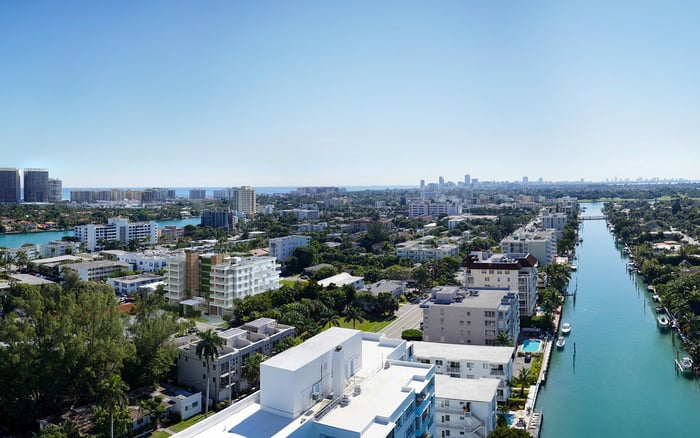
A discreet guide for luxury buyers evaluating North Miami condo ownership costs, from HOA fees and reserve planning to insurance exposure and assessment risk.
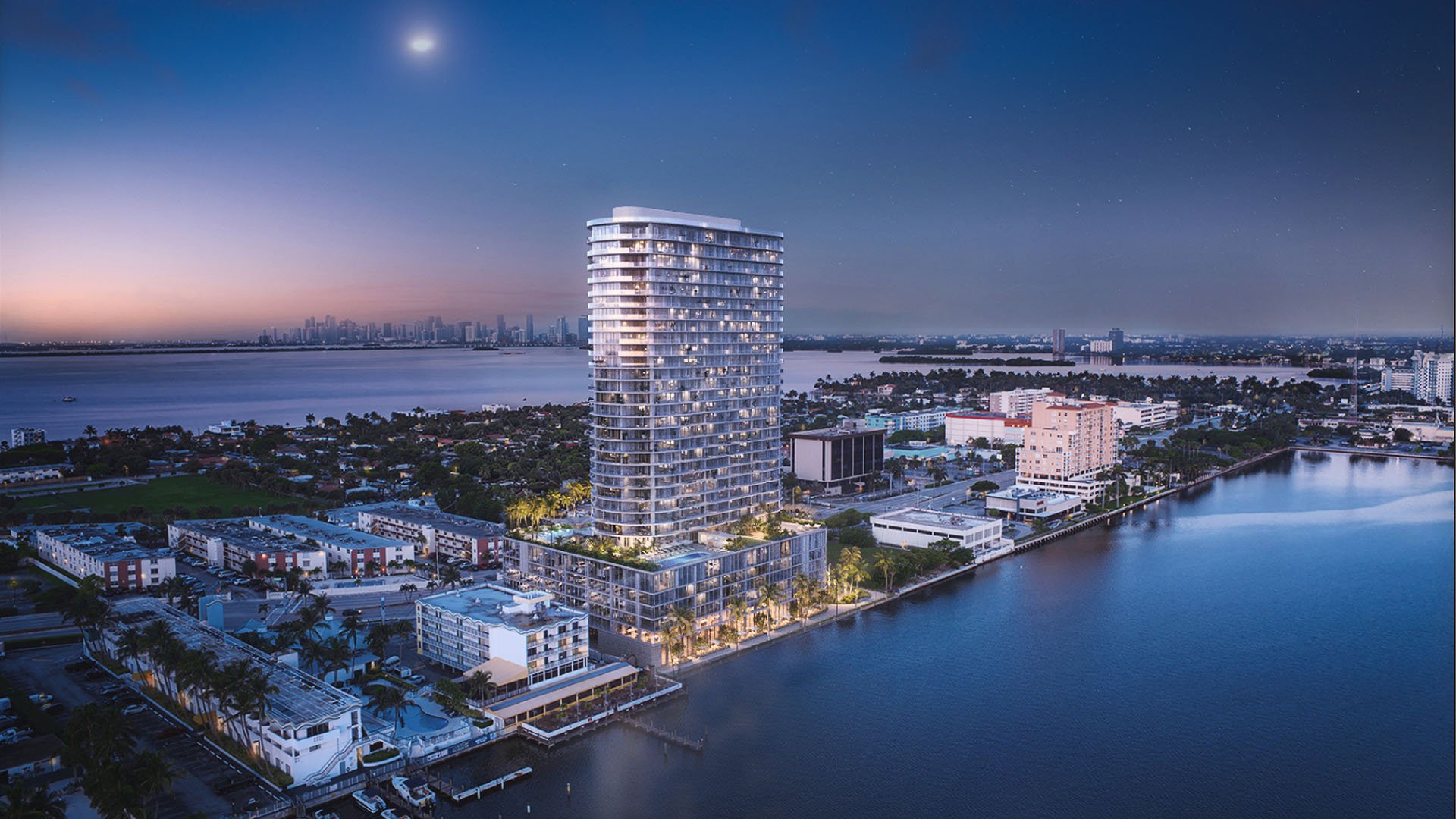
In North Miami, the purchase price is only the opening chapter. For a luxury condominium buyer, the more revealing question is not simply what the residence costs, but what the building requires to protect its standard over time. HOA fees, reserves, and insurance are not administrative footnotes. They are the financial architecture beneath the lifestyle.
A well-run building should feel effortless: staffed arrival, attentive maintenance, polished amenities, clean common areas, secure access, and the confidence that every shared space is being protected. That experience carries a cost. Sophisticated buyers treat monthly fees, reserve policies, and insurance obligations as part of the property’s total value proposition, not as isolated charges.
This is especially important in a coastal South Florida setting, where building quality, association discipline, and long-term planning can influence daily comfort as well as future resale positioning. Whether the search begins around One Park Tower by Turnberry North Miami or expands into neighboring waterfront markets, the same question should guide the conversation: is the building financially prepared for the lifestyle it promises?
HOA fees are often reduced to a single monthly number, but that framing misses the point. A fee is meaningful only when measured against what it supports. In one building, a higher monthly amount may reflect a broader amenity program, deeper staffing, more intensive maintenance, or stronger planning. In another, a lower fee may indicate fewer services, deferred attention, or a more limited operating structure.
For luxury buyers, the review should begin with the operating budget. What categories are being funded? How are payroll, security, common-area utilities, landscaping, amenity maintenance, management, and routine repairs handled? Is the building maintaining a level of service aligned with its positioning, or is it relying on future assessments to solve recurring needs?
The best comparison is not fee versus fee. It is fee versus service, condition, and risk. A waterfront residence with extensive amenities will not have the same operating profile as a smaller boutique building. A newer tower may have different early-life maintenance requirements than an established Resale property. The monthly number should be interpreted within the character of the asset.
Reserves are the funds an association sets aside for future capital needs. They are not designed for ordinary daily expenses. They exist to help address larger building components and longer-horizon repair or replacement obligations. For buyers, reserves are one of the clearest signals of whether an association is thinking beyond the current budget year.
A polished lobby and a beautiful pool deck can be persuasive, but the reserve picture tells a deeper story. Are future needs being anticipated? Is the association building capacity over time? Are owners accustomed to funding the property responsibly, or has the building historically relied on special assessments when major needs arise?
Reserve strength does not eliminate uncertainty. Buildings are complex, and costs can change. But a thoughtful reserve posture can reduce the shock of future obligations and may support a more stable ownership experience. For a buyer considering Investment potential, reserve review is not merely defensive. It helps frame how a residence may be perceived by the next purchaser.
Insurance has become one of the most scrutinized elements in condominium ownership. For buyers, the important point is not to predict future premiums, but to understand how the building structures coverage, deductibles, and budget planning. Insurance affects the association budget, and the association budget affects the owner.
A careful review should ask how master policies fit into the building’s total operating costs, how deductibles are handled, and how the association communicates changes. Buyers should also understand the difference between the building’s master coverage and their own unit-level coverage needs. These are separate conversations, and both belong in the diligence process.
Insurance costs can also influence lender review and buyer confidence. A property that communicates clearly, budgets carefully, and maintains transparent records gives purchasers more to underwrite. That does not make ownership risk-free, but it does make the decision more informed.
New-construction buyers often focus on design, finishes, amenities, and the promise of a fresh building environment. Those are legitimate attractions. But the operating profile still deserves scrutiny. Early budgets may evolve as a building becomes fully operational, staffing patterns settle, amenities are used in real life, and association governance matures.
Resale buyers, by contrast, have the advantage of history. They can examine how the association has managed budgets, maintenance, reserves, communication, and assessments over time. A seasoned building may offer clarity, but it may also come with future capital obligations that require careful review.
The most composed buyers compare both categories through the same lens. What is included? What is excluded? How are reserves funded? What insurance assumptions are embedded in the budget? How does the association handle unexpected needs? A purchase near North Miami may naturally lead buyers to evaluate nearby waterfront alternatives such as Continuum Club & Residences North Bay Village, where the same cost questions remain essential even when the setting changes.
A special assessment is not automatically a sign of poor management. In some cases, it can reflect a deliberate decision to fund a significant improvement, repair, or required project. What matters is context. Why was the assessment needed? Was it planned? Was it communicated clearly? Did it point to a one-time initiative or a recurring budget gap?
Buyers should ask for meeting minutes, budgets, reserve information, assessment history, and any available disclosures that clarify known obligations. The goal is not to find a building with no future expenses. That standard is unrealistic. The goal is to understand how expenses are identified, funded, and governed.
In luxury real estate, surprise is rarely elegant. A building that discusses capital needs candidly is often easier to evaluate than one that presents a deceptively simple monthly fee without the records to support it.
North Miami sits within a broader luxury corridor where buyers often cross-shop waterfront and near-waterfront addresses. Aventura, North Bay Village, Bay Harbor Islands, and Surfside can enter the same conversation depending on boating needs, commute patterns, school preferences, privacy, and lifestyle.
That broader search can be useful because it reveals how different associations package value. A buyer considering Avenia Aventura may weigh access, services, and building programming differently from a buyer drawn to a quieter bayfront address. Likewise, Bay Harbor Towers may invite a different conversation about scale, neighborhood rhythm, and ownership expectations.
The constant is discipline. The most desirable residence is not always the one with the lowest monthly fee. It is the one where the total cost of ownership feels proportionate to the quality of the building, the resilience of the association, and the buyer’s intended use.
Before making an offer, the refined approach is to build a clean ownership-cost profile. Start with the current monthly HOA fee, then identify what it includes and what it excludes. Review the budget, reserves, insurance structure, pending projects, assessment history, rules, rental policies, and any known capital discussions.
Next, consider personal use. A full-time owner, seasonal resident, and investor may experience the same building very differently. Amenity value, parking convenience, pet policies, guest access, and rental restrictions all influence the practical economics of ownership.
Finally, think about exit. Future buyers will ask many of the same questions. A residence in a building with clear records, credible budgeting, and a coherent maintenance culture may be easier to explain when it returns to market. That clarity is part of the asset.
What is included in a condo HOA fee? It typically supports shared building operations, maintenance, amenities, management, and common-area expenses, though inclusions vary by association.
Are higher HOA fees always a negative? No. A higher fee may reflect stronger services, broader amenities, or more comprehensive building operations, so it should be measured against value.
Why do reserves matter to a buyer? Reserves show how an association prepares for future capital needs and can help reduce reliance on sudden special assessments.
Can a building with low fees still be expensive to own? Yes. Low monthly fees may be offset by limited services, deferred maintenance, insurance pressure, or future assessments.
What should I ask about insurance? Ask how the master policy is budgeted, how deductibles are handled, and what separate unit-level coverage you may need.
Is New-construction easier to evaluate than Resale? Not always. New-construction may have evolving operating costs, while Resale offers history that can be reviewed during diligence.
Do special assessments mean I should avoid a building? Not automatically. The key is understanding why the assessment exists, how it is funded, and whether it reflects planning or distress.
How should investors view HOA fees? Investment buyers should treat fees as part of the total return profile, including rental rules, carrying costs, and future resale perception.
Should I compare North Miami with Aventura or North Bay Village? Yes, if those areas fit your lifestyle. Comparing nearby markets can clarify how different buildings package services and costs.
What is the best first step before buying? Build a full ownership-cost profile that includes HOA fees, reserves, insurance, assessments, rules, and personal use assumptions.
To compare the best-fit options with clarity, connect with MILLION.
If branded residences are on your mind — as a home or as an allocation — we would be glad to share what we are seeing, privately.
Begin a quiet conversation