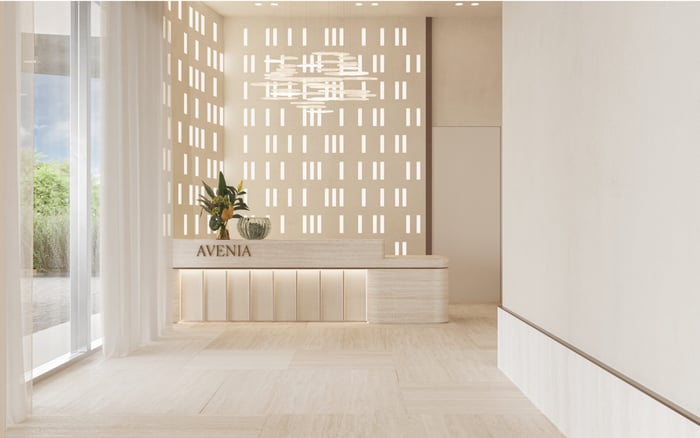
Avenia Aventura offers a useful lens on how neutral finishes, buyer mix, and association culture shape luxury condo resale strategy in Aventura.
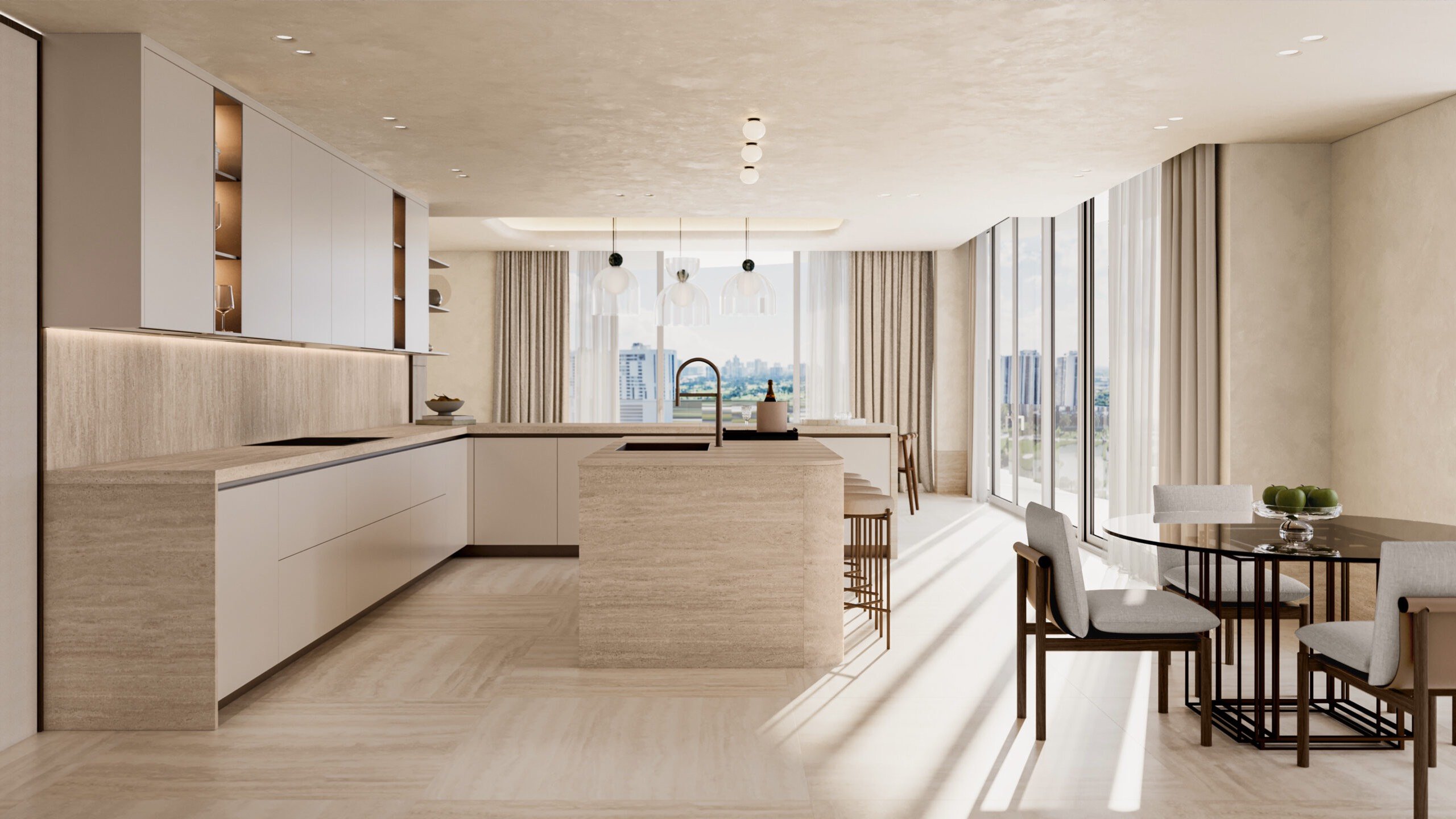
Avenia Aventura sits at the center of a practical luxury real estate question: when a residence is finished to appeal to nearly everyone, who is it truly designed to serve at resale? In Aventura, where many buyers prize residential convenience, lifestyle continuity, and a more settled condominium rhythm, the answer is rarely about surface design alone.
Neutral finishes have become the safe language of premium resale. Pale stone, quiet cabinetry, restrained flooring, and uncluttered lighting photograph well, show cleanly, and allow buyers to imagine their own art, furniture, and daily life inside the rooms. For a seller, that can feel like the broadest possible invitation. For a buyer, it can read as move-in-ready rather than project-heavy.
Yet the deeper question at Avenia Aventura is ownership composition. A building’s value story is not shaped only by countertops and views. It is shaped by whether units are held primarily by end users, seasonal residents, investors, international buyers, or some combination of all four. That mix influences not only daily atmosphere, but also financing perceptions, leasing culture, building rules, and future resale confidence.
Neutral design performs best when the next buyer wants ease. Relocation buyers, seasonal owners, and international purchasers often do not want to inherit a highly personal design statement. They want a residence that looks composed on day one, with limited friction between contract and occupancy.
That matters in the luxury segment because perceived value is immediate. A buyer may appreciate rare materials and custom taste, but if the design is too specific, it can narrow the audience. A neutral residence may not be the most memorable in a stack of comparable units, but it can be the least objectionable. In resale, that is a meaningful advantage.
At Avenia Aventura, the neutral-finish conversation is therefore less about blandness and more about liquidity. A broad palette can make a unit easier to present across buyer categories. The same residence may appeal to a downsizing local owner, a second-home buyer, an investor assessing rental flexibility, or an international family looking for a South Florida base.
The strongest neutral units still need distinction. View corridors, floor height, layout efficiency, terrace usability, parking, storage, and condition create separation when finishes do not. Without those anchors, neutral interiors can make comparable residences feel interchangeable, particularly when several similar units compete at once.
The ownership profile of a condominium can shape the experience of ownership as much as the physical unit. A more owner-occupant-driven building may feel steadier, with residents more focused on long-term maintenance, rules, amenity standards, and association governance. An investor-accessible building may offer more flexibility, but that flexibility can also change the feel of common areas, leasing patterns, and buyer perception.
Neither model is inherently superior. The right answer depends on the buyer’s purpose. An end user may prefer a quieter, more residential environment where neighbors are present and building culture is consistent. An investor may value leasing optionality and a deeper rental audience. A seasonal owner may want enough service and stability to return comfortably without feeling that the building operates like a transient lodging environment.
For Aventura buyers, this is an essential distinction. Aventura is often positioned around residential stability and lifestyle convenience rather than constant turnover. That makes the ownership mix particularly relevant. Buyers considering Avenia Aventura should look beyond the model-residence impression and ask how the building is likely to function once individual owners begin making decisions about use, leasing, holding period, and eventual resale.
The most important due diligence questions are not always visible during a showing. Buyers should review condominium documents, leasing restrictions, reserve positions, assessment history, insurance exposure, and any pending building maintenance obligations. These items can directly affect monthly carrying costs, financing comfort, and the way future buyers evaluate the same residence.
Leasing rules deserve particular attention. Long-term rentals may support a more stable income strategy than shorter occupancy cycles, but the exact rules determine how flexible the unit really is. A residence that appears attractive for investment may be less useful if restrictions limit timing, frequency, tenant approval, or minimum lease duration.
Insurance and reserves are equally important. Luxury buyers often focus on finishes and amenities first, but carrying costs can become the deciding issue when two similar units compete. If ownership costs are clear, reserves appear thoughtfully managed, and maintenance obligations are understood, the resale story becomes easier to defend.
Parking, building access, amenity quality, and unit condition should also be evaluated with resale in mind. A neutral interior can bring a buyer through the door, but practical details often determine whether they stay engaged. In a market where many residences photograph well, operational clarity becomes a luxury feature of its own.
For sellers at Avenia Aventura, the goal is not to apologize for neutrality. It is to give the residence a point of view beyond the palette. A listing should make clear why this specific unit is preferable to another similarly finished option in the building or submarket.
That means emphasizing view orientation, floor position, natural light, layout, terrace utility, parking convenience, storage, upgrades, appliance condition, and the current state of ownership costs. If the building’s rules support a particular buyer profile, that should be presented carefully and accurately. If the unit is better suited to an end user than an investor, the marketing should reflect that.
Neutral finishes are most powerful when they function as a quiet backdrop for stronger selling points. A buyer may first respond to the calm interior, but the decision usually depends on whether the residence feels efficient, financially legible, and difficult to replicate. Sellers who rely only on a clean aesthetic risk blending into the competitive set.
Aventura has a distinct place in South Florida luxury real estate because many buyers approach it through convenience and continuity. Access to daily lifestyle infrastructure, a mature condominium environment, and a more residential cadence can appeal to buyers who want South Florida without feeling compelled toward the most transient waterfront submarkets.
That makes Avenia Aventura a useful case study. The ownership question and the neutral-finish question are intertwined. If the building attracts a durable base of end users and seasonal owners, neutral interiors may help support steady resale by keeping the buyer pool broad. If the building skews more heavily toward investor ownership, the same finishes may support rental marketability but require closer review of leasing culture and association dynamics.
The best buyers will not treat neutrality as a substitute for diligence. They will ask who owns, how they use their residences, how the association governs, and how future buyers may perceive the building. In a luxury condo, the most elegant finish is often confidence.
Why does ownership mix matter at Avenia Aventura? Ownership mix can influence financing perception, leasing culture, association priorities, and how future buyers judge resale stability.
Are neutral finishes better for resale? They can broaden appeal by making a residence feel move-in-ready, but they do not replace the need for strong views, layout, condition, and pricing discipline.
Who is most likely to value a neutral-finish unit? Seasonal owners, relocation buyers, international buyers, and some investors may prefer a clean, broadly adaptable interior.
Can neutral finishes make units feel too similar? Yes. When many units share a similar look, differentiators such as floor height, view, parking, and upgrades become more important.
What should buyers review before purchasing? Buyers should examine condo documents, leasing restrictions, reserves, assessment history, insurance exposure, and known maintenance obligations.
Is Avenia Aventura only relevant to investors? No. The ownership question includes end users, seasonal owners, investors, and international buyers, each with different priorities.
How should sellers market a neutral residence? Sellers should highlight practical distinctions such as ownership costs, amenity quality, views, unit condition, parking, and building rules.
Do leasing rules affect resale value? They can. Leasing restrictions may shape the buyer pool, lender comfort, investor demand, and long-term building atmosphere.
Why is Aventura different in this discussion? Aventura is often framed around residential stability and lifestyle convenience, making building culture especially relevant to resale perception.
What is the best way to shortlist comparable options for touring? Start with location fit, delivery status, and daily lifestyle priorities, then compare stacks and elevations to validate views and privacy.
For a discreet conversation and a curated building-by-building shortlist, connect with MILLION.
If branded residences are on your mind — as a home or as an allocation — we would be glad to share what we are seeing, privately.
Begin a quiet conversation