A buyer-focused guide to Miami Beach residence profiles where adaptable infrastructure, serviceable systems, and disciplined technology planning can help reduce obsolescence risk.
For a Miami Beach buyer, technology is now part of the architecture. The strongest residence is no longer evaluated only by its view corridor, ceiling height, stone selection, or private elevator arrival. It is also judged by whether the building’s systems can keep pace with changing expectations without intrusive retrofits, excessive downtime, or awkward workarounds.
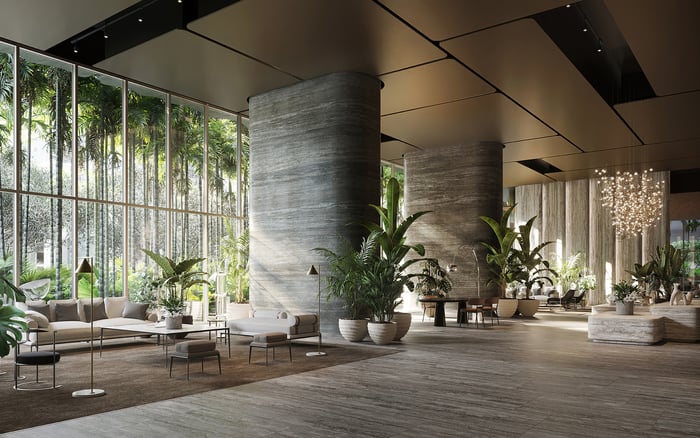
That distinction matters in a market where buyers often plan to hold a residence as a primary home, seasonal base, or generational asset. A polished lobby may photograph beautifully, but the longer-term experience is shaped by access control, package management, climate performance, connectivity, parking systems, life-safety coordination, amenity reservations, and the ability to service each of those elements without compromising privacy.
The practical search language often becomes surprisingly direct: Miami Beach, Oceanfront, New-construction, Pre-construction, Ultra-modern, and Top Project each signal a different expectation around infrastructure, risk, and long-term livability. The most successful purchases treat technology as a core building material, not as a decorative upgrade.
1. Full-service new-construction residence - adaptable core systems
For buyers who want technology that will not age quickly, a full-service new-construction residence is often the natural starting point. The advantage is not simply that everything is new. It is that the building may have been conceived around contemporary expectations for secure access, controlled amenity use, back-of-house efficiency, high-capacity connectivity, and app-based resident services.
The essential quality is adaptability. Buyers should focus on whether systems are serviceable, whether vendors are established, whether controls can be updated, and whether the association has a realistic plan for maintaining software-dependent building operations. Luxury becomes more durable when the building can evolve quietly in the background.
2. Oceanfront residence - resiliency and environmental control
An oceanfront home in Miami Beach carries a distinct technology burden. Salt air, humidity, wind exposure, and intense sun all test a building’s mechanical discipline. The more exposed the site, the more important it becomes to understand glazing performance, air conditioning strategy, dehumidification, waterproofing discipline, elevator planning, and the maintenance culture behind the common areas.
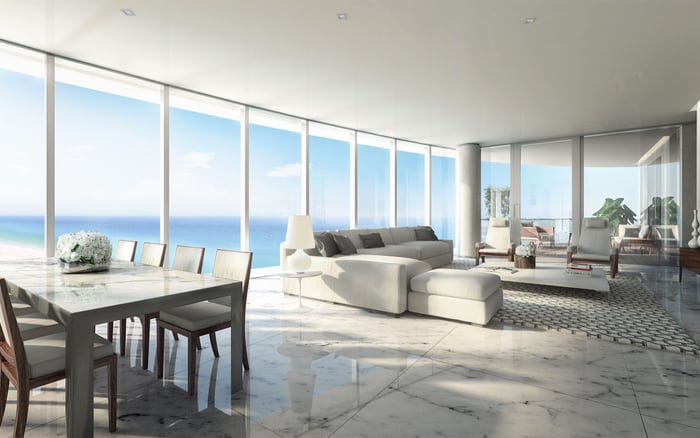
This is where beauty and engineering have to meet. A dramatic water view is most valuable when the residence also supports consistent comfort, predictable service, and strong building management. Buyers should ask how the property approaches preventive maintenance, not only how the amenities are presented.
3. Boutique low-density residence - controlled complexity
Boutique residences can be compelling for buyers who want privacy without unnecessary technological sprawl. Fewer homes can mean fewer usage patterns, fewer amenity conflicts, and a more personal relationship between ownership and building staff. When well executed, that simplicity can help systems age more gracefully.
The caution is scale. A smaller building still needs professional-grade infrastructure and a capital plan that anticipates upgrades. Buyers should evaluate whether the residence offers the right balance: enough technology to feel current, but not so much proprietary complexity that future maintenance becomes expensive or constrained.
4. Branded hospitality residence - service technology and operating standards
Branded residential environments can appeal to buyers who want building technology to support a seamless lifestyle. In this profile, technology often matters most where it is least visible: arrival choreography, staff communication, amenity scheduling, residence services, maintenance requests, guest access, and privacy protocols.
The strongest branded residence is not defined by a logo. It is defined by an operating culture that uses technology to reduce friction. Buyers should look for systems that staff actually understand, policies that protect resident privacy, and a service model that can function consistently during peak season.
5. Large-format private residence - infrastructure that can be customized
For buyers seeking a larger home in the sky or a substantial private residence, the technology question shifts from building-wide systems to personal control. Lighting scenes, shading, audio, security, climate zoning, wellness equipment, and private network architecture can all affect daily life. The wrong system can feel dated quickly, especially if it depends on closed platforms or difficult-to-source components.
The best large-format residences allow customization without trapping the owner. Buyers should favor clean wiring logic, accessible equipment locations, documented controls, and professionals who can explain how future upgrades would be handled. In this category, simplicity is often the most luxurious technology of all.
Technology ages well when it is useful, maintainable, and discreet. It should not announce itself every time a resident comes home. A strong building allows owners to move from car to residence, receive guests, book amenities, control climate, and resolve service issues without unnecessary friction.
For Miami Beach buyers, the most important questions are often practical. Is the building dependent on a single vendor? Are resident systems documented? Can access credentials be changed quickly? Are staff trained to operate the technology? Is there a reserve philosophy that treats software, hardware, and mechanical components as living systems?
A residence that answers those questions clearly may feel less theatrical during a showing, but it can be more satisfying over a decade of ownership. In ultra-prime real estate, the quiet absence of frustration is its own form of luxury.
Before committing to a Miami Beach residence, buyers should look beyond the presentation. Ask for clarity on building access, elevator systems, parking technology, amenity controls, common-area climate management, package rooms, security protocols, and smart-home integration inside the residence itself. The goal is not to become an engineer. The goal is to understand whether the building’s sophistication is supported by competent operations.
It is also wise to separate features from infrastructure. A tablet on the wall is a feature. A well-planned, upgradable control system is infrastructure. A beautiful fitness room is an amenity. A building that manages humidity, access, maintenance, and staff response with discipline is a more complete residential environment.
For buyers at the top of the market, the most future-resistant home is rarely the one with the most gadgets. It is the one where technology has been integrated into the ownership experience with restraint, serviceability, and long-term thought.
Can any Miami Beach residence be completely future-proof? No. The better goal is to buy a residence with systems that are adaptable, serviceable, and supported by disciplined building management.
Is newer construction always better for technology longevity? Not automatically. Newer residences can offer advantages, but execution, documentation, staffing, and upgrade planning matter just as much.
What technology should luxury buyers prioritize first? Prioritize access control, connectivity, climate performance, elevator reliability, security, and maintainable smart-home infrastructure.
Do oceanfront residences require different scrutiny? Yes. Oceanfront buildings face environmental stress, so comfort systems, waterproofing discipline, glazing, and maintenance culture deserve close review.
Are branded residences usually stronger technologically? They can be, especially when the service model is mature. Buyers should still examine how the technology works in daily operations.
What is the biggest red flag in a smart residence? A system that looks impressive but depends on proprietary equipment, unclear documentation, or a vendor relationship that may be difficult to replace.
Should buyers care about building staff training? Absolutely. Even excellent technology can feel dated if staff are not trained to use, troubleshoot, and maintain it consistently.
How should seasonal owners think about technology? They should favor systems that allow remote visibility, secure access management, climate monitoring, and clear communication with building staff.
Does simpler technology ever mean better luxury? Yes. In many high-end residences, reliable and intuitive systems create a more refined experience than complicated features that require constant attention.
What is the best way to shortlist comparable options for touring? Start with location fit, delivery status, and daily lifestyle priorities, then compare stacks and elevations to validate views and privacy.
For a tailored shortlist and next-step guidance, connect with MILLION.
If branded residences are on your mind — as a home or as an allocation — we would be glad to share what we are seeing, privately.
Begin a quiet conversation