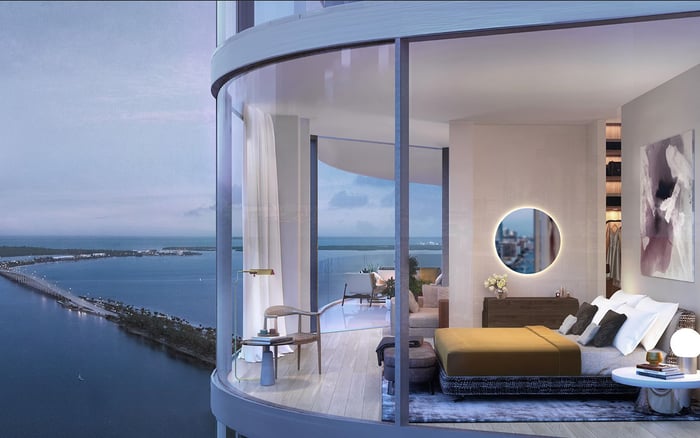
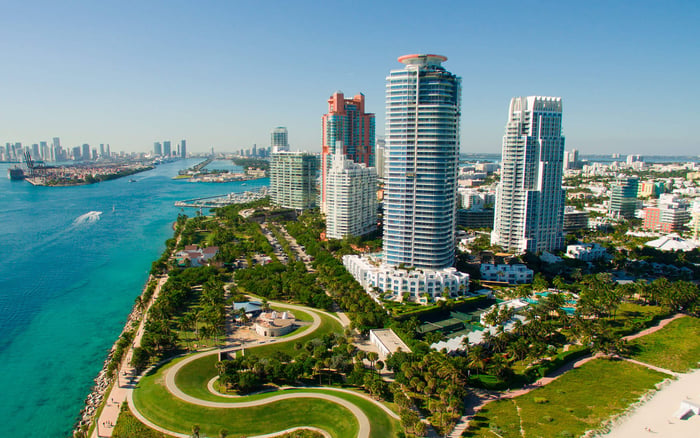
Fractional ownership is moving from a niche vacation concept to a serious consideration for ultra luxury buyers who value access, simplicity, and capital efficiency. This editorial assesses where the model works, where it breaks, and what South Florida’s most exacting buyers should underwrite before committing.

Ultra luxury buyers rarely struggle with affordability. They struggle with friction. Schedules shift, household footprints are global, and the definition of “home” can change with seasons, school calendars, and business travel. Fractional ownership models aim to solve a specific problem: securing a reliable, high-quality base without the full-time carrying costs and operational responsibilities of a wholly owned second home.
In South Florida, that promise can be especially compelling. Miami Beach and Bal Harbour can reward decisive ownership, but they can also punish absenteeism through maintenance oversight, staffing logistics, and weather exposure that demands immediate, competent response. A fractional structure can, in theory, turn a complex asset into a managed service with more predictable access.
In the ultra luxury sector, viability is less about novelty and more about alignment with the buyer’s real priorities: certainty, privacy, design continuity, and an exit path that doesn’t feel like a negotiation. Fractional ownership only works when governance is impeccable and the product is curated to the same standard as the buyer’s other holdings.
“Fractional ownership” is often used as a catch-all, but the structure determines the outcome.
Deeded fractional ownership typically means title is split among multiple owners, each with defined usage rights. It can feel closest to traditional real estate, but it also introduces shared decision-making, shared liabilities, and the potential for misalignment on improvements and timing.
Membership or club-based models may not convey a direct deed interest in a specific home. Instead, the buyer purchases the right to use a portfolio, often through managed reservations. This can reduce interpersonal conflict, but it increases reliance on the sponsor’s balance sheet, management competence, and the rulebook.
Managed co-ownership sits between the two: a small group owns a single residence, while a manager handles scheduling, maintenance, and service. In ultra luxury, it can be compelling when the home is exceptional, the co-owners are thoughtfully matched, and the operating agreement is written with the rigor of a private aviation partnership.
Regardless of structure, treat the contract as the true asset. In high-end markets like Brickell and Miami Beach, your legal rights matter more than the ocean view-because the view only has value if you can use it on your terms.
Fractional buyers should underwrite five pillars. If any one fails, the model stops being a convenience play and becomes a complexity trade.
First is legal clarity. Who holds title, what exactly is being purchased, and what is the dispute mechanism? A clean framework makes the “shared” aspect nearly invisible during normal use.
Second is usage certainty. The most elegant fractional model collapses if peak dates become a recurring negotiation. Ultra luxury clients should demand transparent scheduling rules and credible protection for holidays, school breaks, and signature weeks.
Third is cost transparency. Fractional models can look cost-efficient until layered fees, reserves, furnishing refresh cycles, and management margins are fully accounted for. The right question isn’t “What is the monthly cost?” It’s “What is the all-in cost of certainty?”
Fourth is service and stewardship. The premise is to replace personal oversight with a standard that reads like a private residence run by an excellent hotel team. This is where many models fall short: they deliver access, but not excellence.
Fifth is resale and liquidity. Ultra luxury buyers may not need to sell, but they value optionality. A viable model should have a clear transfer process, realistic buyer-qualification standards, and no hidden penalties that effectively trap capital.
Fractional ownership tends to work best when the objective is lifestyle access, not investment performance. It can be particularly attractive for buyers who:
Want a Miami base for recurring visits but do not want a year-round operational footprint.
Prefer a curated, fully furnished environment with a consistent aesthetic and minimal decision fatigue.
Value premium services but do not want the visibility of a condo-hotel dynamic.
Need an “always ready” home close to the waterfront, dining, and cultural centers.
Consider the difference between a residence designed as a forever home and one optimized for effortless arrivals. In Brickell, a buyer evaluating a full-time luxury condominium might compare a fractional solution to a turnkey, amenity-rich ownership experience such as 2200 Brickell, where the appeal is the ability to lock-and-leave while maintaining a strong sense of private residence.
In Miami Beach, the value of certainty is amplified. If the goal is consistent access to the coastline with minimal operational complexity, the buyer may find that straightforward ownership at a boutique oceanfront property such as 57 Ocean Miami Beach competes directly with fractional propositions, because it preserves autonomy while still supporting a second-home lifestyle.
The ultra luxury tier is unforgiving because expectations are not negotiable. Fractional models most often break in four areas.
Governance fatigue: Even well-intentioned co-owners can diverge on policies for guests, noise, staffing, upgrades, and usage swaps. If you’re buying simplicity, avoid any model where a recurring “board meeting” becomes the price of admission.
Privacy dilution: Ultra luxury purchasers are exacting about who has access to their space. Shared ownership increases the number of parties involved-co-owners, managers, cleaning teams, concierge staff, vendors. Without strict protocols, discretion erodes.
Design drift: Taste is personal, and fractional homes can get compromised by committee. Furniture selection, art strategy, and replacement cadence must be governed by a clear, pre-agreed standard.
Exit mismatch: Selling a fraction requires the next buyer to accept the same rulebook. If the terms are idiosyncratic, the buyer pool narrows. Ultra luxury capital does not like bottlenecks.
A useful litmus test: if you wouldn’t accept ambiguity in an aviation or yacht arrangement, don’t accept it in real estate. The property is only half the experience; the other half is the operating agreement.
South Florida adds layers that can favor professional management, while also raising the stakes.
Weather and building stewardship can demand swift, competent action. A fractional structure with strong management can be protective because the home is never “orphaned” for months at a time. The trade is clear: you must trust a third party to act with the same urgency and judgment you would.
Insurance, reserves, and capital planning aren’t glamorous, but they’re where fractional budgets can surprise buyers. A sophisticated model will pre-fund reserves and outline capital calls with clarity. An unsophisticated model will improvise.
South Florida’s luxury market is also rich with residences designed for lock-and-leave ownership-without shared-title complexity. For example, a buyer seeking oceanfront presence with a refined amenity set might evaluate 2000 Ocean Hallandale Beach as a fully owned alternative that can still feel effortless when managed properly.
Some buyers are primarily solving for utilization. They want to avoid paying for an empty home, but they don’t want the entanglement of shared ownership.
In those cases, traditional ownership with selective rentals can be the cleaner solution, assuming building rules and personal preferences align. A wholly owned residence offers stronger control over design, access, and long-term planning. Operational burden can be outsourced to a private manager without surrendering governance to co-owners.
This comparison is especially relevant in markets like Sunny Isles, where ultra luxury towers often deliver an amenity ecosystem that makes ownership feel turnkey. A buyer weighing flexibility may find that straightforward ownership at a marquee property such as Bentley Residences Sunny Isles provides the service-forward lifestyle they want, while preserving the simplicity of a single decision-maker.
The deeper point: fractional isn’t automatically “smarter” than owning. It’s simply a different way to purchase certainty. If your schedule is consistent enough, you may be better served by owning outright and keeping your options open.
Before committing to any fractional model, align the structure to your true objective.
If your priority is guaranteed peak access, insist on rules that treat prime weeks as first-class assets-not negotiable conveniences.
If your priority is discretion, evaluate how many people will hold keys, how privacy is protected, and what audit trail exists for access.
If your priority is simplicity, avoid models that require consensus for routine decisions. The best experiences are engineered to run quietly in the background.
If your priority is capital efficiency, stress-test the exit and the fees with the same seriousness you would apply to any private-market asset.
In ultra luxury, the winning model isn’t the one that promises the most flexibility. It’s the one that delivers the most certainty with the least negotiation.
Is fractional ownership the same as a timeshare? Not necessarily. Some fractional structures are deeded or investment-like, while timeshares are typically usage rights with different controls.
What matters most when evaluating a fractional offer? The operating agreement. Usage rules, fees, governance, and exit mechanics determine whether the lifestyle feels effortless.
Can I finance a fractional purchase? Sometimes, but financing can be more limited than for a traditional purchase; many buyers treat it as a cash and convenience decision.
Do I get to choose my weeks? It depends on the scheduling system. The best models disclose peak-week protections and rotation rules upfront.
Who pays for repairs and upgrades? Typically the owners via monthly dues and reserves, sometimes supplemented by capital calls; the documents should define this precisely.
How does resale work for a fraction? Resale is governed by transfer rules, potential approval rights, and market demand for that structure. Clarity and simplicity support liquidity.
Are fractional homes usually furnished? Often, yes. Furnishings are part of the convenience promise, but the refresh standard should be contractually maintained.
Does fractional ownership reduce privacy? It can. More stakeholders and staff can mean more exposure unless access protocols are strict and professionally managed.
When is full ownership the better choice? When you want full control over access, design, and decision-making, or when your utilization is high enough to justify the carrying costs.
What is the biggest red flag? Ambiguity. If the rules, fees, or exit path feel negotiable or unclear, the model is unlikely to feel ultra luxury in practice.
To compare the best-fit options with clarity, connect with MILLION Luxury.
If branded residences are on your mind — as a home or as an allocation — we would be glad to share what we are seeing, privately.
Begin a quiet conversation