A buyer-oriented, design-led comparison of how Japanese minimalism translates into daily life at The Residences at Mandarin Oriental, Miami versus Aria Reserve Miami, with a focus on materials, planning, wellness, and long-term livability.
Japanese minimalism is often described with easy words: calm, quiet, restrained. In practice, it is exacting. It depends on proportion, shadow, honest materials, and a disciplined relationship with clutter. South Florida adds its own constraints: harsh sun angles, reflective water light, humidity, salt air, and lifestyles that move fluidly between indoors and outdoors.
That is why comparing The Residences at Mandarin Oriental, Miami to Aria Reserve Miami is less about which building is “more minimal” in marketing terms, and more about which one sustains a coherent sense of serenity in real life. Minimalism is not a color palette; it is an operational system. It either supports your day, or it becomes something you constantly have to manage.
The most useful lens for a buyer is execution: how the architecture, interiors, and services reduce friction and protect stillness, without sacrificing the pleasures of Miami.
At a high level, these two addresses tend to attract different definitions of luxury.
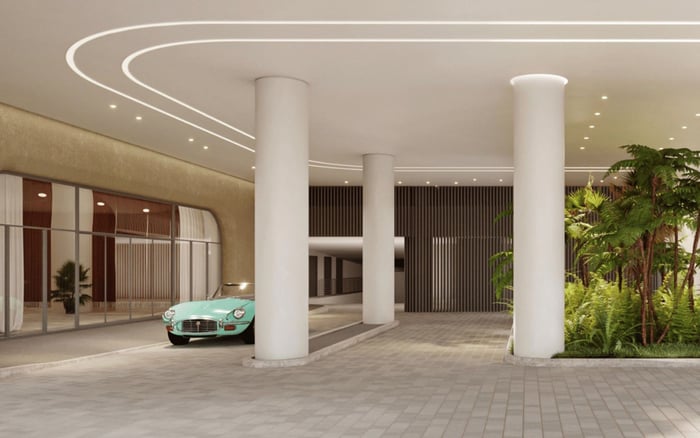
The Residences at Mandarin Oriental, Miami typically reads as a sanctuary proposition. Minimalism here, when done well, should feel like an intentional retreat: a composed arrival, softened acoustics, carefully edited finishes, and hospitality-driven service that protects privacy and cadence.
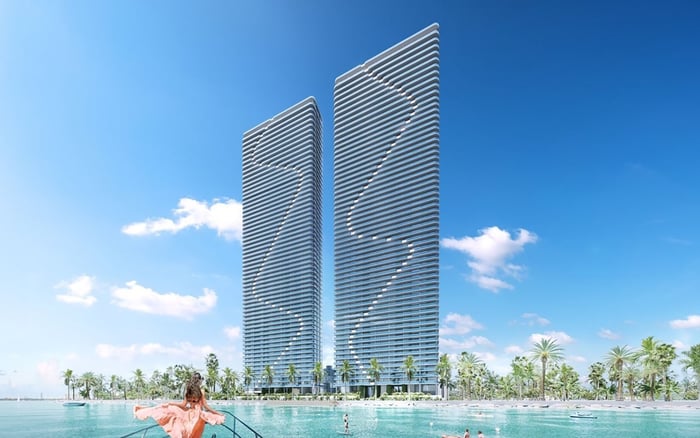
Aria Reserve Miami, by contrast, is commonly sought for scale and view power. In that context, “minimalism” is often expressed as a neutral, gallery-like envelope designed to recede behind glass, sky, and water. The experience can be spectacular, but it has to work harder to feel intimate.
For many buyers, the decision comes down to the kind of quiet you want. There is the quiet of insulation and ritual, and there is the quiet of distance and horizon.
Japanese minimalism is fundamentally about transitions. The best homes separate public and private zones with subtle threshold cues, not heavy doors or theatrical corridors.
Evaluate each building from the curb to your front door:
Does the arrival sequence slow you down, or accelerate you into the elevator bank?
Do you move through layered spaces, or a single open lobby volume?
Is privacy protected by planning, or by signage and staffing?
In a true sanctuary, the building should deliver a psychological decompression zone before you reach your residence. That effect can be built through controlled sightlines, matte surfaces that absorb glare, and an environment that feels curated rather than merely furnished.
In a view-driven tower, arrival often prioritizes speed and clarity. That can still read as minimalist, but it risks feeling corporate unless warmth is introduced through tactility: wood tones, textured stone, and lighting that creates a gradient rather than a spotlight.
When you tour, listen as closely as you look. Minimalism amplifies acoustics. If sound carries in the lobby or corridors, the calm can feel performative.
In Japanese minimalism, light is not just illumination; it is material. Miami’s light is abundant and aggressive, especially around water. The most successful residences temper it without flattening it.
For The Residences at Mandarin Oriental, Miami, the ideal expression is filtered light: brightness that arrives softened, with surfaces that resist glare. Think in terms of comfort at 2 p.m., not sunset photography. Ask yourself whether the interiors still feel composed when the day is at its brightest.
At Aria Reserve Miami, the light story is typically panoramic. That can deliver an extraordinary sense of volume and openness. The minimalist risk is that everything becomes about the window wall, and the interior reads like a blank staging area. The corrective is in the details: deep reveals, clean ceiling lines, and finishes that hold their own in full daylight.
If you are cross-shopping Edgewater, it can also help to experience another nearby waterfront concept like Cove Miami, simply to calibrate how different buildings handle glass, views, and interior calm.
Minimalism in luxury real estate only works when the materials are quietly exceptional. If the palette is too thin, the result is not Zen; it is value-engineered.
When you assess execution, avoid getting stuck on broad descriptors like “neutral” or “clean.” Instead, look for:
Grain and consistency in wood or wood-like finishes
Stone with depth, not flat patterning
Hardware that feels intentional and tactile
Paint and wall surfaces that read velvety, not glossy
A hospitality-branded residence can have an advantage here because the brand promise implies a baseline of daily touchpoints: doors, handles, millwork, and lighting meant to be experienced every day, not just photographed.
A large-scale high-rise can also deliver excellent materials, but buyers should scrutinize continuity. Minimalism is unforgiving when the finish language shifts abruptly between amenity floors, corridors, and residences.
The most overlooked part of Japanese minimalism is that it requires places for things to disappear. If storage is insufficient, the home cannot stay calm.
On your plan review and walk-through, ask practical questions:
Is there a true entry moment with a drop zone, or do you step directly into the living area?
Are there linen, pantry, and utility volumes sized for real living?
Do the kitchens support daily cooking without visual noise?
Are bedrooms buffered from living areas for acoustics and rest?
Sanctuary-style residences often prioritize invisible utility: integrated storage, discreet service routes, and planning that keeps the “back of house” out of sight.
View-forward towers sometimes prioritize glazing and openness, which can be thrilling but demands more discipline from the owner. If you entertain frequently, consider whether the open plan can be reset quickly. Minimalism should make hosting easier, not turn it into a staging exercise.
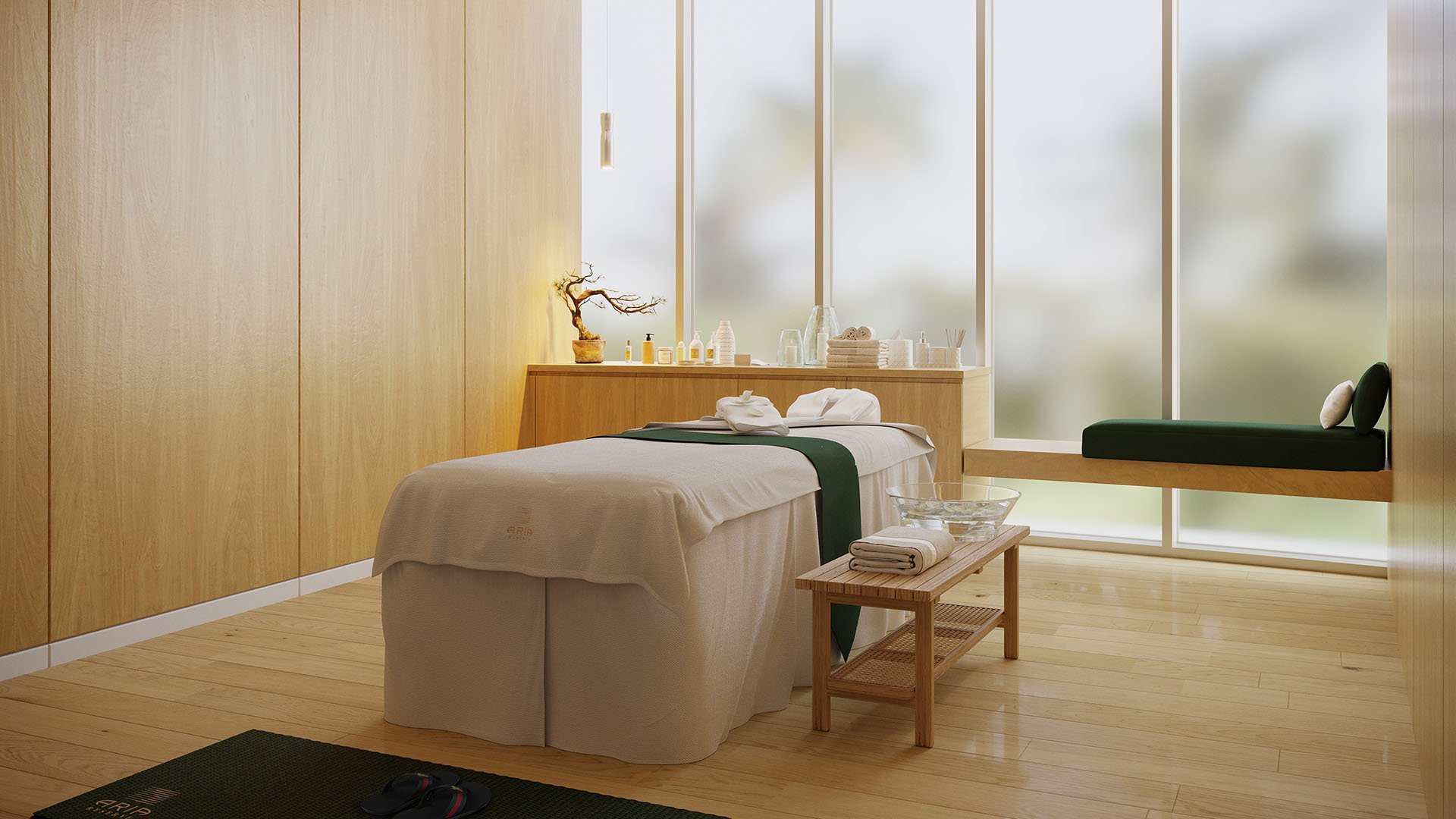
In a Japanese minimalist framework, wellness is not a checklist. It is an atmosphere. Amenities should feel restorative, not energetic.
Assess both projects by asking: do the wellness areas feel like an extension of the residences, or a separate club? Lighting temperature, sound control, and material choices matter as much as equipment.
If you are comparing luxury ecosystems, it is also useful to benchmark against other South Florida wellness-forward concepts. In Coconut Grove, for example, The Well Coconut Grove offers a useful reference for how a building can make health and serenity feel architectural rather than decorative.
Minimalism looks effortless, but it can become high-maintenance if surfaces are too precious or poorly specified. Miami’s environment punishes the wrong choices.
Pay attention to:
Metal finishes and how they handle humidity
Large-format surfaces that may show waves or seams
Glass maintenance expectations, especially at higher elevations
The durability of matte finishes in high-touch areas
The more your design depends on uninterrupted planes and pristine surfaces, the more the building’s operational standards matter. This is where service culture becomes tangible. A minimalist residence is only as calm as its daily upkeep.
Even with flawless interiors, the neighborhood sets the baseline tempo.
A Mandarin Oriental-branded residence in Miami often aligns with a more insulated lifestyle, where the routine is built around privacy, predictable service, and a sense of remove. For many global buyers, that can create an easier on-ramp to the city: the building becomes a mediator between Miami’s intensity and your personal calm.
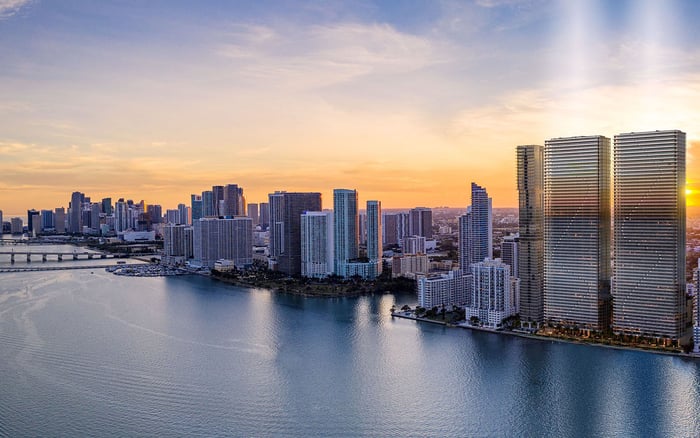
Aria Reserve Miami, associated with Edgewater’s waterfront energy, tends to suit buyers who want serenity inside the residence while still feeling connected to the city’s movement. Edgewater can be ideal if you want proximity without being in the center of Brickell’s velocity.
If your lifestyle leans more urban-luxe, compare your Edgewater impressions to a Brickell standard-bearer like 2200 Brickell, which can help clarify whether you prefer skyline intensity or bayfront openness.
Choose The Residences at Mandarin Oriental, Miami if your version of Japanese minimalism is:
Ritualized and protective: arrival, service, and privacy are part of the design
Tactile and warm: materials do the emotional work, not decor
Oriented toward decompression: the home feels like a retreat first
Choose Aria Reserve Miami if your version of Japanese minimalism is:
View-led and expansive: minimal interiors that yield to the horizon
Social-flexible: open layouts that host well and photograph cleanly
City-adjacent: calm at home, with energy close at hand
If you are still unsure, the most decisive variable is not the lobby or the amenity deck. It is the floor plan. A minimalist life depends on the plan’s ability to hide complexity. Tour with your real routines in mind: luggage storage, seasonal wardrobes, entertaining reset, and the practicalities of daily cooking.
For additional context on how different design languages translate into “quiet luxury” in South Florida, it can be instructive to view a hospitality-forward beachfront benchmark like 57 Ocean Miami Beach, where restraint has to coexist with salt, sun, and constant indoor-outdoor living.
Which project is more aligned with Japanese minimalism in spirit? The better fit is the one that supports calm through planning, materials, and operations-not the one with the whitest palette.
Is minimalism better for primary living or second homes in Miami? It can suit both, but primary living demands more storage and durability than a “showplace” second home.
What should I look for during a tour to judge execution quickly? Prioritize transitions, acoustics, storage, and glare control before you focus on furniture and decor.
Do panoramic glass towers make minimalism harder to live with? Not inherently, but they require stronger detailing and better planning so the interior feels intentional, not empty.
How important is service to a minimalist lifestyle? Very important, because minimalism depends on consistent upkeep and a calm operational rhythm.
What is the biggest red flag in “minimalist” marketing? A neutral box with weak materials, visible seams, and insufficient storage tends to read as cost-cutting, not restraint.
Which matters more: finishes or floor plan? The floor plan matters more long-term; finishes can be upgraded, but poor circulation and storage are harder to fix.
Can minimalist interiors still feel warm and inviting? Yes-when warmth comes from tactility, layered lighting, and proportion rather than decorative objects.
How does Miami’s climate change the material conversation? Humidity and salt air punish delicate metals and high-gloss surfaces, making durability and maintenance planning essential.
What is the simplest way to choose between these two lifestyles? Decide whether your daily calm comes from sanctuary-like insulation or from panoramic openness and city adjacency.
For a confidential assessment and a building-by-building shortlist, connect with MILLION Luxury.
If branded residences are on your mind — as a home or as an allocation — we would be glad to share what we are seeing, privately.
Begin a quiet conversation