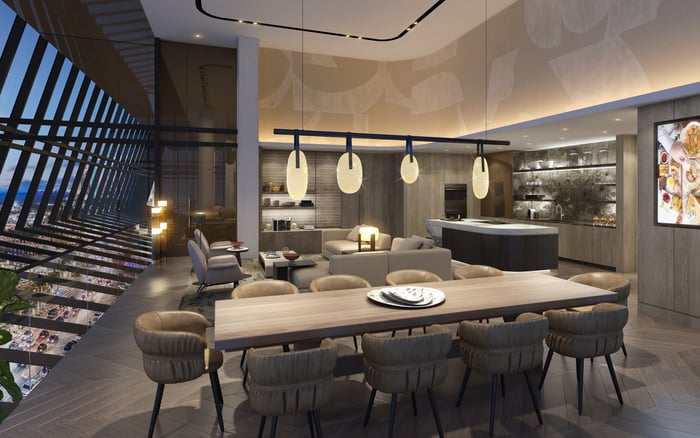
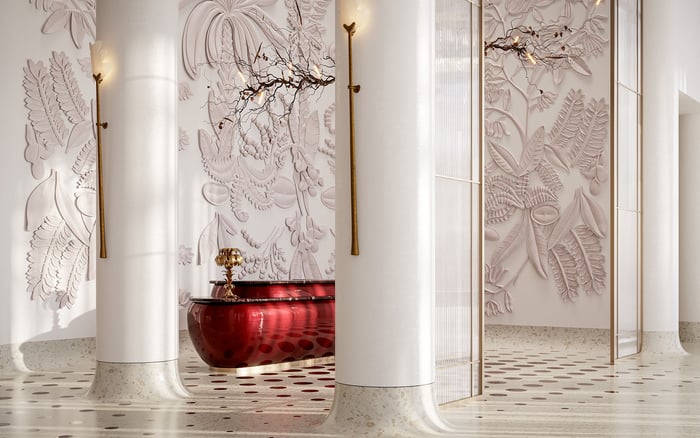
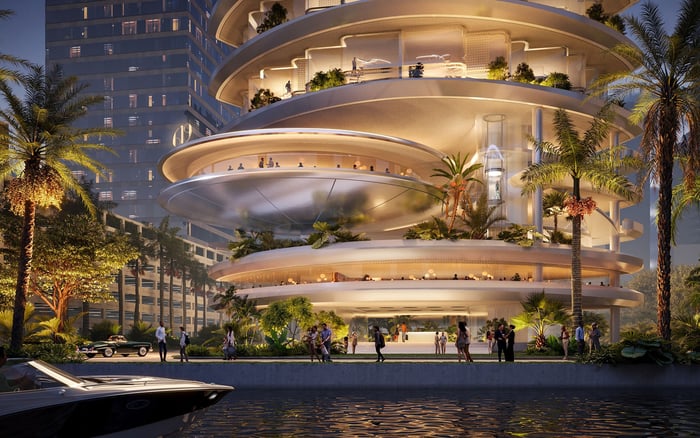
In Downtown Miami, the most valuable amenity is often not the pool deck or the private dining room, but the quality of life that begins at the sidewalk. At the Waldorf Astoria Residences Downtown Miami, the promise of an integrated retail environment signals a broader shift in the city’s luxury stack: residences that feel complete, not only because of what’s upstairs, but because of what the tower contributes to the street. This MILLION Luxury editorial considers what “curated retail” really means in a high-design, branded residential context, how it can influence privacy and daily rhythm, and which due-diligence questions sophisticated buyers should ask before treating ground-floor programming as a permanent lifestyle dividend.
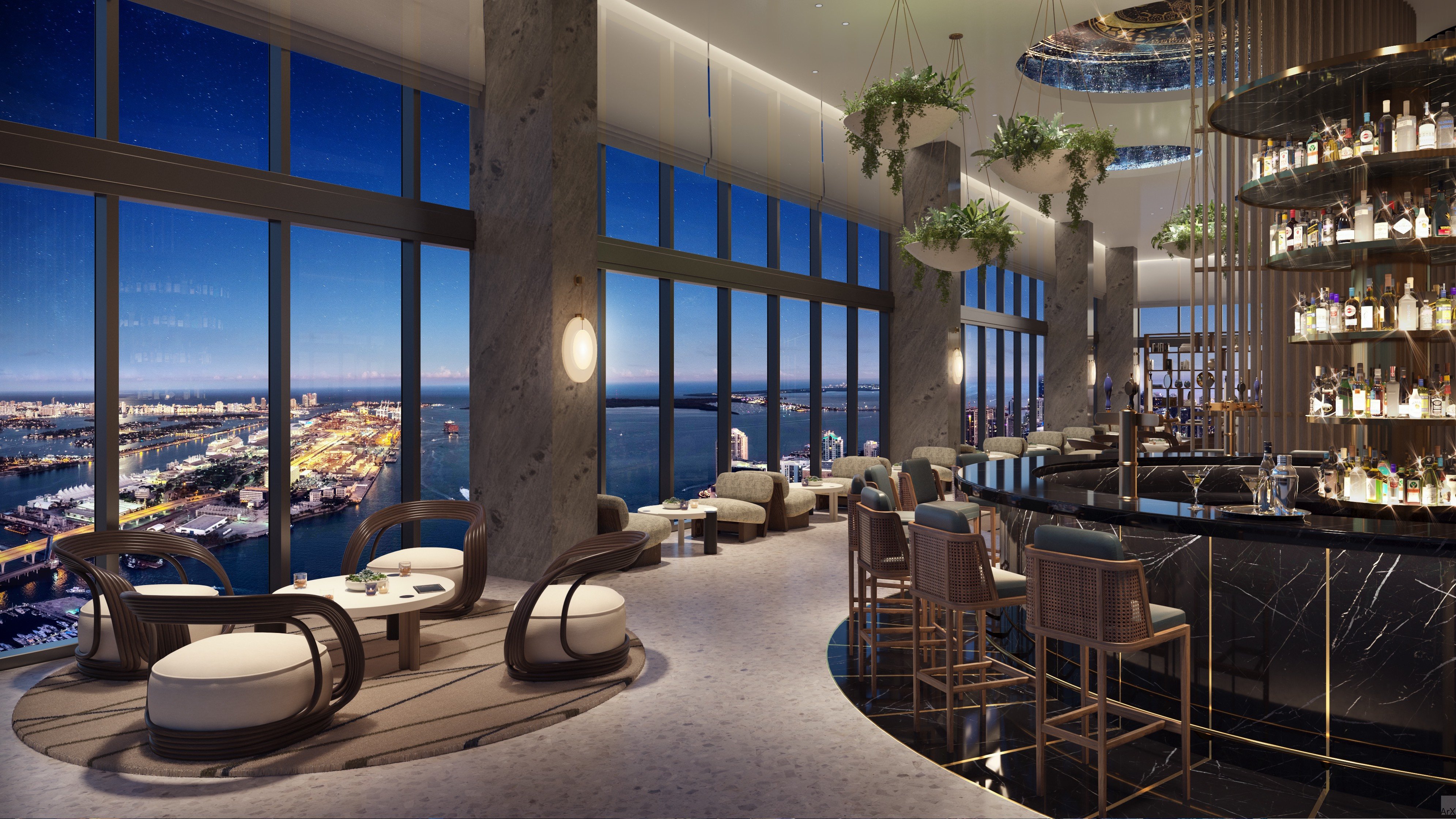
Downtown Miami has matured into a place where lifestyle is measured in minutes: the coffee run that does not require a car, the last-minute dinner reservation that feels effortless, the ability to host without “meeting somewhere” because the neighborhood already performs. In that context, the retail environment integrated into a trophy residential tower is not an afterthought. It becomes part of the building’s identity and, more importantly, part of the resident’s daily rhythm.
At the Waldorf Astoria Residences Downtown Miami brand position, “curated retail” is best understood as a controlled extension of the lobby experience. The ideal outcome is a street-level mix that elevates the public realm while protecting the private one. When done well, it can make a high-rise feel less like an island and more like a discreet, well-managed district.
For buyers evaluating Waldorf Astoria Residences Downtown Miami, the right question is not simply, “What shops are coming?” It is, “How will the building manage the interface between public retail energy and private residential calm over the next decade?”
The word “curated” is often used loosely in luxury real estate. In a truly premium setting, it implies three things: selectivity, cohesion, and operational discipline.
Selectivity
means the retail roster is chosen to reinforce the building’s positioning, not merely to fill square footage. The strongest mixes skew toward daily-use luxury: exceptional coffee, refined casual dining, a high-touch wellness or beauty concept, and occasional-use services that quietly remove friction from a resident’s week.
Cohesion
is the design and brand alignment that keeps the ground floor from reading like a random strip of storefronts. Materials, lighting, signage, and facade transparency should feel like one composition. Retail should look and feel inherent to the building, not bolted on after the fact.
Operational discipline
is the least visible and most consequential component. Curated retail requires tight control over deliveries, trash handling, staff access, and noise. In other words, the “back of house” must be as carefully engineered as the storefront.
In a neighborhood as active as Downtown, the difference between a seamless street-level ecosystem and an annoying one is often not the tenant brand. It is whether the building planned for the everyday logistics that come with success.
Integrated retail can function like a private amenity without actually being private. Residents benefit from proximity, not exclusivity. That distinction matters, because the value is in convenience and quality-not in the notion that a shop is “for residents only.”
When ground-floor programming is strong, it can elevate a building in ways that standard amenity decks cannot:
The best luxury is time. Retail that lets a resident keep the day local becomes a meaningful lifestyle dividend.
A tower anchored by strong food and beverage options reshapes how residents entertain, especially in a business-forward city.
High-quality retail can draw adjacent investment and improve the perceived walkability and safety of the immediate blocks.
The risks are equally real, and sophisticated buyers should weigh them with the same seriousness as view corridors or HOA budgeting:
A popular concept can push activity into evenings and weekends.
Rideshare queues and valet overlap can complicate arrivals.
A “curated” mix at opening can become less aligned as leases roll.
This is why experienced buyers compare not only towers, but how towers manage the ground plane. For contrast, consider how waterfront arrival sequences and resident separation are emphasized at Aston Martin Residences Downtown Miami, where the lifestyle story is tied as much to movement and access as it is to finishes.
Retail shapes the lived experience most at the moments a resident is least interested in being “seen”: arriving, leaving, receiving deliveries, and returning late.
In practical terms, a buyer evaluating a curated retail environment should look for these architectural and operational markers:
A true residential entry should feel unmistakable, controlled, and calm.
If the curb is chaotic, the building’s luxury promise weakens quickly.
Deliveries should be efficient, not a daily lobby performance.
Retail success should not translate into accidental access.
In a high-profile address, the goal is a public realm that feels vibrant without feeling porous. The best buildings deliver both by designing the street experience as a sequence-public to semi-public to private-with clarity at every threshold.
Luxury buyers often treat retail as “nice to have,” then discover it functions more like a reputational anchor. In many markets, the buildings that remain culturally relevant over time are the ones with a ground-floor identity that ages well.
A few dynamics to consider:
Even as interiors are renovated and tastes shift, an enduring ground-floor mix can keep the address feeling current.
If the initial curation leans too trend-driven, it can feel tired quickly.
Cleanliness, staffing, signage discipline, and security posture are visible-daily.
For buyers who split time between neighborhoods, this is where comparisons become useful. In Brickell, for example, the expectation of convenience and polished street energy is often built into the lifestyle proposition. A project such as 2200 Brickell speaks to a quieter, more residential reading of the district, which can influence how much public-facing programming a buyer actually wants attached to their front door.
Because the Research Pack and Fact Table for this topic do not specify exact tenants, the right approach is to diligence the framework rather than fixate on the names. Treat the retail plan as a living operating system.
Key questions a buyer should ask their team to clarify during due diligence:
If ownership and management are distinct, alignment of incentives matters.
The quietest buildings are the ones that plan for the unglamorous schedules.
If rideshare, valet, and retail overlap, friction becomes routine.
Luxury curation can be undone by uncontrolled branding.
Understand who has approval rights and what standards persist.
The point is not to be pessimistic. It is to be precise. In ultra-premium real estate, the difference between “convenient” and “compromised” is often a policy document.
In Downtown, integrated retail is part of a larger arc: towers that contribute to the street help make the neighborhood feel finished. That matters for end users who want daily life to be beautiful, and for buyers who think in decades.
Downtown’s appeal is also its variety. Some buyers want the high-energy, always-on feeling; others want proximity without saturation. For those who prefer a more curated, design-forward waterfront lifestyle with a stronger resort cadence, Miami Beach can be a counterpoint, where the relationship between building and street is often more controlled. A project like 57 Ocean Miami Beach captures that quieter edge of coastal luxury where the “retail amenity” is less about storefronts and more about an edited environment.
Alternatively, buyers who prioritize wellness-forward programming and a more intimate neighborhood texture may look toward enclaves where street life is calmer by design. That is part of the appeal behind projects such as The Well Coconut Grove, where the brand story revolves around a specific lifestyle thesis rather than a broad downtown ecosystem.
For a branded residence, the highest standard is that retail reads as hospitality. That does not mean room service at the storefront. It means the tone is consistent: discreet lighting, controlled sound, refined materials, and staff behavior that suits a luxury address.
A useful mental model is to ask whether the ground floor reads as:
or
The former can become part of why a buyer chooses the address even when comparable residences exist nearby. The latter may still be convenient, but it rarely becomes a value driver.
For buyers assessing Waldorf Astoria Residences Downtown Miami, curated retail is not about chasing buzz. It is about a consistent, controlled luxury experience that begins before you reach the front desk.
What is a “curated retail environment” in a luxury residential tower? It typically means the building selects and manages ground-floor tenants to match a specific lifestyle and design standard.
Does integrated retail usually increase resale value? It can, when the retail improves daily convenience without compromising privacy, noise, or arrivals.
What retail types tend to work best in ultra-luxury settings? Daily-use concepts like café, wellness, and refined casual dining generally complement residential living best.
What is the biggest downside of ground-floor retail for residents? Operational friction, such as noise, delivery traffic, and curb congestion, is the most common complaint.
How can a building protect resident privacy with retail onsite? Separation of entrances, controlled access, and dedicated service circulation are essential design moves.
Should buyers assume announced retail tenants will remain long-term? No; retail rosters can change at lease rollover, so governance and standards matter more than names.
What should I look for during a site visit or tour? Focus on curb management, entry separation, and whether the street experience feels orderly and intentional.
Does retail make a tower feel more “urban,” for better or worse? Yes; it can add energy and convenience, but some buyers may prefer quieter, more insulated living.
Is retail different from standard condo amenities? Yes; it is public-facing and operationally complex, so its benefits depend heavily on management discipline.
Who should review retail-related details during due diligence? Your broker and attorney should review governing documents, access plans, and any relevant operating rules.
If you'd like a private walkthrough and a curated shortlist, connect with MILLION Luxury.
If branded residences are on your mind — as a home or as an allocation — we would be glad to share what we are seeing, privately.
Begin a quiet conversation