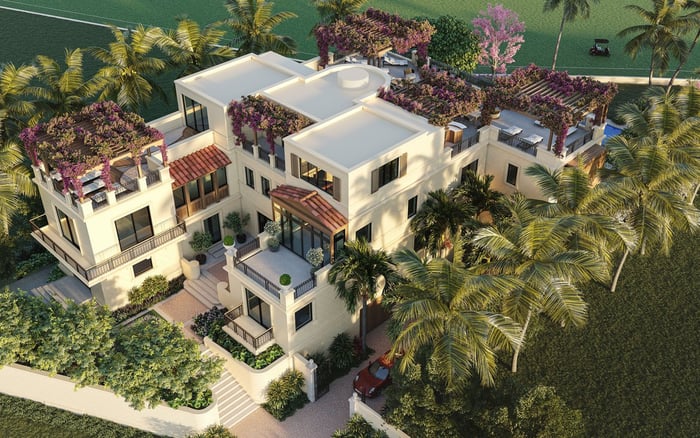
A buyer’s guide to evaluating privacy, tower adjacency, view corridors and exposure when moving from Aspen-style seclusion to South Florida luxury condominium living.
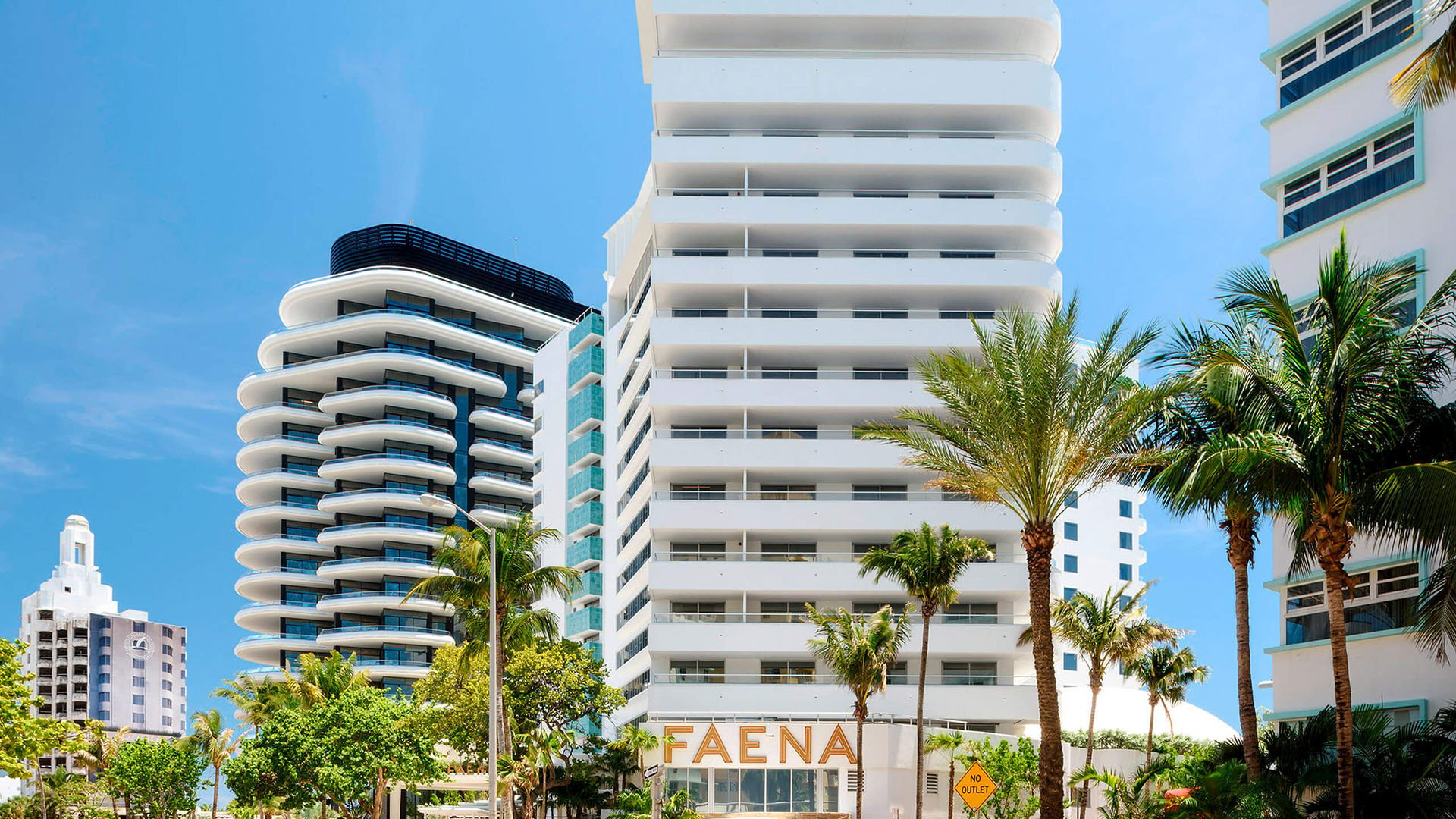
For an Aspen buyer, privacy is often intuitive. A home is protected by land, topography, tree cover and distance. In South Florida, privacy is more architectural. It is negotiated through glass, height, setbacks, view corridors, tower orientation, terrace depth, elevator access and the quiet intelligence of a floor plan.
That shift matters. A residence can feel visually exposed even when it is large, expensive and high above the street. Conversely, a smaller home can feel remarkably private if its principal rooms avoid direct tower-to-tower confrontation. The best purchase decisions begin before finishes, amenities or brand names. They begin with one question: who can see into the rooms where life actually happens?
For buyers moving from alpine estates to Miami Beach, Brickell, Surfside or Sunny Isles Beach, privacy is not a single feature. It is a layered condition. The right home protects the morning routine, the dinner table, the primary suite, the terrace and the evening view after the city lights come on.
The first privacy test is external. Before falling for a residence, study what surrounds it today and what could plausibly surround it later. A dazzling view can be compromised by a neighboring tower if the exposure is narrow, the parcel next door is underbuilt or the preferred rooms face directly into another building.
In dense districts, the most private homes are often not simply the highest. They are the homes with the most thoughtful angles. A corner residence that looks over a park, waterway or broad avenue may outperform a higher interior unit facing a parallel tower. A waterfront line with open lateral views can feel more private than a higher residence whose main glazing stares across a tight urban slot.
This is where Waterfront and Oceanfront buying diverge. Waterfront can include bays, canals, rivers and inland waterways, where orientation may be more varied. Oceanfront tends to offer a stronger primary exposure, but neighboring buildings can still affect side views, bedroom windows and terraces. The headline view is only part of the privacy story.
Luxury buyers often ask for the best line. The sharper question is: best for which room? The living room may be beautifully open while the primary bedroom faces a neighboring balcony. A kitchen may enjoy water views while a secondary bedroom looks straight into a tower wall. Privacy should be mapped room by room.
Start with the primary suite. In South Florida condominium living, this is often where privacy is most valuable. Look for bedrooms that turn toward water, sky, landscape or a low-rise edge. Then examine the bath. Large windows can be exquisite, but they require careful analysis after dark, when interior light makes a residence more visible from outside.
Next, study the terrace. A deep terrace may create a sense of retreat, but only if it is not directly aligned with another terrace across the way. Angled terraces, recessed outdoor rooms and corner exposures can offer a better balance between openness and discretion. In projects such as The Residences at 1428 Brickell, the buyer’s task is not merely to admire the urban energy of Brickell, but to identify which exposures feel calm, protected and livable at every hour.
Elevation is useful, particularly in districts with intense street activity or low neighboring structures. Yet high floors are not automatically private. If a nearby tower rises to a similar height, the relationship between windows can feel surprisingly intimate. High floors should be evaluated in context, with attention to diagonal views, future development risk and nighttime visibility.
A better framework combines elevation with separation. Wide avenues, water bodies, parks and low-rise historic fabric can create breathing room. So can a site plan that staggers towers rather than aligning them face to face. The most private residences often have a sequence of protective layers: height, distance, orientation and interior planning.
Glass also deserves discipline. Expansive glazing is part of the South Florida dream, but privacy depends on how that glass is used. Consider where drapery pockets, shades and lighting scenes are integrated. A home that requires constant closed shades is not truly private; it is simply defended.
In Miami Beach and Surfside, privacy often comes from a refined balance of ocean exposure and low-rise neighborhood texture. Buyers are drawn to light, sand, breeze and resort ease, but the strongest homes preserve a sense of separation from neighboring towers and public-facing activity.
When assessing Miami Beach, look beyond the postcard view. Ask how the arrival sequence works, whether the residence shares corridors with many neighbors and how the terrace relates to adjacent buildings. At The Perigon Miami Beach, a buyer comparing residences should think in terms of horizon, side exposure and the choreography of daily privacy, not just the drama of the address.
Surfside can appeal to buyers who want a quieter rhythm without leaving the coastal luxury corridor. A residence such as The Delmore Surfside belongs in a privacy conversation because Surfside itself is often evaluated by buyers seeking a softer, more residential alternative to denser settings. The essential due diligence remains the same: compare sightlines, neighboring heights, terrace adjacency and the way private rooms are shielded.
Brickell offers energy, walkability and skyline drama, but it requires particular precision. Privacy here is rarely about isolation. It is about controlled exposure. The best residences feel connected to the city without surrendering the interior life of the home. Buyers should favor lines with wider view corridors, corner conditions and principal rooms that avoid direct window-to-window confrontation.
Sunny Isles Beach presents a different equation. Towers often celebrate height, ocean views and a strong resort character. The key is to understand how each residence sits within the coastal wall of buildings. In evaluating Bentley Residences Sunny Isles, for example, a privacy-minded buyer would study the relationship between elevation, neighboring tower spacing and the way outdoor areas are oriented toward the water or adjacent properties.
Across both markets, the most discreet purchase is not always the most visible trophy. It is the one where the floor plan, the building’s position and the surrounding skyline work together quietly.
Not every Aspen-to-Miami buyer wants a tower. Some want the service, security and ease of condominium living, but with a softer scale. Coconut Grove, Bay Harbor Islands, Fisher Island, Coral Gables and select waterfront pockets can offer a more residential mood, depending on the site and product type.
A residence such as Vita at Grove Isle is the type of project a buyer may consider when searching for a more insulated, island-like setting within the broader Miami market. The privacy question changes here. Instead of asking only about neighboring towers, buyers should examine approach, access, marina or waterfront activity, landscape screening and the relationship between residences across the site.
Low-rise does not automatically mean private. A second-floor residence can feel exposed if it faces a shared amenity deck, entry court or neighboring home. Conversely, a well-positioned lower residence can feel serene if landscape, setbacks and orientation create a sense of enclosure.
Visit at different times of day. Morning sun, afternoon glare and evening interior lighting can each reveal a different privacy condition. Stand in the primary bedroom with lights on. Sit at the dining table. Step onto the terrace and look left, right and diagonally, not only straight ahead.
Request stack plans and surrounding context, then compare them with what you see on site. Identify adjacent parcels and ask what could change. Consider whether the view relies on a gap that may not remain open. Think in terms of permanence: water, public parks and established low-rise areas can provide more dependable separation than an empty lot.
Finally, decide what privacy means personally. Some buyers want no visual contact with neighbors. Others are comfortable with a city view if the bedrooms and baths are protected. The ideal South Florida home is not the one that feels most spectacular for ten minutes. It is the one that feels composed, discreet and natural after ten years.
Is a higher floor always more private in South Florida? Not always. A high floor can still face another tower at a similar elevation, so spacing and orientation matter as much as height.
What is the first thing to study when privacy is a priority? Study the surrounding parcels and view corridors before focusing on finishes. The neighboring skyline will shape daily privacy.
Are corner residences usually better for privacy? They can be, especially when they create diagonal views and reduce direct window-to-window exposure. The specific orientation still matters.
How should Aspen buyers adjust their expectations in Miami? They should shift from land-based privacy to architectural privacy. In Miami, discretion often comes from height, setbacks, glass control and plan design.
Can Oceanfront living still feel exposed? Yes. Ocean views may be open, but side windows, terraces and neighboring towers can still affect privacy.
What rooms deserve the most privacy review? The primary bedroom, bath, dining area and terrace deserve the closest review because they shape the most personal parts of daily life.
Is Brickell too dense for privacy-minded buyers? Not necessarily. Brickell can work when a residence has strong separation, protected bedrooms and view corridors that avoid direct tower confrontation.
Why does nighttime matter during a showing? Interior lighting can make a residence more visible from nearby towers. Evening visits reveal privacy issues that daylight may conceal.
Do shades solve privacy concerns? Shades help, but a home that depends on closed shades all day may not deliver the open, private lifestyle a buyer wants.
Should privacy affect resale thinking? Yes. Protected views, thoughtful exposure and comfortable separation can make a residence feel more livable over time.
For a discreet conversation and a curated building-by-building shortlist, connect with MILLION.
If branded residences are on your mind — as a home or as an allocation — we would be glad to share what we are seeing, privately.
Begin a quiet conversation