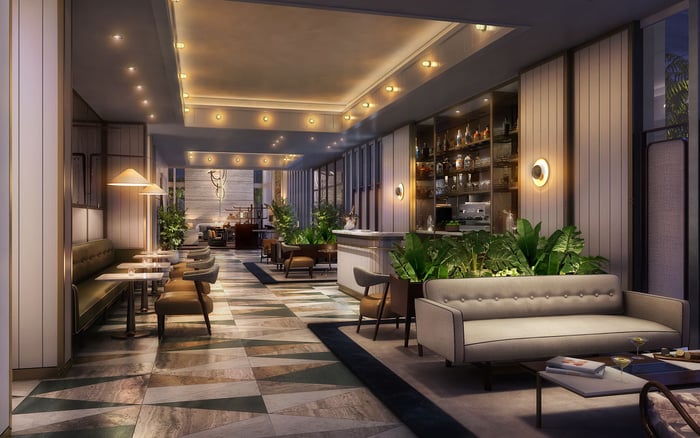
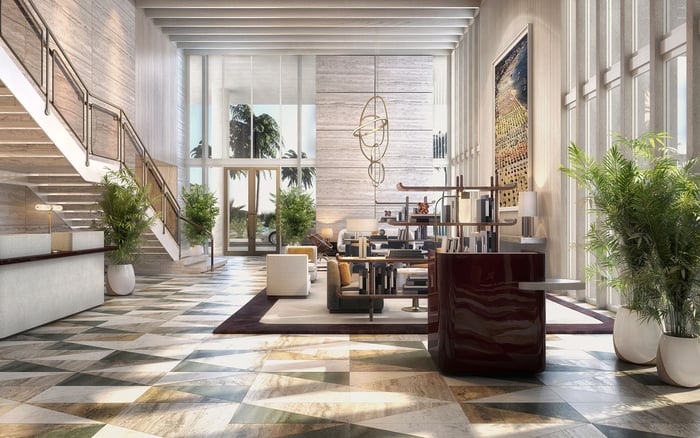
Four Seasons Hotel & Private Residences Fort Lauderdale illustrates how branded residences are reshaping Fort Lauderdale luxury through hospitality-backed service culture, buyer trust, and a more managed coastal lifestyle.

Fort Lauderdale’s luxury conversation is no longer defined simply by proximity to the water. Increasingly, it centers on how that lifestyle is supported once an owner steps inside. In that context, Four Seasons Hotel & Private Residences Fort Lauderdale occupies a precise position: it combines a Four Seasons hotel with private residences, placing a globally recognized hospitality brand at the center of residential ownership.
That pairing matters because it frames the property as both real estate and operating culture. The building is not defined only by architecture, views, or amenity space. Its market relevance comes from the promise that private residential life can be supported by the standards, habits, and expectations of a hotel platform known for consistency and personalization.
For Fort Lauderdale, this is a meaningful evolution. The city has long had the natural ingredients of high-end coastal living: beach access, waterfront neighborhoods, yachting culture, and a more relaxed rhythm than Miami. The Four Seasons flag adds something different: an immediate service identity that independent condominium projects typically must build over time.
The appeal of Branded Residences is both practical and emotional. A luxury buyer may be evaluating floor plans, finishes, and location, but the branded-residential category adds another layer: trust in the operator. When a residence is associated with an established hospitality name, the buyer is not only considering what the property looks like today. The buyer is also weighing how it may feel to live there over time.
That is where Four Seasons Hotel & Private Residences Fort Lauderdale becomes central to the discussion. The property’s private-residence component gives owners proximity to, and association with, hotel-style amenities and service infrastructure. The value proposition is not limited to access. It is about a residential environment shaped by staffing, service rituals, and a managed hospitality lens.
In the ultra-premium market, that can be as persuasive as a view corridor or a private terrace. The most sophisticated buyers often already have access to beautiful homes. What they increasingly seek is ease, predictability, privacy, and a level of attentiveness that removes friction from daily life.
A branded residence cannot rely on name recognition alone. The brand has to signal a repeatable standard. In Fort Lauderdale, the Four Seasons name gives the property an immediate service language: consistency, personalization, and hospitality-driven operations. That is a different starting point from a conventional condominium, where the building must establish its own culture through association management, staffing decisions, and resident expectations.
This does not mean every luxury buyer wants the same lifestyle. Some prefer the independence of a purely residential tower. Others are drawn to the quieter confidence of a hotel-backed environment where service is not treated as an amenity, but as an operating principle. Four Seasons Fort Lauderdale sits squarely in the latter category.
It also reflects the broader South Florida shift in which buyers increasingly value hotel-level service, staffing, and amenities inside residential environments. In a market where design and location remain essential, service culture is becoming one of the more important differentiators.
Fort Lauderdale Beach is increasingly part of a larger regional luxury map, and Four Seasons helps explain why. The project supports the city’s move beyond a casual beach-market identity toward a more structured luxury lifestyle offering. That does not erase Fort Lauderdale’s relaxed character. It adds a more refined operating layer to it.
Nearby, Auberge Beach Residences & Spa Fort Lauderdale and St. Regis® Residences Bahia Mar Fort Lauderdale also sit within the broader conversation about elevated coastal living, brand awareness, and the expectations of buyers who want more than a beautiful address. Together, they underscore that Fort Lauderdale is no longer simply adjacent to South Florida’s luxury narrative. It is helping define a Broward version of that narrative.
The distinction is subtle but important. Fort Lauderdale does not need to imitate Miami Beach or Palm Beach to compete. Its appeal lies in pairing waterfront ease with a more composed residential experience. A hospitality-backed property sharpens that identity by making service part of the everyday proposition.
For high-net-worth buyers, service culture is often most valuable when it is quiet. It is not necessarily about spectacle. It is about the feeling that the residence is supported by a professional framework, that staff interactions are polished, and that the daily experience has been considered before the resident asks.
Four Seasons Hotel & Private Residences Fort Lauderdale fits this desire because its relevance is grounded in a managed, hospitality-backed resident experience. The brand gives buyers a shorthand for how the property is meant to operate. It suggests that service is not an afterthought layered onto the real estate, but part of the property’s core identity.
This is particularly important in a coastal second-home or seasonal ownership pattern, where owners may value continuity as much as convenience. The ability to return to a residence that feels managed, familiar, and service-forward can be a decisive part of the appeal.
South Florida has become one of the clearest laboratories for branded residential living. In Surfside, The Surf Club Four Seasons Surfside reflects the regional resonance of hospitality-backed ownership. In Coconut Grove, Four Seasons Residences Coconut Grove shows how the same broad service conversation can adapt to a different neighborhood character.
Fort Lauderdale’s version is distinct because it connects the Four Seasons service idea to a city still refining its luxury identity. The property helps Fort Lauderdale compete more directly with other South Florida luxury destinations by importing a top-tier hospitality brand into the residential conversation. That does not make the city less local. It makes its luxury offering more legible to buyers who understand service culture across markets.
The central lesson is that Four Seasons Hotel & Private Residences Fort Lauderdale should not be viewed only as another luxury coastal property. Its importance lies in the way it bundles service, amenities, design, and residential ownership into a single branded experience.
For buyers, the question is not only whether they want a residence in Fort Lauderdale. It is whether they want that residence to come with the cultural architecture of a hospitality brand. In that sense, the property is a strong example of where the market is heading: toward homes that promise not just privacy and beauty, but a more intentionally managed way of living.
What is Four Seasons Hotel & Private Residences Fort Lauderdale? It is a mixed hospitality-and-residential luxury property in Fort Lauderdale that combines a Four Seasons hotel with private residences.
Why is it considered a branded residence? The project pairs private ownership with a globally recognized hospitality brand, placing it within the branded-residential category.
Why does the Four Seasons name matter to buyers? It gives the property an immediate service identity tied to consistency, personalization, and hospitality-driven operations.
How does this affect Fort Lauderdale’s luxury image? It supports the city’s shift from a casual beach-market identity toward a more structured luxury lifestyle offering.
Is service culture as important as design? For many luxury buyers, service culture is becoming a key differentiator alongside architecture, location, and amenities.
What does hotel-backed living mean for owners? It means private residential life is associated with hotel-style service infrastructure and a managed hospitality environment.
Does this make Fort Lauderdale more competitive regionally? The presence of a top-tier hospitality brand helps Fort Lauderdale compete more directly within South Florida luxury real estate.
Who is the likely buyer for this type of property? It appeals to buyers who value privacy, coastal living, operational ease, and the reassurance of a known service platform.
How is it different from an independent condominium? An independent condominium typically has to build its service culture over time, while the Four Seasons flag creates an immediate framework.
What is the main takeaway for luxury buyers? The property shows how Fort Lauderdale luxury is increasingly defined by both real estate quality and hospitality-backed service.
When you're ready to tour or underwrite the options, connect with MILLION.
If branded residences are on your mind — as a home or as an allocation — we would be glad to share what we are seeing, privately.
Begin a quiet conversation