A buyer-focused guide to comparing wellness credibility, air quality priorities, and recovery spaces across Arte Surfside, Kempinski Residences Miami Design District, and Frida Kahlo Wynwood Residences.
In South Florida’s luxury condominium market, wellness has become a sophisticated language. It can describe a building’s physical setting, the quality of its air systems, the presence of spa and recovery spaces, or the credibility of a brand that has made health part of its identity. The challenge for buyers is that these elements are often discussed together, even though they answer very different questions.
Arte Surfside, Kempinski Residences Miami Design District, and Frida Kahlo Wynwood Residences enter that conversation from distinct angles. The right choice is not simply the project with the most wellness language. It is the residence whose strongest attributes match how a buyer actually restores, entertains, works, sleeps, and protects privacy.
For the ultra-premium buyer, the decision should begin with a clear distinction: wellness credibility is not the same as air quality, and air quality is not the same as recovery. A residence can feel serene without having a clearly articulated technical air story. A building can offer urban energy while still requiring careful review of its environmental systems. A recovery area can be visually compelling yet underused if it does not fit the owner’s daily rhythm.
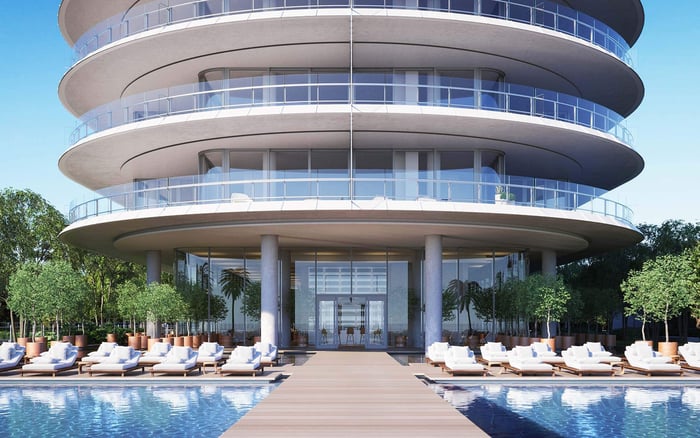
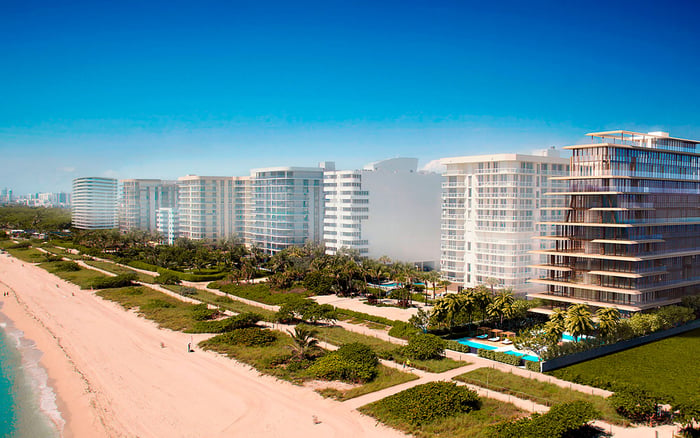
Arte Surfside is positioned as the low-density, oceanfront option among the three. Its appeal is rooted in privacy, tranquility, and spatial generosity, making it especially relevant for buyers who define wellness less as programming and more as the removal of friction.
That distinction matters. At the highest tier of the market, wellness is often about what a residence subtracts: elevator congestion, visual noise, dense circulation, and the sense of constant urban motion. Arte Surfside’s seclusion-oriented environment gives it a different kind of credibility. Its wellness case is not primarily framed around a cited third-party certification. It is framed around the lived experience of calm, oceanfront, low-density living.
For a buyer weighing Arte Surfside against more urban or branded-wellness alternatives, the central question is this: should the residence function first as a quiet refuge, or as an amenity and lifestyle platform? Neither answer is universally superior. The distinction is personal and, at this level, highly consequential.
Within the language of South Florida luxury, Arte Surfside also aligns with a specific buyer psychology. The buyer drawn to Surfside often values discretion over spectacle, room to breathe over social density, and oceanfront exposure over neighborhood intensity. Here, boutique scale can become a wellness feature in itself.
Wellness credibility should be judged on three layers. The first is setting: light, water, space, privacy, and quiet. The second is operational seriousness: how building systems, maintenance, and amenity design support health over time. The third is formal validation, where applicable, through disclosed standards or certifications.
Arte Surfside’s differentiator belongs primarily to the first layer. Its physical environment carries the wellness argument. For buyers who believe the most valuable luxury is daily decompression, that may be enough. A low-density oceanfront residence can support sleep, calm, and privacy in ways that do not require a heavily branded wellness narrative.
Kempinski Residences Miami Design District should be approached through a different lens. As a branded urban comparison in this buyer set, its wellness credibility depends on how convincingly the residence translates hospitality expectations into private residential life. The key is not the name alone. It is whether the building’s programming, service culture, amenity operations, and private spaces create a consistent wellness experience rather than a decorative one.
Frida Kahlo Wynwood Residences invites another line of thinking. Wynwood carries cultural energy, visual intensity, and a creative district identity. For some buyers, mental stimulation and proximity to art, dining, and social movement are part of a broader wellness equation. For others, that same energy may require stronger in-residence retreat spaces to preserve calm.
This is why new-construction wellness choices should never be reduced to a single label. A buyer should separate what is emotionally compelling from what is functionally durable.
Air quality is one of the most serious wellness categories precisely because it is difficult to see. Renderings can show pools, treatment rooms, gardens, and lounges. They rarely communicate how air is filtered, circulated, monitored, dehumidified, or maintained over years of ownership.
For buyers comparing these three residences, air quality should be treated as a technical category rather than a lifestyle adjective. The relevant questions are specific: what filtration standards are used, how fresh air is introduced, how humidity is managed, whether systems serve residences individually or collectively, and what maintenance protocols protect performance over time.
Arte Surfside’s oceanfront and low-density positioning may feel naturally restorative, but that does not replace technical review. Coastal air, humidity, salt, and building-envelope performance all matter in a South Florida residence. The calm of the setting is valuable, yet air quality still belongs in the buyer’s engineering and operations conversation.
For a Design District or Wynwood residence, the analysis becomes even more important because urban context adds complexity. Buyers should understand how building systems mediate exterior conditions and how private interiors maintain comfort during heat, humidity, and high-use periods. The most refined interiors can perform only as well as their systems.
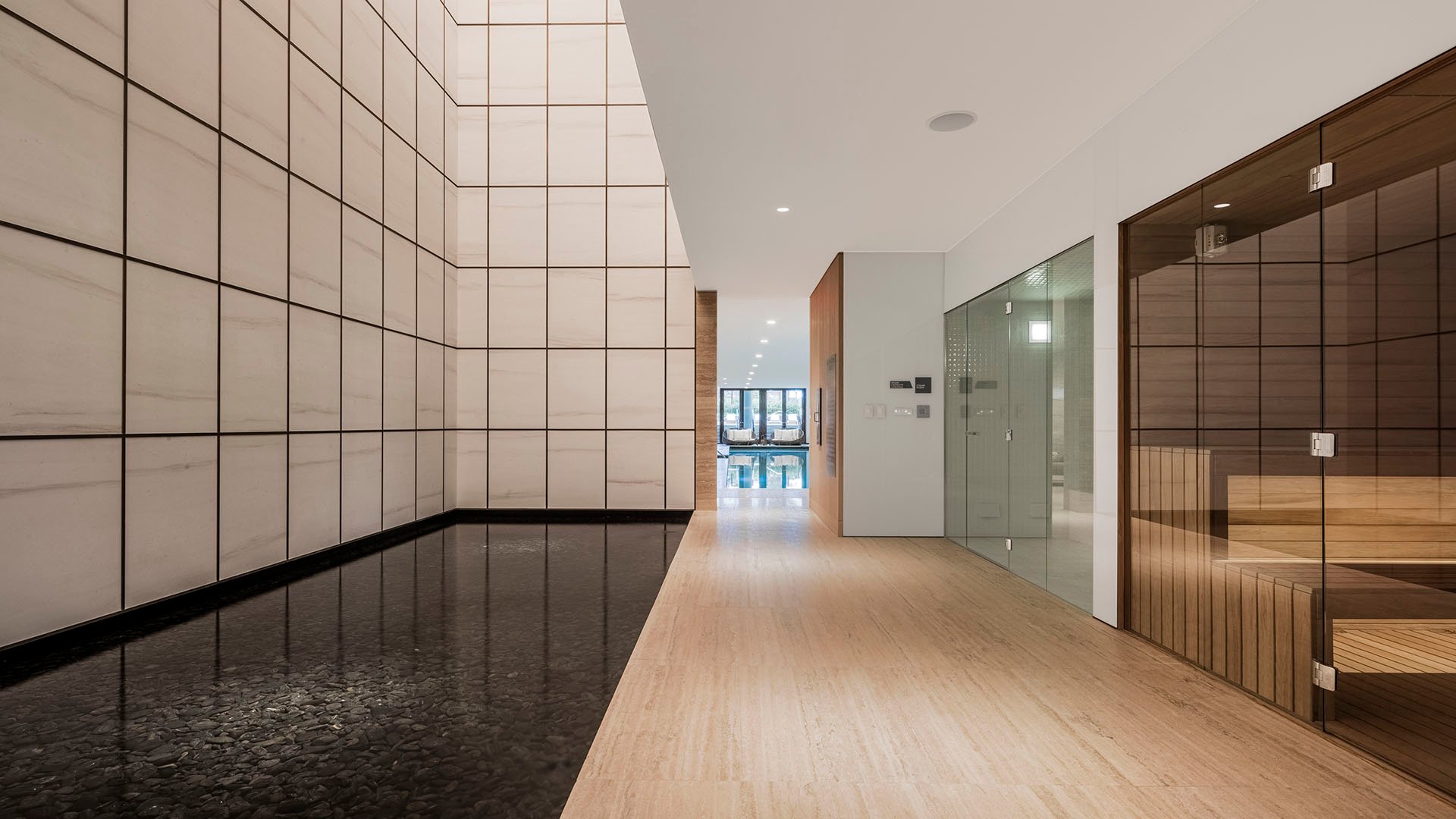
Recovery spaces are often the most emotionally appealing part of the wellness conversation. Buyers imagine spa suites, quiet rooms, pools, terraces, treatment areas, fitness environments, and places to transition from stress to composure. Yet the best recovery space is not always the most elaborate one. It is the one the owner will actually use.
Arte Surfside’s recovery proposition is closely tied to its calm, oceanfront, low-density conditions. For certain buyers, walking into a quieter building, looking toward the water, and returning to a residence with spatial generosity may be more restorative than an amenity menu. Recovery begins before the spa, because the environment itself lowers the volume.
In a more urban residence, recovery spaces must work harder. A buyer considering Kempinski Residences Miami Design District may place greater value on service-led transitions: arriving efficiently, moving through well-managed common areas, and using amenities that feel composed rather than crowded. A buyer considering Frida Kahlo Wynwood Residences may value creative energy outside the door, while still needing a residence that provides a decisive shift into privacy.
The core test is simple. If recovery is the priority, ask where the body calms down first. Is it at the shoreline, in a treatment room, on a private terrace, in a low-density lobby, or in the ability to move through the day without unnecessary friction?
Choose Arte Surfside if the highest form of wellness is seclusion, privacy, oceanfront calm, and a residential rhythm that feels protected from intensity. It is the most direct match for buyers who want the building’s setting to do much of the wellness work.
Lean toward Kempinski Residences Miami Design District if your definition of wellness includes a branded residential environment, urban proximity, and the possibility of hospitality-style service. The decisive issue is how convincingly the private residence, amenities, and operations support wellness beyond branding.
Consider Frida Kahlo Wynwood Residences if creative district energy is part of your lifestyle and you want wellness to coexist with cultural movement. In that case, the residence must provide a strong private counterbalance to the surrounding activity.
The most disciplined buyers will not ask which project sounds healthiest. They will ask which one reduces the specific stresses they experience most often. For one buyer, that answer is silence and water. For another, it is service and convenience. For another, it is inspiration followed by private retreat.
Which buyer is most aligned with Arte Surfside? A buyer who prioritizes privacy, tranquility, spatial generosity, and low-density oceanfront living is most naturally aligned with Arte Surfside.
Is Arte Surfside’s wellness appeal based on certification? Its key wellness differentiator is its physical setting rather than a cited third-party wellness certification.
How should buyers compare wellness credibility across the three projects? Separate setting, operations, amenities, and any formal standards instead of relying on wellness language alone.
Why is air quality a separate category? Air quality depends on technical systems, filtration, humidity management, and maintenance, not just the atmosphere of a building.
Does oceanfront living automatically mean better air quality? No. Oceanfront calm can be restorative, but buyers should still review the building’s air and humidity systems carefully.
What makes recovery spaces effective? Effective recovery spaces support daily use, privacy, quiet transitions, and rituals that owners will actually maintain.
How should a buyer think about Kempinski Residences Miami Design District? It should be evaluated on how well branded residential service, amenities, and urban convenience support a wellness lifestyle.
How should a buyer think about Frida Kahlo Wynwood Residences? It should be evaluated on whether creative Wynwood energy is balanced by meaningful private retreat and calm interiors.
Is boutique scale a wellness advantage? It can be, especially when fewer residences support privacy, reduced circulation, and a quieter daily experience.
What is the simplest way to choose between the three? Identify whether your primary need is oceanfront calm, branded urban service, or cultural energy with private recovery.
To compare the best-fit options with clarity, connect with MILLION.
If branded residences are on your mind — as a home or as an allocation — we would be glad to share what we are seeing, privately.
Begin a quiet conversation