A discreet comparison of Eighty Seven Park and Arte Surfside for buyers who care about household staffing, laundry placement, service circulation, privacy, and long-term downside discipline.

For buyers comparing Eighty Seven Park Surfside and Arte Surfside, the obvious conversation starts with oceanfront architecture, privacy, and the feel of a refined coastal address. The more important conversation begins after the first impression fades: where staff enter, where laundry lives, how service circulation works, and whether the residence can operate quietly when the household is full.
That question matters because the Surfside and northern Miami Beach market attracts owners who may live with domestic support. A housekeeper, nanny, chef, estate manager, visiting security professional, or seasonal family office assistant changes how a residence performs. A beautiful condominium can feel less composed when service routes cross the primary entertaining path, laundry is too visible, or staff have no logical place to stage daily tasks.
Both buildings belong in the same buyer conversation, but neither should be judged by branding alone. The right comparison is not only about finishes, views, or a first tour; it is about how each specific residence supports privacy, daily operations, and long-term confidence.
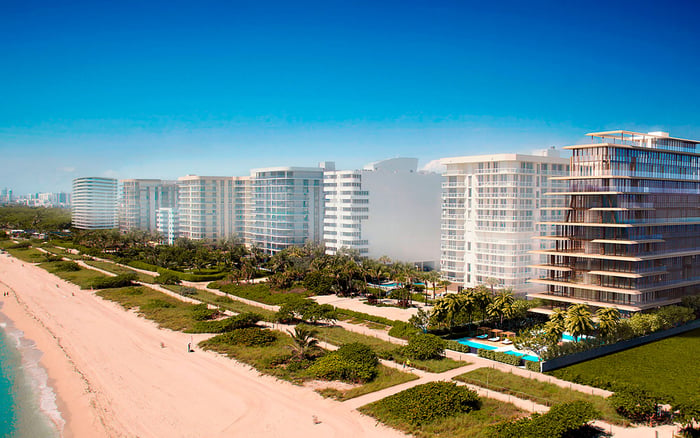
The first distinction is neighborhood texture. Eighty Seven Park benefits from a coastal setting that can feel removed from denser Miami Beach corridors while still remaining part of the broader luxury-service ecosystem surrounding Surfside.
Arte Surfside offers a different form of discretion within Surfside’s luxury market. The appeal is less about urban energy and more about a calibrated residential environment, where the daily cadence can feel quieter and more controlled.
For a buyer who values domestic operations, both settings are compelling. The Miami Beach side of the comparison gives Eighty Seven Park a distinct neighborhood identity, while Surfside gives Arte Surfside a village framework that many owners perceive as calmer. The question is which environment better supports the owner’s actual household rhythm.
A staffed residence should be evaluated around a normal day. Groceries arrive. Beach towels return damp. Children come in from the sand. Guests need lunch. Housekeeping turns bedrooms while owners remain in the living area. A chef may need to move discreetly between kitchen, storage, and service areas. If those movements require repeated crossings through formal rooms, the plan may read elegantly in photographs but feel strained in use.
At Eighty Seven Park Surfside, the buyer should focus on how each residence handles privacy within an oceanfront building. The project’s appeal is strongest when the unit plan supports it operationally through discreet utility zones, sensible circulation, and service logic that does not compete with the owner’s main arrival sequence.
At Arte Surfside, the due-diligence question is equally plan-specific. Privacy may be central to the buyer’s interest, but the exact residence still determines whether staff movement feels invisible or improvised. In a building where discretion is part of the proposition, back-of-house design becomes part of the luxury, not a secondary feature.
Laundry placement is often treated as a convenience detail. In this price category, it is a risk-management detail. The wrong laundry location can create noise near bedrooms, visible baskets near main halls, and repeated staff traffic through owner spaces. The right location allows housekeeping to operate efficiently while preserving the composure of the residence.
For buyers comparing Eighty Seven Park and Arte Surfside, the question is not simply whether the residence has a laundry room. It is whether that room is properly placed in relation to bedrooms, staff routes, service entries, linen storage, and mechanical or utility areas. A well-positioned laundry zone gives staff a place to work without turning the family corridor into an operations corridor.
This is especially important for seasonal owners. When a residence is used intensely over holidays or school breaks, towels, linens, uniforms, workout clothing, and beachwear accumulate quickly. New-development expectations often focus on finishes and amenities, but laundry logistics can be the difference between a residence that feels serene and one that feels constantly in motion.
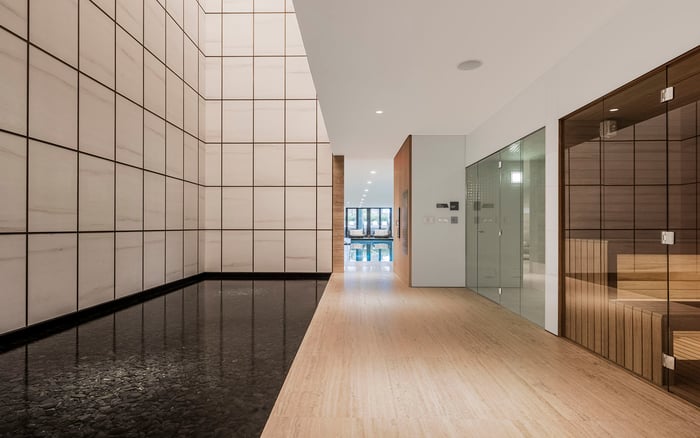
Service corridors and back-of-house circulation matter because they separate hospitality from display. In the best residential plans, staff can receive deliveries, move laundry, remove trash, and support dining without becoming part of the owner’s social experience. This is not about hiding people; it is about respecting everyone’s role and allowing the home to function gracefully.
In boutique towers, this issue becomes more acute. Smaller buildings can feel more private, but they may also require closer scrutiny of vertical circulation, loading procedures, service elevator access, and the relationship between the unit entry and utility areas. A buyer should understand not only the residence plan but also the building’s operating protocols.
For Eighty Seven Park, the broader appeal includes privacy, service expectations, and operational planning in a direct oceanfront environment. For Arte Surfside, the emphasis on Surfside’s quieter luxury fabric makes discretion central. In both cases, the buyer should ask for current floor plans and building rules, then mentally walk the service path from curb to kitchen to laundry to refuse area.
Eighty Seven Park may resonate with a buyer who wants the feel of the Surfside catchment while remaining in the northern Miami Beach oceanfront micro-market. Its coastal context can appeal to owners who want design, privacy, and a softer edge than denser beach corridors.
Arte Surfside may resonate with a buyer who wants the Surfside address and a quieter village character. That can matter to owners who prefer a residential daily cadence rather than a more urban beach scene.
Neither choice is automatically superior for a household with staff. A particular line, floor, or residence configuration may outperform another on laundry placement, staff circulation, and operational privacy. The disciplined buyer does not ask, “Which building is more prestigious?” The disciplined buyer asks, “Which specific residence will work better on a Tuesday morning?”
Downside discipline in this comparison means looking beyond finishes. It combines architectural fit, household operations, and financial caution. A residence that requires awkward staffing workarounds may be harder to live in and harder to defend at resale when the next buyer has the same operational expectations.
Before committing, buyers should review the exact plan for laundry location, utility depth, staff staging, elevator access, and the distance between service arrival and the kitchen. They should also consider whether the building’s concierge, valet, fitness, spa, and hospitality-style services align with their standards. Global luxury buyers often assume this level of support, but the lived experience depends on execution.
Oceanfront, boutique, privacy-driven buildings can be exceptionally compelling when the plan is right. In the Eighty Seven Park versus Arte Surfside decision, the most elegant purchase is the one where the residence works quietly before anyone notices it is working at all.
Is Eighty Seven Park actually in Surfside? It is often discussed with Surfside because of its nearby coastal residential context, but buyers should confirm jurisdictional details during due diligence.
What makes Arte Surfside different in this comparison? Arte Surfside is considered here through the lens of Surfside privacy, household operations, and how a specific residence handles daily service needs.
Why does laundry placement matter so much? Laundry placement affects staff efficiency, bedroom privacy, noise, and whether housekeeping activity crosses the owner’s main living areas.
Are service corridors always necessary? Not always, but strong service circulation helps reduce conflicts between staff movement, deliveries, entertaining, and private family life.
Which building is better for household staff? That depends on the exact residence plan, service access, and building procedures rather than the building name alone.
Is Surfside quieter than denser beach districts? Surfside is often valued for a more residential coastal character, but buyers should evaluate the specific block, building, and daily rhythm.
Should buyers prioritize amenities or floor plan? Both matter, but staffed households should give special weight to the floor plan, utility spaces, and back-of-house logic.
What should be reviewed before making an offer? Review current floor plans, laundry location, service elevator access, delivery routes, utility storage, and building operating rules.
Does boutique scale improve privacy? Boutique scale can support privacy, but only if circulation, staffing procedures, and common-area operations are well resolved.
What is downside discipline in this context? It means buying a residence that balances design appeal with daily operational strength and long-term resale defensibility.
For a confidential assessment and a building-by-building shortlist, connect with MILLION.
If branded residences are on your mind — as a home or as an allocation — we would be glad to share what we are seeing, privately.
Begin a quiet conversation