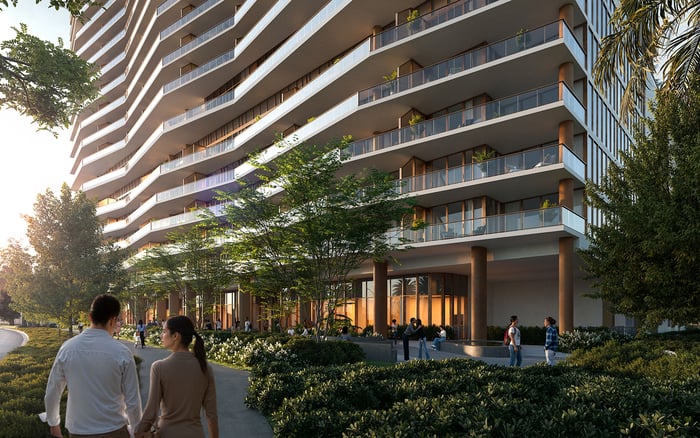
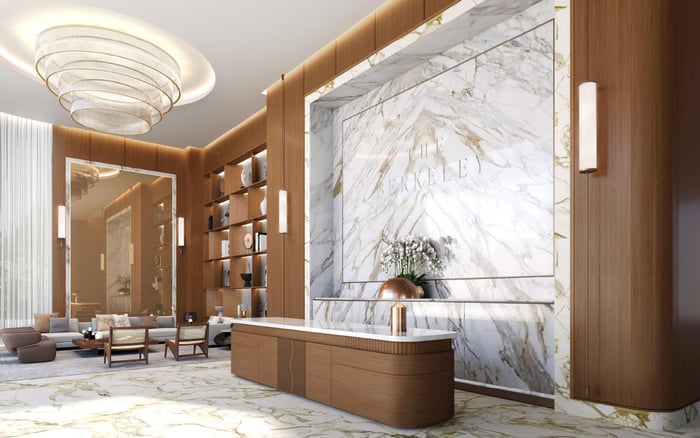
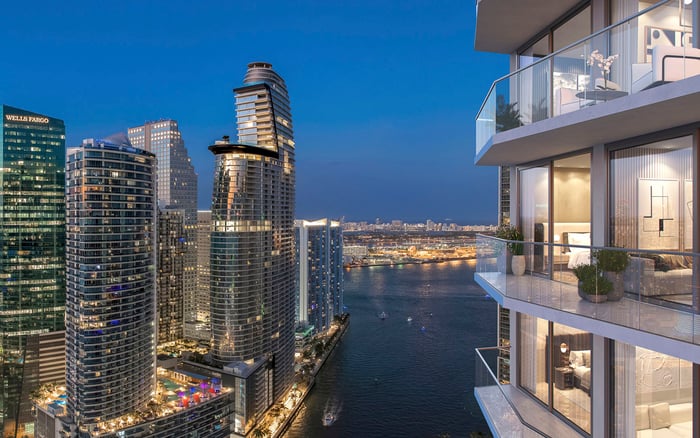
A discreet buyer’s guide to evaluating Arte Surfside alongside Edgeworth West Palm Beach through the practical lenses of building scale, lobby privacy, resident familiarity, governance, reserves, insurance, service depth, and resale fit.
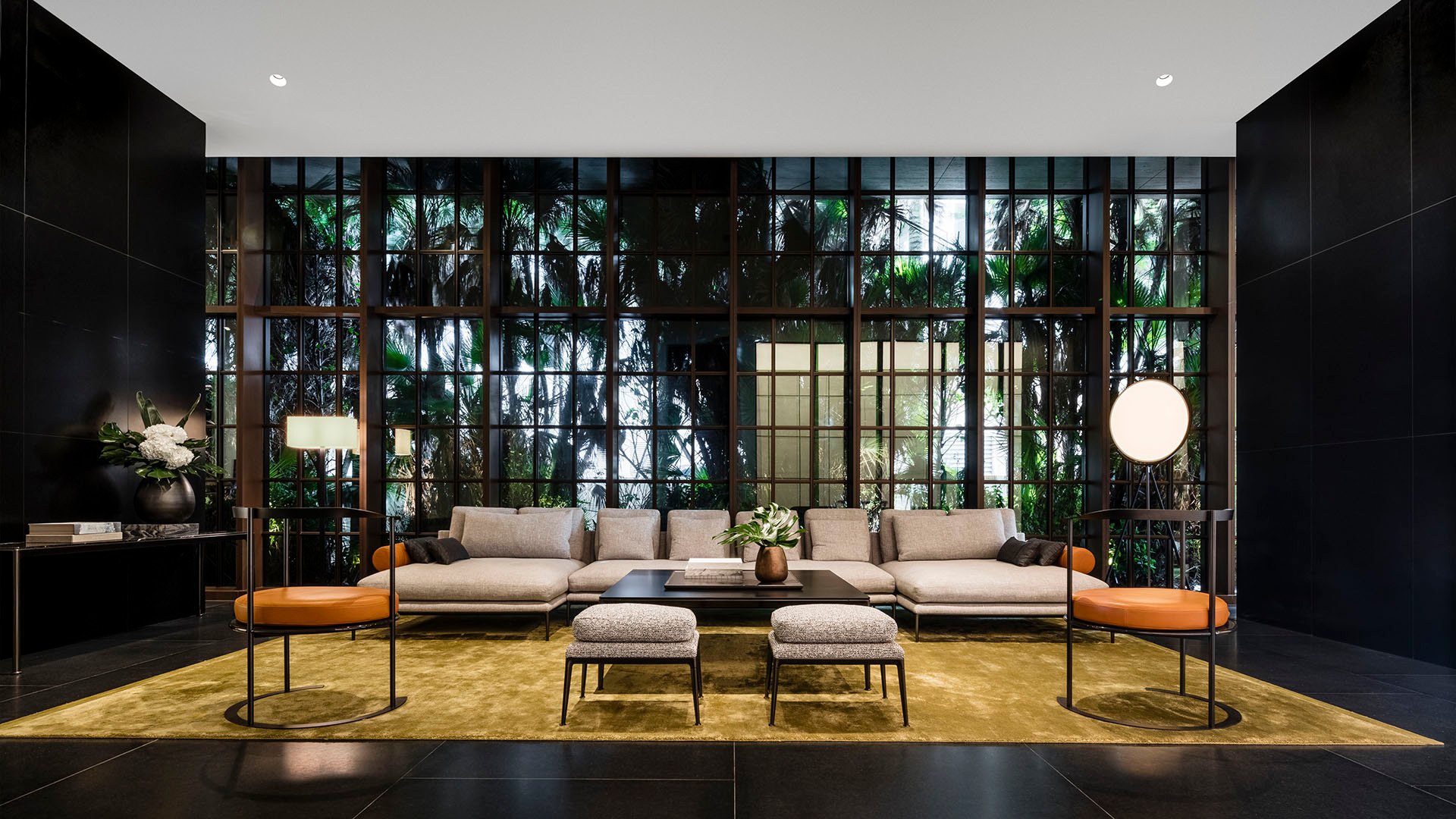
At the top of the South Florida condominium market, the defining choice is not always view, finish, or address. Often, it is scale. A buyer may admire two residences of comparable polish while weighing very different ownership environments: a more intimate building where residents and staff become familiar quickly, or a larger setting where privacy may come from volume, separation, and operational design.
That is the useful lens for reading Arte Surfside alongside Edgeworth West Palm Beach. The goal is not to declare one model superior. It is to understand how each building’s scale, lobby sequence, staffing model, documents, and association culture may affect daily life.
For a private buyer, the question is not simply which property appears more luxurious. It is which ownership environment best matches discretion, family rhythm, social preference, board tolerance, and long-term exit expectations.
Arte Surfside is the natural starting point for a discussion about boutique privacy because the name itself sits within a Surfside luxury context and is commonly considered through the lens of discretion. In this type of review, the buyer should focus less on marketing language and more on how the building actually operates.
The appeal of a smaller-feeling residential environment is straightforward. Fewer daily encounters can make arrival calmer, elevator use quieter, and staff recognition more personal. For buyers who value low visibility, quiet circulation, and a familiar residential rhythm, that can be the difference between owning a polished apartment and owning a home that feels genuinely private.
But boutique scale is never only a lifestyle benefit. It is also a governance and operating structure. In a smaller association, fixed costs and major capital projects may be shared across fewer owners. That makes monthly charges, reserves, insurance posture, staffing depth, and board culture especially important in diligence.
Lobby privacy is one of the most under-discussed forms of luxury in South Florida. It determines who sees you arrive, how often you cross paths with guests, how much staff recognition exists, and whether the building feels like a private address or a public stage.
For Arte Surfside, buyers should evaluate the arrival experience in practical terms: Where do residents enter? How are guests received? How are vendors managed? How visible is the lobby from the street or common areas? How clearly are resident movement and service movement separated?
The diligence question is operational. Observe the arrival sequence, understand visitor management, ask how deliveries are handled, and test whether the staffing model is deep enough for the level of service being promised. Privacy without discipline can become inconvenience. Service without discretion can feel intrusive. The best buildings balance both.
In a limited residential setting, neighbors tend to become known. That familiarity can be reassuring. Staff may understand household preferences, residents may recognize one another, and the building may develop a calmer rhythm than a high-traffic property.
Yet resident familiarity also changes governance. In a smaller association, board dynamics can feel more personal, and differences over spending, reserves, insurance, renovations, service expectations, or house rules may become more immediate. A buyer who wants maximum privacy should also ask whether they are comfortable with the intimacy of decision-making that can come with it.
This is where a boutique building requires a sophisticated buyer. Scale can create the quiet, closed-community quality that larger towers often cannot replicate. At the same time, the owner must be comfortable with a building where financial alignment and cultural fit matter. In an intimate environment, the neighbors are not background noise. They are part of the asset.
Edgeworth West Palm Beach belongs in this comparison because West Palm Beach is a key South Florida market for buyers who want a refined residential base with access to Palm Beach County’s social, cultural, and professional networks. The right way to evaluate Edgeworth is not to assume equivalence with Arte Surfside. It is to test the same questions against the documents and disclosures for that specific building.
Start with scale. How many residences share the lobby, amenity spaces, elevators, garage, staff, and association budget? Then move to access. Is the arrival sequence private, semi-private, or visibly urban? How are guests screened? How often will residents meet nonresidents in circulation areas? How does the building separate service movement from owner movement?
The West Palm Beach buyer may be drawn to a different daily rhythm than the Surfside buyer. One may prefer a quieter coastal context. Another may want city adjacency, a more active lobby environment, or easier proximity to dining, offices, cultural venues, and Palm Beach routines. Neither preference is inherently better. The discipline is to understand what the building will feel like on an ordinary weekday and during peak social periods.
Resale and investment analysis should begin with buyer depth. A boutique-leaning building’s strongest audience is not every luxury buyer. It is the buyer who prioritizes discretion, lower visibility, architectural character, and a specific residential identity. That focus can be powerful because it gives a property a clear position. It can also narrow the resale audience to those who actively want that model.
A larger or more urban building may draw from a broader pool, depending on its final attributes, but breadth is not automatically better. More comparable inventory can make pricing more transparent, while boutique scarcity can make valuation more nuanced. The owner must understand whether they are buying into a highly specific lifestyle position or a more conventional luxury tower market.
For Arte Surfside, the exit test should include service consistency, association financial health, insurance trajectory, reserve adequacy, and whether the building’s identity remains compelling against future competition. For Edgeworth West Palm Beach, the same test should be applied once building-specific details are confirmed: scale, resident mix, service promise, governance, and likely buyer profile at resale.
A disciplined buyer should separate aesthetic desire from operational reality. First, study the association budget and reserves. Smaller buildings can be elegant and quiet, but they may also require owners to carry a larger share of fixed costs. Second, review insurance assumptions and capital planning. South Florida luxury buildings need serious financial resilience.
Third, evaluate staffing. Ask whether the team is sized for the level of privacy and responsiveness being marketed. Fourth, understand governance. How are decisions made, and how personal might disagreements become in a small owner group? Fifth, experience the lobby and arrival at different times. A calm showing appointment may not reveal daily patterns.
Finally, define your own threshold for familiarity. Some buyers want a building where everyone recognizes everyone. Others want anonymity, even at the expense of intimacy. Arte Surfside and Edgeworth West Palm Beach should be measured by how their actual scale, documents, and operations answer that personal question.
What is the core difference between Arte Surfside and Edgeworth West Palm Beach? Arte Surfside is useful as a boutique privacy reference point, while Edgeworth West Palm Beach should be evaluated through verified building-specific details. The comparison should focus on how each property actually operates.
Why does building scale matter so much in luxury due diligence? Scale affects privacy, staffing, monthly costs, governance, amenity traffic, and the daily rhythm of arrival and departure.
Does a smaller building always mean more privacy? Not always. Smaller scale can reduce traffic, but privacy also depends on access control, lobby layout, staffing, visitor management, and resident behavior.
Can boutique scale create ownership risk? Yes. Fixed costs, reserves, insurance, and capital projects may be shared across fewer owners, which makes financial diligence especially important.
Why is lobby privacy important for ultra-prime buyers? The lobby controls visibility, guest exposure, service flow, and the first daily impression of discretion. For many buyers, that experience matters as much as design.
How can resident familiarity improve quality of life? Familiarity can create comfort, recognition, and a quieter residential rhythm. It can also make board and neighbor dynamics feel more personal.
What should buyers ask about Edgeworth West Palm Beach? Buyers should confirm residence count, access design, staffing model, amenities, governance, budget, reserves, insurance, and resale positioning.
Is Surfside or West Palm Beach better for privacy? The answer depends on the specific building and the buyer’s preferred routine. Surfside and West Palm Beach can support different versions of privacy, discretion, and daily convenience.
How should buyers think about resale in a boutique building? They should assess whether future buyers will value the same privacy, scale, design identity, and association structure. A narrow but committed buyer pool can be beneficial when the building’s identity is clear.
What is the best way to shortlist comparable options for touring? Start with location fit, delivery status, and daily lifestyle priorities, then compare stacks and elevations to validate views and privacy.
For a discreet conversation and a curated building-by-building shortlist, connect with MILLION.
If branded residences are on your mind — as a home or as an allocation — we would be glad to share what we are seeing, privately.
Begin a quiet conversation